
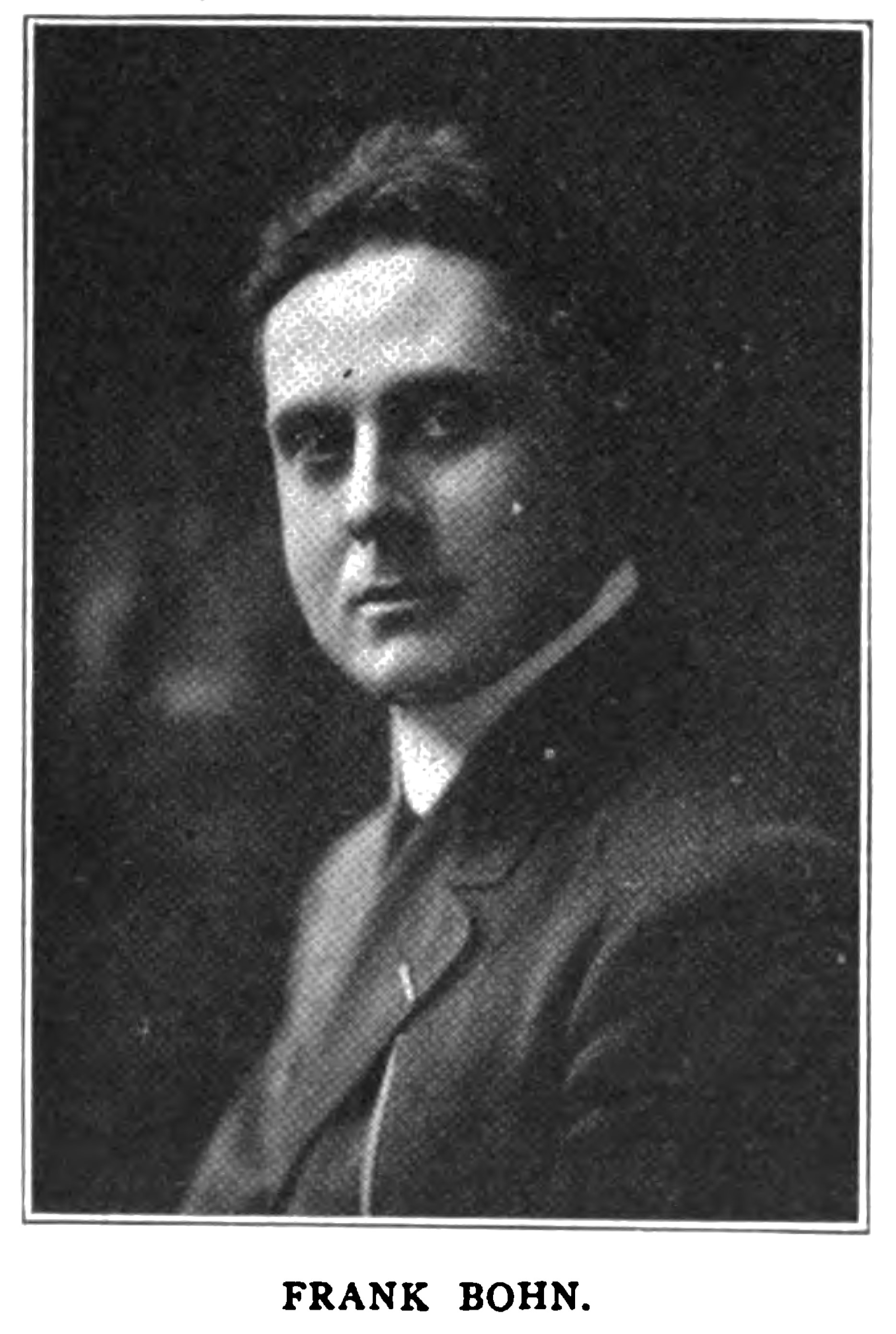
A century before Gerald Horne, Frank Bohn at his very best with this blistering assault and damning corrective of U.S. founding myths.
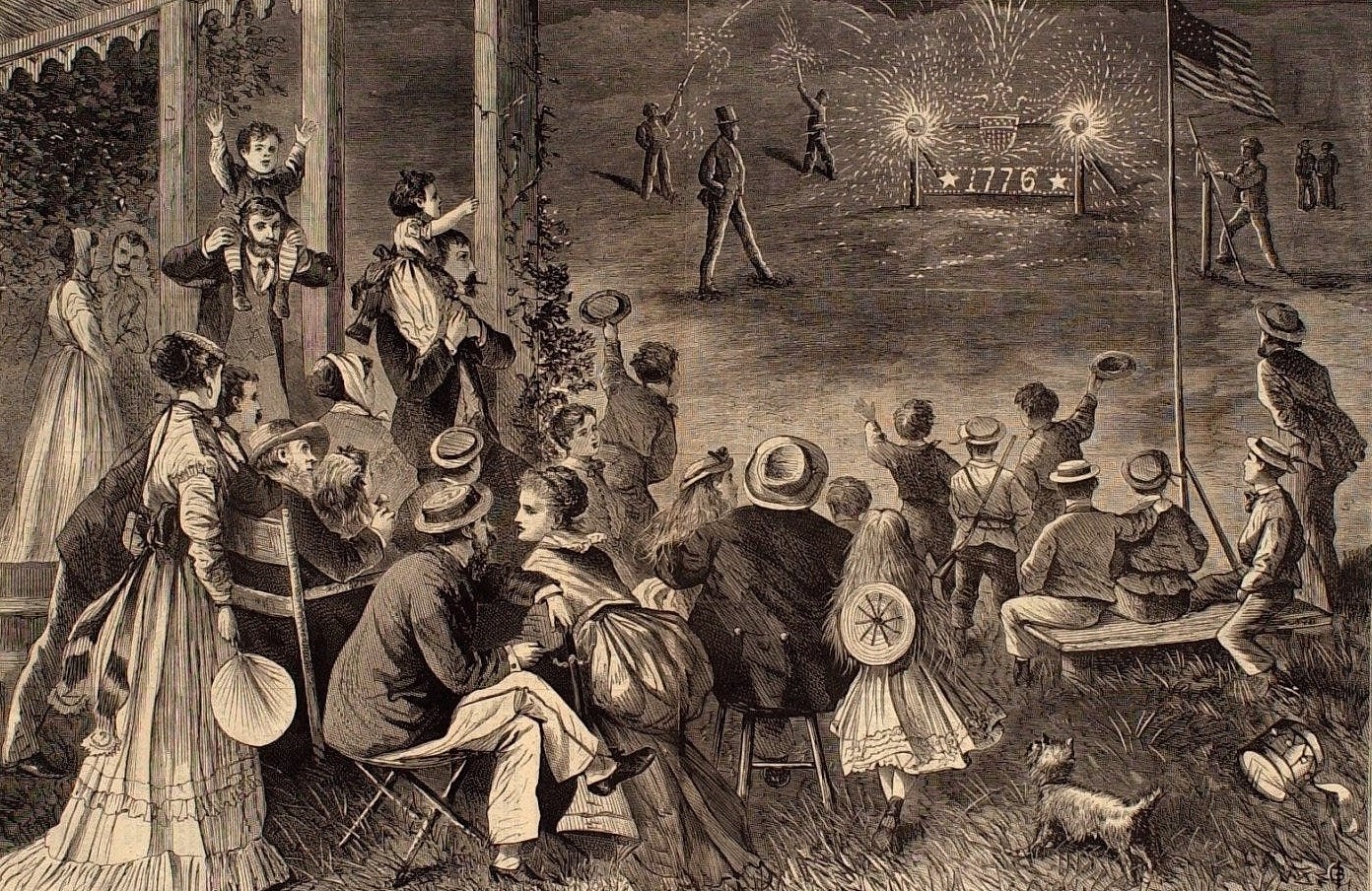
‘The Fourth of July, A. D. 1776’ by Frank Bohn from Revolt (San Francisco). Vol. 2 No. 1. July 1, 1911.
Ridiculous Spectacles are Presented
The two most ridiculous spectacles in the world are those furnished by the working class of England at the coronation of some poor half-witted creature as king, and the working class of America on the Fourth of July. These two celebrations prove beyond all peradventure the close bond of blood that exists between the two nations. Thickness of head puffed up by conceit! Two hundred and fifty years with less progress to show for it than the working class of the Continent makes in five! Not enough to bear the slave’s burden-the British slave must praise the king for it, and his American cousin celebrates his “independence” with fireworks and whisky. To cap the climax they will get together and tell each other that they are “the most intelligent, the most progressive, the most free, the best fed, and industrially the most effective ‘citizens’ in the world.” But the so-called “Anglo-Saxon race,” for these two hundred and fifty years since the restoration, has been a huge joke to all who have taken the trouble to understand it. The working class fools at the coronation we shall leave to be dealt with by our comrades across the sea. The Fourth of July gives us quite enough food for thought without leaving home. Let us see how it came to be America’s day of noisiest celebration.
The Fourth of July, A. D. 1776.
On that sacred and long-to-be remembered day, a number of elderly and very sedate gentle- men in powdered wigs and lace cuffs gathered in what was afterwards known as “Independence Hall,” Philadelphia, and proclaimed to the world that “These States are, and of a right ought to be, free and independent.”
Forty-nine years later a workingman and a member of one of the labor unions which were then first being organized in America, stood up on the steps of that same “Independence Hall” and proceeded to make a speech in the open air. He did not go inside to make his speech for the very good reason that, had he done so, he would have been kicked out. He told his assembled fellow workers that the working people of the United States ought to have free schools and the right to vote. Some people still think that the Revolutionary War gave to the American workers those great privileges. It did no such thing. In fact, it took away the right to vote from some who had it. But in 1825 the workers were organizing and demanding the ten-hour day, higher wages, free schools, the free ballot and the right to organize and strike.
But let us return to “Independence Hall.” The bold workingman has been talking twenty minutes. A crowd had assembled. The crowd contains not only not only workingmen, but capitalists, lawyers, petty shop keepers and politicians. These eminently respectable gentlemen are shocked at the “seditious mouthings” of the workingmen about “liberty, free education, enough to eat and time in which to eat it.” They rise heroically in defense of law, order, religion, and the national honor. A hundred of them seize that lone workingman, drag him from the steps of “Independence Hall,” kick him about in the mud of the street, and spit upon him.
So much for the results of the American Revolutionary War to the working class.
The Chief Causes of the American Revolution. In 1761 the British ministry made an effort to secure some financial assistance from America, to the end that the large debt of Great Britain incurred in the French and Indian War might be paid. The argument of the British ministry was sound and reasonable. The war had been waged fundamentally to keep the French out of the West-the Ohio Valley. The Americans had started it. The British debt amounted to £140,000,000, or $900,000,000. For the eight millions of people living in Great Britain at that time this debt was colossal, and it was feared that it could never be paid.
There appeared to be no more need of legislation. The Sugar Act, passed by Parliament in 1733, besides other taxes, levied a duty of one shilling per gallon on all molasses imported from the West Indies to the British Colonies. The Americans made few objections to this at the time. The numerous bays, islands, and lonely shores of New England and the Middle Colonies made political theories unnecessary. The New England capitalists smuggled industriously, grafted the king’s officers and praised God on Sunday for the richness of His blessing on their labor.
Something Strange.
Here is something the school histories do not teach. It is rather curious, because the facts are all known to teachers of history in all the large universities. The writer could cite many books which give the facts. The rich trade of New England in the generation preceding the American Revolution took the following course: England produced grain, lumber, and salt fish. The surplus was taken to the West Indies and traded for molasses. The molasses was brought back to New England, smuggled ashore, and turned into rum. The rum was again taken aboard ship, carried to the African coast and traded for slaves. These slaves were then brought to America and sold everywhere from Maine to the southernmost Spanish settlement in South America. Let us repeat this. Don’t forget it.
THE HOLY GHOST PURITAN CAPITALISTS OF NEW ENGLAND DERIVED THEIR FORTUNES FROM SMUGGLING IN MOLASSES AND GRAFTING THE GOVERNMENT OFFICIALS, FROM THE MANUFACTURE OF RUM, AND FINALLY FROM THE UNUTTERABLE BLOOD-REEKING SLAVE TRADE IN AFRICA AND AMERICA. ENGLAND AND HER COLONIES HAD A MONOPOLY, FROM 1714 TO 1775, OF THE ENTIRE AFRICAN SLAVE TRADE. THAT IS WHAT THEY WERE FIGHTING TO PROTECT, WHEN THEY CALLED OUT THE FARMERS, WHOSE “SHOT WAS HEARD ‘ROUND THE WORLD.”
In the May number of Munsey’s, a trashy popular magazine, Prof. Albert Bushnell Hart, head professor of history at Harvard University, cites documents which go to show that the Puritans were right in thinking themselves to be the moral and spiritual aristocracy of the earth, the “Lord’s chosen,” the “anointed,” and all that rot. The rich of New England still think this of themselves. They have as good a right to do so as their ancestors. They are no better and no worse. Anglo-Saxon middle-class Puritans will not get drunk on rum because it will interfere with their profit-grabbing. But they will smuggle in the molasses to make the rum out of. They will make the Gold Coast tribal chiefs drunk as the price of their slave. The captives, their wives and their children.
Praise-God Puritan then herds them into his vessel. One-half or two-thirds die in their own filth of starvation or asphyxiation on the way to America. The Praise-God Puritan then throws them to the sharks like rotten pork. For those that remain he receives Spanish gold. He then proceeds proudly home and builds Harvard University, Yale University, and fills the land with churches, prayers, psalm singing and braggadocio.
The worst about Puritanism has not been rum smuggling, slave trading, murder and rape of slave Women. It has been the outrageous hypocrisy which has risen loftily from the ashes which the profit-seeker always leaves in his wake, and said to all the world, “I can teach you virtue. I can teach you law. I can exhibit in my deeds the victories of a people great because of its freedom. I am the messenger of God Almighty. I am sent unto humanity to convert it to Christ Jesus.”
To-day the New England Puritan gang draws gold from a million child slaves in the same South to which its ancestry sold the blacks. To-day the Cromwellian despotism in industry, in law, in sham morals and religion, rock-grounded upon thievery and murder, raises its Star Spangled Banner on the Fourth of July and calls the working class to worship.
Revolt ‘The Voice Of The Militant Worker’ was a short-lived revolutionary weekly newspaper published by Left Wingers in the Socialist Party in 1911 and 1912 and closely associated with Tom Mooney. The legendary activists and political prisoner Thomas J. Mooney had recently left the I.W.W. and settled in the Bay. He would join with the SP Left in the Bay Area, like Austin Lewis, William McDevitt, Nathan Greist, and Cloudseley Johns to produce The Revolt. The paper ran around 1500 copies weekly, but financial problems ended its run after one year. Mooney was also embroiled in constant legal battles for his role in the Pacific Gas and Electric Strike of the time. The paper epitomizes the revolutionary Left of the SP before World War One with its mix of Marxist orthodoxy, industrial unionism, and counter-cultural attitude. To that it adds some of the best writers in the movement; it deserved a much longer run.
PDF of full issue: https://www.marxists.org/history/usa/pubs/revolt/v2n01-jul-01-1911-Revolt.pdf
 Revolution's Newsstand