
A classic from Michael Gold who introduces readers to King Henry I of Detroit’s Brazilian domains; Fordlania.
‘Fordlandia’ by Michael Gold from The Daily Worker. Vol. 11 No. 301. December 18, 1934.
SOME know Henry Ford as the inventor of the flivver, the magnate of Detroit, a notorious Jew-baiter, and as a pious church-goer. But how many people know that Henry is the king of a great empire which embraces three million seven hundred thousand acres, and which is his for the duration of his natural life.
How many people know that Henry is King Henry the First of Fordlandia?
This is not a satirical fable after the manner of a modern Voltaire. There really exists a place called Fordlandia, and Henry is its King.
Seven years ago, a tract of land on the banks of the Tapajoz River, in the heart of the. Brazilian jungle, a dismal, swampy place, inhabited by a few “syringieres,” or rubber gatherers, caught the eye of one of Henry’s industrial ambassadors. It was called Boa Vista, which means Good View, and when the metallic glim of Henry’s emissary down the broad winding Amazon looked upon its richness of rubber, its tall sprouting fertile rubber-giving trees, he claimed it in the name of his lord, Henry of Detroit.
And he named it Fordlandia.
Fordlandia
FORDLANDIA lies squarely on the Tapajoz River, one of the greater tributaries of the Amazon. The nearest town is one hundred and thirty miles distant and the nearest seaport is Para, seven hundred miles away.
Every afternoon, in Fordlandia, rain falls. It falls out of the sky as regularly as though there were an alarm-clock in the heavens.
And when the rain stops, the sun comes forth again and blazes with tremendous heat. The jungle swamps steam like volcanoes. The jungle swelters. But at night in the forests the great cats howl and the long boa constrictors twist their great shining powerful lengths around the trunks and limbs of ancient jungle giants.
I am supplying these details myself. I have never voyaged down the Amazon in a riverboat or a native canoe. I have never seen Fordlandia.
Now it may be that these details no longer exist since Henry became King of Fordlandia and the Tapajoz River became his. They did exist seven years ago when the Yankee with the metallic eye first gazed upon the fertile rubber trees. Today, however, all these pleasant details of native life may have vanished. Henry’s agents may have put silencers on the tigers. The boa constrictors may have been converted into conveyors. The steam out of the jungle swamps may already have been dammed up in gigantic boilers.
If these things haven’t been done as yet, one can expect them. Fordlandia is doomed to become civilized.
Civilization Comes to Fordlandia
HOWEVER, in the brief seven years that Henry has worn the kingly crown and carried the sceptre of his Brazilian empire, great Changes have already been wrought in the native life of the Amazon.
The people of Fordlandia are approximately four thousand in number. This is not a large population, but with sufficient time the populace will no doubt manage to increase its progeny and lift its census rates.
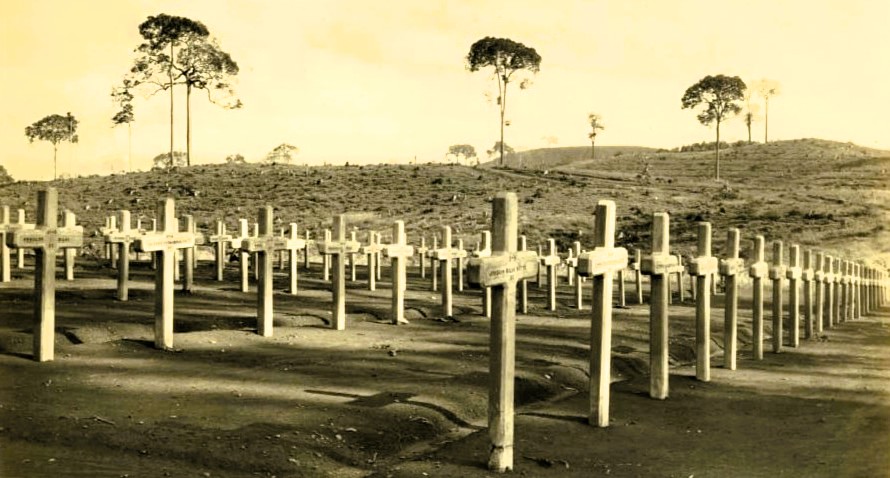
When Henry came to the Amazon, they lived in wretched adobe huts, and they died of insect poisoning, and typhoid infected their drinking waters, and their morals were none too good. They wore little clothing because the sun was so hot, and they had many children and many wives, these “syringieres,” and they gathered the rubber from the rubber trees and sold it in baskets in the seaport of Para.
They were a sleepy, good-natured people, very primitive and perhaps a little bit content with themselves and their own lives.
But Henry’s emissary came and he saw the fertile rubber trees and he knew that in his faraway kingdom of Detroit, his lord and master was sorely in need of a rubber field all his own, in order to have rubber for the tires of his flivvers. It was costing his lord many hard earned dollars to purchase the rubber which the brigands who had captured the rubber sources and rubber markets of the world sold to him.
And so, Fordlandia was born, and great changes came to the people of the Tapajoz River.
Detroit In the Amazon
THERE by the silent waters of the Tapajoz, sprang up a little Detroit.
Henry built the houses for his workers and subjects, not wretched adobe huts, but modern American four room houses, with baths, modern drainage systems, telephones and electric lights, and a little plot of ground in the backyard for a garden.
And when this was done, a set of laws were drawn up for the people of Fordlandia, and first and foremost of these laws, was that every Sunday each worker must go to church and never, not even one day a week must he sleep with an unmarried maiden.
This is the first commandment of Fordlandia. If there is any breach of the moral code established, drawn up, administered and judged by Henry the First, the subject is banished forever from the baths and the electric light of Fordlandia. Then he can go back into the swampy and smoking jungle to live in sin forevermore.
And besides these, Henry brought to Fordlandia a Main Street, movies, jazz, cafeterias, Boy Scouts and four football teams.
Now, it is strange, that when the ambassador came to Fordlandia and he saw the thousands of rubber trees in full growth, he did not immediately begin to cut the trees and take from them their rubber for Henry’s tires. Instead, he cut down thousands and thousands of these trees, destroyed them, laid them waste, and when thirteen thousand acres of land had been cut down and cleared, and thousands of trees with so much useful rubber butchered, Henry’s ambassador, who is chief engineer, began to plant the seeds of new rubber trees. It takes five or six years for a good tree to grow, and the market price may be higher then.
When the new trees are grown up, and modern scientific methods of manufacturing rubber have created the new product, then Henry will have in his hands control of a great rubber field. He will be able to flood the market with his new low-price rubber. And what of the other brigands? Will they let Henry undersell them? They will try to sell cheaper than Henry. And pretty soon in Fordlandia will come lay-offs, and speed-up, and wage-cuts. Then perhaps war. At first the Fordlandians will wish to be back in their primitive innocent pre-Ford paradise. Then somebody will say: We make the rubber. We are the workers. We are strong enough to drive out the chief engineer and declare a republic. A workers’ republic. Then Fordlandia will become Soviet Tapajoz. And the people will live happily ever after.
PDF of full issue: https://www.marxists.org/history/usa/pubs/dailyworker/1934/v11-n301-Nat-dec-18-DW-LOC.pdf
 Revolution's Newsstand