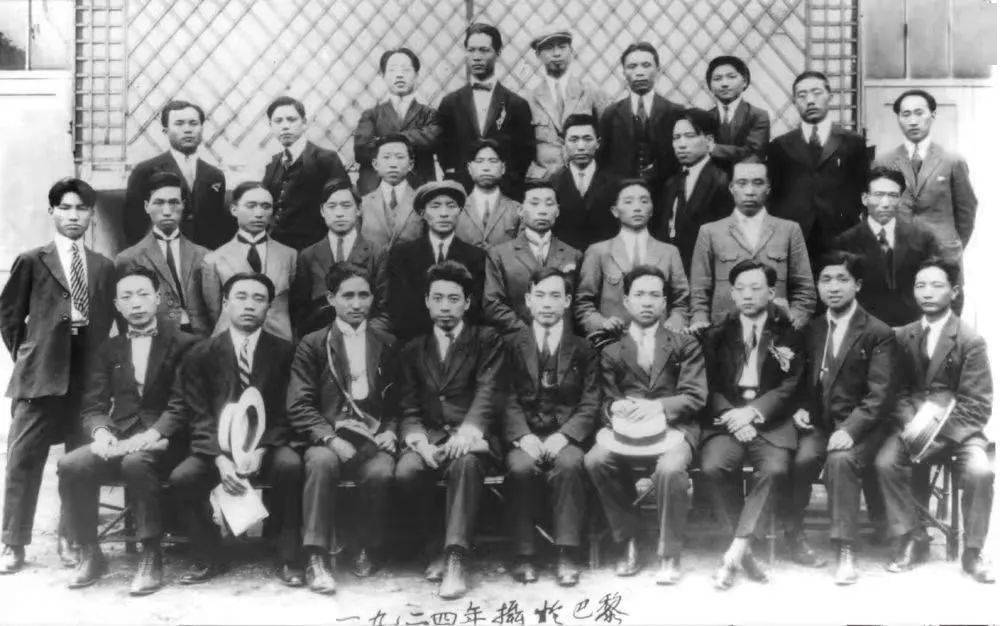
China had seen earth-shaking events in the period between 1924 and 1928, with the position of the Communist Party going from relatively small and a part of the KMT, to a mass organization at war with the KMT.
‘The Chinese Young Communist League’ from Communist Youth International Between the Fourth and Fifth Congresses, 1924-1928, August 1928.
Since the last World Congress great changes have taken place in the Chinese League. From a small organisation of students it has developed into a mass organisation of the proletarian youth. With depleted ranks, but with the rich experience of past events, the League, after the Wuhan events (2nd half of 1927) became illegal.
Up to the time of the last Congress of the Y.C.I., the Chinese League barely numbered 1,000 members, who were in the main students. The majority of the organisations were situated in a few large towns (Shanghai, Canton, Chan-Sha, Pekin). In the university towns, they had practically no relations with the proletarian young workers, and still less with the young peasants. In that period, the mass work of the League was mainly conducted among the students. The work inside the organisation was adapted to its student membership, and its educational work suffered from being too abstract. The Committees of the League were not organised according to fields of work, but according to the class of the membership (Students’ Department, Workers’ and Peasants’ Department). Only in the Spring of 1925 did the Y.C.I. associate itself with the wide political movement, on the arrival of Sun-Yat-Sen in the North.
The Shanghai events and the General Strike in Shanghai and Hong-Kong which followed, as also the boycott of foreign goods, were the basis of the work of the League. The Y.C.L. played a leading role in all these events. Y.C.L.’ers were organisers of workers’ trade unions and committees in order to effect the boycott. From this period, the basis of the work of the League, its membership and the type of its work completely changed. Already in 1925 the League was reorganised on a new basis. Gone were the Workers’ and Peasants’ Departments in the committees which were formed like the usual Y.C.L organisations. Factory Groups were set up in the large towns. The Y.C.L. participated in several economic struggles. Its organisation broadened and launched out into new places. At the Plenum which was held in October, 1925, in Pekin, the membership had already reached 3,000. The organ of the League, “The Chinese Youth,” became the only popular youth journal, and its sales steadily increased. In the South of China, in Kuantung, the first attempts of the Y.C.L at conducting work amongst the peasants were made. In Canton the League organisation, together with the revolutionary forces, took part in the liquidation of the reactionary coup.
At this period, the League for the first time formulated its economic programme and carried it through the trade unions. Several new District Committees were organised in Honan, Wunan and Hupeh, and in the North a Northern Committee of the League was set up.
Several Y.C.L. organisations played a leading part in various important events, for instance: in Tsingtan the League led a strike of workers. For active work in this town several members of the League were beheaded. The work inside the Y.C.L. considerably improved. The political educational work was adapted Together with the to the requirements of the young workers. Party, a school for the training of leading members in the Centre and North of China, was organised.
In the beginning of 1926, after the defeat of the army of Kuo-Sun-Ling and the Second People’s Army in Henan, the work of the League became more difficult owing to reaction. The organisations of Anen (Tsiang Tsi), Dairen Tsingtan and Henan were broken up, and the Shanghai organisation also suffered. Despite the entrance of many new members into the League its total numbers did not increase.
During this period a discussion took place in the League on the question of a Young Kuomintang. The Canton Committee put forward the suggestion that a Young Kuomintang should be organised on the same basis as the old Kuomintang in order to bring the youth into the national-revolutionary movement. The C.C. did not agree to this suggestion, although the decisions of the Fourth Y.C.I. Congress had foreseen the necessity for the formation of a similar organisation in China. As the question of a Young Kuomintang is part of the colonial question at the forthcoming Congress, we omit here the arguments both for and against.
The question of further work amongst students was discussed. A large number were in favour of the formation of left student leagues of youth and for a split of the students’ movement, which was under the control of the League. This suggestion was not agreed to, as at that period the mass of students still worked for the revolution.
For the first time discussion on methods of work amongst peasant youth were raised. It was decided to form youth sections of Peasant Unions and to utilise all possible means for the organisation of the youth into the peasant unions.
All this time the League C.C. paid greatest attention to the numerical increase of its organisation.
For the first time young workers commenced active participation in the work of the League. For this purpose, town district committees were enlarged, meetings of secretaries of factory groups and workers in trade unions were instituted. And finally, only in 1926 did the Y.C.L take steps for the organisation of a Pioneer movement throughout China. The first pioneer sections were organised in Canton and Shanghai at the end of 1925, but in 1926 the organised development of the pioneer movement commenced. The Y.C.L. was forced to have several discussions with the Shanghai trade unions as to the character of the pioneer organisation. The Shanghai trade unions suggested that the Pioneer organisations should limit themselves to cultural tasks and not take part in the economic struggle of the young workers. The Y.C.L. stood for the participation of the pioneers in the economic struggle, since the pioneers consisted for the most part of children of workers who were not protected by the unions. Similarly the theory that the pioneers should form a unified organisation of the Kuomintang type was not agreed to. The C.C. of the League, who stood for the point of view that the class struggle within the Kuomintang would develop and become stronger with the growth of the revolution, rejected this theory and worked for the formation of pioneer organisations based on the class struggle, formally under the guidance of the trade unions, but actually controlled by the Y.C.L.
With the development of the national revolution, the work of the Y.C.L. also grew. During the most successful period of the national revolutionary movement, the Y.C.L. grew to 40,000 members and 120,000 pioneers. The Y.C.L. participated in the struggle for Shanghai, Wuhan, Honan and other towns. In many places the League led strikes of young workers, and sent hundreds of propagandists into the villages, for the organisation of peasant leagues. The Y.C.L played a leading part in many peasant trade unions and leagues. In Shanghai the League published three daily papers for young workers during a period of two months.
The Fifth Congress of the Chinese League played a tremendous role, and considered the results of the work of the League in all spheres. It took place in June, 1927, in Huhan. The Congress laid down the line for work among young workers and peasants, and drew up a programme of economic demands more applicable to the changed situation. The Congress recognised that a correct form of work amongst peasant youth was the organisation of special youth sections of peasant unions and the creation of military sport Leagues of the peasant youth. Steps were taken to place the pioneer movement under League control. The reactionary movement in the first place hit the Y.C.L. Thousands of young Communists were exterminated.
A very great role was played by the League in the struggle against opportunism within the Party. The C.C., on behalf of the League, was the first to associate itself with the Resolution of the Seventh Plenum of the Comintern, and fought for its accomplishment against the sabotage of the leading group of the C.C. of the Party. The Shanghai Committee of the League also played a great part in the Shanghai events, repeatedly criticising the opportunist mistakes of the Party Committee.
Everybody is aware of the actions of the C.C. of the League during the fall of Wuhan, when the C.C. of the Party permitted obvious opportunist mistakes, and quite openly sabotaged the instructions of the C.I. The C.C. of the League during that period wholeheartedly supported the C.I., and openly criticised the C.C. of the Party before the Party masses. Actually the Y.C.L. during that period was the organisational centre of struggle against opportunism within the Party, and to the League can be attributed a great role in the formation of a new guiding Party centre.
The increasing reaction destroyed many Y.C.L. organisations and at the same time caused a number of tendencies to appear within the League, of which the most dangerous was putchism. A struggle was conducted against this. The other side was vanguardism, an endeavour to put forward the Y.C.L. in place of the Party. At the November Plenum of the C.C., the vanguardists was defeated. Apart from this, there was a group which endeavoured to prove the necessity of liquidating the Y.C.L., the motive for this being the necessity of strengthening the Party.
The liquidators were successful in Canton, where actually the organisation was fused with the Party. The same position held good in several districts under Soviet control. The C.C. of the Chinese League fights against these tendencies. In the main it is possible to state that the Y.C.L. is ridding itself of these deviations and is following the lead of the last Plenum of the Y.C.I.
At the present moment the League has 10,000 members. The organisations which suffered the largest losses were the Canton, Kupch and Konan organisations. The Shanghai organisation at the present moment is the best and strongest in the League and has the greatest influence among the young workers.
The role of the young workers during the last period has considerably increased among the active elements of the League, although the training and bringing forward of active workers involved certain difficulties. In some organisations of the League there existed strong anti-intellectual tendencies.
In the new phase of the Chinese revolution, the Y.C.L. takes its place numerically weaker, but greatly strengthened in quality.
PDF of full book: https://www.marxists.org/history/international/young-communist-international/cyi-4th-to-5th.pdf
 Revolution's Newsstand