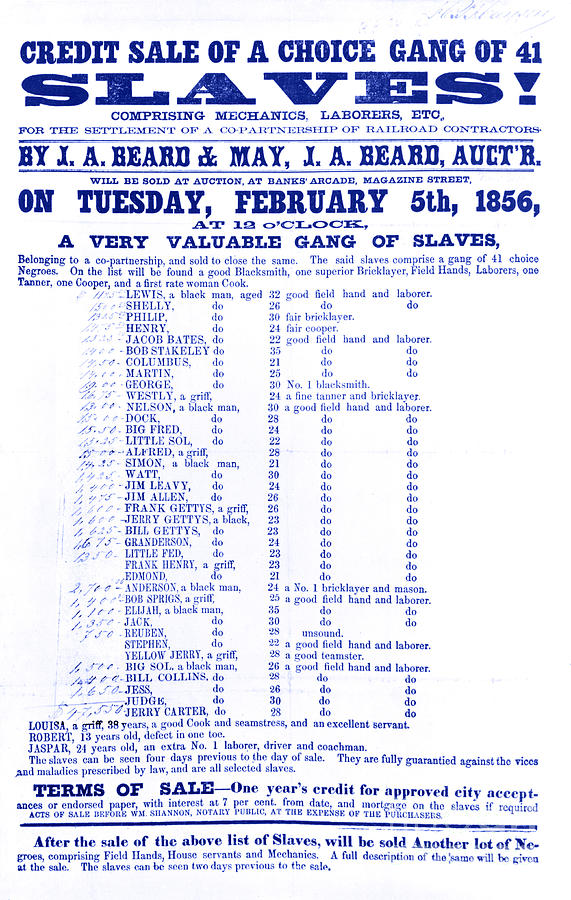
As the official Communist Party moved towards a ‘popular front’ to defend U.S. democracy against a rising fascism during the crisis of the Great Depression, the history of the U.S., its Constitution and founding, as well as notions of ‘bourgeois democracy’ and capitalism’s historic progressivity were again, as it was a generation before, debated in the Left. Clifford denies the notion, in a country founded on slavery and by slave-owners, where the dictates of capital and imperialist expansion have had no limits, of much of a democracy to defend.
‘Was the United States Ever a Democracy?’ by Maurice Clifford from Class Struggle (C.L.S.). Vol. 5 No. 6. June, 1935.
There are some people, who believe that Fascism cannot come to America because of the “deep-seated traditions of democracy” that prevails here. Certainly Fascism is not inevitable. But just as certainly must we ask with clear minds, “Was the U.S. ever a democracy?”, in order to see how effective a weapon American democracy may possibly be against the rise of Fascism.
Democracy is a type of State in which the people are supposed to control political affairs either directly or through representatives. Democracy includes as its fundamental characteristics the right to vote and to hold office, but it also takes in a host of civil liberties in which the right of free speech, press and assemblage are the most prominent.
It still seems to be taken for granted in this country that democracy has existed ever since the Revolution. Even Lenin made the stupid blunder of declaring in his famous “Letter to American workers”, that the American Revolution was a war of the people against English robbers. In reality the Revolutionary War had a very slight immediate effect upon the extension of democracy. The U.S. began its history as an anti-democratic republic with such restrictions upon voting and office holding as made it an open dictatorship of the few very wealthy plantation owners and slave holders, merchants, bankers, lawyers and such over the vast majority of the population.
Since earliest colonial times, land property qualification was the one outstanding and universal requirement and the dominating consideration for almost 200 years. In New England, when only company members could vote, strict limitations had been put upon the right to join the company and after the companies had ceased to exist and the colonies became purely political institutions the same limitations of the right to vote were carried over. So it was that in the original States, which formed constitutions in the early years of the Revolutionary War, very little democracy existed. The hastily adopted constitutions embodied the franchise restrictions which were already fixed in the colonies and after the establishment of independence these limitations were continued. In every one of the thirteen original States, a property qualification held and in five of them the property had to be in the form of real estate. With the rise of American capitalism and its commercial and industrial bourgeoisie came the breakdown of the land property qualification. The modifications, however, did not abandon the principle that only property owners might vote but substituted one form of property for another, tax paying or personal property in lieu of real estate. These reservations persisted well into the middle of the 19th century, disappearing for the most part with the advent of the Civil War (though retained by Delaware until 1897).
To understand fully the weight of the restrictions, which were then in force, we must epitomize the distribution of the country’s wealth. Of the four million Americans, only a few thousand persons owned nearly all of the land in great estates and vast plantations. Meanwhile a large minority of the population –mostly craftsmen and small farmers—eked out a precarious living from the tiny plots of land they owned or rented. These two classes were the free men and together they were somewhat less than half the total population. The majority of the American people were either white indentured servants or Negro slaves. In most of the South the Negroes were more than the white population, while in Pennsylvania they were 20% and in New York 16%. These people—the mass of laborers—owned nothing, not even their labor power. We may say hopeless, indeed, was their prospect of attaining the status of free man and free holder necessary to enable them to take part in the government. Of the free working class very few ever could take part in the government or cast a vote in the whole course of their lives. At this time wages paid free laborers averaged less than $2 a week, farm labor getting 31 cents a day, while carpenters were sometimes paid as much as 52 cents for a day’s work. No crime jailed so many as debt. Children, whose parents were unable to maintain them, were bound into forced labor for period of years making a virtually insurmountable the mountain of restrictions placed in their path to democracy.
But the right to vote, even when secured, did not carry with it the right to hold office. Thousands of men who could vote were by law hopelessly debarred from ever holding any office, becoming a Judge or Legislator or reaching the position of Governor of the State. Many States required that office holders should be rich. In one State, the Governor had to own 500 acres of land. In a second, he had to have an estate of $25,000 and in yet another of $50,000. For a seat in either branch of the State Legislature qualifications were of a similar nature. In Maryland, Delaware and New Jersey, legislative candidates had to be possessed of $15,000 real or personal property. South of Pennsylvania the land requirement was general. To become a Senator in North Carolina, one had to own 300 acres, while in South Carolina, Representatives had to own at least 500 acres and ten Negroes.
The American Revolutionists were not social revolutionists. Their break with the English King and Parliament was revolutionary in form—overthrowing British rule—but not in content. America’s ruling oligarchy was not in the least democratic. They were fearful that the masses of oppressed, enchained and enslaved population might seize upon the demands, “no taxation without representations”, and “government with consent of the governed”, and attempt to carry forward the bourgeois revolution in their own interests under the banner of democracy. As Madison wrote to Jefferson in 1788, “To secure the public good and private rights against the danger of the propertyless or proletarians and at the same time, preserve the spirit and form of popular government , is then the great object to which our inquiries are directed.” So it was that our first political parties were not, even in name, democratic parties. The followers of Thomas Jefferson, leader of the opposition to the avowedly aristocratic Federalist Party, avoided the very name Democrat, preferring to call themselves Anti- Federalist Republicans. It was not for fifty years, until in Andrew Jackson’s day, that the name “Democrat” was openly used as a Party appellation.
Our Constitutional Dictatorship
It is a very familiar fact to historical materialists that the American Constitution aimed to perpetuate the conditions of slavery, pauperization and oppression of the masses then extant. Alarmed by Shay’s Rebellion—the most highly organized and most nearly successful of the widespread attempts of the poor farmers and craftsmen to democratize the government—the wealthy ruling class soon began to talk of the dangers of democracy. In the guise of discussing commercial relations the tycoons of the times, led by Washington, Madison, Hamilton and others, determined to establish a powerful, new national government to preserve their class hegemony.
A Convention was called in Philadelphia, which for four months sat in secret session. The delegates were hand picked by the State Legislatures which were composed only of wealthy property owners, who were elected not by all of the people, but only by the big and little property owners and tax payers. Rufus King, delegate from Massachusetts, wrote: “If Massachusetts should send deputies, for God’s sake be careful, who are the men.” From the South came slave owners, planters and lawyers; the North sent merchants, bankers, ship owners, landlords and their lawyers. Rhode Island sent no delegates at all and of the sixty-five sent by the other twelve States, ten did not even attend and sixteen declined or failed to sign the document which was adopted. The other forty-four exceeded the powers granted by the Continental Congress—merely to revise the Articles of Confederation—by preparing a Constitution to go into effect as soon as nine of the thirteen States had ratified it.
This secretly prepared Constitution is crammed with all sorts of anti-democratic provisions. The governmental apparatus was divided into three mutually inter dependent divisions, executive, legislative and judicial. Yet each concentrated a high degree of power in itself. The President was made a strong executive with powers greater than those of the King of England at that time or of any elected European State officer since. The President could veto legislation and appoint (concurrent with the Senate) administrative officials and Judges of the federal inferior and supreme courts. His election was as far removed from popular vote as possible. He was chosen by a College of Electors, whose method of selection was left to the choice of the State Legislatures. Should the votes of the Electors give no one a clear majority the House of Representative was given the power to elect the President. “But in choosing the President the vote shall be taken by States, the representation from each State having one vote.” In 1824 Jackson and in 1876 Tilden—the “people’s choice” for President—were robbed of the office when the election was thrown into Congress. The “people” counted for little.
The law making power was subdivided into a bi-cameral legislature with only the House of Representatives chosen by the “people” directly. The Constitution itself provided that only that minority of the population, which could meet the high property qualifications necessary to vote for the State legislatures, could elect Representatives. Thus the restrictions upon voting then prevalent in the States were set right into the constitutional law of the land. To check the responsiveness of this body to the wishes of the masses, the Senate was set up. Senators, like the president, were not to be elected by the “people”, but were to be chosen by the State legislatures. The big property owners, elected by little property owners, selected the biggest one of all to be the U.S. Senator. It took a century and a quarter and a Constitutional Amendment to give the people the right to elect Senators. Should the people wish to turn out “their” representatives from office, they may have to wait two to six years to do it. Moreover, a higher minimum age was set for office holding than for voting and a longer term of citizenship required.
Under the Constitution, the Judiciary is appointed for life by one man, the President and like him they are not directly responsible to the people. Nor are they removable from office except through impeachment proceedings, which the Senate alone has the power to try. They become, thereby, absolutely independent of the will of the people. As early as 1794 the Supreme Court arrogated to itself the power, not granted by the Constitution, to declare “unconstitutional” laws passed by Congress. Many important cases have been decided by a vote of five to four and with the rapid development of the Court’s power in recent years, in a number of instances the vote of a single Judge was often sufficient to nullify legislation. Of all the remnants of monarchy, the life tenure of office was the most flagrant and offensive and opposed to the democratic principle of responsibility to the people. Soon an assault took place against the independent judiciary. Impeachment proceedings were instituted and for a time “Judge-breaking” became wide spread among the federal and States’ judiciary. But nothing came of this protest.
The “Fathers” also provided that the Constitution, once accepted, could be amended only with the greatest difficulty. It required two-thirds of the members of both Houses of Congress or the Legislatures of two-thirds of the States to move an amendment and approval by the Legislatures or Conventions of three-quarters of the States to put an amendment into force. So thoroughly undemocratic was the Constitution that it did not even mention civil liberties. Opposition to it on this score led to such strife that in order to get the Constitution passed it was agreed to add the first ten amendments, “safe-guarding” civil liberties, immediately after its adoption. These first ten amendments declared that the Federal Government could not prevent freedom of speech, press and assemblage; the right to petition; the right to keep and bear arms; the right to a speedy trial by jury upon indictment of a grand jury; and prohibition of excessive bail or fines and cruel punishments. But one after another, these provisions of the “Bill of Rights”, have been nullified by judicial decision, executive action or legislation.
Though the Preamble of the Constitution starts off, “We the people…”, not 4.5% of America’s four million voted on the question, only 100,000 votes being cast for the adoption of the Constitution and 80,000 against. The vast majority of the poor people—the small farmers, frontiersmen and craftsmen—that is those who could vote were opposed to it, while the millions of Negro slaves and indentured servants were not able to voice their opinion at all. The very sharp class demarcation for and against the Constitution was crystallized in the nick naming of its supporters as “Washingtonians” and its opponents as “Shayites”. So great was the Federalists’ fear that a strong fight against them might materialize as time passed that they immediately began a high pressure campaign for the Constitution. Their tremendous financial resources were thrown into the fight to establish newspapers and buy public opinion. Hamilton’s, Madison’s and Jay’s essays—now collected as “The Federalist”—played an important role in the battle of words. But they were not above using gangsters’ strong arm tactics to secure their end. At once they called State Conventions to ratify the Constitution in a hurry and approval by five States was pushed through within one month. In Pennsylvania to prevent hasty approval, the “Antis” had remained away from the Convention. To complete a quorum the Federalists broke into the homes of the Anti-Constitutionalists and dragged them to the State House where they were forcibly held in their places. Business was rushed through and the Constitution was ratified by a vote of 43 to 23. The opposition gained strength as time passed, the vote in the three largest States being very close: Massachusetts, 187 to 168; Virginia, 89 to 79, New York 30 to 27.
The Constitution of the United States proved to be an excellent mechanism through which the few thousand large slave owners for many years were able completely to dominate the entire country’s policy. This slaveocracy controlled the several hundred thousand small slave owners and ruled all the twelve million people in the South at the time of the Civil War. Being allowed Congressional Representation out of all proportion to their numbers—the Constitution guaranteed additional Representatives for three fifths of all the Negro slaves—they were able to take the leading role in the Federal Government. Through the Missouri Compromise they maintained in the Senate a voice equal to that of the North and West combined. These few thousand Southerners clogged all the pores of the higher apparatus and they predominated in all three divisions of the government, Legislative, Executive Administrative and Judicial. Most of the Presidents were their henchmen and through appointments they had a majority of the Cabinet posts and the Supreme Court in which the leading Judges were theirs. Their majority in the high Army posts enabled them to prepare for the inevitable insurrection and shift all the arms to the South. On this basis they dominated not only the South but the entire nation of 32 million at the time of the war.
How Much Did Democracy Grow?
The Southerner Jefferson’s ideal of government was to decentralize and cut its business to a minimum but he did not abandon the Southerner Washington’s hegemony of the slaveocracy. On the other hand, Andrew Jackson’s protest was directed against both varieties of special privilege and stood for the combination of the small Western agrarian. How little all this actually affected the masses could be seen by the election figures. In 1824 the voting percentage was but 3% when only 366,999 of the nations 11,000,000 voted either for Jackson or John Quincy Adams in the Presidential election. Though Jackson had received the highest number of electoral votes the election was thrown into the House of Representatives, which chose Adams President. It was not until four years had passed that the number voting exceeded the million mark and the voting percentage jumped to 9.1%.
Notwithstanding the rapid growth in population generally, the increase in the percentage sharing the democracy of the ruling class was slight. From 1828 through the Civil War the voting percentage averaged about 12% of the whole population. From the Civil War through the first two decades of the 20th century the average was only 17%. Only after the adoption of the 19th Amendment to the Federal Constitution in August, 1920, which granted the right of suffrage to the women of the country, did the voting percentage then jump to 25% of the whole population. Since then, each Presidential election has seen a slight increase, the percentage in 1932 being 31.9%. In the last Presidential election the number voting reached about 40 million the very largest vote ever cast in the history of the United States. Standing alone, these figures may evoke shouts of patriotic pride, but when we compare them to the prevailing suffrage figures for other countries where millions of people are enfranchised we see such a huge disproportion in favor of these other nations that we must stifle these shouts unuttered in our throats.
For example, in the last British General Meetings in October, 1931, 21 million out of a population of 44.8 million, or 50%, voted. Germany held an election in November, 1932, when 35.4 million of the 65 million German people voted. This vote was 54% of the total population. Four months later another election brought 62% of the population to the polls, 39.3 million votes being cast. This comparison is staggering; a country with half our population casts a vote equal to that in the United States. How can we account for these discrepancies? Further, the highest vote ever cast in this country for any single working class was the Socialist in 1920 of 920,000 for Debs. Of the nearly forty million votes in 1932, only one million went to the candidates of all working class parties. Meanwhile in Germany fourteen million voted for the Socialist and Communist candidates.
The Disfranchisement of the Working Class
First of all we must categorically state that in America, most of those who vote are not workers and most of the proletariat does not vote. In fact, the U.S. is an excellent example of a country where the working class has been disfranchised. That the ballot is limited to the bourgeoisie and petty bourgeoisie in the main, is well illustrated by the straw votes of the “Literary Digest”, which have been such close forecasts of election returns. The many millions of “Literary Digest” ballots are sent to a mailing list taken from telephone directories automatically excluding the vast majority of the working class who have no telephones.
Throughout the history of the barring of the workers from a voice in the government the target of direct attack has ever been the foreign born and the Negro. All during the development of the Pacific Coast the Chinese, Mexicans and Indians were openly excluded from the ballot and today Asiatics are denied citizenship and its “rights”. The wave of immigration due to the corn famines in Ireland led to an intense anti-foreign sentiment on the Atlantic seaboard. Advanced by the “Native American Party” the literary tests—later to be so freely used against the Negroes– were brought forth in the pre-Civil War years especially as a bar to the alien. It is true, however, that in the mid-west and Great Lakes regions the suffrage was extended to foreigners to induce them to settle and to develop the country. In seven States as late as February 1917 aliens could vote after declaring intention to become naturalized, but this was no longer true after the last war. However, it should be noted that in all these regions the foreign born were greatly needed to develop the country and could become small property holders, whereas in the East and West coasts the attacks were launched against them as unskilled laborers.
Before the Civil War slavery prevented the Negroes from voting. Afterwards they were violently excluded from the polls by organized terror of the K.K.K. and other bodies, by manipulation of the ballots, false counting of votes, repeating, the sudden removal of the polls and illegal arrests the day before election. After a period of violent intimidation it occurred to the Southern whites that there were perfectly legal and respectable ways to eliminate the Negro from voting: Adultery and those crimes involving moral turpitude, conviction as a tramp or vagrant and crimes against the election laws. Complex election laws were set up to befuddle the Negro. On challenge he must take an oath in minutest detail declaring himself qualified to vote and he must swear that he is not guilty of any of the long list of crimes mentioned. And this oath must be supported by someone known to the election officials. Further legal measures included the abolition of a great number of elective offices and making them appointive by the Governor, heavy tax requirements and “education” or “literacy” tests. It must be remembered, too that in the days of slavery it had been a crime to teach a Negro to read or write, violation of this law by a Negro sometimes being punishable by death.
A problem that always presented itself was how to exempt some special favorites from a test which was meant to bar only Negroes but which had to be worded “impartially”. In dealing with the “foreigner” the problem had been: How to frame a tests that would rule out the illiterate Irishman, say, and not the ignorant American. In the case of the Negro the task was to disfranchise all Negroes whether illiterate or not. One way out was to enact an “understanding clause” which required the voter to construe the constitution when read to him and made the voting registrars absolute judges of the most questions of interpretation over which constitutional lawyers had battled for decades. Another way of barring the Negro was through the enactment of “grandfather” clauses which allowed those to vote whose grandfathers were citizens, etc.
Aside from the eleven Southern slave States before the Civil War everywhere in the North, Negro suffrage was denounced in an unmistakable manner, in constitutional conventions and at the polls. All but six of the Northern States also had denied suffrage to the Negro; fifteen excluded him by law while six more had altered their constitutions to bar him. Even the few States which never excluded the Negro erected special barriers for him to climb in addition to those required of the whites. The experience of New York was typical where at these “popular” referendums (1846, 1850 and 1867) equal rights for the free Negro were defeated. Only in 1876 were these special barriers lowered and the three year residence period, ownership of $250 property and tax paying for a Negro to qualify as a voter were finally abandoned.
Even if the Negro can climb over all the trick tests put in his path to the ballot box, his vote can be but a meaningless rubber stamp approval of candidates he cannot name. In the South there is only one election contests and that is in the democratic Primaries from which he is barred and the bar has been but recently sustained by the Supreme Court of the United States. So have the courts sustained all the other abuses with which the Negro has been burdened. In the courts all the burden of proof has been laid upon the negro to show that he was being denied a “right” and they took advantage of all the technicalities and ambiguities of the law to make the Negroes’ problems all the harder. Witness the fact that it is only now that the question of the systematic barring of Negroes from juries has come up in a decisive manner.
The Negro people are almost 100% toilers. As unskilled labor on farm, in factory, mine or railroad the Negro represents the basis of the working class as a whole and the vicious blows against Negro suffrage epitomize the attack on the democratic rights of the entire working class. Obviously, the Negro has no chance at all. Surely the masses of Negroes can have no illusions that under the capitalists’ laws, courts and Constitution, they will be allowed democracy to vote themselves and their class into power.
The capitalists have provided all sorts of barriers to prevent the workers from ever voting themselves into power. The minimum voting age, residence period, literacy and understanding taste, property and tax paying requirements as well as disqualifications upon paupers and delinquent tax payers, are all aimed directly or covertly at limiting the workers’ voice in the government.
Since 1919 the voting age of German men and women has been set at 20 years, while in Russia all citizens above 18 years of age, except those especially debarred, have the right of suffrage. But the minimum age limit of 21, universal in the U.S., bars several million of the most militant section of the nation’s toilers from participation in the government. In Missouri, as far back as 1820, a fruitless effort was made to reduce the age limit to 18 since everybody had to do a man’s work and boys of 18 were already householders and independent. Under capitalist law these young people are infants yet they are a vital factor in his profit structure. Well he knows how dangerous to his interests it might to place the ballot in the hands of American youth.
Today 13 States have a property ownership qualifications for voting, require payment of general or Poll taxes, bar delinquent tax payers or disqualify non taxpayers. This reversion to a tax paying requirement cannot be viewed merely as a “club” against delinquent tax payers, to deny them the franchise until all assessed taxes have been paid. Rather must we regard the Poll Tax as a vicious attack upon the right of the workers to vote. Because the Poll Tax is the most “democratic” of taxes, each individual counting for one and each paying the same tax, it falls most heavily upon the workers and the poor farmers. Not only must the worker, who wishes to vote, deny his family some necessities of life in order to pay this tax out of his meager income, but he must preciously guard the receipts for it and be able to show them to the Registration Board to meet fully even this requirement.
If property qualifications are used to bar workers from the ballot they also are used to keep him from holding office. Not considering the tremendous financial resources which are needed to conduct an election campaign, the expenses of which often run into the hundreds of thousands of dollars. There are very definite property qualifications for office building. For example, in New York State today, as must be the case elsewhere, this is true for service on juries. Prospective jurors, their names drawn from the voting lists, are required to fill out blanks stating their occupations, etc., and they must swear that they own $250 in property—above all debts and liabilities. If they do not meet this property qualification they are ineligible for jury service. While in recent years, this law has not been enforced, jury officials not questioning jurors about their wealth, it still remains on the statute books as a bar to the poor worker. This applies not only to petit or trial juries but especially to grand juries, which usually are hand picked and are always affluent or friends of the “politicians”. In all of the nearly two million people in New York County that might be eligible, there are no more than 500 names on the grand jury list. The role of the grand jury is far more important than the layman may imagine. In all felony cases, and in some misdemeanors, after a person is held by a police magistrate to answer for a crime, the grand jury investigates the facts of the occurrence. If it feels that a crime has been committed, it will indict, charging a specific person with a specific crime. Being left to its determination, the grand jury drops the cases of many wealthy men which should be persecuted and persecutes many workers whose cases should be dropped.
Millions of unemployed workers, dependent upon the relief “support” of the State, which makes no provision for payment of the Poll Tax are very neatly deprived of their “inalienable” and “democratic” rights to participate in the government. Alabama specifically requires that its voters be engaged in some employment, thus barring from voting thousands of citizens, who are only seasonally employed, or who are wholly unemployed. Some States have openly denied the vote to citizens who have received relief. Besides, no provisions whatever are made to allow citizens as “work relief” to vote, especially those who may be in CCC Camps and other camps far from home.
Every one of the forty-eight States requires a previous residence period for voting, six require two years in the State, the others a year or less with a proportionate time requirement in the county and election district. These are additional burdens upon the propertyless and footloose worker since, due to seasonal and other unemployment, millions are forced to lead a migratory existence in search of work, living in no one place long enough to acquire a legal voting residence. To enforce these restrictions fourteen States and many cities too, require voters registration, which not only prohibits from voting many moving into or out of the city but stops those, who are moving about within the city itself. In Washington, D.C. half a million people living there have no vote. Legion, indeed, must be the workers, who are prevented from exercising the “right” to the franchise due to these regulations. And each day sees more qualifications added, such as the measure proposed in Colorado, the “Intelligence Test Bill”, providing for mental tests for prospective candidates before their elections, etc.
Let us now summarize the methods of our democracy so far as results go. For 144 years half the American population, the women, were excluded from voting. Today, 13 million Negroes, barred before the Civil War by slavery, are still disfranchised by legislation and terror. Four million working youth are termed “infants” and excluded from participation in the balloting. Thirteen million adult foreign born must wait five years to become citizens and vote while some aliens never can become naturalized. Many States disqualify United States soldiers and sailors from voting. A mountain of regulations, tax paying, property owning and employment requirements, education, literacy and understanding tests, etc., etc., effectively bar the poorest, the most revolutionary sections of our toiling population from participation in our “democracy”?
The Communist League of Struggle was formed in March, 1931 by C.P. veterans Albert Weisbord, Vera Buch, Sam Fisher and co-thinkers after briefly being members of the Communist League of America led by James P. Cannon. In addition to leaflets and pamphlets, the C.L.S. had a mostly monthly magazine, Class Struggle, and issued a shipyard workers shop paper,The Red Dreadnaught. Always a small organization, the C.L.S. did not grow in the 1930s and disbanded in 1937.
PDF of full issue: n/a
 Revolution's Newsstand