The 1910 state of the working class and the Socialist movement in Erie, Pennsylvania.
‘Erie, Cauldron of Capitalism’ by R.W. Tilloston from the Chicago Daily Socialist. Vol.
Pennsylvania City Has a Great Output and Low Wages
Erie, Pa., May 26. Although nearly a score of the most active members in the Socialist movement in Erie, including speakers and writers, have left for other parts of the country, thus leaving only a few of the English-speaking comrades at the helm, yet the party or organization continues to grow with a certainty.
The Socialist movement in Erie is composed of three affiliated branches. English No. 1, Finnish No. 2, Polish No. 3; in addition to a branch at Girard and one in Corry, with a society in Greenfield, comprising the Local Erie County.
Jewish Branch Is Formed
A Jewish branch had been lately organized, also German and Italian branches. The good work started by these branches has not been lost though the organizations have disbanded. Besides these organizations, there are in Erie a Roumanian Socialist labor ring, and a Hungarian Socialist labor ring. An old Socialist Labor Party section still exists in Erie, with a small Polish branch, but no trouble is experienced with the Socialist Labor Party men, as the spirit of working class unity is becoming more and more the issue. The No. 1 branch owns and controls the publication of a semi-monthly paper, called “The Comrade,” 173 E. 17th St. This is a four-page, standard size, paper, filled with bright and sharp articles from the pens of local writers. Its circulation is confined to the city mostly, and has been the party’s most powerful weapon in the propaganda. It has been running for a year and a half and has circulated so extensively among the Catholic workingmen of Erie that the Catholic Chronicle, published in Erie, has seen fit to publish on Sunday, May 7, the vilest and most false attack upon the party that has ever appeared in print for a long time. To this the local paper, The Comrade, made but one reply, the circulation of more literature among the Catholic workers, and dismissing the whole attack as but a trifling thing that was not even worth the trouble of a reply. As a result of the attack, more subscriptions are coming in at headquarters.
Took Up Politics
The activities of the Erie Socialists among the unions of Erie are indicated as they were never indicated at the meeting of the Central Labor Union on Wednesday night, May 4, at Labor Temple Hall. On this night the communication from the Pennsylvania State Federation of Labor on political action was taken up for discussion. The Socialist delegates in the session arose to attack the call for a “Union Labor Party” one after another, Comrade Joseph Stain, from the machinists’ union, leading the attack, and moving for the filing of the call for Union Labor Party candidates. He was rapidly followed by the other delegates who were Socialists, each one of them ripping the proposed “Labor Party” up the back, and showing the other members present that “the only working class party was the Socialist Party.” To these arguments the old party delegates present could frame no answer, with the consequence that in Erie there will be no Union Labor Party. It is planned that the labor unions of Erie will erect in a short time a large and comfortable labor temple, which will accommodate all the unions and Socialist societies of the city. The unions already own a fine large piece of property only one block from the business section, and have almost the required sum of money on hand.
Strong Labor Paper
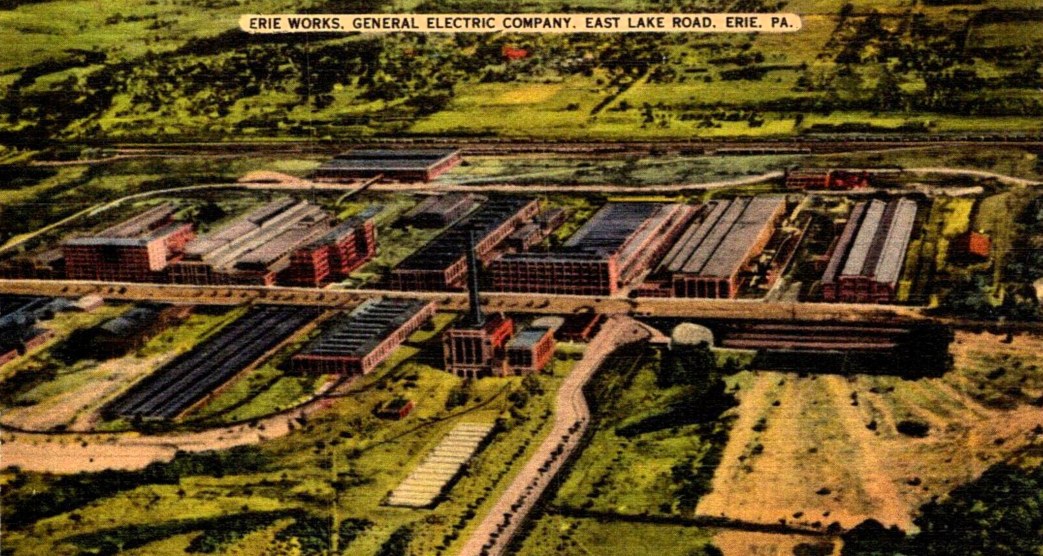
There is published in Erie a fine large weekly paper of eight pages, known as the Union Labor Journal, which is endorsed by all the unions and contains much Socialist writing, almost every issue carrying a special article from R. Hunter. Mr. R. Garren, the editor of the Journal, is not a member of the party, but is a Socialist nevertheless. Mr. Garren will undoubtedly be remembered by many of the old-time Socialists as having been connected with the old “Erie People,” of which J. Wanhope, now editor of Wilshire’s, was editor. Erie is fast becoming one of the great industrial centers of the nation. It is already noted for its low wages from one end of the country to the other, and for having the largest output of boilers and engines of any city in the world. The gigantic plants of the Erie City Iron Works, Nagle Boller and Engine Works, Ball Engine Works, Pennsylvania Works, and scores of other great shops producing other machinery. The General Electric Works, famous for their inhuman methods against their strikers in their plant in Schenectady, N.Y., are at present constructing plant east of the city, which will employ 12,000 men, and add to the population 40,000 people. An idea of the size of the plant will be had from the fact that 38 miles of railroad tracks will be laid to connect the works together. Twenty great buildings, in size 800×160 feet, are being built. They will be five and six stories in height, and will cover a space of 350 acres.
Big Strike Some Day
The Socialists of Erie are keeping an eye to these great increases in the local Industries and preparing in every manner for the education of the great masses of workers who will some day Initiate a second McKee’s Rock general strike. Such belief is not exaggerated in Erie, when one considers that the various boosting organizations are advertising the lowness of wages and the scarcity of labor troubles, and ere getting as a result the moving in of many outside industries; indeed it is freely said that that was one of the principal inducements for the General Electric Company. Some years ago one of the members of an outside industry contemplating removal to Erie was told that “plenty of men could be secured in Erie at $1 per day!”
The comrades of Erie were all greatly encouraged by the Milwaukee victory and the No. 1 branch was one of the first to send in congratulatory respects to the Milwaukee comrades. The party has put up a full ticket for the coming elections, the ticket being headed by the popular union machinist, Comrade George B. Allen of Corry, at which place another branch, called Corry No. 1, is in active swing. Comrade Allen Is out for congress In the Erie and Crawford districts, and polled a thousand votes in Erie County alone when Debs, running for president at the last national campaign polled about 1,100 votes in the city and county. The Erie comrades join in the new enthusiasm born part of the Milwaukee victory, part of the great labor strikes in Pennsylvania, and part of a natural revival of activity which the real Socialist never loses for a great length of time. The county committee meets on the first Wednesday of each month at 1321 Holland street. At this address the comrades coming through Erie will at any time find the county secretary, Comrade F.T. Gillis, who will appreciate a visit from outside comrades. Also Comrade G.W. McKean, editor of The Comrade, will be glad to meet comrades coming through Erie, at his residence, 446 E. 7th street, at any time.
The Chicago Socialist, sometimes daily sometimes weekly, was published from 1902 until 1912 as the paper of the Chicago Socialist Party. The roots of the paper lie with Workers Call, published from 1899 as a Socialist Labor Party publication, becoming a voice of the Springfield Social Democratic Party after splitting with De Leon in July, 1901. It became the Chicago Socialist Party paper with the SDP’s adherence and changed its name to the Chicago Socialist in March, 1902. In 1906 it became a daily and published until 1912 by Local Cook County of the Socialist Party and was edited by A.M. Simons if the International Socialist Review. A cornucopia of historical information on the Chicago workers movements lies within its pages.
PDF of full issue: https://www.marxists.org/history/usa/pubs/chicago-daily-socialist/1910/100527-chicagodailysocialist-v04n182.pdf
 Revolution's Newsstand