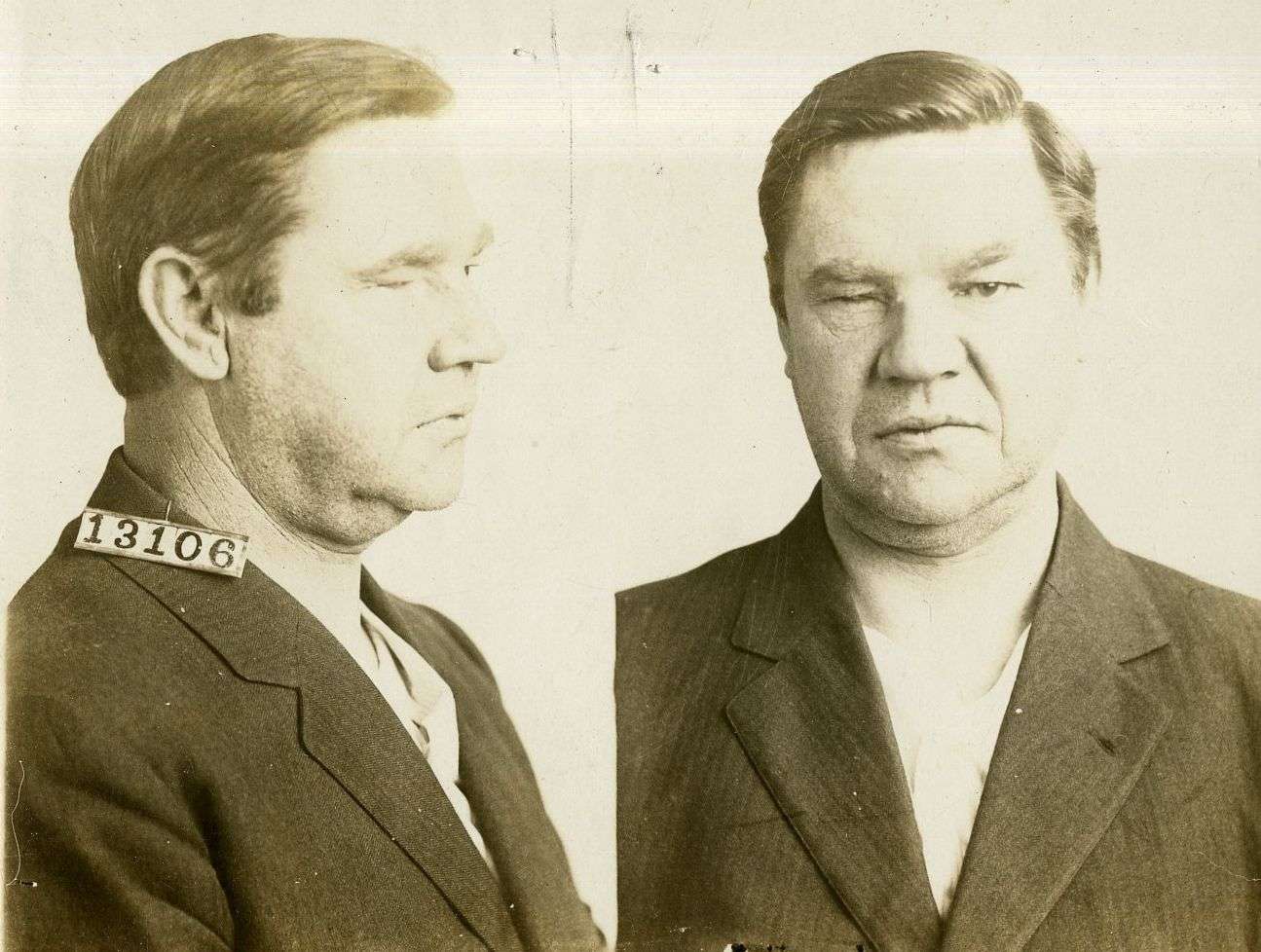
Representing not just two political perspectives in the Socialist Party, but two classes, it is fair to say that there was no love lost between Party leader, the lawyer Morris Hillquit, and the revolutionary miner, William D. Haywood. Though a member since 1901, like so many other radicals, Haywood came into active Socialist Party work during Debs’ 1908 run, was elected International Delegate to Copenhagen in 1910, and then ran for the National Executive as the Left’s standard-bearer in 1911. Serving as a manifesto and program for that run Haywood wrote, with Frank Bohn, among the most important texts in U.S. left history, ‘Industrial Socialism.’ Quickly pounced on by the Party’s Right, pronouncements in that book would be used the Right-Wing to alter the Party’s constitution at its next convention to deny Left-Wingers membership. Haywood,, like many U.S. revolutionary Marxists in the pre-war period, defined himself as an ‘Industrial Socialist’ and reformist opponents, like Hillquit, ‘Political Socialists.’ Those definitions do not mean that each side was opposed to political or industrial action, rather where the power to enforce political and economic demands lay. The Political Socialists focused on the ballot box, the Industrial Socialists on the workplace. Those opposing views are made clear by Haywood’s defense and challenge in a famous letter to Hillquit’s home-base newspaper, the New York Call.
‘Socialism and Law’ by William D. Haywood from The New York Call. Vol. 4 No. 338. November 29, 1911.
Editor of The Call:
In Monday’s issue of The Call Comrade Morris Hillquit, under the caption of “Socialism and Law,” submits a brief presumably as a criticism of a paragraph found in “Industrial Socialism.” His commentary enters into many generalities which one finds difficult to reply to in the limited space of a press letter.
There are features of Comrade Hillquit’s letter that he might well be called upon to answer in a debate before the party membership of New York in any given locality, or for that matter in an open meeting. It is a well known fact that Comrade Hillquit and myself represent two different schools of thought which at the present time are causing general discussion in the Socialist movement. Particularly can this be referred to as the growing demand for industrial expression in the ranks of the Socialist party. On this question of industrial organization I am willing to meet Comrade Hillquit in debate, at time and place convenient. Our defense of this position is the real essence of Comrade Hillquit’s contention.
I am inclined to this belief from the following very pointed remarks of Comrade Hillquit: “Any indiscreet remark or expression is sure to be quoted against us forever and ever. And if Comrades of the prominence of William D. Haywood and Frank Bohn publicly proclaim a doctrine so indefensible and so much at variance with the accepted Socialist position, it should be disavowed in our party press, promptly and emphatically.”
It will certainly be agreed that Comrade Berger is more prominent than either of us. I would ask Comrade Hillqult whether at any time he publicly criticized or disavowed the article indited by Comrade Berger, “Bullets or Ballots,” in which Comrade Berger urged every Socialist and union man in the United States to arm himself with a modern improved rifle. Was this “ethically unjustifiable and tacitly suicidal?” And if so, why did not Comrade Hillquit at once “promptly and emphatically disavow this doctrine”? Is it not because on the question of trade unionism he and Berger are hand in glove?
Comrade Hillquit challenges us on the following paragraph:
“When the worker, either through experience or a study of Socialism, comes to know this truth (the economic foundation of modern ethics and jurisprudence) he acts accordingly. He retains absolutely no respect for the property rights of the profit takers. He will use any weapon which will win his fight. He knows that the present laws of property are made by and for the capitalists. Therefore he does not hesitate to break them. He knows that whatever action advances the interests of the working class is right, because it will save the workers from destruction and death. A knowledge of economic determinism places the worker squarely on his intellectual feet and makes him bold and independent of mind.”
Comrade Hillquit states that this is good anarchistic doctrine. Then, after injecting much extraneous matter, he continues arguing in a circle until he meets himself coming back with practically the same statement of which he complains.
“Of course, the Socialists do not preach the gospel of meekness or submission. On the contrary, we call the workers to incessant, aggressive and unyielding struggle on the field of economic and political battle, but we fight in the open as an organized, trained and intelligent army, with clean weapons and for a great cause, and not as a gang of petty criminals and sneak thieves. Nor do the Socialists hold that the Socialist commonwealth will necessarily be introduced serenely by a succession of legislative enactments. It is not impossible that before we reach the final stage an attempt will be made by the ruling classes to frustrate our victory by force, as, for instance, by attempting to steal a decisive election or preventing our elected representatives from taking office. In that case, we will fight like tigers and mount the barricades, if need be. But then we will be fighting, not as a mob or law-breakers, but against such a mob.” Comrade Hillquit says that we will fight with clean weapons. This evidently includes other weapons than the ballot, which we have all agreed has been clean and effective. But what other weapon has Comrade Hillquit in mind? Does he propose to stand behind a barricade of lawbooks firing a series of well-written briefs at the advancing army of capitalistic minions? Where are these barricades to be erected, when we will “be fighting like tigers, not as a mob of law-breakers, but against such a mob?” Is it possible that Comrade Hillquit is so far removed from the class struggle that he does not know that we are fighting against such a mob at the present time?
Can Comrade Hillquit point to single instance where the capitalist class has complied with any law or provision that has stood in the way of exploitation? Does it not resort to rapine, murder, debauchery, bribery! and all of the crime on the calendar In the present battle against the working class? Were not the 145 victims of the Triangle fire, the country women and countrymen of Comrade Hiliquit, soldiers who fell behind the barricades which he refuses to recognise? Did they not lose their lives in the class struggle as a direct result of a violation of laws provided which were flagrantly ignored?
Is it necessary to call Comrade Hillquit’s attention to the spirit of revolt animating the workers in every city of the world at the present moment? Is it necessary to build the barricades on the asphalt pavement before the door of the building where his law offices are located before he will be brought to a realisation of the fact that the fight is now on? What manner of legislation will Comrade Hillquit suggest that will bring back the precious lives of the countless tens of thousands that are yearly murdered in industrial pursuits? What will he have to suggest in the way of a brief that will assuage the grief of the widows and orphans? Comrade Hillquit says “we maintain that modern law is, in the main, class law. capitalist law made to enslave the workers, and we urge complete change of the judicial system along the lines of the Socialist program.” I agree that capitalist law is made to enslave the workers and would like to ask Comrade Hillquit what he has in mind when says that “we urge a complete change in the judicial system along the lines of the Socialist program.” Where is to be found, in this or any other country the demand for such a program coming from the Socialists? Is it not true that when private ownership in the means of life is [unreadable word] that the juridical system will fall of its own weight? Is it not true that the principles of Socialism are mainly confined to the altering of industry rather than enactment of law for the governing of individuals? Has the recent usurpation of Supreme Court power on the part of the National Executive Committee been of such benefit that Comrade Hillquit would like to keep it as a permanent institution on the Socialist program?
If this be the desire, he will find opponents as vigorous against him on this issue as he will find of him on the question of industrial organization and the idea of proper Socialist legislation for capitalist conditions.
I want Comrade Hillquit doubly to understand that I have no change to make in the paragraph “Industrial Socialism”, that he criticizes, or that I have urged in the past and propose to continue to appeal to workers in the future to defend themselves at all hazards and with every and any weapon against the violent encroachment of a common enemy.
New York.
WM. D. HAYWOOD
The New York Call was the first English-language Socialist daily paper in New York City and the second in the US after the Chicago Daily Socialist. The paper was the center of the Socialist Party and under the influence of Morris Hillquit, Charles Ervin, Julius Gerber, and William Butscher. The paper was opposed to World War One, and, unsurprising given the era’s fluidity, ambivalent on the Russian Revolution even after the expulsion of the SP’s Left Wing. The paper is an invaluable resource for information on the city’s workers movement and history and one of the most important papers in the history of US socialism. The paper ran from 1908 until 1923.
PDF of full issue: https://www.marxists.org/history/usa/pubs/the-new-york-call/1911/111129-newyorkcall-v04n333.pdf
 Revolution's Newsstand