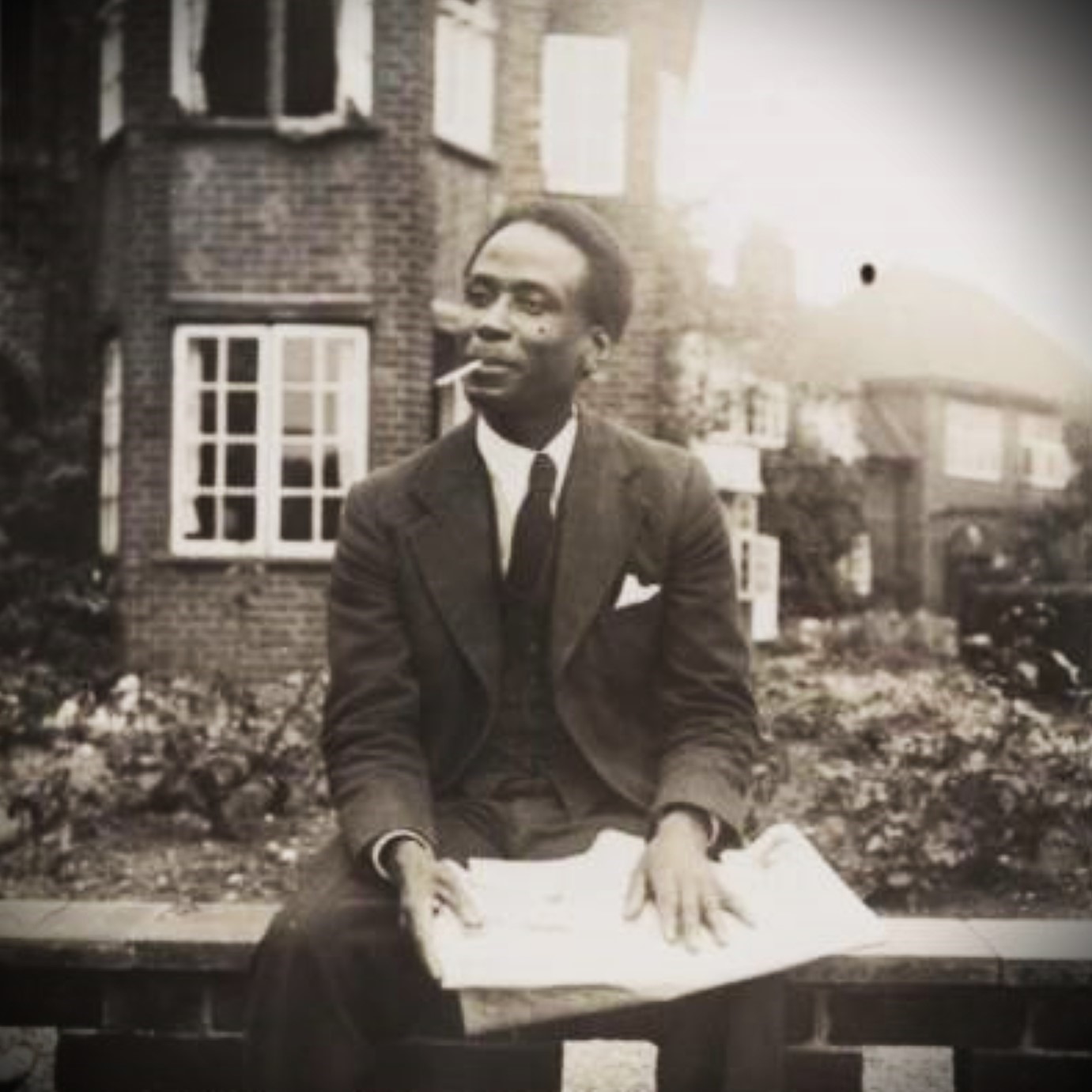
A major article from Padmore detailing internal conditions and U.S. imperialism in Liberia, as well as the long relations of Black activists in the U.S. with Liberia
‘American Imperialism Enslaves Liberia’ by George Padmore from The Communist. Vol. 10 No. 2. February, 1931.
AMERICAN Finance Capital long ago invaded Liberia. However, judging from the character of the report recently issued by the special commission which was appointed last April to investigate the question of slavery in that country, Liberia seems doomed to definitely become a protectorate of the United States. Here again we see the ruthless policy of Yankee Imperialism, which brutally exploits 12 million Negroes in the United States, maintains a military dictatorship over Haiti, and now reduces Liberia, the last independent Negro Republic in Africa, to the position of a vassal State.
Ever since the last imperialist war, Dollar Diplomacy has assumed great influence over the financial affairs of Liberia, thanks to the economic activities of the Firestone Rubber Company, which is the largest and most important foreign concern operating in the country.
Liberia is a typical colonial country. It is situated on the West Coast of Africa, between the British colony of Sierra Leone and the French colony of Ivory Coast. The country covers an area of about the size of Ireland and Wales combined, with a coast line extending 350 miles. Liberia is inhabited by two principal groups; (1) the indigenous population which numbers about 2 millions and is composed of various tribes, and (2) about 20,000 Americo-Liberians, Negroes whose ancestors were once slaves in America, who returned and settled in the country during the early days of its colonization. The majority of them reside in the coastal towns, such as Monrovia, Cape Palmas, Marshall, Greenville, Great Bassam, etc., where they are chiefly engaged as trading capitalists and state officials. Because of their favored economic and political positions these “Anglo-Saxonized” blacks are not only the petty bourgeois class, but they have actually constituted themselves an oligarchy, imposing their will upon the indigenous population which is chiefly engaged in agriculture and pastoral occupations. These people, in contra-distinction to the coastal Negroes, still retain their native customs and their own social and political institutions. Because of their economic and social status they are not only despised and ill-treated, but most ruthlessly exploited by their Europeanized black brothers as well as by the white capitalists. Thus we have the irony of the descendants of former slaves themselves becoming slave masters.
The situation in Liberia gives us one of the most striking examples of the fallacy in Garvey’s utopian scheme of “Black Racialism.” It shows that Negro capitalists will oppress and exploit other Negroes, just as the whites do, when they are in the economic position to do so. Therefore, the Negro workers must realize that their class interests take precedence over race, which is only being utilized by the black bourgeoisie in order to promote their own economic interests.
HISTORICAL BACKGROUND
Historically speaking, Liberia has always been considered a sort of “stepchild” of America, for the republic not only had its origin in the efforts of an American organization known as the Colonization Society, which was established in 1817 for the purpose of settling emancipated slaves in Africa, but America has despatched cruisers to Liberia on several occasions in order to suppress native rebellions and to save the country from the intervention of European powers. The Liberian Movement was a kind of “Black-Zionism.” After many difficulties the new state was proclaimed free and independent in 1847. Constitutionally, the Liberian government is modelled on the same republican lines as the United States.
In the latter part of the 19th century, the Government was compelled to float loans from British bankers under terms which placed the British in complete control of her customs. This intervention of British officialdom led to increased taxation on the native tribes, who refused to pay. The Government was therefore forced to float a new loan in 1906, much of which was frittered away by an English company.
Shortly after this, new boundary difficulties arose. Great Britain threatened to take a more aggressive stand in respect to taking over the administrative affairs of the country, while France was about to annex a slice of the Liberian frontier next to the Ivory Coast. However, the American capitalist press awoke to the occasion and by conducting a campaign evoked much sympathy for the republic, which enabled the Liberian mission that visited the United States in 1908 to secure the intervention of the State Department. Elihu Root, at that time Secretary of State, declared that “Liberia is an American colony,” and his Government would negotiate outstanding questions with Britain on behalf of the republic.
DOLLAR DIPLOMACY
President Roosevelt, having annexed the Panama Canal Zone in 1903, was desirous of getting a permanent foothold on the African Continent in order to enable America to compete with European Imperialism. With this object in view, he sent a commission of three to Liberia in February, 1909, for the purpose of investigating conditions affecting boundary disputes and reporting on economic possibilities. The Commission issued its report in the latter part of the same year.
On the basis of this report, the United States announced in July, 1910, that it would take charge of the finances, military organization, agriculture, and boundary questions affecting Liberia. This was agreed to by Great Britain, France, and Germany. The first step taken in this direction was to float an international loan of $1,700,000 in 1912. This loan was secured through Morgan & Co., Kuhn Loeb, and the National City Bank of New York, Fleming & Co. of London, Warburg & Co. of Hamburg, etc., on the customs revenue, a rubber tax and a tax on native labor shipped from Liberia to work on the Spanish cocoa plantations in Fernando Po and the Portuguese Island of San-Tome.
For this financial obligation, Liberia placed the collection of the revenue in the hands of an American Receiver General appointed by the United States Government, assisted by British, French, and German sub-receivers. This arrangement was pursued until the war, when America definitely assumed full control over the finances of the Republic. The constabulary was also turned over to the United States and placed under the control of army officers. The imperialists hoped that in this way the indigenous population which had frequently revolted against taxation and the oppressive policy of the Liberian Government would be kept in subjection. This, however, did not prevent such a serious revolt by the Kroo tribe in 1915 that the Government was threatened with foreign intervention in order to save the lives and property of British and French nationals. The United States again saved the day by despatching the warship Chester to Monrovia, the capital of the Republic, where ammunition and other military supplies were landed. This naval intervention further strengthened the grip of America over the Republic. The Liberian Government a few years later agreed to place its entire public defense in the hands of the United States War Department. Colonel Charles Young, the senior ranking Negro officer in the American Army, was sent to Liberia as military adviser to the government. In 1924 the sum of $120,000 was spent on arming the Constabulary and Frontier Force.
Prior to the war, Liberia was largely dependent upon Germany av a market for her raw products. Large quantities of palm kernel, cola nut, cocoa, rubber, coconuts, and coffee, were shipped to Hamburg annually. But when the United States entered the war in 1917, Liberia was forced to break diplomatic relationship with Germany. This was done in order for the allies to annex the cable station in Monrovia, which was owned by a German company, as well as to break Germany’s commercial domination over the republic. Liberia lost her most dependable European market and was soon reduced to a state of absolute financial dependence upon the United States. This again provided another opening for the further domination of the country by American imperialism.
By the beginning of 1918 the finances of the republic were in such a deplorable condition that the Liberian Government through its Consul General in Washington, Dr. Ernest Lyons, approached the United States Government for another loan of $5,000,000 “with which to refund the 1912 loan, to develop the interior resources of the country under American supervision, and to give practical aid and assistance to her allies now in the greatest struggle of the epoch.” The communication further stated:
“Liberia offers for the satisfaction of this loan, among other things, material assistance to her allies in the present war; viz.
“(1) Labor, (2) base for the operation of allied fleets along the west African coast, (3) food, (4) communication facilities, (5) internal revenue, and (6) the customs levies.
“Liberia can furnish, estimating conservatively, 200,000 able-bodied men. It is well known throughout Europe that maritime communications between there and the west coast of Africa would be impossible were it not for the services of these natives as seamen and stevedores of which Liberia furnishes the greater number. From the coastal tribes, viz. the Krus, Bassas, Grebos, and Veys, Liberia can furnish a minimum of ten regiments of experienced and qualified stevedores. A large portion of the contract labor employed in the various colonial possessions is drawn from the Liberian hinterland. Since the war, this labor has been at a standstill and could be transferred to France for communication service during the war.” (Emphasis mine–G.P.)
The United States agreed to grant the loan providing Liberia consented to the following terms: (1) That not only the customs, but the hinterland revenue be placed under the control of American officials; (2) that a Commissioner General be appointed to govern the native tribes, and (3) that military officials be increased so as to place all the strategic positions of the government in the hands of United States officials.
Due to the wide-spread discontent of the masses, the Liberian government refused to agree. After repeated threats, however, it was forced to accept, and was only temporarily saved from this new financial entanglement because the U.S. Senate defeated the loan.
THE FIRESTONE DICTATORSHIP
After the war, America found herself confronted with the British rubber monopoly. As rubber is an indispensable product in the automobile industry of the United States, a conference was called by the rubber manufacturers in which the United States Government participated. At this conference it was agreed that the United States Government would actively cooperate with the industrialists in providing a tropical sphere of interest in order that they might produce their own raw rubber. Such a plan would also create an outlet for the capitalists to invest more finance capital in the colonies. President Hoover, then Secretary of Commerce, was the official spokesman of the Government and principal supporter of this imperialist project. At that time he was the most bitter assailant of the Stevenson Plan which created a monopoly for the British capitalists who were restricting the production and marketing of rubber from the Malay States and the Dutch East Indies in order to control prices on the world market. About 75% of the world supply at that time was under British control. In 1927 the world was consuming about 575,000 tons of rubber annually; the United States was using 70%, which is about equal to the quantity produced by the British. This dependence of the American tire manufacturers upon British producers did not suit the interests of Yankee imperialism, especially at a time when both powers are feverishly preparing for war. A way out had to be found, and Liberia provided it. Hoover got Congress to appropriate thousands of dollars to enable the United States Department of Commerce to investigate the possibilities of rubber cultivation in Africa.
Whatever opposition a section of the Liberian officials who were under British influence expressed against America’s economic intervention, was soon suppressed by pressure brought to bear on the part of the State Department in Washington, and in July, 1925, the Liberian Government finally decided to enter into negotiation with the Harvey Firestone Rubber Corporation for a lease of rubber producing lands. The Firestone Corporation secured a concession of 1 million acres of land at the cost of 6 cents per acre. It has been estimated that when the trees reach maturity within six years, the crop will be about 250,000 tons.
After the negotiations were completed, the Firestone Company demanded that the Liberian Government accept a loan of $5,000, 000 at the rate of 7% interest, failing which, they (Firestone) would not carry through the proposed land development scheme. The Liberian people were reluctant to accept this heavy financial obligation, realizing that they had recently escaped the clutches of the United States Government. But this time the pressure from Wall Street was too great, the Liberian legislature finally succumbed to the coercion of the great Colossus of the North.
One of the greatest obstacles in the way of the economic development of the Republic, has been the lack of transportation. In this respect Liberia is medieval when compared with the neighboring British and French colonies on the west coast of Africa. There are no railroads in the country, while roads suitable for vehicular traffic only exist in the principal towns. The only means of communication between the hinterland and the seaports is on animal back over mud-covered forest tracks and bridgeless rivers. This is the reason why the Firestone Company was so insistent upon the Government accepting the loan in order that funds might be provided for the construction of railways and motor roads, as well as the improvement of the harbor of Monrovia. The terms of the loan therefore specially stipulate that half of the money has to be expended on public works, while the other half is to be used in payment of certain outstanding public debts. The proposed roadbuilding scheme will greatly facilitate the company in transporting its raw produce from the plantations to the ocean for shipment to the United States. Under the terms of the loan the office of Receiver of Customs was abolished and a Financial Adviser appointed. The Liberian Government received very little actual cash as the Firestone Corporation turned over the loan to the American Financial Adviser who alone was responsible for disbursements.
This is how Dollar Diplomacy operating through Firestone and through the machinations of a corrupt clique of native bourgeois politicians who prostitute themselves as the lackeys of Yankee imperialism, has been able to enslave millions of colonial toilers by saddling loans upon this little West-African Republic.
SLAVERY UNEARTHED
In carrying through the imperialist project of large scale plantations, the Firestone Corporation has been confronted with two major problems: (1) Confiscation of native lands, and (2) an adequate supply of cheap labor. The Liberian Government, headed by President King, has actively cooperated in solving both of them. Now that the Liberian legislature has expropriated and given away to the Firestone Company the lands of the natives, they are resisting the attempts of the rubber interests to turn them into wage slaves. This has already led to several uprisings which have been put down by the Liberian military force.
By enlisting the services of various Americo-Liberian officials, such as administrators of provinces and districts, as well as native chiefs, the American imperialists are gradually succeeding in getting the peasants to leave their villages and work on the rubber plantations. Over 40,000 men have already been recruited and turned over to the Firestone Concessions. This recruiting is carried out largely under the orders of the chiefs who are paid one cent for every worker supplied. The Government has also established a Central Labor Bureau in Monrovia with branches in various parts of the country, through which able-bodied Negroes are conscripted into labor battalions and shipped off to the plantations. The Government also receives a commission for each man supplied. The workers get about five cents a day and are compelled to labor 14 and 15 hours under the most brutal and demoralizing conditions.
In some parts of the Republic actual slavery exists. Kathleen Simon, the wife of the British Liberal statesman, Sir John Simon, in her recent book entitled Slavery, states: “Whether the number of slaves in Liberia is 100,000 or 500,000, no one can say. Equally it is difficult for anyone to deny that slave-owning and slave-trading prevail over wide areas of the country.” Open charges against the Liberian Government for promoting the slave trade have been made by Dr. Buell of America and Mr. John H. Harris of England before the League of Nations, and more recently by Mr. Roland Faulkner, a Liberian Senator. Mr. W.G. Gibson, the Liberian Secretary of State, in a letter in reply to the allegation of Faulkner, published in the Liberia Times, admitted that thousands of natives are recruited in the interior, brought to the ports of the country and shipped to the Portuguese Island of Fernando Po, and to African colonies. Mr. Gibson said, “All of us (Liberian officials) know that it is a transaction authorized by law and sealed by contract and agreement. Whether we agree with the law or not, is another question.” (Emphasis mine–G.P.)
The Government not only knows of the existence of slavery, but actually legalized the system in order to enable a few degenerate black politicians to enjoy a parasitic existence by turning over thousands of native toilers to the Portuguese and French slave dealers.
The slave trade of Liberia has become such an international scandal that even the League of Nations has been forced to make a gesture. An international commission composed of the following representatives was appointed last April to investigate the charges: Dr. Cuthburst Christy, on behalf of the League of Nations Secretariat; Dr. Charles S. Johnson, a well-known Negro-sociologist and Professor of Fisk University, on behalf of the United States; and the Hon. Arthur Barclay, a former president of Liberia, on behalf of the Black Republic.
The commission held many sessions in various parts of the country, where, according to the African World of June 14th, 1930, “The chiefs and other prominent men, as well as the better class of the native population expressed their loyalty to President King and said that they had no complaints to make.” (Emphasis mine.—G.P.) This was to be expected! For these chiefs and other “prominent men and better class natives” are the ones who constitute the feudal land owning class of Liberia, and therefore maintain domestic slavery. Such bloodsuckers certainly have “no complaints to make.”
The toiling masses, however, had a different story to tell. Their evidence was so indicting that the Commission despite its attempt to whitewash the Government was compelled to admit “that inter and intra-tribe domestic slavery existed” The Commission also stated “that the pawning of human beings was widespread throughout the country.” “Forced labor has also been widely used, both by the Government and by private persons, chiefly for road making, erecting public buildings, and porterage.” “This system has also been largely abused by many officials of the Government, as well as soldiers, who use these slaves to cultivate their own farms.” With respect to the exportation of labor, the Commission discovered that large contingents of laborers were recruited from the indigenous population and shipped to Fernando Po and French Gabbon under conditions scarcely distinguishable from the old methods of slave trading and slave-raiding.
As was to have been expected, the commissioners entirely exonerated the American imperialists for the part they played in recruiting forced labor by stating in their report that they “discovered no evidence that the Firestone Co. ‘consciously’ employed forced labor.” This is nonsense! The commissioners know better. Even the American bourgeois liberal, Dr. Buell, in describing the labor problem in Liberia in his authoritative book, Native Problem in Africa, has the following to say about Firestone:
“Agreement Number Two provides that the Liberian Government will encourage, support and assist the efforts of the Lessee to secure and maintain an adequate labor supply.”
“In the spring of 1926 the government established a Labor Bureau at the head of which it appointed a Commissioner, under the control of the Secretary of the Interior. According to this Commissioner, the Bureau will supply annually a total of 10,000 men to the Firestone Plantations—two thousand men from each county. By June, 1926, the Bureau already had supplied the Plantations with six hundred men. It sent out requisitions to each Native and District Commissioner who in turn divided up contingents among the chiefs. According to the Commissioner, the Firestone Plantations paid the chiefs one cent a day for each boy and the same sum to the Government Bureau.
“Thus, under this system, which is similar to that which has produced wholesale compulsory labor in other parts of Africa, the Firestone Plantation Company is making it financially worth while for the government and for the chiefs to keep the plantations supplied. The concession Agreement Number Two imposes on the government the obligation to cooperate in securing these men. As Liberian officials and chiefs are already accustomed to imposing compulsion whether in securing men for road work or for Fernando Po, there is no reason to believe that they will employ any different methods in obtaining labor for the Firestone Plantations.” (Emphasis mine.—G.P.)
What an indictment! Did the commissioners know of these facts? Perhaps, like the Firestone Company, they “consciously” did not know.
Such a statement that the Company did not “consciously” employ forced labor is merely a way of white-washing Firestone and his agents, and at the same time providing the United States Government with the pretext for assuming still greater political control over the republic in the form of a protectorate. This will no doubt justify the fears expressed by the British imperialists in their organ The African World of October 5th, 1929, which commenting editorially on the Liberian situation stated:
“No one who follows the question would be surprised if, as the outcome of the Commission, the United States were invited to take the more definite administrative interests in Liberia. It is thought that America may be prepared to enter upon an extension of a colonial policy in West Africa.”
Today we can already see a definite movement in this direction.
RECOMMENDATIONS EXPOSED
The commission made certain recommendations in its report. The most important were: (1) That Liberia abandon the policy of the “closed door”; (2) The re-establishment of the authority of the chiefs; (3) The appointment of Americans to administrative positions in the Government, such as Commissioners, district officers, etc.; (4) Declaring domestic slavery and pawning illegal ; (5) Cessation of the shipment of laborers to Fernando Po and other places outside of Liberia; (6) Increasing discipline over the military forces; and (7) Encourage the emigration from the United States.
All of these recommendations definitely support the interests of American Imperialism. Let us examine some of them briefly. The “closed door” policy was established in order to prevent foreign capitalists from invading the country and competing against the native bourgeoisie; the Americo-Liberian politicians enacted a law that only Negroes were entitled to certain economic and political privileges. But now that American finance capital has a stranglehold over Liberia the imperialists are demanding a change in favor of the “open door” policy so that their interests might be better safeguarded.
The authority of the chiefs is to be established because these chiefs are not only big landlords and usurers, but also the official tax-gatherers and labor-recruiting agents of the Government. Within recent years the toiling masses have begun to revolt against them. So in order to bolster up their authority which can be utilized in the services of the imperialists to extort super-profits out of the masses, the Commissioners have appealed to the Government to rally to the aid of these feudal exploiters. With the appointment of Americans in the Government, with the administration of finance, the military and other key positions in the hands of Americans, the Liberian Government will easily be converted into a Bureau of the State Department of Washington.
The Commission talks glibly about abolishing domestic slavery and pawning. Domestic slavery has always been widely practiced in Liberia by the native chiefs and the rich Americo-Liberians who hold thousands of men, women, and children enslaved on their plantations. The women and children attend to the household duties as well as the lighter phases of agricultural production, while the men and boys do the heavy labor on the land. Pawning is a system whereby a man may give his wife or child to another as security for a loan. During this time the person pawned has to work for the moneylender until the principal and interest on the loan have been liquidated. Through these methods the indigenous tribes are held in bondage. These systems are so deeply rooted in the social life of the country that they will never be abolished by mere legislative enactments. And whatever “freedom” is given will be to make exploitation and oppression easier.
The fifth recommendation aims to abolish the exportation of forced labor to foreign countries. At a glance it might appear that humanitarian reasons prompted the commissioners to make this recommendation, especially in view of the great human sufferings and torture involved. But, oh no! When stripped of its garb, we see the sordid motive of capitalist exploitation back of this gesture. In 1926 the Firestone Co. published a statement in the American press saying that it would require 300,000 to 350,000 laborers in order to carry through its projects. The able-bodied male population in Liberia has been estimated at between 300,000 and 400,000, or one-fifth of the total indigenous population. The present rate at which these laborers have been shipped from the country threatens to deprive the Firestone Company of its quota. Therefore, in order to put an embargo on exportation and thereby facilitate the plans of Firestone, the worthy Commissioners discovered that this is an opportune moment to call upon the Government to curtail the activities of the native slave-dealers.
Now let us turn to the sixth point, which deals with the question of military discipline. The Liberian Constabulary and Frontier Force are made up largely of men from the interior known as “bush-Negroes,” who have close economic and social ties with the toiling masses of the hinterland, and because of this, they very frequently display great sympathy for the exploited classes. They have often refused to obey the orders of the officers who are recruited from the rich Americo-Liberian bourgeois families. The Commission, realizing that in the event of a native uprising the army cannot be depended upon, have called upon the Government to strengthen military discipline.
The last point takes the cake–“encouraging the emigration of the Negroes from the United States.” One wonders whether this is a concession to Garveyism or not? Did not Garvey attempt to carry out a similar project in 1926? Rumor has it that Dr. Dubois, who was sent to Liberia by President Coolidge to represent the United States Government at the inauguration of President King in that year, was the one who blocked this “black-Zionist” exodus. At that time American capitalism still needed black labor in the United States, therefore the bourgeoisie could not sit idly by and see their black slaves transported away. But four years have gone by and the economic situation in America has changed considerably. The United States is today in the grip of a tremendous crisis resulting in the unemployment of over 8 million workers. Perhaps the Commissioners hoped to help their bourgeois masters out of their dilemma by advocating the repatriation of Negroes back to Africa. Whatever might be the idea in the back of the minds of these “saviors of capitalism,” we advise the Negro workers to remain where they are. They built America out of their sweat and blood, and their historic task is to organize their forces and join hands with the class-conscious white workers under the revolutionary leadership of the Communist Party, which alone fights for the interests of all toilers, in order to win their self-determination and social emancipation.
“Back to Africa” whether raised by Garvey or the Liberian slave commissioners is a reactionary slogan aimed to help in saving capitalism in America.
LABOR AND THE CRISIS
Exclusive of the plantation laborers who represent the forced labor class in Liberia, there are a few wage workers, such as carpenters, masons, mechanics, shipwrights, etc., in Monrovia. At various ports along the coast hundreds of men and boys belonging to the Kroo tribe are employed as stevedores, boatmen, and sailors by European and American steamship companies operating in West Africa. The average wage of these marine workers is 20 to 24 cents per day of 12 hours.
This is also another method by which the Liberian Government is able to extract money out of the blood and sweat of this section of the native population. Every steamer which signs on Kroo seamen has to pay the Government one dollar per head, which the steamship company in turn deducts from the already small wages of these workers. The Government collects over $25,000 per annum from this source. These seamen are also exploited through other bureaucratic methods. For example, whenever the Kroo sailors return home from a voyage they are made to pay the governor of their town one shilling each for the upkeep of the municipality, including the Governor’s residence. Furthermore, the governor also imposes a special tax of 3% shillings on each man for what purports to be sanitary construction, while the central government in Monrovia also collects a poll tax from these workers.
As a result of these various kinds of taxation the Kroo seamen are constantly in debt, for while they are away their families are forced to obtain credit from the Americo-Liberian merchants and tradesmen in order to get food and clothing. The Kroo seamen are entirely unorganized and, therefore, at the mercy of their employers, who treat them in the most shameful manner.
The following incident gives us an idea of the conditions under which these black seamen are forced to work.
“In 1924 fourteen Kroo boys complained that they had been unjustly imprisoned in Warri, a port in Nigeria, as a result of the complaint of a British captain, their employer, who charged that they had refused to obey his orders. The boys stated that they had been frequently compelled to work overtime from three o’clock in the morning to midnight—twenty-one out of twenty-four hours; and that at Warri they had worked storing palm oil from three o’clock one morning to one o’clock the following morning, when they were given permission to rest. At 2.45 A.M. they were ordered to scrub down the deck. At the same time the captain upbraided hem for having left three casks of oil on deck. The boys by this time ‘began to jeer and to behave insolently,’ whereupon the captain had them arrested and they were placed in a British prison while the steamer sailed away.” (Buell, Native Problem in Africa. Vol. II, page 775).
From time to time spontaneous strikes break out on board ships, but these are invariably crushed in the bud largely because of the lack of organization and leadership.
During the past six months the already low standard of living of these workers has fallen even lower due to the acute economic and financial crisis in the republic. Liberia, like all colonial countries, is in the grip of the agrarian crisis. The revenue dropped from $1,270,000 in 1928 to $985,000 this year. After the stock market crash in New York, last November, Firestone began to curtail production of raw rubber which brought about a catastrophic disorganization in the business life of the country. Thousands of people were turned out of work, both by the Firestone Company and the Government, which is dependent upon Firestone for a considerable portion of its revenue.
The Liberian merchants and traders today find themselves confronted with vast stocks of goods which cannot be disposed of. The Liberian trade correspondent of the African World, October 11, 1930, writes:
“Owing to the present state of the world rubber market, the Firestone plantations are continuing to curtail their developments and have already reduced their European and American staffs while the native labor employed there now is some thousands below what it was some little time back.”
Two other factors which have contributed to the present panicky situation are: (1) the formation of a Chamber of Commerce by the European and American trading companies in Monrovia in order to protect their common interests and at the same time bring pressure to bear on the Government in order to collect well over a million dollars due them for official supplies, and (2) the closing of the Bank of West Africa, the only bank institution in the country.
ROLE OF NEGRO PETTY-BOURGEOISIE
It is also interesting to observe how American imperialists are using the services of the Negro petty bourgeoisie in order to advance their own interests. The Firestone Company, which was implicated in the slave business of Liberia, had to draw its chestnuts out of the fire, so instead of appointing a white American as United States representative on the slave commission, the politicians in Washington conveniently departed from their traditional policy and appointed a Negro. When dirty work has to be done, especially in relation with a Negro state, a black lackey has always been found to do the task. These petty-bourgeois Negroes on the other hand are always ready to play the sycophantic role for their imperialist masters, in reward for a few political and economic crumbs from the overladen tables of the white-bourgeois exploiters.
Even a so-called leader like Dr. DuBois, the editor of the Crisis, the “left” organ of the National Association for the Advancement of Colored People, commenting on their appointment of Dr. Johnson, had the following to say:
“The United States Government has been extremely wary in allowing itself to be represented officially by an American of Negro descent. To be sure, we had ministers in the past to Haiti and Liberia, but these representatives concerned only two countries directly. If our memory is not deceived never before in an international commission where a body like the League of Nations is represented by white men, has the United States nominated a colored man to represent this country. President Hoower deserves credit…” (Emphasis mine—G. P.)
Here we see DuBois who considers himself the most radical Negro in America and the greatest champion of the rights of his oppressed race paying compliments to the imperialist Hoover for utilizing the services of the black lackey in order to exonerate Firestone and give America a justification to establish a protectorate over the little Negro Republic of Liberia.
But the American Negroes are not the only ones engaged in this “Uncle Tom” business. The petty-bourgeoisie of Liberia, especially the trading capitalists and the politicians of Monrovia, in order to advance their economic and political interests, are actively cooperating with Negro business men in the United States who are the agents of American finance-capital.
Mr. Faulkner, the opposition leader of the administration and one of the leading merchants in Liberia, at the recent session of the National Negro Businessmen’s League held in Detroit, said, “It is my desire to secure the cooperation of American business men to investigate business and commercial conditions by a commission,” furthermore, “I desire the cooperation of American financiers in order to establish a bank in Monrovia, since the British Bank of Liberia, the only financial institution now there, closes the doors of its agency on the 30th of September and the doors of Monrovian bra on the 31st of October.” (From the Afro-American.)
True to their historic role, the Negro bourgeoisie of America and Liberia have sold out to Yankee imperialism.
There are a number of journals with this name in the history of the movement. This Communist was the main theoretical journal of the Communist Party from 1927 until 1944. Its origins lie with the folding of The Liberator, Soviet Russia Pictorial, and Labor Herald together into Workers Monthly as the new unified Communist Party’s official cultural and discussion magazine in November, 1924. Workers Monthly became The Communist in March,1927 and was also published monthly. The Communist contains the most thorough archive of the Communist Party’s positions and thinking during its run. The New Masses became the main cultural vehicle for the CP and the Communist, though it began with with more vibrancy and discussion, became increasingly an organ of Comintern and CP program. Over its run the tagline went from “A Theoretical Magazine for the Discussion of Revolutionary Problems” to “A Magazine of the Theory and Practice of Marxism-Leninism” to “A Marxist Magazine Devoted to Advancement of Democratic Thought and Action.” The aesthetic of the journal also changed dramatically over its years. Editors included Earl Browder, Alex Bittelman, Max Bedacht, and Bertram D. Wolfe.
PDF of full issue: https://www.marxists.org/history/usa/pubs/communist/v10n02-feb-1931-communist.pdf
 Revolution's Newsstand