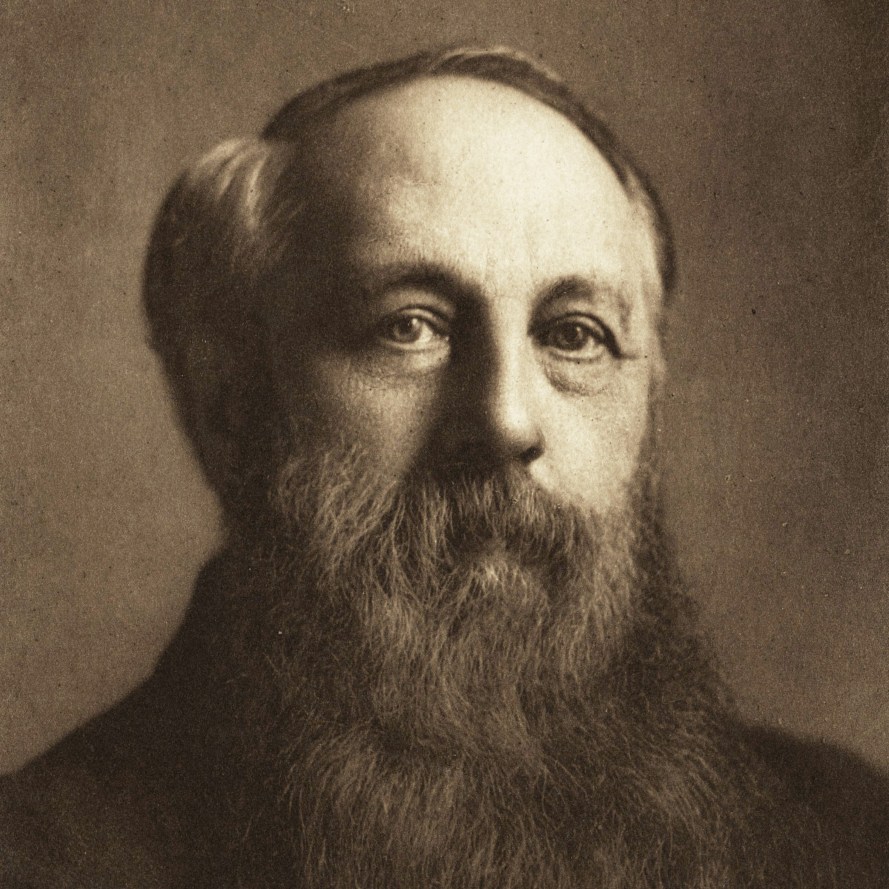
Ludwig Lore writes of the apostate founder of the Social Democratic Federation on his death.
‘Hyndman–Pillar of Reaction’ by Ludwig Lore from The Workers’ Council. No. 7. December 15, 1921.
FROM England comes the news of the death of one of the outstanding figures of the Socialist movement of pre-war days. H.M. Hyndman, at the age of 79, is dead.
Hyndman was the founder of the social-democratic movement in England. He created the Social-Democratic Federation, which later became the Social-Democratic Party.
It is a well-known fact that he came into the Socialist movement and remained unceasingly active in its ranks thru more than a generation at the greatest sacrifice of his own personal ambitions.
For Hyndman was the son of a well-to-do family and received the well rounded out education that is traditional in the class from which he sprung.
With his brilliant political insight, his capabilities both as a speaker and as a writer, Hyndman, had he remained true to the standards of the class from which he came, would have become one of the leading statesmen of the nation.
He was, however, constitutionally in sympathy with the under-dog. As a very young man he took the part of oppressed India against its British exploiters. When shortly afterward, in the capacity of newspaper correspondent, he was sent to the front in the war between Italy and Austria, in 1888, he met Mazzini and Garibaldi, and was so attracted toward them that he formed a life-long friendship. The outbreak of the Paris Commune and his acquaintance with Karl Marx during this critical period in European history led Hyndman into the Socialist movement.
But, in spite of his long experience in the British movement and in the International, Hyndman always showed a marked preference for Latin peoples, traditions and customs.
Friedrich Engels once jokingly remarked: “This Hyndman is a splendid internationalist–except when the Germans are under discussion. Then he becomes a violent nationalist.”
Such being the case, it is hardly surprising that Hyndman, when the war broke out, became one of the most violent jingoes in the International. He poured the vials of his wrath not only upon the German leaders who openly supported the war-camarilla, but he was equally bitter against those Germans who opposed the war-policies of the German Social-Democracy.
He was firmly convinced of the justice of the Allied cause and defended it with blind vehemence against all who opposed him.
When the Russian Revolution broke out he had no patience with the peace demands of the Russian people, and urged Russia to help the Allies to carry the war to a victorious conclusion. Like every honest social patriot, he had for the Bolsheviki only disapproval and contempt.
Hyndman went the way of so many of our orthodox Marxists, who have lived with their theories so long that they have lost touch with the spirit of the revolution, lost the spark that gives these theories life.
Like Jules Guèsde in France, like Karl Kautsky in Germany, like Plechanov in Russia, he became the spokesman of the enemies of Soviet Russia and of the Third International.
The Paris Commune brought Hyndman, the young revolutionist, into the proletarian movement. Hyndman, the party leader, died as one of the pillars of capitalist reaction.
The Worker’ Council purpose was to win the Socialist Party of America to the Third, Communist, International and later to win locals and individuals. Published (mostly) weekly by the International Education Association in New York City, Workers Council included important members of the SP, mainly from its Jewish Federation like. J. Louis Engdahl, Benjamin Glassberg, William Kruse, Moissaye J. Olgin, and J. B. Salutsky, editor of the radical Jewish weekly, Naye Welt. They constituted the Left Wing that remained in the Socialist Party after the splits of 1919 and were organized as The Committee for the Third International. Most would leave the SP after its1921 Convention, joining the Workers (Communist) Party after a short independent existence later that year.
PDF of full issue: https://www.marxists.org/history/usa/pubs/workers-council/07-workers-council-1921.pdf
 Revolution's Newsstand