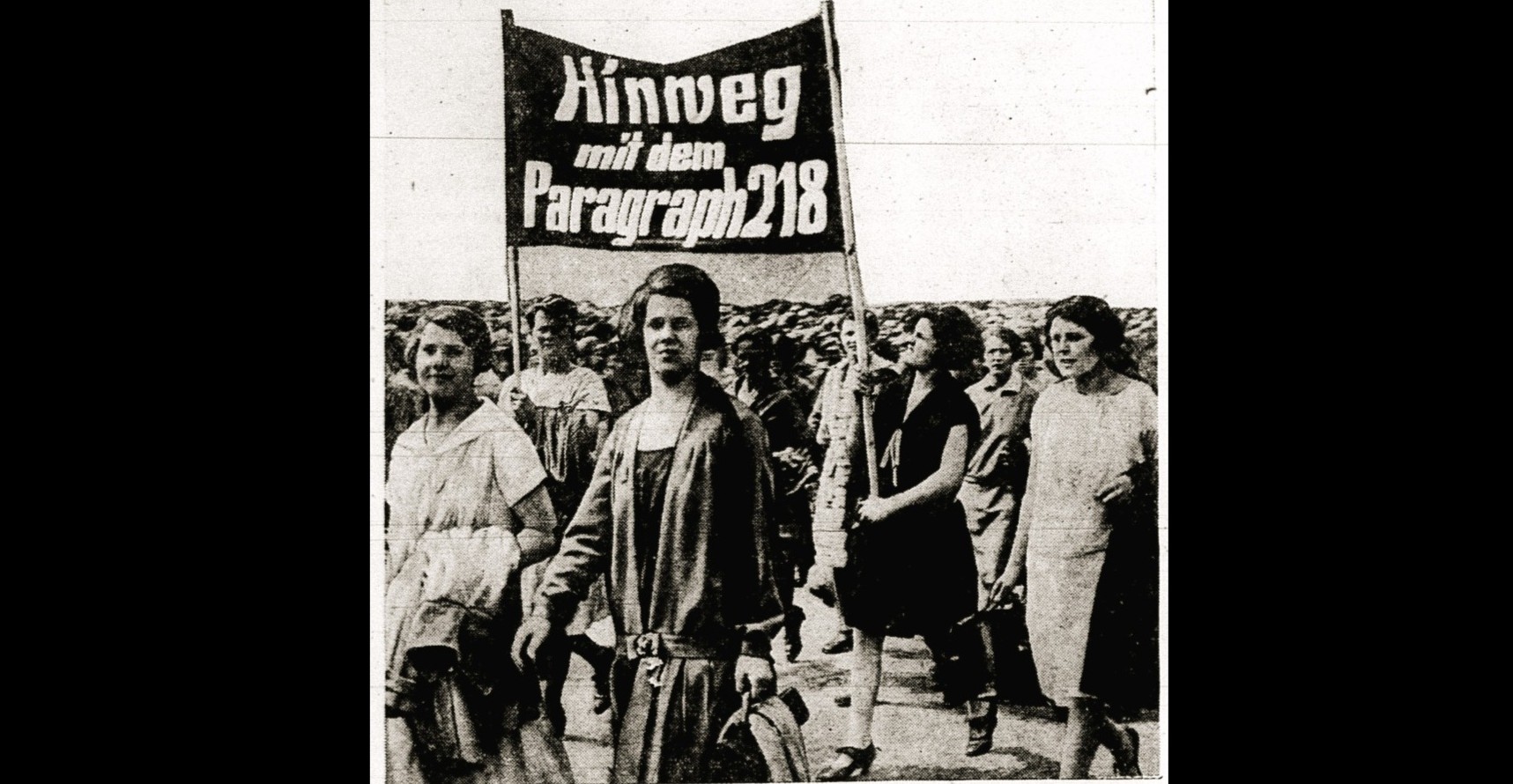
The Soviets legalized abortion on demand (with some caveats) in 1920, the first modern country to do so. Transferring family planning to the medical clinic from the peasant midwife and back alley; from a woman’s obligation to a women’s decision, saved countless lives and gave a body blow to a centuries-old Russian patriarchy. Inspiring women around the world with a new-found legitimacy. While the U.S. certainly had early working-class women as active supporters of bodily autonomy, it was always on the defensive, both against religious reaction, and poor-despising bourgeois feminists who viewed abortion as way to resolve a ‘pest control problem.’ Inspiring a proletarian birth control movement that successfully differentiated itself from the often eugenicist versions of bourgeois family planning, the Soviet accomplishment made it an issue embraced by a Communist movement at a time when it was resolutely, and self-described, anti-feminist (meaning bourgeois feminism, not women’s social emancipation). Abortion rights, rather than ‘family planning’ became an ever-greater demand and would soon be a mainstay in the Communist program. As the Revolution receded, by the 1930s, ‘traditional’ women’s role became increasingly resurrected (‘Mothers of the Socialist Fatherland’) and the new ‘Stalin Constitution’ (the Soviet definition, not mine) of 1936 formally outlawed abortion(with caveats) was formally outlawed in the land that first legalized it. Within two years of this article, this very same magazine would print pieces with headlines like ‘Abortion: Right or Privilege.’
‘Birth Control: This Knowledge is Desperately Needed’ by Grace Hutchins from Working Woman. Vol. 6 No. 7. April, 1935.
IN a little mining-steel town of western Pennsylvania recently, the women were discussing birth control. They agreed that one of their most immediate needs was to know how to space and limit the number of their children. But how to find out?
A Child Each Year
That information is at present reserved for those who can pay for a private physician to tell them how not to have too many children. But the working-class mother often finds another child is on the way before she has fully recovered from having the previous one. Her husband too wants to regulate the number of children, but no one in the town can tell them what to do about it. According to the present federal law, the giving of information on birth control is classed with “obscenity, pornography, and indecency.” As one father wrote:
“We got scared of another abortion, so we went through with it this time. I’ve tried hard to find out about birth control, but people put you off with stuff that’s no good, and where I live they say it’s against the law. I bet my boss who laid me off gets it all right from his private doctor and his wife doesn’t have to go through such hard times…It gets one sort of upset to see something you need so badly held back for the rich.”
In capitalist America the working-class mother has too many children, too many for her own health and for the good of the children, because she has no money to buy the information she needs; she cannot afford, under the conditions of capitalism, to give even one child the care he should have for his health and welfare.
When a physician in a birth control clinic in New York City heard about those women workers in the little mining steel town of Pennsylvania and their discussion of the subject, she said:
“But why don’t they go to the birth control clinic?”
More Clinics Needed
That is good advice for those who are within reach of such a clinic, and such organizations as the American Birth Control League, are doing good work in increasing the number of desperately needed birth control centers in the United States. There are now 200 such centers; but 26 of them are in Greater New York City. There is only one in Pittsburgh and it is difficult, if not impossible, for a miner’s wife in a remote mining camp to know how and when to get in to the clinic for the needed information.
What about the women in Germany, Italy and Austria where fascist rulers already dictate what the workers shall do and say? Can working class women get information in those countries on how to space and limit the number of their children? Before fascism developed there were birth control clinics in all three of these countries.
Fascists Demand Cannon Fodder
But one of the first acts of the fascist state was to close all birth control centers. As the Birth Control Review explains:
“In fascist Italy, Nazi Germany and Catholic Austria, birth control centers have been closed and the dissemination of contraceptive information prohibited. But women under fascism have given their answer to the dictators who bid them bear more babies to fight future wars…Italy’s birth rate has declined since the advent of fascism. In 1924 it was 29 per 1,000; it was only 23 in 1934.”
In fascist Germany the birth rate is only 17.6 (during the first half of 1934) and the Nazi rulers are said to be worrying about it in connection with their preparation for wars in the future.
Workers’ Country Is Different
In contrast to these facts about fascist nations, we find that the increase in population in the Soviet Union is about three million a year!
Mrs. Margaret Sanger, pioneer in the birth control movement in the United States, went to the U.S.S.R. last summer to see for herself the situation in the only country where the workers and farmers rule. She writes of what she saw in the Birth Control Review for June, 1935, and we quote her testimony as to the position for women in the first workers’ state:
“One must keep in mind the attitude of Soviet Russia toward its women. This would delight the heart of the staunchest feminist. Equal rights are a settled and accepted fact.”
“There are no laws against birth small towns and villages, Mrs. Sanger said she found everywhere posters, warning women against abortions and urging them to practice contraception instead. But abortions are allowed, with proper safeguards for the health control, and no religious objections. The right of a woman to have birth control instruction is clear. And this right need not be bulwarked, as in our country, by ‘health reasons,’ ‘economic reasons,’ ‘eugenic reasons,’ but is granted as a simple human right.” After visiting women’s consultation centers in many places, including of the woman who receives full pay during this period of absence from work. She concludes:
“We could well take example from Russia, where there are no legal restrictions, no religious condemnation, and where birth control instruction is part of the regular welfare service of the government.”
This is a German “war baby”. Born in 1914 he is one of many such who have been forced into military service by the Nazis who are preparing war against the Soviet Union. Why should workers kill one another? Why should mothers raise families only to have them mutilated and slaughtered? Hitler forbids birth control clinics but favors sterilization for militant workers.
The Working Woman, ‘A Paper for Working Women, Farm Women, and Working-Class Housewives,’ was first published monthly by the Communist Party USA Central Committee Women’s Department from 1929 to 1935, continuing until 1937. It was the first official English-language paper of a Socialist or Communist Party specifically for women (there had been many independent such papers). At first a newspaper and very much an exponent of ‘Third Period’ politics, it played particular attention to Black women, long invisible in the left press. In addition, the magazine covered home-life, women’s health and women’s history, trade union and unemployment struggles, Party activities, as well poems and short stories. The newspaper became a magazine in 1933, and in late 1935 it was folded into The Woman Today which sought to compete with bourgeois women’s magazines in the Popular Front era. The Woman today published until 1937. During its run editors included Isobel Walker Soule, Elinor Curtis, and Margaret Cowl among others.
PDF of full issue: https://www.marxists.org/history/usa/pubs/wt/v6n07-aug-1935-WW-R7524-R2.pdf
 Revolution's Newsstand