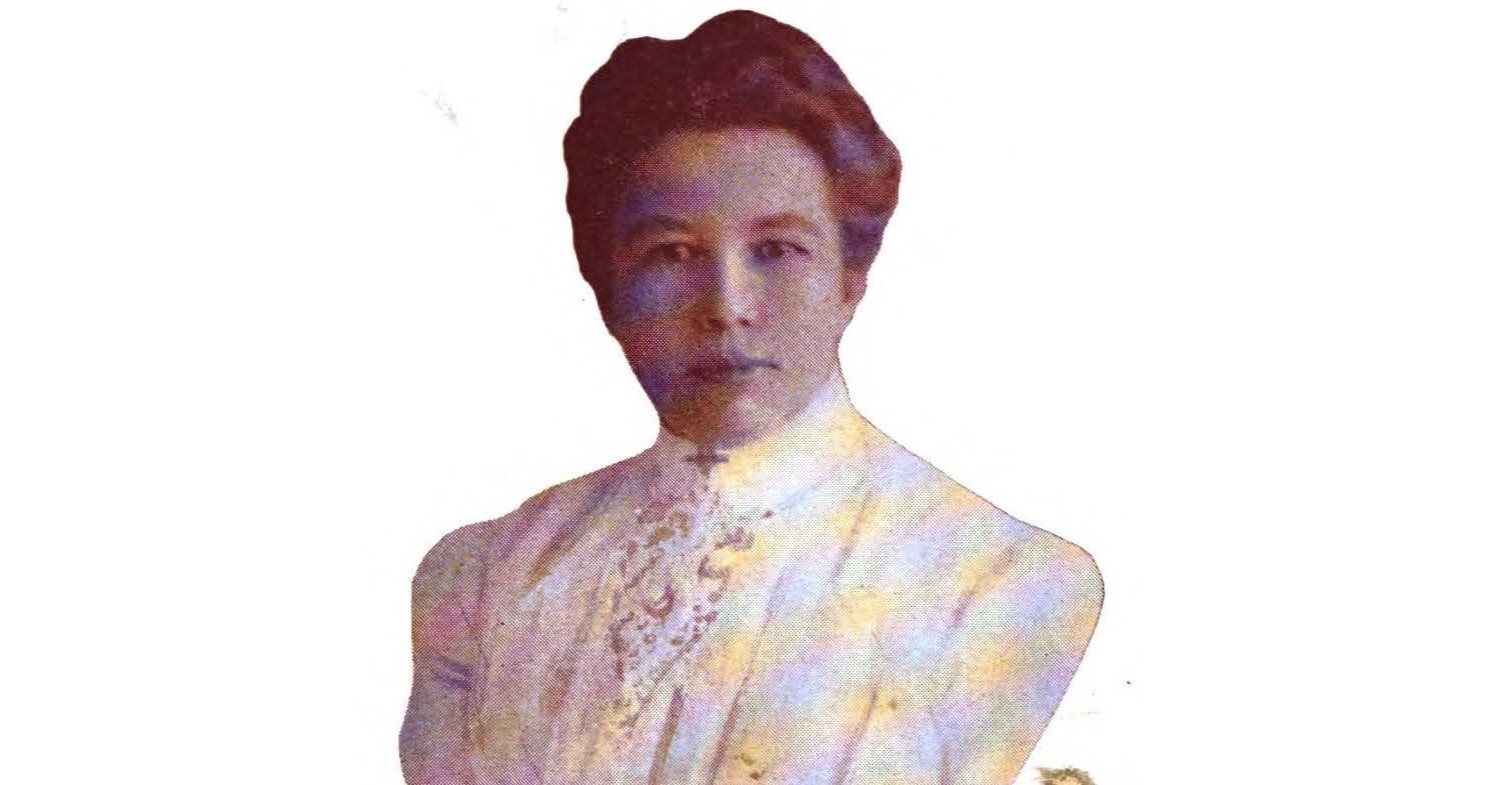
The Left-Right fight in the Socialist Party was reaching its apex in the Spring of 1912, with the Party putting Section 6. Article 2. in their constitution, making the advocacy of ‘law-breaking’ and sabotage incompatible with membership. Against its Industrial Socialist opponents, the Right hurled ‘anarchist,’ ‘bomb-throwing,’ and ‘anti-political’ accusations. Caroline Nelson gives a proletarian response, explaining a few realities to the learned lawyers then leading the Party.
‘Political Action vs. Academic Hair-Splitting’ by Caroline Nelson from Revolt (San Francisco). Vol. 3 No. 51. April 20, 1912.
At the beginning of the Lawrence strike Lena Morrow Lewis had an article in the Milwaukee Social-Democratic Herald headed, “The Hoodlumism of Haywoodism.” In this screed she tried to convince the workers that the fight with master-class was not in the field of industry, but in the hall of propaganda; that propaganda circulars and speakers were the real thing with which to overcome the master-class. The word INTELLIGENCE occurred so often in the article that one got the impression that the writer was bent on bowing to our so-called educated classes. The worker must be educated before anything can come his way. The destruction of capitalist property and the ignoring of capitalist laws were signs of terrible ignorance on the part of the worker, so recorded Lena in Milwaukee.
Right after that, in the capitalist papers, came Lincoln Steffens, and he showed that the capitalists themselves ignore their own laws, when it suits their convenience; that they have no regard for any law when it does not serve their purpose.
The question is, shall the workers have more regard for the laws made against them by their masters, than the masters themselves have? Back of every law in operation must stand a power to carry it into effect. When that power vanishes so does the law. The workers have: the right to violate every law they are powerful enough to violate in their own interest. That is good political action. We are in an actual fight with an enemy for our daily bread to protect our life, and not merely in a discussion. Every move we take that shows our power is an intelligent move; every move we take that shows weakness and cowardice is a stupid move. And the least intelligent action we can take is to bow with deference to capitalistic institutions, with their ethics. What are our Socialists coming to?
Now, let us shift the scene to Oakland. The I.W.W. over there in their fight for free speech gave the Socialists there a good reason for starting a recall of the capitalist politicians in certain offices. Yet, here we find that Tuck and Osborne are both with all their feeble might trying to swat the organization that gave them the political handle to act as political organization. Tuck being editor of the “World” can use that paper to show that the I.W.W.’s are anarchists, and Osborne being an intimate friend of Tuck’s can also air his political narrow mindedness. The last learnedly writes a letter, a copy of which appears in the World; to a Los Angeles friend, to show him how superior in political wisdom he is to those that believe in Industrial Unionism or Trade Unionism in connection with the Socialist party. Tuck argues that the I.W.W. is a reactionary anarchistic body because it repudiates political action. As a matter of fact the I.W.W. is the Industrial organization, whose motto is, “An injury to one is the concern of all!” Its aim is to form the workers into one big union. Why is that anarchism? It is anarchism to the muddle-headed or peanut politician in our party. To call the I.W.W.’s “anarchists” is just as logical as it was for the capitalists a few years ago to call the Socialists anarchists. One would think that our Socialists who get off such ridiculous lingo are as deficient in principle and ordinary regard for truth as the capitalist lick-spittles, a few years ago showed they were. These lickspittles have changed their tune because the Socialist party grew into a power and shall we say respectability. As soon as the I.W.W.’s get powerful, which they will at the present rate of growth, we shall find our peanut politicians falling all over themselves to praise them.
Everyone knows that the I.W.W.’s are not anti-political. On the contrary they realize that the workers cannot stir upon the industrial field without causing political action in proportion to that power. And contrary to Osborne’s stupid claim that the I.W.W.’s have never done anything but theorize and mutter, we have the proof of the Lawrence strike, one of the first revolutionary strikes in America, which has caused more political action in America than all Our dear comrades the votes put together. should realize that there are more ways than one of skinning a cat. The I.W.W. as an organization, must necessarily steer clear of politics. To form an industrial organization upon a set of theoretical political dogmas or platforms and programs would be foolish. Such an organization could never do anything but discuss and split hairs.
The American Federation of Labor in its present form has had its day. Great change in its organization is already going on. And half of its members are in sympathy with the I.W.W. Let any one throw a slur on the I.W.W. among the A.F. of L. and trouble starts. Now, then, the I.W.W. is undoubtedly the coming labor organization. It stands for the overthrow of the wage system. It stands for Socialism. It’s therefore very bad politics for our Socialist peanut politician to howl–anarchism–at the industrialists. They will in fact be swept aside like so many straws in the wind, or they will as they have done before claim that they are not guilty of such brainless performances. The Socialist party ought to have passed beyond the stage of academic hair splitting with its creeds and get to work and thank the power that gives them an opportunity to do something instead of turning around and making faces at it because that clown acts gives temporary respectability.
Revolt ‘The Voice Of The Militant Worker’ was a short-lived revolutionary weekly newspaper published by Left Wingers in the Socialist Party in 1911 and 1912 and closely associated with Tom Mooney. The legendary activists and political prisoner Thomas J. Mooney had recently left the I.W.W. and settled in the Bay. He would join with the SP Left in the Bay Area, like Austin Lewis, William McDevitt, Nathan Greist, and Cloudseley Johns to produce The Revolt. The paper ran around 1500 copies weekly, but financial problems ended its run after one year. Mooney was also embroiled in constant legal battles for his role in the Pacific Gas and Electric Strike of the time. The paper epitomizes the revolutionary Left of the SP before World War One with its mix of Marxist orthodoxy, industrial unionism, and counter-cultural attitude. To that it adds some of the best writers in the movement; it deserved a much longer run.
PDF of full issue: https://www.marxists.org/history/usa/pubs/revolt/v3-w51-apr-20-1912-Revolt.pdf
 Revolution's Newsstand