
Max Brod–Kafka’s best friend, literary executor, and biographer–looks at the origins of Kafka’s works through the conflict with his father over social, religious, and personal issues, including generous excerpts from Kafka’s own letters. Essential reading for all students of Kafka, one of the 20th century’s most important writers.
‘Franz Kafka—Father and Son’ by Max Brod from Partisan Review. Vol. 4 No. 6. May, 1938.
In 1924, at the age of 41, Franz Kafka died in a Vienna hospital. His lifelong friend and literary executor, Max Brod, has just published a biographical study entitled, Franz Kafka: Eine Biographie. From its opening chapter we excerpt a passage that seeks in his relationship to his father the origin of certain elements of Kafka’s work. Later chapters in Herr Brod’s book show how this relationship combined with social, religious and esthetic influences to shape the characteristic Kafkian art. (Ed.)
ALL HIS LIFE Franz Kafka stood in the shadow of his father’s powerful personality. Hermann Kafka was physically impressive: tall, broad-shouldered. His long life had been filled with hard work, rewarded by considerable success in business, burdened by much sickness. He left behind him a large family of children and grandchildren in whom he took a patriarchal pleasure. And after the wholesale house on the Altstadter Ring had been sold, his estate still included a four-story apartment house in the center of Prague. By his own labors and sacrifices he had built up an extensive family and kept it going. This achievement, taking hold of his son’s imagination, left its mark on all his work.
In November, 1919 Kafka wrote a lengthy and detailed “Letter to My Father.” More than a hundred pages long, the letter was, as I gathered from conversations with Franz, really intended to be given to his father (through his mother); and Franz believed at the time that in this way he could clarify the painfully deadlocked relation between them. Had the letter been delivered, the effect would in all probability have been the opposite of what Franz intended; it could scarcely have helped the father to understand the son. But in any case Frau Kafka did not deliver it: with a gentle word or two she returned it to Franz. And after that we spoke no more of the matter.
“Dear Father,” it begins. “You once asked me why I claimed to be afraid of you. As usual I could find no answer, partly because I was afraid of you, partly because my fear was too complex to talk about.” There follows a detailed analysis of the relationship between this strange father and this strange child, together with a study of his own character, that amounts to a short autobiography. Here and there the perspective appears to me distorted; facts are found in combination with unwarranted assumptions; from seemingly trivial perceptions there emerges an edifice of almost unfathomable complexity; and in the end the whole structure explicitly turns on its own axis, seems at once to refute itself and yet to remain valid. In conclusion Kafka makes the father himself speak, as if in reply:
“While I openly and sincerely attribute the sole blame to you, you try to outdo yourself in ‘cleverness’ and ‘tenderness’ by acquitting me of all blame. Of course your success in this is purely illusory (you do not want more) and, despite your phrases about ‘being’ and ‘nature,’ ‘contradiction’ and ‘helplessness,’ it can be read between the lines that I was the real aggressor, while you acted purely in self-defense. You really should be satisfied with the results of your disingenuousness, for you have succeeded in proving three things: first that you are innocent, second that I am guilty, and third that out of pure magnanimity you are prepared, not only to pardon me, but what is at once more and less, to prove, and yourself to believe, that I, contrary of course to the actual truth of the matter, am also innocent. That might have been enough for you, but you go still further. You make up your mind to live entirely at my expense. I admit that we fight one another, but there are two kinds of combat. The chivalrous sort, in which two independent opponents measure their strength, in which each exists for himself, loses for himself and wins for himself. And the sort waged by an insect, which not only stings, but also sucks blood to preserve its own life. That is in the character of the true professional soldier, which is what you are. You are unfit for life; but to make things comfortable and easy for yourself and to spare yourself any self-reproach, you prove that I have robbed you of all your fitness for life and put it in my pocket.” (These remarks cast considerable light on the genesis of Franz Kafka’s “insect story,” Metamorphosis, and also on The Judgment.)
The central theme of the whole letter can be summed up in the following formula: the son’s weakness as compared to the father’s arrogant strength. Yet, Kafka was aware that the contradictions were not as sharp and simple as the letter makes out. This awareness, inevitable in a work of Kafka’s, runs through the entire text, becoming most pronounced in the concluding words, which are the most conciliatory in the entire piece:
“Living facts cannot of course fit together like the demonstrations in my letter; life is more than a Chinese puzzle; but with the correction resulting from this fact—a correction which I cannot and have no wish to execute in detail—I believe that something very close to the truth will have been achieved. This should have a soothing effect on the two of us and make both life and death easier.”
With this reservation, the contradiction between the two characters is sharply delineated. The letter stresses the difference in the heredity of the two families from which Franz Kafka sprang: the shy, eccentric Lowys on his mother’s side, and the strong, realistic Kafkas. “Compare the two of us: I, to oversimplify, a Lowy with something of the Kafka at the base, which however does not express itself in the Kafka will to life, business, conquest…You, on the other hand, a real Kafka, as to strength, health, appetite, loudness of voice, eloquence, self-reliance, endurance, presence of mind, knowledge of people, a certain largesse and, of course, all the faults and weaknesses belonging to your very virtues; weaknesses that are brought out by your changing moods and sometimes by your temper.” To this compare the qualities which Franz (in another work) describes as his heritage from his mother’s family: “Defiance, sensitivity, sense of justice, restlessness.”
Toward the end of the letter, Kafka, in speaking of his vain attempt to get married, again paints an animated portrait of his father. “The most important obstacle to my marriage,” he writes, “is the ineradicable conviction that the support and conduct of a family require everything that I have recognized in you, the good and the bad together, as you organically combine them: strength and arrogance; health and a certain immoderation; eloquence and unwillingness to listen; self-confidence and contempt for the abilities of others; power over men and an inclination to tyranny; knowledge of people and mistrust toward most. Not to mention such unmixed virtues as diligence, endurance, presence of mind, fearlessness. Such are your qualities—mine by comparison seem next to nothing. Could I, thus equipped, venture into wedlock, when I saw that even you had to struggle hard in your marriage and were positively deficient in your relations with your children? Of course I did not ask myself this question so explicitly; otherwise my common sense would have shown me men quite different from you (Uncle R. for instance), who had married and at least not collapsed under the strain—a considerable accomplishment, that would have been plenty for me. But I did not ask this question, I experienced it from childhood on. I examined myself not only in reference to marriage, but in my relation to every trifling matter. Everywhere you convinced me of my incapacity, both by your example and by your training (as I have attempted to describe it). And what was true in connection with trifles could not help but apply to the greatest step of all: marriage.”
Here it seems impossible to deny the applicability to Kafka’s case of Freud’s theories of the subconscious. And yet this interpretation seems too facile. For one thing Franz Kafka himself was thoroughly familiar with these theories and never regarded them as anything more than a very approximate, rough picture of things. He found that they did not do justice to details or, what is more, to the essence of the conflict. In the following pages I shall attempt a different interpretation of the facts, by adducing the example of Kleist. For the present, however, it must be admitted that Kafka himself, in stating that he had not explicitly, or “in ordinary thinking,” formulated his attitude toward his father’s superiority, but had “experienced it from childhood on,” seems to confirm the psycho-analytical point of view. So do his remarks on his father’s “methods of training”—amplified in numerous diary entries dealing with his “miscarried education”; and his letters on pedagogy, based on Swift’s thesis that “children should be brought up outside of the family, not by their parents.”
The greater part of the letter, in fact, is devoted to his father’s type of “training.” “I was a timid child,” says Kafka. “However, I was assuredly headstrong, as children are; it is true that my mother spoiled me, but I cannot believe that I was more intractable than the average. I can’t help thinking that a friendly word, a guiding hand, a gentle glance would have obtained any results desired. At bottom you are a kindly, soft-hearted person (the following does not contradict this; I am speaking only of the outward form in which you affected the child); but it is not every child who has the endurance and the courage to keep on searching until he finds kindness. In your dealings with a child, you could not help but be your own violent, noisy, hot-tempered self; as a matter of fact you thought your methods calculated to produce a strong, courageous boy.”
His father’s unfavorable judgments regarding Franz’s recreations, his friends, his whole manner of being and acting, were an intolerable burden to him; they caused him to despise himself. Yet the father did not always adhere to his own judgments and rules, and this very lack of logic seemed to the son in retrospect a sign of his untrammeled vitality, his integrity of will. “By your own unaided strength you had worked yourself up so high that you had unlimited confidence in your opinions…in your easy chair you ruled the world. Your opinion was correct, and every other was crazy, hysterical, meshugge, abnormal. Your self-confidence was so great that you could be inconsistent without ceasing to be right. Sometimes you had no opinion at all in a certain matter, and then all opinions that were possible on the subject had without exception to be wrong. For instance you might curse at the Czechs, then at the Germans, then at the Jews, not for any particular qualities but for everything at once, and in the end there was no one left but you. For me you became imbued with the mysterious something that is proper to all tyrants whose right is based not on thought, but on their own person.”
Here we might recall the prominent role played in Kafka’s works not only by the concept of human dignity or democracy, but also by the principle of authority (see The Trial, The Castle, and all the stories and fragments that make up The Great Wall of China.)
Why did Kafka need his father? Or, more correctly, why was he unable to free himself from his father despite his critical attitude toward him; why did he not, like so many children, build a protective wall between himself and his parent? Or rather, since he actually did create such a barrier and in later years almost ceased to speak to his father: why did he suffer so deeply from the coldness between them? Must he not have known that between characters so diverse as himself and his father an intimate relationship was simply impossible? Franz in any case was able to understand his father; he was more than fair in his loving admiration of him—but the father by his very nature, and of course without any blame, as the letter repeatedly emphasizes, was hopelessly closed to any understanding of his son’s peculiar character. Even in my friend’s lifetime, when I had no knowledge of his diaries, I realized how deeply this wounded him, but it was vainly that I tried to convince him how foolish he was in overestimating his father and belittling himself. The swarm of arguments on which Kafka based his case (when he did not, as frequently happened, prefer to say nothing) actually did succeed in shaking me for the moment.
The life and death of all his own aims and desires—says Kafka in the letter—depended on his father’s judgment (see The Judgment). He writes: “My courage, decision, confidence, joy in a thing did not endure if you were opposed to it, or if your opposition could even be surmised; and I surmised it in almost everything I did…In your presence I developed a halting, stuttering speech—you are an excellent speaker as long as you are speaking of the things that interest you—but even my halting speech was too much for you, and ultimately I stopped talking altogether, at first for spite, and then because I could neither talk nor think in your presence. And since you were my actual teacher, this affected everything in my life.” Here we encounter an interesting parallel: Kleist is also said to have stuttered. Kafka’s stuttering, indeed, can only be applied to his relations with his father; otherwise, whenever he opened his mouth at all, he spoke freely, easily, elegantly, often humorously, with a charming, overflowing fantasy and disarming naturalness.
According to the letter, the results of his “training” (and here Kafka offers his own commentary to the final words of The Trial) was as follows: “I had lost my self-confidence in your presence, and exchanged for it a boundless consciousness of guilt. It was this sense of guilt that I had in mind when I aptly wrote of a certain person: ‘He is afraid that his shame will survive him’.”—Kafka then construes his further life as a series of attempts to break away from his father, to attain to regions removed from his father’s influence. It is remarkable that Kafka, who in his judgment of literary works absolutely rejects all lifeless, abstract “constructions,” should in this case himself employ “constructions” which, along with correct elements, contain many half truths and distortions. Thus, for example, he attempts to classify his entire literary work under the general heading of “attempt at flight from his father,” as if his love of artistry, his creative pleasure had no existence of their own. Those who knew him were, of course, far from accepting the simple picture of a man tortured by a father complex. They saw in him a man inspired by form, creative will and ability, thirst for knowledge, a love of life and humanity. A component, though no more than a component, was that aspect of his literary work which the letter so movingly describes: “You were the subject of my books,” he writes. “In them I poured out the sorrows that I could not pour out on your breast. My writing has been a purposely drawn-out parting from you. But though this parting was forced by you, its direction was determined by me.”
In the letter Kafka views other aspects of his life as an attempted flight: family, friendship, Judaism, profession, and ultimately his two attempts to marry: “My self-evaluation depended far more on you than on anything else—more even than on outward success…Where I lived I was despised, ill-judged, defeated, and though I exerted myself to the utmost to escape, I did not succeed, for with rare exceptions that was beyond my powers.”
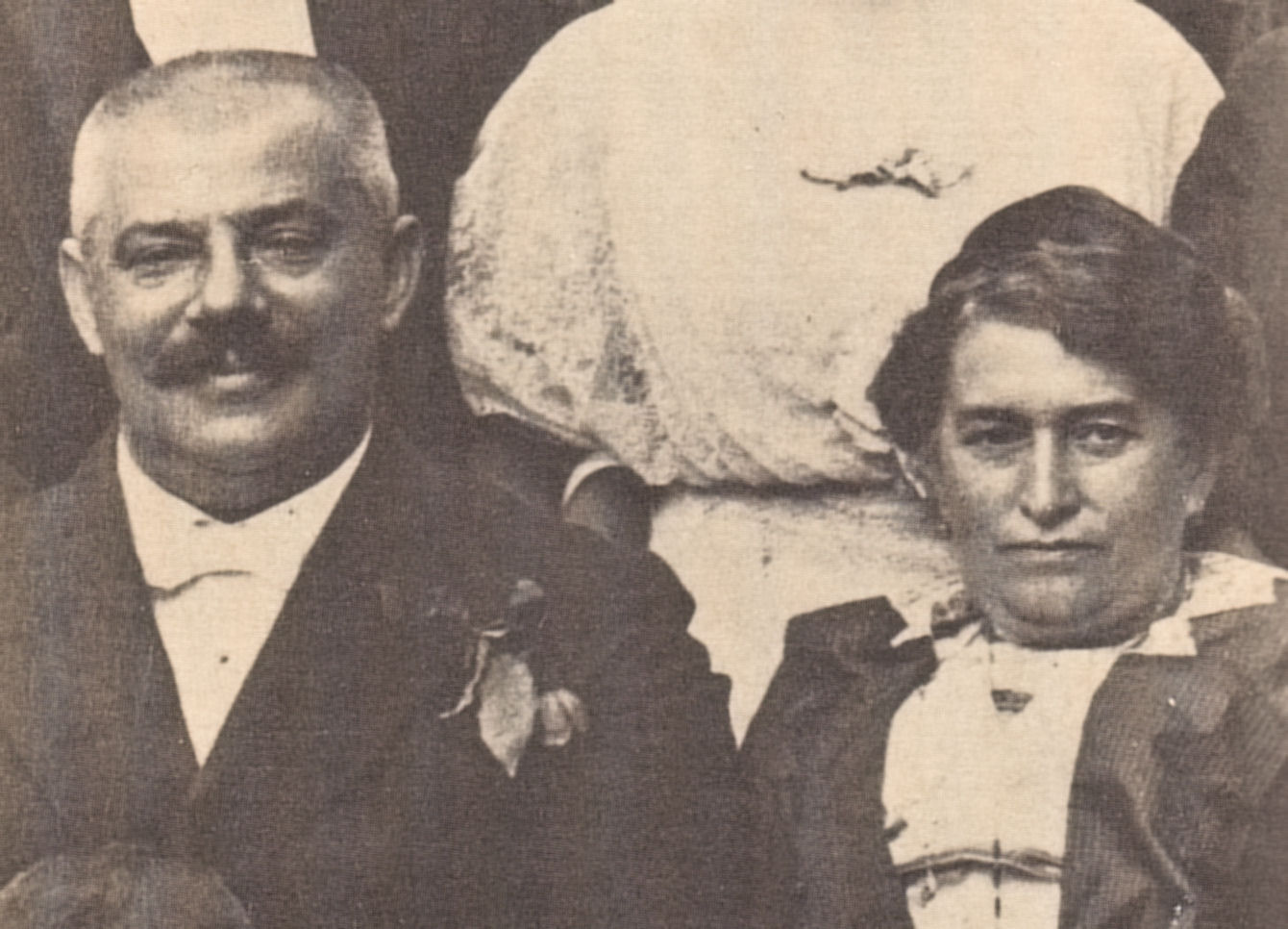
His remarks on Judaism, as a flight from his father’s power may here be mentioned, because they cast an important light on his childhood and also on his later religious development. “I found just as little salvation in Judaism. Here, other things being equal, a salvation was conceivable. Even more likely was the possibility that we should find one another in Judaism or use it as a starting point for further relations. But what sort of Judaism was it that I received from you? In the course of time I have had some three different attitudes toward it.
“As a child I emulated you in reproaching myself for not going to temple often enough, for not fasting, etc. I thought that I was doing an injustice, not to myself but to you, and the consciousness of guilt, which always lurked in readiness, ran through me.
“Later, as a young man, I failed to understand how you, with your pretense of Judaism, could reproach me for not exerting myself (if only for piety, as you put it) in the service of a similar sham. The whole thing, as far as I could see, was a delusion, a joke, not even a joke. Four days in the year you went to temple. When you were there, you were certainly more indifferent than anything else; you patiently ran through the prayers as if they had been a mere formality, and occasionally startled me by your ability to find the place in the prayer book. For the rest, I was permitted—and that was the main thing—to run around wherever I liked. And so I yawned and dozed through many hours there (I think that since then I have never been so bored, except in dancing school) and tried to get as much pleasure as possible out of the few little novelties that occurred, such as when the Ark of the Covenant was opened. This always remined me of the little box that opened at the shooting galleries when you hit a bullseye, except that in the shooting gallery it was something interesting that came out, while here it was always the same old headless dolls. What is more, I was very much afraid there too, not only, as was natural, because of all the people, but also because you once mentioned in passing that I might be called up to the Torah. This possibility kept me trembling for years. Otherwise I was never seriously disturbed in my boredom, except perhaps by my bar mitzvah, which, like a meaningless examination, required only a certain amount of memorizing. And then again my attention was attracted by little insignificant events, as when you were called to the Torah and cut a good figure in this function, which I regarded as purely social; or when in the memorial service you remained in the temple while I was sent away. I did not understand this last occurrence, and for a long time it aroused in me the almost unconscious feeling that something disreputable was going on.
“That was the temple. At home your religion was if possible even more wretched. It was restricted to Passover, which became more and more of a slapstick comedy, though, to be sure, the influence of your growing children had a good deal to do with that. (Why did you have to give in to this influence? Because you were the cause of it.) This was the faith that was handed down to me. Unless I include your pointing out to me ‘the sons of F., the millionaire,’ who on the principal holidays came to temple with their father. It seemed to me that the best thing to do with such a heritage was to get rid of it as quickly as possible, and this riddance seemed to me the height of piety.
“Later I adopted still a different attitude. I came to understand how you could believe that here too I was maliciously betraying you. You had really brought a certain Judaism with you from your little ghetto-like village community. It was not much, and what there was of it dwindled in the city and the army: yet the impressions and memories of youth did constitute a sort of Jewish life. The fact is that you did not have much need for that sort of sustenance, since you came of a powerful stock and were impervious to religious forces when they were not closely bound up with social considerations. Basically the faith which supported your life was your belief in the unquestionable correctness of the opinions of a certain Jewish social class; since these were your own opinions, your faith was your belief in yourself. This was enough Judaism for you, but for handing down to a child, it was too little; in the transmission it disintegrated entirely. All that remained were a few untransmittable childhood impressions and your much feared person. It was impossible to persuade a child, whose very fright had made him a sharp observer, that the meaningless forms you went through in the name of Judaism, with an indifference suiting their insignificance, could have any higher meaning. For you they held meaning as little memories of former times, and that was why you wanted to pass them on to me; but since even for yourself they had no independent value, you were able to do this only by arguments and threats. This method was, of course, unsuccessful, and since you did not understand your weak position, you became furious at me for my apparent recalcitrance.
“All this is no isolated phenomenon; the same was true of a large part of this transitional generation of Jews, who emigrated from the country, where a relative piety still prevailed, to the city. It was more or less inevitable, but it added one more asperity to our already difficult relationship. I am quite willing for you to believe—as I do—that you are guiltless in this respect; but you should explain your guiltlessness by your character and the nature of the times, not by outward circumstances. You should not say you had too much work and worry to permit you to occupy yourself with such matters. For in this way you turn your indubitable guiltlessness into an unjust reproach to others—a reproach that is very easily countered. For we are here concerned not with any instruction that you should have given your children, but with an exemplary life; if your Jewishness had been stronger, your example would also have been more cogent; this is self-evident and again no reproach, but only a defense against your reproaches.
“I have received a certain tardy confirmation of this estimate of your Judaism through your conduct in the last few years, when it seemed to you that I was busying myself more with Jewish matters. You have always been prejudiced in advance against my occupations, and even more so against my enthusiasms. Here you showed the same distaste; yet in this case you might have been expected to make a slight exception, for this was Jewishness of your Jewishness and hence offered the possibility of a new relationship between us. I do not deny that if you had taken any interest in these matters, they might have aroused my suspicions by that very fact; I do not claim to be any better than you in this respect. But the matter never came to a test. Through me Jewishness became repulsive to you, Jewish books unreadable. They ‘disgusted you.’ This may have been because you insisted that the Judaism you taught me during my childhood was the only true sort and that beyond that there was nothing. But it is hardly thinkable that you should have insisted on this point. In this case your ‘disgust’ (let us forget for the moment that it was immediately directed not against things Jewish but against my person) could only signify that you unconsciously recognized the weakness of your Jewishness and of my Jewish training, but, not wishing to be reminded of this, replied to all reminders with open hatred. Anyway, the negative importance you attached to my new Jewishness was much exaggerated; in the first place it bore your curse within itself, and moreover, since this sort of development depends largely on the nature of one’s relation to one’s fellow men, it was in my case doomed to failure.”
Compared to Kafka’s father, his mother, seen “in the kaleidoscope of childhood,” seems “a paragon of reason.” Her son indeed deplores her lack of independence toward his father, but also understands it. He understands her love for her husband and realizes that opposition to his will would have been impossible. Yet he resented the fact that his parents formed a sort of unit, a common front against their son, which his mother dared abandon only in secret. This resentment has left a profound trace in Kafka’s work. See Das Ehepaar (The Married Couple), which from this point of view is one of Kafka’s most revealing works.
The Kafka household in many ways resembled the Prousts’ (see Léon Pierre-Quint: Marcel Proust, sa vie, son oeuvre: “His father left home early in the morning and rarely saw his son.” His mother, by contrast, “was gentle and kind…he watched over him with the utmost care, excusing in advance his fantasies and the careless habits in which he indulged.”) If we study the common elements in the relations of Proust and Kafka to their parents we may perhaps begin to understand the similarity in outlook and style of two writers who, though they lived at the same time, never heard of one another. Their special precision in description, their love of detail, their meticulousness; the obsession of both with the family circle, a certain similarity in their racial make-up (Proust’s mother was a Jewess) and even in their outward lives—all this encourages comparison, though of course the difference between Proust’s cosmopolitan environment and Kafka’s bourgeois Prague led to important divergences in their work.
In dealing with cases such as Proust, Kleist and Kafka who, as long as they lived, never tore themselves away from the domination of family and family tradition, psychoanalysis sets up its theory of subconscious erotic attachment to the mother and subconscious hatred for the father. But there is also a simpler explanation for this attachment to the infantile (though it does not entirely exclude the psychoanalytical). This explanation is that the parents are the first problem confronting the child, the first resistance he has to deal with; his conflict with them is the model of all his life struggles to come.
The seriousness and intensity with which this first conflict (with parents and family) may be felt is shown by the career of a typically infantile poet: Kleist.1 All his life Kleist was haunted by the thought: what will my family (the extended family circle) say to my omissions and commissions? Will they trust me? There was bound to be an unbridgeable gulf between Kleist’s old Prussian family, which saw fame exclusively in the spheres of warfare and government, and the delicate, emotional, erratic poet. Kleist was literally terrorized by the most elevated ethical principles. He knew that in the eyes of his family his verses and dramas were not much better than a base and contemptible debauch. Kafka read Kleist’s letters with especial sympathy, underlined passages telling how Kleist’s family regarded the poet as “an utterly useless members of human society, unworthy of further consideration.” With silent irony Kafka noted in the margin that on Kleist’s hundredth birthday the family had laid a wreath on the poet’s grave with the words: “To the best of our race.”
It has often been noted that Franz Kafka’s works, especially in their prose style, show a considerable resemblance to Kleist. This resemblance cannot be attributed to mere influence. To my knowledge, no one has yet pointed out the similarity in their basic attitudes. This attitude is, in the truest sense of the word, “incarnate” in both men. Even their portraits show a resemblance, at least in the boyishness and purity of their features. In Kafka’s work the central theme is again responsibility toward the family. This is the key to stories such as Metamorphosis, The Judgment, Der Heizer (The Stoker) and many details in other works. Also a special way of using symbols that are utterly realistic, is common to both writers. It is not really so far from Kleist’s virgin who, before the eyes of her aristocratic family, is transformed into a pregnant and dishonored woman, to the young man who in the bosom of his family is mysteriously transformed into a contemptible insect. (Metamorphosis.)
In both writers there is the same attachment to family and: childhood experiences. In both there is the unconscious survival of an austere tradition (in Kleist’s case a Prussian tradition refreshed by Kantianism, in Kafka’s the Jewish ethics of justice, reawakened by later Jewish studies.) In connection with the childlike appearance of Kleist, I might mention one of Kafka’s utterances to me: “I shall never experience the age of manhood,” he said. “From a child I shall grow directly into a white-haired old man.” He often pointed out, even in his diaries, that people thought him very young.
In both men we find an occasional distrust toward the sexual function. Finally, both made excessive demands on themselves, as if they owed it to their family to prove that they were not good-for-nothings. This explains the dislike for every kind of “dependence,” that tormented Kafka even in the hungry Berlin winter of 1923 (the last year of his life), when he received packages of food from his parents in Prague.
Finally, Kafka’s highest ideal is nowhere better expressed than in Kleist’s longing words: “To cultivate a field, to plant a tree, to beget a child.” Yet the careers of both men were far removed from the coveted peasant simplicity. The analogy can even be pursued in studying their literary form, though of course we must bear in mind that Kafka consciously learned from Kleist’s style. Both writers are remarkable for a sort of fantastic invention that seems to spring from the child’s inclination to enchant everything he plays with. These two men actually did know “the way back”—and often traveled it. Their crystal-clear style, their realistic treatment of detail are a compensation, a defense against their childlike dreams. For both of them describe with the clearest, simplest, most definite words they can possibly find, the most secret, dark and unresolvable things.
(translated by RALPH MANHEIM)
1. Heinrich von Kleist, born 1777, committed suicide 1811. Most important of German Romantic dramatists. Chief dramas are Penthesilea, Das Kathchen von Heilbronn, Der Zerbrochene Krug, Prinz Friedrich von Homburg. It is his long short story, Michael Kohlhaas, which most directly influenced Kafka, both in his prose style and his treatment of the problem of justice. (tr.)
Partisan Review began in New York City in 1934 as a ‘Bi-Monthly of Revolutionary Literature’ by the CP-sponsored John Reed Club of New York. Published and edited by Philip Rahv and William Phillips, in some ways PR was seen as an auxiliary and refutation of The New Masses. Focused on fiction and Marxist artistic and literary discussion, at the beginning Partisan Review attracted writers outside of the Communist Party, and its seeming independence brought into conflict with Party stalwarts like Mike Gold and Granville Hicks. In 1936 as part of its Popular Front, the Communist Party wound down the John Reed Clubs and launched the League of American Writers. The editors of PR editors Phillips and Rahv were unconvinced by the change, and the Party suspended publication from October 1936 until it was relaunched in December 1937. Soon, a new cast of editors and writers, including Dwight Macdonald and F. W. Dupee, James Burnham and Sidney Hook brought PR out of the Communist Party orbit entirely, while still maintaining a radical orientation, leading the CP to complain bitterly that their paper had been ‘stolen’ by ‘Trotskyites.’ By the end of the 1930s, with the Nazi-Soviet Pact of 1939, the magazine, including old editors Rahv and Phillips, increasingly moved to an anti-Communist position. Anti-Communism becoming its main preoccupation after the war as it continued to move to the right until it became an asset of the CIA’s in the 1950s.
PDF of full issue: https://archive.org/details/sim_partisan-review_1938-05_4_6/page/29/mode/1up?view=theater
 Revolution's Newsstand