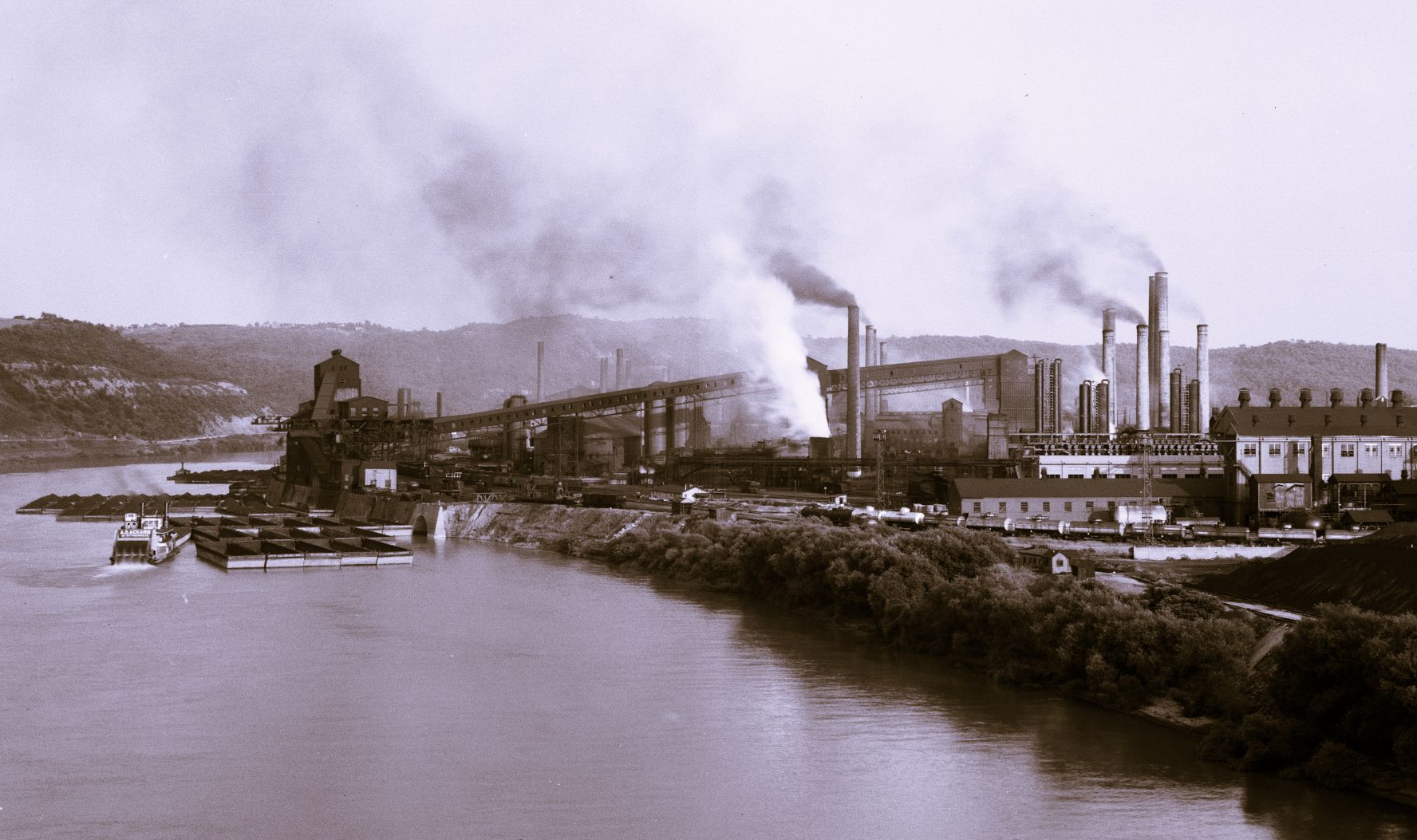
A Black worker from what is still a company town, Clairton, Pennsylvania, site of today’s deadly coke mill explosion, and long-time place of steel-making and worker-killing, writes to the Daily Worker to tell of conditions there in 1929.
‘Clairton, Pa., Ruled Lock, Stock and Barrel by Carnegie Steel’ by a Worker Correspondent from The Daily Worker. Vol. 6 No. 221. November 21, 1929.
CLAIRTON, Pa. The conditions of the Negro workers in Clairton are deplorable. The workers are forced to live in shacks not decent enough for horse stables, for after they pay three to four times the market price for food and clothing they have not enough left out of their miserable wages to pay for half-way decent places to live in.
Moreover they are segregated to the worst districts. Most of the Negro workers that live in fairly decent houses have to take in lodgers and these houses are over-crowded.
The Negro workers are constantly victimized, their homes burglarized, their clothes stolen, and the courts and police silently encourage those who victimize them. Why do those who victimize the Negro workers here go scot-free? It is because the Carnegie Steel Co. must have dull-minded submissive slaves to do their work, slaves who have had the manhood crushed out of them either by being swindled or their energy sapped away by continually drinking rotten hooch, the traffic in which the Carnegie Steel either winks at or openly supports.
The paymaster of the mill is the mayor of the town, and gives the traffic in booze a free hand because it makes the worker get drunk and makes him temporarily forget the unbearable conditions he must face.
Prostitution is also winked at by the authorities so that the money left over from drinks can be spent on prostitutes. In fact, the Carnegie Steel does everything to afford the lowest amusements to the workers so their minds can be kept off basic problems.
The workers are also encouraged to get advances on their wages so their noses can be kept to the grinding stone. This is done to keep the workers in a position where they have to work at any wage. However, in the face of all this, many Negro steel workers are constantly in revolt.
Many are beginning to turn to the only solution, which is organization, and many can discriminate between the treacherous A.F. of L. fakers and the militant new trade union center, the Trade Union Unity League. They are ready for the T.U.U.L. leadership.—B.B.
The Daily Worker began in 1924 and was published in New York City by the Communist Party US and its predecessor organizations. Among the most long-lasting and important left publications in US history, it had a circulation of 35,000 at its peak. The Daily Worker came from The Ohio Socialist, published by the Left Wing-dominated Socialist Party of Ohio in Cleveland from 1917 to November 1919, when it became became The Toiler, paper of the Communist Labor Party. In December 1921 the above-ground Workers Party of America merged the Toiler with the paper Workers Council to found The Worker, which became The Daily Worker beginning January 13, 1924.
PDF of full issue: https://www.marxists.org/history/usa/pubs/dailyworker/1929/1929-ny/v06-n221-NY-nov-21-1929-DW-LOC.pdf
 Revolution's Newsstand