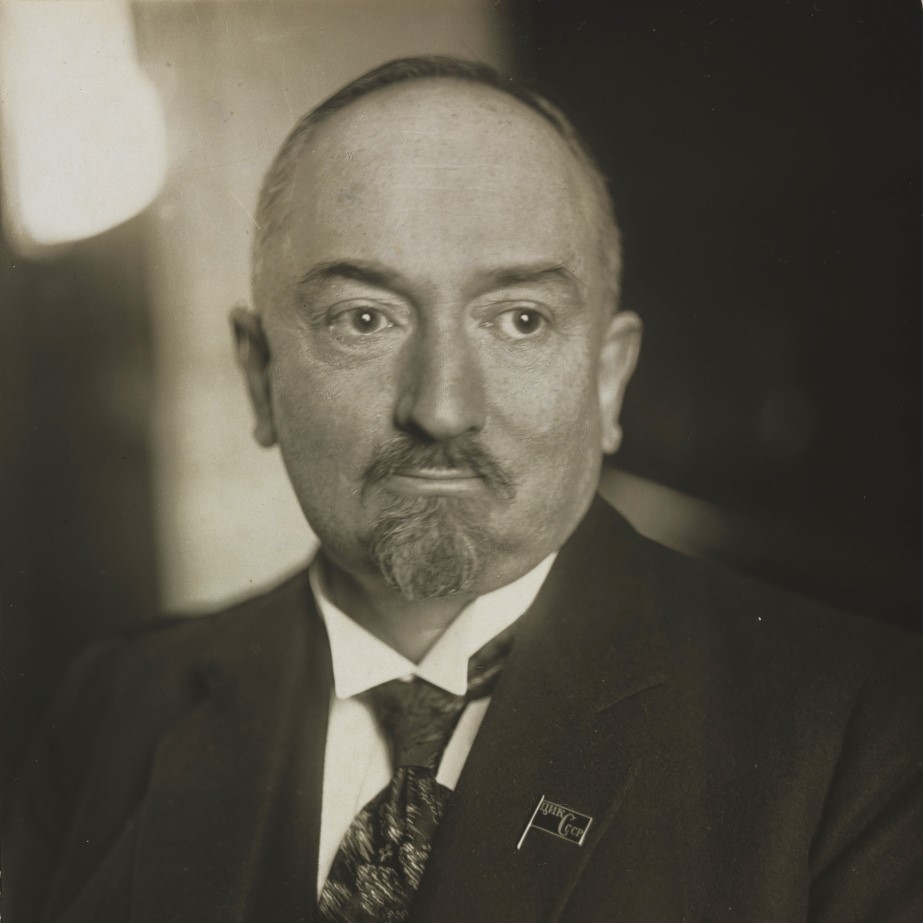
The comrade with, perhaps, the most difficult job of any Bolshevik after the Revolution was the enigma, Georg Chicherin. As Commissar of Foreign Affairs he was tasked with an impossibility; peace between the Soviets and imperialism, Here he speaks on the gangsters’ peace signed at Versailles.
‘The Treaty of Versailles’ by Georgy Chicherin from The Revolutionary Age. Vol. 2 No. 2. July 12, 1919.
THE Versailles peace treaty signifies not peace but a further continuation of war. It creates a condition that can produce nothing else than a continuation of the war. Besides, this is the purpose of the framers of the treaty, namely, to make the war conditions lasting in order to be in a better position to combat the working class movement. The present de facto oligarchy keeps itself in power by inciting the workers of different countries against one another. It is obvious that the capitalist governments formulated such a peace as signifies a continuation of war. It is a war in so far as it drives certain workers into conflict with others; it is a peace in so far as, by the continuation of bloodshed, it does not kindle revolutions. Thus, in the last analysis, calculates the oligarchy. Whether their calculations are correct that is another question.
One instrument of the unbroken warfare seems to be the League of Nations, which, under the Treaty of Versailles, implies a continuation of the coalition, not a peace organization for whose foundation Imperialism is clearly not fitted. But even this coalition can not exist for long; on the first contact with reality it will, of itself, fall to pieces.
The only purpose of the League of Nations is to serve as a demagogic cover under which is hidden the continued coalition of the Entente powers against their German rivals. The League of Nations used to be a demagogic means to work up the patriotism of the masses in the Entente nations; but conditions have changed. The mob has already ceased to believe the stories told them for such a long time, and all that demagogy on the League of Nations is already somewhat stale. I am convinced that it will not delay for one moment the rapidly spreading revolutionary movement in the Entente countries.
Besides the very fact of a continuing existence of a military coalition shows that the conditions created at Versailles are but a new form of prolongation of the war; it shows that the old world is not in a position to solve either the contradictions formed by it, or the problems which it establishes for itself, and that the moment has arrived for the new society to take the legacy which it alone is in a position to manage.
As to general disarmament, it is only a new manoeuvre to continue the rule of the oligarchy. Universal military obligation prepared the masses for revolution. The workers used the arms put into their hands to threaten their masters. Therefore the oligarchy is obliged to turn to the system of voluntary service and, instead of the national militia, there are organized bands of White Guards.
This program of disarmament is also a new demonstration that the Treaty of Versailles is hurrying to reconcile not only national but class antagonisms. Germany is brought to such financial exhaustion that the German people even if they worked day and night, could not recover from this condition. As to the other aspects of economic life, Germany is made entirely unable to pull itself out of the condition into which it is put. All this leads only to the result that the antagonism of interests in the international field will take on a most lingering, sharp, and serious character.
Lorraine and the Sarre Basin constitute a prize of war, and through this acquisition the French hope to gain a large stake for their own pocket. The working class has nothing to gain on this, but it is a fact, on the contrary, that French capital is afraid of the revolutionary traditions of the French workers, and therefore frequently shows the inclination of fastening itself on a foreign labor market.
In the department of Meurthe and Moselle, French capital has to deal not with the French working class, but with a motley mass of workers of all sorts of nationalities. The French capitalists thus strengthen their class condition and still less than before reckon with the Parisian workers and their revolutionary inclinations.
In general, what is done at Versailles is not in a position to bring a condition of quiet; it only drives the workers into the street. This still-born treaty of the Allied powers turns over a new leaf in history for mankind: a revolutionary period of “storm and attack.”
The Revolutionary Age (not to be confused with the 1930s Lovestone group paper of the same name) was a weekly first for the Socialist Party’s Boston Local begun in November, 1918. Under the editorship of early US Communist Louis C. Fraina, and writers like Scott Nearing and John Reed, the paper became the national organ of the SP’s Left Wing Section, embracing the Bolshevik Revolution and a new International. In June 1919, the paper moved to New York City and became the most important publication of the developing communist movement. In August, 1919, it changed its name to ‘The Communist’ (one of a dozen or more so-named papers at the time) as a paper of the newly formed Communist Party of America and ran until 1921.
PDF of full issue: https://www.marxists.org/history/usa/pubs/revolutionaryage/v2n02-jul-12-1919.pdf
 Revolution's Newsstand