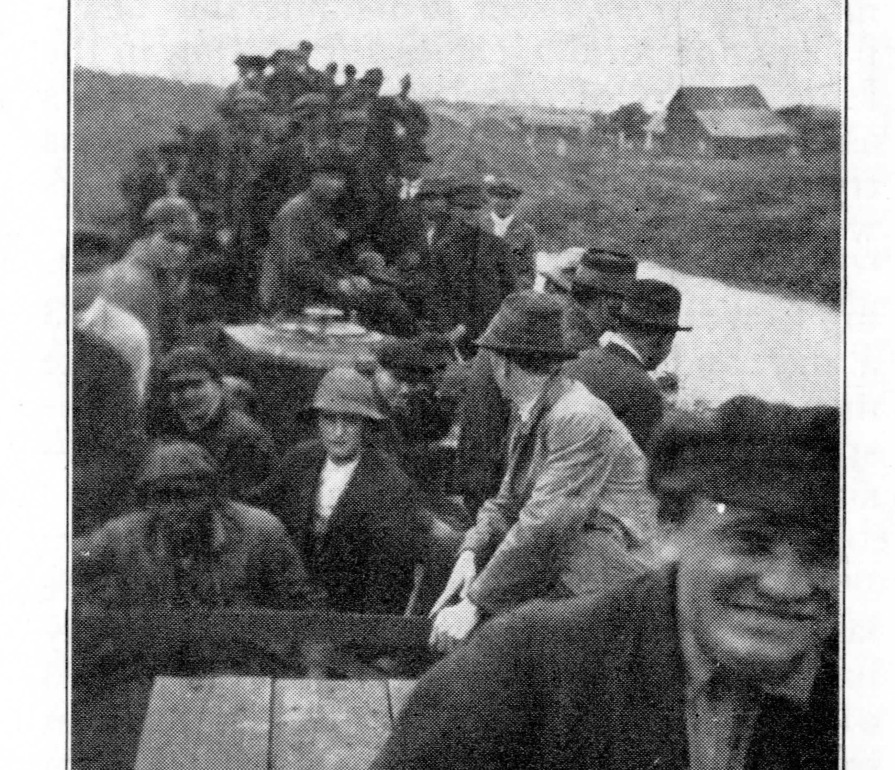
A whole world of labor on the road. Veteran wobbly organizer Forest Edwards describes three classes of Hobo; the Tramp, the Crook, and the Migratory Worker.
‘The Migratory Worker’ by Forest Edwards from Solidarity. Vol. 7 No. 315. January 22, 1916.
The migratory worker and what he is up against. This subject has been on my mind for some time, and only now have I decided to write on it. In the following paragraphs there will be no attempt made at moralizing about any of the many trades and professions common among the migratory population. Just a simple recognition of their existence together with their relation to the workers and the I.W.W. leaving the question of good and bad for the reader to decide for himself.
It will be impossible to discuss the migratory worker with out at the same time bringing into the argument all of the migratory population. This course will be necessary for the rea son that not all of the migratory population are migratory workers. There has been many attempts made at writing and lecturing on the subject, but so far as I have been able to read or listen, none of the writers or lecturers were able to discuss the subject intelligently. This for the reason that they lacked the experience necessary to knowledge of the subject, or they were playing to the galleries. In either case, the result was the same. The real facts in connection with the life of the American hobo have been improperly assembled, or were not known to the author. The result has been confusion.
For a clear understanding of the “migratory worker,” suppose we classify the migratory population. In doing this, I believe it best to use a term that will cover the migratory population. Take the term “Hobo.” By using this term in a general sense it makes our subject more easily understood. The term “HOBO” so far as this article is concerned, will apply to all of the migratory population.
Then for the sake of clearness, the hobo, will be again sub-divided into three classes. They are as follows, “The Tramp,” “The Crook” and the “Migratory Worker.” Under these subdivisions we will proceed to discuss the Hobo.
THE TRAMP
The tramp appears in many forms. That is, he has many different professions. He may be seen as a “Tinker,” a “Mush-Fakir,” a “PEDDLER” or an “AGENT.” He may be a “professional Bum.” There are many such professions that cannot be classed with those followed by the Crook. The Tramp is a man that is up and busy. He depends upon his wits for his living. He is distinctly an individualist in thought and action. He is fighting the world alone. He is seldom found on a job of work. If he works at all for wages he does so only as a means of getting himself started up in business. He does not depend upon wages for his bread and butter. The tramp is not interested in the matter of better wages, shorter hours of labor or better working conditions. Moreover, he is no force for improved conditions except as he might talk favorably for them. The I.W.W. has made no appeal to the tramp.
THE CROOK
Without stopping to argue as to whether this element is good or bad, we will simply recognize the fact that they are here. They form no small part of the migratory population. Their forces are being fast recruited. There are many of these new recruits who are but amateurs at the business. Although thousands are sent over the road every year, it seems that this method of dealing with them is no remedy for the profession. But aside from that the Crook is bound to float around over the country, with other hobos for practically two reasons. First he is forced to change locations on account of his reputation. To avoid the Officers and so on. Second, he must search new fields for exploitation. In the harvest belt, he follows the migratory workers from Oklahoma to Canada. He always has his eye open for easy money. When the workers leave, then he leaves also.
The Crook is a man who has decided to get along without working for wages. He appears as a “Professional Gambler,” a “Boot-Legger,” a “Confidence Man” or a “High-Jacker.” He is known as a “John-Yegg,” a “Forger” and a dozen other such professions too numerous to mention. He depends upon his knowledge of these professions to get him his pork-chops. The remarkable fact to note in this connection is that few of them? succeed in getting by any better than the wage-worker does. You will find them on the bum, as a rule.
This element is a real menace to the workers who depend upon their daily wages for their living. They are a bar to successful organization. They come into the Union of the workers and get a card under the guise of being wage workers. They use their Union affiliations as a means of covering up. To escape attack. To get a degree of protection. And to further their exploits. The crook is not looking out for the welfare of the workers. He is looking out for himself. His motive is always personal gain. He is no force for higher wages and better working conditions because he does not operate on the job. If all of the Crooks in the world were organized, they would not function on the job, and consequently could not raise wages. They are not interested in job conditions. The I.W.W. has no message for them. They are exploiters of labor.
THE MIGRATORY WORKER
The migratory workers are Hobos, but all hobos are not migratory workers. The roaming nature of the migratory worker is developed more by reason of the seasonable work in different sections of the country upon which these men depend for their living. They are found in the harvest field of the north in the fall. In the oil fields of the south in the winter. Or, they may be found in the orange groves of California, or the woods in northern Minnesota, Michigan or Wisconsin. This is all seasonable work. Then again, the migratory worker is found on construction work, such as railroads, dams and electric construction jobs. The wages and conditions are usually bad on such work, because there is little or no organization among them. These poor conditions prohibit the workers from making “big stakes.” General dissatisfaction prevails among them.
It is out of the ranks of the migratory worker that the “Professional Tramp” and “the Crooks” are recruited. Dissatisfied with their lot, and seeing no way of getting away from the insults of the Boss, they try to make a stand. The Migratory worker is exploited to the limit by the boss, and not being inclined to lead a crooked life, he is unarmed and as such is an easy victim for grafters; grafters that evolved out of his own ranks.
The migratory workers are expected to beat their way on the railroad. Their wages are not sufficient to pay their fare on the cushions. The railroad companies expect this method of travel from their employes. They employe ex-convicts who have turned stool pigeons in the pen as railroad detectives to shoot and club men for beating the road. The migratory worker is in constant fear. The whole world is against him. Some drink booze. If they will indulge in the use of alcohol they become easy prey for the gambler and others. With the card shark, he has no show. He lacks the knowledge necessary to the profession.
The migratory worker is the only one who can function on the job. He is the only one who is interested in bettering conditions on the job. His actions on the job are prompted by a motive consistent with his interest as a wage worker. To him the propaganda of the I.W.W. has a real meaning. The I.W.W. has a message for the migratory worker. It appeals to the wage workers and asks them to unite for a common purpose. That purpose is higher wages and shorter hours and the emancipation of the working class from all exploitation.
FOREST EDWARDS
The most widely read of I.W.W. newspapers, Solidarity was published by the Industrial Workers of the World from 1909 until 1917. First produced in New Castle, Pennsylvania, and born during the McKees Rocks strike, Solidarity later moved to Cleveland, Ohio until 1917 then spent its last months in Chicago. With a circulation of around 12,000 and a readership many times that, Solidarity was instrumental in defining the Wobbly world-view at the height of their influence in the working class. It was edited over its life by A.M. Stirton, H.A. Goff, Ben H. Williams, Ralph Chaplin who also provided much of the paper’s color, and others. Like nearly all the left press it fell victim to federal repression in 1917.
PDF of full issue: https://www.marxists.org/history/usa/pubs/solidarity-iww/1916/v7-w315-jan-22-1916-solidarity.pdf
 Revolution's Newsstand