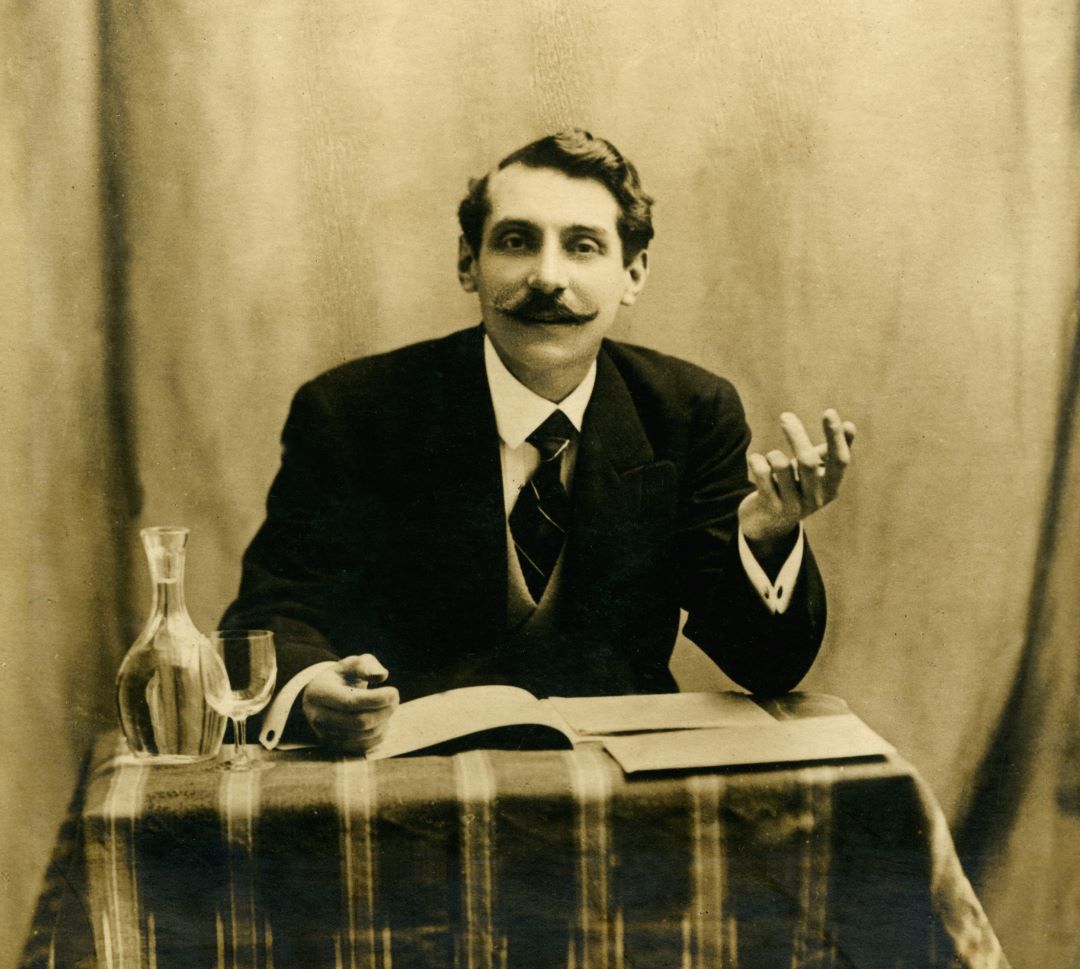
Originally published in La Revue Socialiste France in 1894, this is its first English-language publication (Charles H. Kerr would do a later translation) of Lafargue’s fascinating ‘ethnological’ Bible study. As is often the case with Lafargue, alongside that which is antiquated there are offered some brilliant and revelatory insights into religion and culture. “Eat the peach, spit the pit” as my grandfather would say.
‘The Myth of Adam and Eve: An Ethnological Study’ by Paul Lafargue from The Weekly People. Vol 17 Nos. 7-10. May 11-June 1, 1907.
From the German by Fred. Fellermann
“Only that which can be, can be thought.”–Parmenides.
In the eighteen century, when France was the home of criticism, only two points of view were known there in regard to the narratives of the Bible: one side confessed to be believers, and accepted everything therein literally; the other side confessed to be freethinkers and rejected the whole as the inventions of impostors. In distinction to this the philosophical intellects of our time are just as slow to sneer at the Biblical narratives, as they are to kneel down before their mysteries. They explain them, and try to discover whether their fantastic covering does not hide some positive facts. In doing this they step in the footprints of the physician of the insane, who is not at all inclined to deny certain undisputable wonders, but on the contrary, tries to retrace to pathological causes, what formerly was imputed to divine interference.
In my estimation, it is hardly possible that man, whose intellect can only exercise itself on real things and appearances, can conceive anything utterly unreal. Therefore one may revert to the profound saying of the Greek philosopher and assert, that that which man thinks, has existed, does exist, or can exist.
But, as a concave mirror, according to its eccentricity, reflects the image more or less distorted, so also does the human brain, in accordance with the degree of its development reflect things and appearances in their most varied combinations and forms. The human brain changes with the different epochs of history; the myth which we smile at as absurd, appeared, on the contrary, to primitive man, who created it and believed in it, self-evident and natural. We need not even go beyond our own personal experience, to get this fact confirmed. Are the fashions and prejudices of our grandfathers not just as silly and unreasonable, as our fashions and prejudices will be to the coming generations?
Myths are neither the inventions of impostors, nor idle fantasies, but rather one of the naive and spontaneous forms of human thought. Only then will we become acquainted with the childhood of mankind, when we will be able to unriddle the meaning which myths had for primitive man, and which has been lost in the course of many centuries. But it is a very difficult task to find one’s way in the mysterious labyrinth of myths. Various methods have been tried to explain them, without however, yielding the expected results, as may be concluded by the contradictions which have shown themselves in the explanation of the same myth by various scholars who had applied the same method. Since a few years, English mythologists, who call themselves “folklorists,” apply a new method, in the study of folk legends.
The ingenious and learned folklorist, Andrew Lang, to mention only one of the many, has had the happy thought, to the great horror of the highly cultured of comparing the Greek myths with the legends of the savages. And he proved that the African, negroes and the American red-skins were in possession of legends which could be readily mistaken for the myths of the Greeks, the lights of our civilization. It is therefore more than probable that by study of the customs and usages of savage peoples, it may be possible to reconstruct again the prehistoric millet in which the primitives religions had their origin and to comprehend the proceedings which influenced their development. Long ago, Goguet and Chateaubriand called attention to the peculiar analogy which existed between the Franks of the Merovingian period, Homer’s Greeks and the Indians, whose customs disclosed to Morgan the first forms of the family. All anthropologists acknowledge to-day that the savages, unfortunately disappear very quickly before our brutal civilization, exemplify the childhood of mankind; as Dr. Letourneau’s strikingly remarks, “They are the living pre-history.” The folklorists confine themselves to comparing, one with another, the legends, myths and superstitious notions of the various peoples. As members of England’s “good society” they guard themselves against drawing into their sphere the Biblical narratives. Consequently one has to go beyond them and search for the facts which are at the bottom of the myths, and to employ the same criticism to the narratives of Genesis, as to the legends and the theogony of Hesiod.
The Two Narratives of Genesis.
The Commentators have pointed at the fact that Genesis contains two narratives of the creation of man, which do not at all supplement, but rather contradict, each other.
The first chapter narrates that Elohim “created man in his own image, in the image of God created he him, male and female created he them.” (Gen, I., 27). And he said to them: “Behold, I have given you every herb bearing seed, which is upon the face of all the earth, and every tree, in which is the fruit of a tree yielding seed; to you it shall be for meat.”
(Gen. I, 29) Accordingly, he granted them the right to eat from every fruit, without exception.
The second chapter narrates the occurrence differently. “Jahve-Elohim formed man of the dust of the ground,” (Gen II, 7), put Adam, whose name really signifies “earth,” in the Garden of Eden and said to him: “Of every tree of the garden thou mayest freely eat; but of the tree of knowledge of good and evil, thou shalt not eat of it: for in the day that thou eatest there, of thou shalt surely die.” (Gen. II., 16, 17). Thereupon Jahve-Elohim pulled out of Adam’s side, Eve, the wife of the former, just as Jupiter had pulled out of his thigh Bacchus, and had produced from his head, Minerva. According to this story, man is not created in the image of God; but as soon as he had eaten from the forbidden fruit, said Jahve-Elohim: “Behold, the man is become as one of us.” (Gen. III, 22.),
The third and fourth chapters narrate the disobedience of Adam and Eve, their expulsion from Paradise, and murder of Abel; they also contain a genealogy of Cain’s offspring. The fifth chapter continues the interrupted narrative, it does not know anything about the Garden of Eden, of the creation of Eve, the fall of man, or the birth of Cain and Abel, but it speaks again of Adam as a male and female, who at the age of 130 years, “begat son in his own likeness (consequently bisexual), and called his name Seth.” (Gen. V. 3). The narrative clones with a genealogy from Adam to Noah.
Chapters II, III, and IV of the book of Genesis inform us that besides Adam and his children the earth was peopled by other men; that rivers and various regions had received names before Adam had been created; that gold, the use of metals, the forging of swords, the domestication of animals, and the tilling of the soil were known, all of them appertaining to affairs which denote a rather high degree of civilization; while on the other hand, it is said that Adam and Eve, like the lowest savages, went about naked without even being aware of their nakedness. They were therefore incapable of comprehending the meaning of “the perception of good and bad,” which they should have attained by eating the forbidden fruit. Travelers, indeed, have proved that savages, in a similar condition of nakedness and innocence, have no conception of abstract expressions like perception, bad, good, justice, and ideas which result therefrom.
The three chapters named have been evidently inserted and must have originated in a period other than that of the first and fifth chapters, which treat of different occurrences. Instead of considering the first five chapters of Genesis as a whole, they must be di vided in two groups and studied separately; and this will be done in the following effort
If analyzed in the light of the knowledge which we possess concerning primitive peoples, it will perhaps be possible to fathom the sense of the myths which they relate.
The Myth of Adam, the Man-Woman.
The first and fifth chapters of Genesis do not mention the existence of woman. Adam and his offspring till Noah are created in the image of Elohim; they are male and female, and enjoy an extraordinary longevity, beget children first after they count more than a hundred years and die several centuries old. Noah was 500 years old when he begot three sons; he is the only descendent of Adam whose three children are recorded by names.
The rabbis did not hesitate to accept Adam as a hermaphrodite. Two the most distinguished theologians, Moses Maimonides, in the 12th, and Manasse Ben Israel in the 17th century, asserted that Adam’s body, like that of Hermaphroditus, the child of Hermes and Aphrodrite, was at the same time that of a man and a woman, and that the male and female body was grown together at the shoulders. If one accepts the text of the Bible literally, then he is certainly bound to conceive a similar picture of the first human pair, Plato has described a race of hermaphrodite beings, who had four legs and four arms and bore on a single neck two heads. The double number of limbs made them so strong and wanton, that the gods of the Olympus warred against them. At first Jupiter Intended to extirpate them, but later became milder humored and satisfied himself with separating them into two parts. In each half there remained a peculiarly strong desire to unite with the other, and, according to Plato, herein is to be found the origin of love.
In the old Persian mithraism we also encounter the idea that the first human beings, were bisexual. This doctrine teaches that from out of the tree of life, the “Relva,” a bisexual being emerged, formed the man, Meschia, and the woman, Meschiana, who became the progenitors of the human race. The myths of a bisexual first man can be found in great numbers with other peoples.
M. Ledrain, well versed in Assyrian lore, states that the religions of anterior Asia present numerous cases of gods who are bisexual, and from this he draws the conclusion that man at first had conceived the deity as bisexual. But the androgynal gods, whose image is found upon the bricks and monuments of Asia, probably do not belong to any savage nation, but to nations already highly civilized, living in cities, having characters for letters, and who knew how to till the soil and to work in metals. On the other hand, it is known that in the Egyptian and Greek pantheon, Nelth, relatively Zeus–not to mention any other gods–were represented as hermaphrodites, after they had been worshipped for a long time in the unisexual form. [One of the tablets of the “Pantheon Egyptian,” by Champollion the younger (1823), represents Neith, the great goddess of Sais, whose festival is annually celebrated over all Egypt, with the organs of the male sex. The “Galerie Mythologique,” by Ch. Lenormant, contains medals from anterior Asia, with the reproduction of a Zeus, who has two breasts. Saint Augustine quotes an old Latin poet who calls Jupiter “ruminus” (the nurse) the father and mother of gods.” “Progenitor genitrixque deorum.”] The bisexual gods, belong to a period after the conception of hermaphroditism of the first human pair had been arrived at. It would go beyond the limits of this article to produce the ample proofs which uphold this view.
Let us therefore put aside these androgynal gods and ask the question: “What is the meaning of this first bi-sexual human being, what means this Adam who is blessed with such extraordinary longevity? Is there hidden under these unrealities a reality, and what is it?”
Morgan has proved in his epoch-making work “Ancient Society,” that, with savages of the lowest order of which we have any knowledge, sexual Intercourse is permitted within the tribe. The tribe was, to use the expression of MacLennan, “endogamous.” Only later was sexual intercourse between the members of the same tribe prohibited. In order to prevent within the endogamous groups sexual intercourse between mother and son, father and daughter, they were divided in four generations: those of the grandparents, parents, children and grandchildren. All the members of the same generation considered themselves as brother and sisters, as children of the preceding parents and as parents of the following younger generation. Sexual intercourse was allowed between al men and women of the same generation, also between brother and sister, but was prohibited between the members of the various generations.
Sexual intercourse between brother and sister has at some time been customary with all nations. The Greeks call the marriage of Juno with her brother Jupiter, the holy marriage, (hieros gamos); the Cretans celebrate annually in remembrance of old customs the festival of the holy marriage.
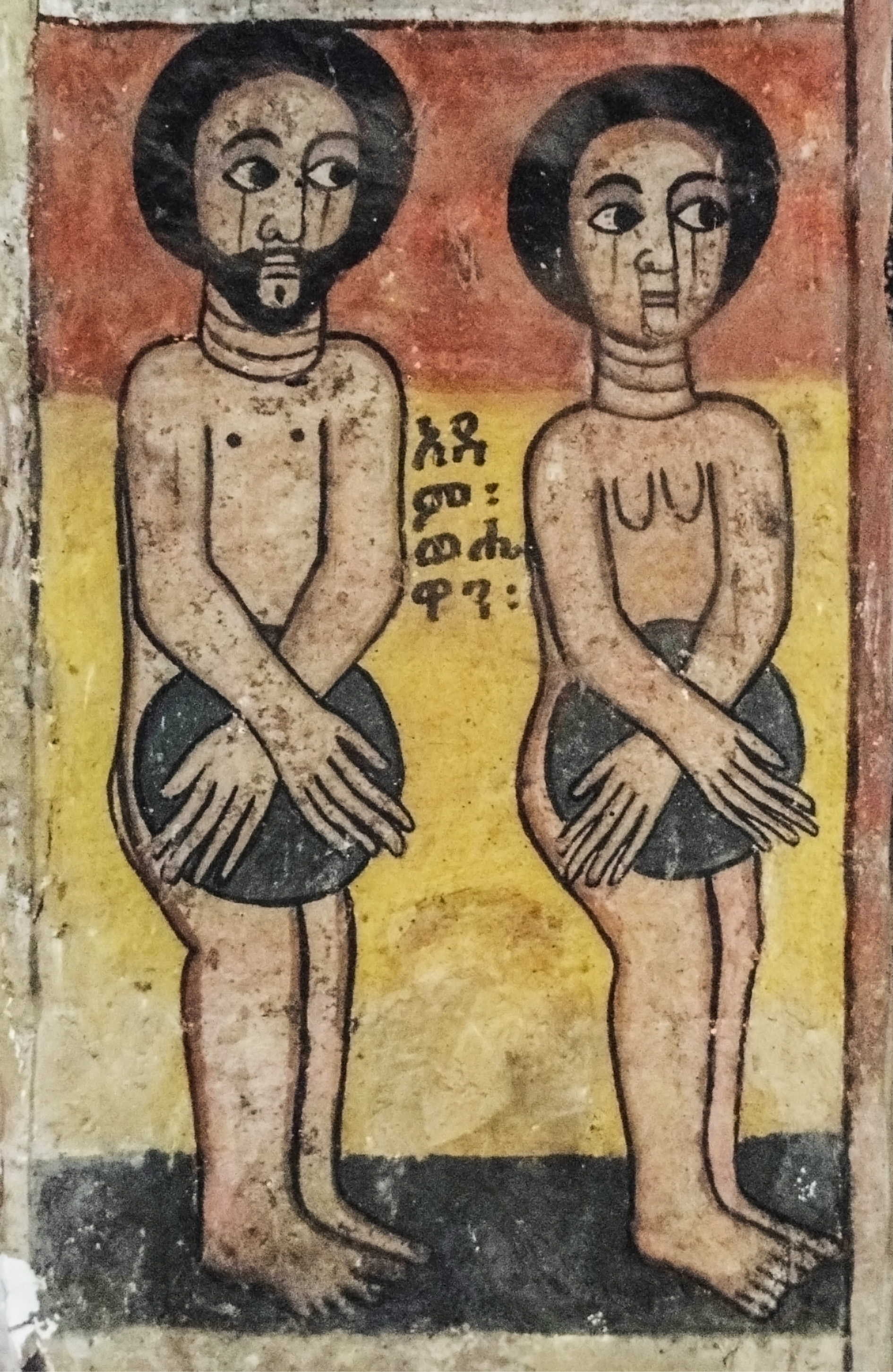
However, in a more remote period, sexual intercourse must have taken place between mother and sons and father and daughters, as is presented by certain legends and religious ceremonies: In India, Brahma marries his daughter, Saravasti: In Egypt, Ammon praises himself as the husband of his mother: in the Eddas, Odin is the husband of his daughter, Frigga; and, in Persia, the magicians practiced this sort of incest to become high priests. The endogamous tribes are bi-sexual, because the members are not obliged to look beyond their pale for husbands or wives; the conditions or life among these savages necessarily enforces sexual intercourse between the members of the same group.
Just as among the animals which live in herds, the males and females never separate, so also the members of primitive tribes never leave each other: together they roam, hunt, eat, sleep and fight; they have no domesticated animals, except dogs sometimes–they know nothing of culture. Inasmuch as they live only from the results of the chase, fishing, and the athering of berries, fruits and roots, in order to find the means of subsistence, they are occasionally compelled by necessity to limit their number, just like wild horses, to 40 or 50 heads. As soon as this number is overstepped, the tribe separates itself into two, and the same procedure is repeated as often n that number is reached. All these small groups which occasionally spring Into existence retain the original name of the tribe, to which sometimes Is added a surname; at stipulated periods they assemble in order to celebrate certain religious ceremonies. The tribe of 40 or 50 persons represents a unit, which lives and works as a single in- dividual, and counts as many heads as there are persons, and double the number of arms and legs. The Greek mythology personifies these tribes in the form of the Hekatoncheires, those fifty-headed and hundred-armed giants, which were begotten by Gea and Uranos, details which are older than Zeus and the twelve Olympian gods which Aeschylus designated as new gods. The circumstance that the human intellect conceives an entire group of individuals who live together as a single being, appears quite natural. So appear, for instance, to Guy Coquille, the acute commentator on medieval common law, the rural associations which tilled the feudal estates in “bourdelage” as a single body. They were composed of several members, which, however, were separated from each other; but through their fraternity, friendship and economic connection, they represented only a single body. [Guy Coquille: “Questions et Réponses sur les Coutumes de Nivernais.” 1, VIII (1611). “Bourdelage” was stem of tilling other people’s estates, similar to the half lease system (méayage): the owner of the estate received a part of the harvest, a twelfth, eighth, or sixth. Gomme in his “Village Communities” points out that this system is still in existence in England and Scotland].
The Talmudists assert that Adam giant, whom God diminished beseeching of angels who fret man. At all events distinguished from all common mortals, just as the Titans and Hekatoncheires, by his double sex and his extraordinary longevity. The two learned rabbis above quoted, give no explanation upon this point, and, as far as I know, no one else has ever tried to render a reasonable explanation of the bisexual Adam. In my opinion the endogamous tribes of Polynesia give the key wherewith to understand the passages in the narratives of Genesis, which up till now could not be explained.
Savage peoples use often a name in the singular to denote an entire body of persons; so, for instance, the word “aino” means, with the hairy and semi-savage Ainos of Japan, a single individual and also an entire group of individuals. Instead of taking the name Adam for the proper name of a single person, It should be considered as the name of one or several savage Semitic tribes. The narrative of the Bible gives us a right to such a conception, because it says, that Elohim “created man in his own image; male and female created he them,” (Gen. I, 27), and that the first men went about naked and lived only, on fruits, just as the man-like apes.
The tribe Adam had descended from the tribe Elohim, and the former had begotten the tribe Seth and these in turn the tribe Enos and so forth. All these tribes acknowledged Elohim as their original parent and had him raised to their ancestral deity; in consequence, thereof all their kinsmen called, themselves the children of Elohim, that is, the children of gods, to distinguish themselves from other men, who are only the sons and daughters of man. (Gen. VI 1, 2, 4).
The tribe of Adam was endogamous, that is, it consisted of the tribe of Elohim, of men and women, which they had created in their likeness,” and like the tribe of Seth, which on their part were begotten in their Image.” As soon they become too numerous they separated themselves in the manner of savage peoples in small tribes of about 40 heads, bat each tribe retained the name of Adam and assembled at certain periods for the purpose of religious ceremonies. But after a certain time, which is reckoned by their common gatherings, the tribe of Adam became so numerous or they dispersed themselves over so wide a territory, that all of them could not any longer assemble at the same place. Therefore they decided to disperse and to form, besides the old tribe, a new one, which bore the name of Seth, and which instituted a cult of their own (Gen. IV, 26), and held its gatherings The holy formula which was pronounced at these partings was perhaps the same which Elohim had shouted to Adam: “Be fruitful and multiply and replenish the earth, and subdue it, and have dominion over the fish of the sea, and over the fowl of the air, and over every living thing that moveth upon the earth.” (Gen. 1, 28). It is worthy of observation that Elohim gives Adam only plants for food. (Gen. I, 29).
The expression that God created the first man as “male and female,” has no sense if one presupposes that he referred to a single Individual named Elohim or Adam. But it answers with wonderful exactness the reality as soon as it is applied to the endogamous tribes which bore the names of Elohim, Adam, Seth, Noah, etc.
Savages know not their age; although they sometimes know succinctly to count and to tell how many times an event or a ceremony has been repeated in a given period. They remember the numbers by carving marks on a stick, or by knots which they tie in a bark rope or leather straps. One knot means a unit, double knots a dozen, etc., etc. The rosary beads of the pious Catholics are still a remnant of the mnemotechnic rope. The kinsmen of the tribes of Adam, Seth, Enos, Noah, etc., did not know how old they were, but they knew the number of their common gatherings, which probably took place several times a year. The number of these gatherings, which may be compared with the Olympic sports of the Greeks, have now been pronounced with generous magnanimity as so many years of life of the antediluvian patriarchs: and thus is explained the extraordinary and puzzling longevity in the most natural way.
The tribes which had descended from Elohim remained endogamous until the days of Noah; about this time, however, the necessity for new forms of sexual intercourse had manifested itself. The “children of Elohim” had begun to look for wives outside their tribe among the “daughters of man.” (Gen. VI, 2, 4). This innovation meant a complete revolution in the habits, customs, and the organization of the tribes.
At the start it encountered great difficulties and provoked the wrath of the gods, the Elohim, who had been the protectors and supporters of the old customs. The Elohim decided to “destroy man whom they had created from the face of the earth;” this must have caused bloody struggles, which caused the decomposition of the old tribes and led to the new organization of groups after a new system.
In reality, there begins with Noah a new era; so far Elohim, Adam, Seth, Enos, Cainan, Mahalaleel, Jared, Enoch, Methusalah and Lamech had begotten only single line of descendants, whose names the Bible has transmitted to us. Noah, however, makes an exception to this, from him descend three lines, through Shem, Ham and Japhet, which means that the tribe of Noah has divided itself into four groups, one of them retaining the name of Noah, while the others called themselves differently. When the Australian tribes, which have been thoroughly studied by Fison and Howitt, cease to be endogamous, but instead begin to organize themselves into conjugal clans, they divide themselves into an even number of groups, which they get by the multiplication of the number two. Then the members of the same clan cease to indulge, as formerly, in sexual intercourse with each other, but on the contrary, all men of clan A, for instance, have all the women of the other clan, B for wives, and vice versa, all the women of clan B have all the men of clan A for husbands. The clans A and B are called conjugal clans. [L. Fison and A.W. Howitt: “Kamilorol and Kurnai,” Melbourne 1880]. In this peculiar way have savages succeeded in preventing sexual intercourse between brothers and sisters on the maternal side. At a considerably later period man began to prohibit sexual intercourse between children of the same father. This fact alone would be sufficient proof that the first form of the single family was based upon mother-right, a fact which is hardly doubted at present.
When sexual intercourse within the groups was prohibited, then, very likely, was created the rough fantasy of those bisexual beings, wherewith to remember and to represent those groups which had remained endogamous.
The Myth of Adam and Eve
The contents of chapters II, III and IV of the book of Genesis, and the Inserted myth of Adam and Eve in the first narrative, are a mixture of legends which have formed themselves in later epochs, one following the other, and which probably have been gathered in various countries.
To cover the insertion, the second chapter starts off with a resume of the preceding chapter. It reiterates that Elohim completed “his work” on the Seventh day and that he rested on this day, and after that Jahve-Elohim steps upon the scene: it is he who speaks and acts. Let us stop a moment at this double-naming of God.
The translators of the Old Testament render without any distinction the names of Elohim, Jahve-Elohim and Jahve simply into “God the Lord” and “Lord.” In doing so they committed a mistake, the same as a Hellenist would be guilty of if he would translate the names of Uranos, Chronos and Zeus, which belong to three successive generations of gods, simply into “God,” as if they were a single celestial personality. Jahve is the singular. Elohim, on the other hand, is the plural of Eloah, and signifies the strong, powerful; the root “el” signifies the strong man, the bold man, the hero. Michel Nicolas remarks, that in the Old Testament the kings, princes and judges were called Elohim. (Michel Nicolas: “Etudes Critiques sur la Bible,” 1862.)
Based upon the alternate use of the words Elohim and Jahve, Dr. Astruc, in 1753, concluded that Moses must have blended two different traditions into a single narrative. This remark has become the starting point of important studies about the text of the Pentateuch. Michel Nicolas was of the opinion that Elohimism was the old, polytheistic form of the Israelite religion, while Jehovaism or Jahveism represented a younger and more digested monotheistic form of the same. It is certain that the Jahve cult is of a later origin, because it is distinctly stated in the Bible that it was founded by Seth, Adam’s son. (Gen. IV. 2) According to English theologians, Jahve was the national God of the Jewish people, while Elohim was the forerunner of the multiplicity and universality of the gods of the trinity. To-day one is perhaps entitled to give utterance to a more realistic conception. If one compares with each other passages in which the word Elohim is contained, then it will be found that the heathens use it when they address the Hebrews, and the latter use it when they address the heathens. In the eyes of the heathens it was Elohim who had liberated the Israelites from the bondage of the Egyptians (1 Sam. IV, 8.) When Joseph was commanded to prophecy before Pharaoh, he speaks of the Elohim, (Gen. XLI 16). When David prays the king of Moab for the protection of his family, he uses the word Elohim, (1 Sam XXII 3). This seems to indicate that the Elohim, whom Renan has so strikingly compared with the “spirits of the savages,” were the common gods of all the Semitic tribes, and that Jahve was the Elohim, or more correctly, the Eloah of a single tribe, and also, according to English theologians, the God of a tribe or nation. Indeed, in chapters II and III of Genesis, there is reference to Jahve-Elohim, that is, to one of the Elohim by name Jahve, and in the first book of Kings it is related that the Syrians considered Jahve as one of the Elohim (1 Kings, XX, 38 and 28.)
The word Jahve is derived from the verb to be, “hanah,” and inasmuch as it is used as a substantive it means “the being in existence,” the “essence: Jahve therefore is an Eloah, a strong and powerful man, who outlives others, consequently he is a deified ancestor, whose cult was founded by Seth-Baal, with whom he was continually at strife, likewise must have been an Eloah, who had been raised to ancestorship by another Semitic tribe.
An historic example, borrowed from the Roman genealogies, will bring into sharp relief the word combination of Jahve-Elohim.–The gens Cornella divided itself into four branches, which distinguished themselves from each other by the names of Scipio, Lentulus, Camus and Sulla. One member of the gens, for instance, was called PubIius Cornelius Scipio: Cornelius was the name of the gens and corresponds to the name of Elohim; Scipio was the name of one of the four branches and corresponds to the name of Jahve, which one of the branches of Elohim bore, and Publius was a personal name. Every branch of the gens Cornelia had its special ancestor, and consequently its special ancestral cult, but all four branches acknowledged a common ancestor and therefore assembled from time to time in order to celebrate in common the rites of that ancestor’s cult. The Elohim were the common ancestors of all the Semites, but on the other hand Jahve was revered as a divine personage by only one branch of the great Semitic family.
At the period at which the description of the myth begins, the Jahve-Elohim had already reached a relatively high degree of material and intellectual development; they possessed towards the East the Garden of Eden, which was planted with trees and stocked with domestic animals was watered by a big river, but “there was not a man to till the ground.” (Gen. II, 5.) In order to get workmen they addressed Adam, that is, a branch of the Elohim, who still were savage and, like their oldest ancestors, roamed the forests and appeared to them as contemptible as “the dust,” with which perhaps they likewise sprinkled themselves, as do the Australian negroes. Although the medieval feudal lords called themselves Christians and children of Adam, they nevertheless were thoroughly convinced that they were baked of a better material than the citizens and bondsmen: the Jahve-Elohim looked down with similar feelings upon their savage kindred.
They take them as slaves in the Garden and show them the trees and animals, which they are commanded “to dress and keep” (Gen. II, 15), and allow them to eat of all the fruits in the Garden, except the fruit “of the tree of knowledge of good and evil.” (Gen. II, 17.) When Adam and Eve disobey and eat from the forbidden fruit, the Jahve-Elohim fear they would also reach out their hands “and take also of the tree of life, and eat, and live forever.” (Gen. III 22.)
The prohibition not to eat of the fruit of the tree of knowledge, and the apprehension lest Adam also take and eat from the tree of life, require two explanations.
The clans of savages bear the names of animals and plants, which are considered as their ancestors and therefore held sacred by all their kinsmen. This is the reason why in Egypt in a certain city it is forbidden to eat of certain animals or plants, while they eat of them undisturbed at other places. The image of the animal or plant, which is treated with reverence as the ancestor of the tribe, is generally displayed in the abodes and chiseled upon the graves of the kinsmen of the tribe and occasionally tattooed upon their skin. Robertson Smith, the learned professor of Arabic at the university of Cambridge, enumerates in his work a long series of Arabian tribes, that even in historic times bore names of animals and plants, from which, according to their assertions, they had descended. (Robertson Smith: “Kinship and Marriage in Early Arabia,” 1885.)
The tree of life, of which Genesis speaks, was evidently a tree which was revered as a divine ancestor, like the “Relva,” the tree from which, according to mithraism, mankind originated. Upon Chaldaic tombs there is often found the chiseled image of a tree; the Babylonians and Assyrians revered the cypress, which is presented on various monuments and guarded by two genii, Just as after the expulsion of Adam and Eve from Paradise, the way to the tree of life was guarded by cherubim with flaming swords. (Gen. III, 24.) Inasmuch as the Jahve-Elohim do not eat the fruits of the tree of life, they naturally forbid their helots the use of it also. The tree of knowledge, of good and evil, has another explanation. When in Australia the harvest of the fruit of the bread-tree threatens to be meagre, then the yam-roots and wild bananas are declared “tabu,” that is, their use is forbidden. If there is a scarcity of chicken and hogs, and the fishes are scarce in any bay, then chicken, hogs and the bay are declared “tabu.”
But the “tabu,” which is a prohibition for the general welfare, serves also the purpose of creating privileges among the various ages, sexes and classes. So, for instance, young fellows who had not as yet reached the status of hunters or warriors were forbidden to eat of the emu; on certain South Sea Islands women may were allowed to eat of hog or man, delicious morsels, which were distinctly preserved for men. J. King, in his Voyage de l’Astrolabe,” relates that one day he had personally witnessed the killing of a young slave because he had dared to take some sweet potatoes which had been declared “tabu.” The priests ordained the “tabu” in the name of “Eautas,” one of the Polynesian deities. The religious prohibition impresses them with such a horror, that those who violate it by mistake, sometimes inflict upon themselves death by hunger. The “tabu” existed also with the Jews. R. Smith says that the prohibitions contained in the Pentateuch and the Leviticus, which regard many foods as “unclean,” must not at all be taken to mean that they were “unclean” in the natural sense of the word; for the Hebrew word “tame” was not used to denote real unclean matter, but was the peculiar expression of a religious rite, whose sense is fully expressed in the idea of “tabu.”
The tree of knowledge, of good and evil, was declared “tabu;” the fruits of it, which Eve found “good for food and pleasant to the eyes,” were reserved exclusively for the Jahve-Elohim; to taste them was tantamount to an infringement upon their privileges and to equalize with them, and to become their equals; wherefore they say: “Behold, the man is become as one of us.” (Gen. III, 22.) The pronoun “us” used in this verse indicates clearly that Jahve-Elohim was not a single individual, but that it must be understood as a totality of individuals, as that of a clan. Adam and Eve likewise believe they have become equals with their lords; they now blush concerning their nakedness, which hitherto had appeared to them quite natural, and so they demand to be dressed like the Jahve-Elohim. Dress is the outer mark of the different positions in life. In the British Museum of London there are to be found wonderfully preserved old wall paintings from the Nile valley, on which are represented female Egyptians of rank, dressed and adorned, and served by female slaves, who are absolutely nude like Eve before the fall. When in the American colonies a negro slave was liberated, it was his first care to dress and to ape the manners of his former master.
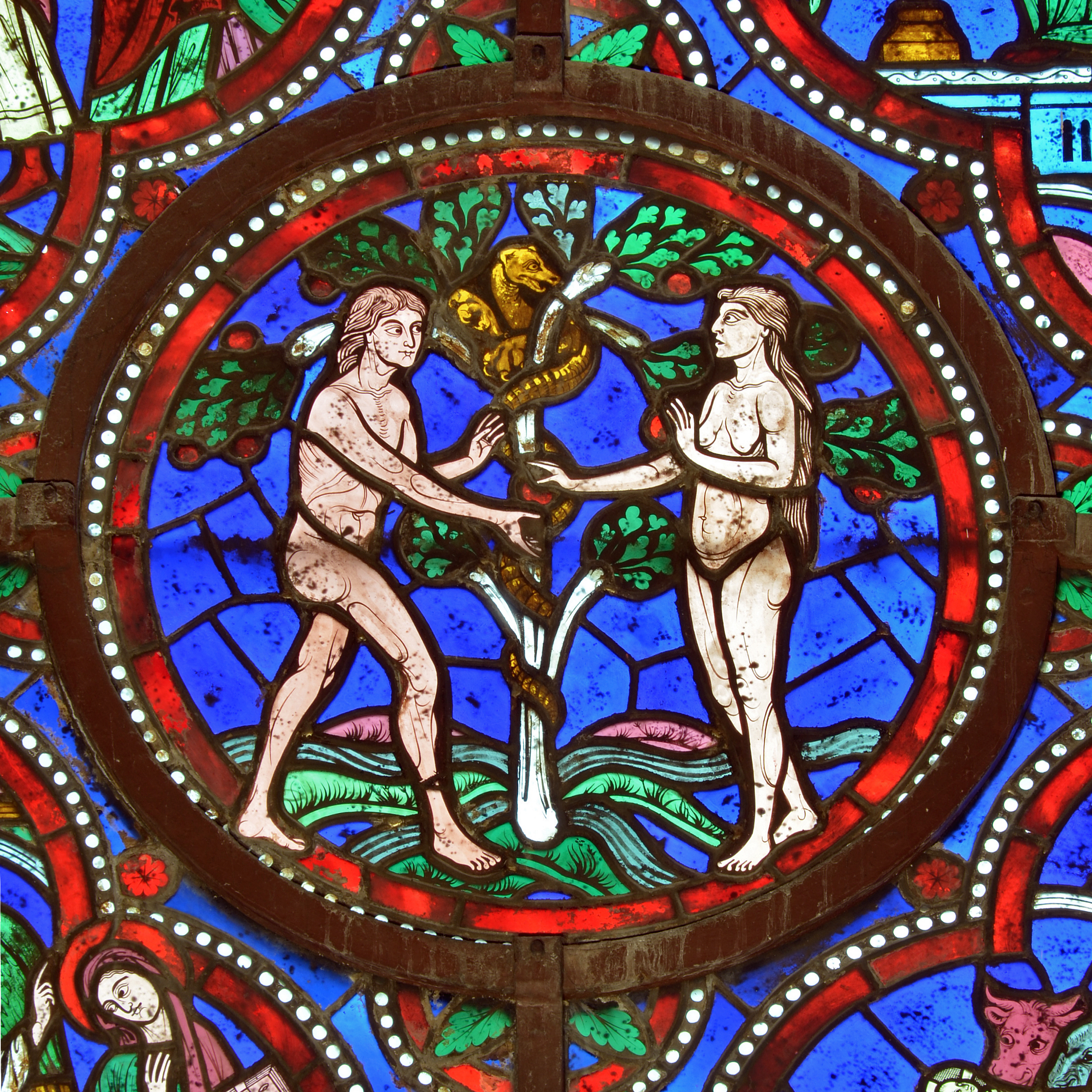
It is worthy of note that Adam and Eve do not of their own initiative partake of the “tabued” fruit. A third party must enter to suggest the idea of eating of the forbidden-fruit, and, so to say, lift the “tabu.” Hence the myth of the serpent, which is entwined with the narrative of Genesis. Although the serpent is a creeping animal, or perhaps just because it “goes on its belly,” has it played such an important role in the history of mankind. It was revered in nearly every land; with the Mexicans and the Egyptians it was a deity, the Gallas of Abyssinia regard it as the mother of mankind, and Orientalists assert that Buddhism is merely a transfiguration of the cult of the serpent; In the temple of Minerva upon the Akropolis the Athenians fed a serpent; St. Augustine tells of Christian heretics, the Ophites, who kept in their churches a serpent, which, upon the call of the priest, would crawl from its abode to lick the host, with which the faithful communicated. From Lucian we learn that the Greeks built temples in honor of Alexander the Great and offered sacrifices, because he was the son of a serpent which had begotten him on his mother, Olympia. In India the serpent Ahl is the foe of Indra, the father of daylight; with the Persians appears Ahriman, the god of Evil, in the form of a reptile and is depicted as the serpent with two feet. In Genesis it is said that “the serpent was more subtle than any beast of the field.” (Gen. III, 1.) The Greek impute to it the gift of prophesying and Cassandra and her brother, Helenos, had been endowed by a serpent with the ability to see into the future. The historian, Josephus, believed with his Jewish countrymen that the serpent was able to speak and had often conversed with Adam, and that it, however, had been punished by God with the loss of speech, Paracelsus was of the opinion that with speech it had not lost its wisdom, and that all reptiles still maintain the knowledge of deep secrets of nature.
Certainly, all these attributes have been ascribed, more or less, to all animals and even plants. Aboriginal man naively transfers all his own attributes to things which surround him, and he makes no difference between them and himself; they live, feel, think and act exactly like himself. For this reason, he considers them as his ancestors and is convinced that his soul after death will pass through animals, plants and even inanimate matter. It required a long process of development before man arrived at the point of separating himself from animals and plants and creating the “genus homo.” The last progress of natural science consists in the fact that he is again placed in the animal kingdom.
The most simple, and yet the most natural explanation of the myth of the serpent, is given by the naive illustrators of the German Bibles of Luther’s time. They show us Eve in conversation with a serpent, which has a human head. In the Egyptian pantheon men sometimes are represented with heads of animals, but sometimes reversely, animals are represented with human heads. After the exodus from Egypt, Moses and the Hebrews were evidently familiar with similar representations. But it was not necessary at all to have lived in Egypt in order to combine man and animal into a single being. There is a wide range of savages and barbarians who consider animals as their ancestors, bear their names, and carry, in certain ceremonies of their cult, masks which represent the head or body of that animal. But of all the animals the serpent is selected most often. R. Smith informs us that several Arabic tribes bear the names of various serpents. Very likely it was the kinsmen of a “serpent” clan who persuaded Adam and Eve to revolt against the Jahve-Elohim, their lords and masters, and the possessors of Paradise. Only upon this assumption became plausible the words which Jahve-Elohim spoke to the serpent: “I will put enmity between thee and the woman, and between thy seed and her seed” (Gen. III, 15), that is, I shall cause war between your two clans.
During their captivity in Egypt the Israelites were very likely often subjected to severe punishment because they had eaten of fruits, whose enjoyment was the privilege of their lords. The punishment meted out was–as was customary also in Rome–to take them out of the pleasure gardens, in which work was comparatively easy, and send them into the country where they had to perform considerably harder work. This makes self-explanatory the passage in which Jahve-Elohim speaks to Adam: “Cursed is the ground for thy sake, in sorrow shalt thou eat of it all the days of thy life. Thorns also and thistles shall it bring forth to thee and thou shalt eat the herb of the field. In the sweat of thy face shalt thou eat thy bread.” (Gen. III 17-19.) Very likely, one or several such happenings have given the kernel to the myth around which other details then grouped themselves. For the rest, abstract expressions like the knowledge of good and evil, fit considerably better in the mouth of an Egyptian priest, than in the mouth of Semitic barbarian.
In order to explain the origin of human misery, the myth of disobedience and the fall of the first human pair is perhaps of great importance from a religious point of view–just as, in its repetition, the myth of Ham is important, because it represents the slavery of a whole race as fully justified–yet, from a historical viewpoint it possesses less worth, as many of its details have hitherto been very little observed.
Verse 24 of Genesis II says: “The man shall leave his father and his mother and cleave unto his wife:” consequently the wife does not leave her parents and pleads not meekly like Ruth: “For whither thou goest I will go, and where thou lodgest I will lodge, thy people shall be my people, and thy God my God.” The woman therefore was not as yet dependent upon the man. But verse 16 of the third chapter shows that the position of woman has entirely changed, because the Jahve-Elohim announce to her that from now on “thy desire shall be to thy husband and he shall rule over thee,” that is, the man has now become the head of the family.
The two quoted verses indicate that within the bosom of the family an entire revolution had been accomplished. On account of his studies of the Greek legends, Bachofen had arrived at the conclusion, that the patriarchal family must have been preceded by another form of the family in which the woman held sway over the man, and, to use a Biblical expression, that his desire was subordinate to hers. After observations carried on for many years concerning the customs of the Indians, Morgan has come to the same conclusion. Where the mother-right existed, the woman remained in her family, in her clan, and the man must “leave his father and mother and cleave unto his wife. Before the fall of man Eve was the mistress, “despoina,” as the Spartans say, with whom the primitive customs have prevailed for a longer time. For this reason the tempter addresses her; Adam “obeys her word,” she commands and suffers doubly for the committed fault; she loses her authority over man and receives bodily punishment; in sorrow she shall bring forth children.
Robertson Smith finds that the name Eve points at the family with mother-right; the word stands for “Hawwa;” the Hebrew name for Eve has been formed by the change of sound and the added feminine ending of the word “hagg,” which originally signified maternal relationship. Besides, there are various other traces in the Bible which indicate the family under mother-right. When Abraham ordered his oldest servant to fetch a wife for his son, the latter remarked that it would be necessary for Isaac to move into the country of his intended wife. (Gen. XXIV, 5.) The wife of Samson, who is a daughter of the Philistines, remains living with her people and Samson visits her there. (Judges XV.) In our own days Duveyrier has found that, with the Tuaregs, mother-right is still in existence, but has reached its last stage of development.
The issuance of Eve from a rib of Adam before the fall of man, is an anachronism. Such a myth could not be developed, unless the family of father-right had been established, and the wife had transmigrated into the dwelling of her husband, no longer as his equal and coordinate, but as a subservient person, over whom and her children he possessed the right of life and death. According to Roman law the position of the wife in the family was equal to that of a daughter, “loco filiae,” so that by a legal fiction, she became the sister of her own children. The primitive intellect of the Semites had to explain in a way more coarse and palpable than a legal formula, the subordinate of a wife to her husband, and so they permitted the wife to be issued from her husband’s side, as a child is issued from the mother’s womb. But, although the wife did not issue from her husband’s body, she did, nevertheless, issue from his moneybag. During the first period of father-right the man either bought his wife with presents, as Isaac did, or he had to serve for her like Jacob. Homer applies to young girls the epithet, “Alfesiboia,” “the fetcher of cattle,” because they were exchanged for cattle; in several languages the expression “to affiance” means to give a pledge. As the father of the family possessed the right over life and death of his children, this right was transferred to the buyer of a daughter, who thenceforth had the right of a father. In order to Interpolate an explanation of the authority of the man, he adopted his wife and took her as a daughter in his dwelling. That Genesis permits Eve to spring from a rib, is undoubtedly a sham adoption of the wife by the man, which was customary with the Semites in the early period of the family of father-right.
The Myth of Cain and Abel.
This myth, which has become, since Byron, the favorite theme for the poetical treatment of the devil, is remarkable for its great unity; the details which it relates, are not of foreign origin, but evidently originated in the bosom of the Semitic nation, or at least, in a nation of herdsmen, who were hostile to the settled life of the husbandmen.
Diodorus of Sicily relates, that in his time, the tribes of the Nabataie Semites had forbidden, on penalty of death, the sowing of wheat, the planting of trees and the building of houses. At a certain period of their history, the Hebrews must have entertained an Intense hatred against the tilling of the soil, which made their nomadic life impossible and which kept their herds off from the tilled ground. Every cultivation of the soil meant for them a restriction of the right of pasture, which, for a pastoral people, is the first and most important of rights. Genesis relates, that Abraham and Lot had to part from each other, because their herdsmen were continually fighting about the pastures and springs; likewise had Esau and Jacob to part from each other. (Gen. XIII and XXXVI.) But more often must It have come to quarrels and fights between herdsmen and husbandmen, because the latter claimed it as their right not to allow herds on their cultivated fields. Very likely, at one of these encounters the husbandman, Cain, killed the herdsman, Abel, whose animals had torn down the fence and browsed the crops.
The Kalewala, the epic poem of the people of Finland, relates the story of a fratricide, which, in its description of bloody brutality, reveals to us perhaps that about which Genesis is silent.
“The proud sheep of Untamo browsed the oats which Kalewo had sown, the wild dog of Kalewo tore to pieces the sheep of Untamo. Untamo became angry and threatened Kalewo, his natural brother, with death. He swore to tear down the house, to murder in it big and small; to exterminate all its inhabitants and to burn it to ashes. And he equipped his people, to the strong ones he gave swords, to the weak ones and the children he gave spears, and he went to a bloody fight, to a war of life and death against the son of his mother. They reached the place. They cut Kalewo’s people into pieces slaughtered the great race, burned his dwelling and levelled it with the sterile ground. A single woman escaped the butchery, a woman, with a child in her lap.” (XXXI Runo.)
The God of a pastoral people could certainly not help but side with his people against the party of the husbandmen, and Jahve also acts accordingly: “And the Lord had respect unto Abel and to his offering;–but unto Cain and his offering he had no respect.” (Gen. IV, 4, 5.)
The murder of Abel must be avenged. But the revenge for blood, that first conception of retributive justice which rises obscurely in the human brain, is not executed in its full severity when it concerns members of the same family, or the same tribe. The cause of this offence against the simple and inexorable logic of the savages and barbarians is simply as follows: All kinsmen of a clan trace their origin back to a common ancestress, the same blood pulsates in the veins of all; to spill this blood is in their eyes the greatest crime which they can commit. A savage may in a fit of insane rage kill a member of his own family, but he never will consent to it deliberately. He will refuse to stain himself with the blood of a member of his family, even if it called for to avenge the death of a relative. Banishment is the only punishment which primitive people impose upon him who has taken the life of a member of the clan. Should, however, the murderer be a stranger, then the revenge for blood must be executed in its severest form; blood for blood, and death for death. But even banishment is a terrible punishment. He who is punished with it roves about unstaid and a fugitive; he becomes a “wolfshead” a “wulf heofold,” as the old Saxons say; he is without protection against the clans which surround him and from which he has been expelled. When informed of his fate Cain trembles and weeps. “My punishment is greater than I can bear,” he painfully cries. “I shall be a fugitive and a vagabond in the earth; and it shall come to pass that everyone that findeth me shall slay me.” (Gen. IV, 13 and 14.)
Savages pursue every stranger whom they meet on their grounds, as a wild animal. If the American Indians encountered a stranger for the first time upon their grounds, they cut off his nose and then sent him back to the chieftain of his tribe with the message that if he were encountered a second time upon their grounds he would be scalped. Jahve, to whom Cain complains of his sorrows and who on this occasion represents the council of the elders of the clan, does not want the death of the fratricide and “sets a mark upon Cain, lest any finding him should kill him.” Yea, he even threatens: “Whosoever slayeth Cain, vengeance shall be taken on him seven-fold.” (Gen. IV, 15.) That is, Cain’s death shall be avenged by seven other persons. The mark Jahve placed upon him served him as a passport and enabled him to get through the territory occupied by the various tribes and to reach the land Nod, the land of fugitives, which was located beyond Eden, towards the East.
In the land of Nod Cain settles down, builds a city and becomes the progenitor of a new line. Out of aversion many of his descendants return to pastoral life, the others develop themselves in the direction which their ancestor had taken. One of them, Tubal-Cain, discovers the art of forging brass and iron. Agriculture, and the art of working metals and building cities, makes Cain’s progeny so powerful and feared, that Lamech, a descendant in the fifth generation, proudly boasts that he can avenge an insult seventy-seven times. The pastoral god Jahve satisfied himself with the simple revenge, “an eye for an eye, and a tooth for a tooth;” in his threat he only promised seven deaths for one. The myth of Cain, which has been so ludicrously conceived by the bourgeois poets, means simply the triumph of agriculture over pastoral life.
New York Labor News Company was the publishing house of the Socialist Labor Party and their paper The People. The People was the official paper of the Socialist Labor Party of America (SLP), established in New York City in 1891 as a weekly. The New York SLP, and The People, were dominated Daniel De Leon and his supporters, the dominant ideological leader of the SLP from the 1890s until the time of his death. The People became a daily in 1900. It’s first editor was the French socialist Lucien Sanial who was quickly replaced by De Leon who held the position until his death in 1914. Morris Hillquit and Henry Slobodin, future leaders of the Socialist Party of America were writers before their split from the SLP in 1899. For a while there were two SLPs and two Peoples, requiring a legal case to determine ownership. Eventual the anti-De Leonist produced what would become the New York Call and became the Social Democratic, later Socialist, Party. The De Leonist The People continued publishing until 2008.
 Revolution's Newsstand