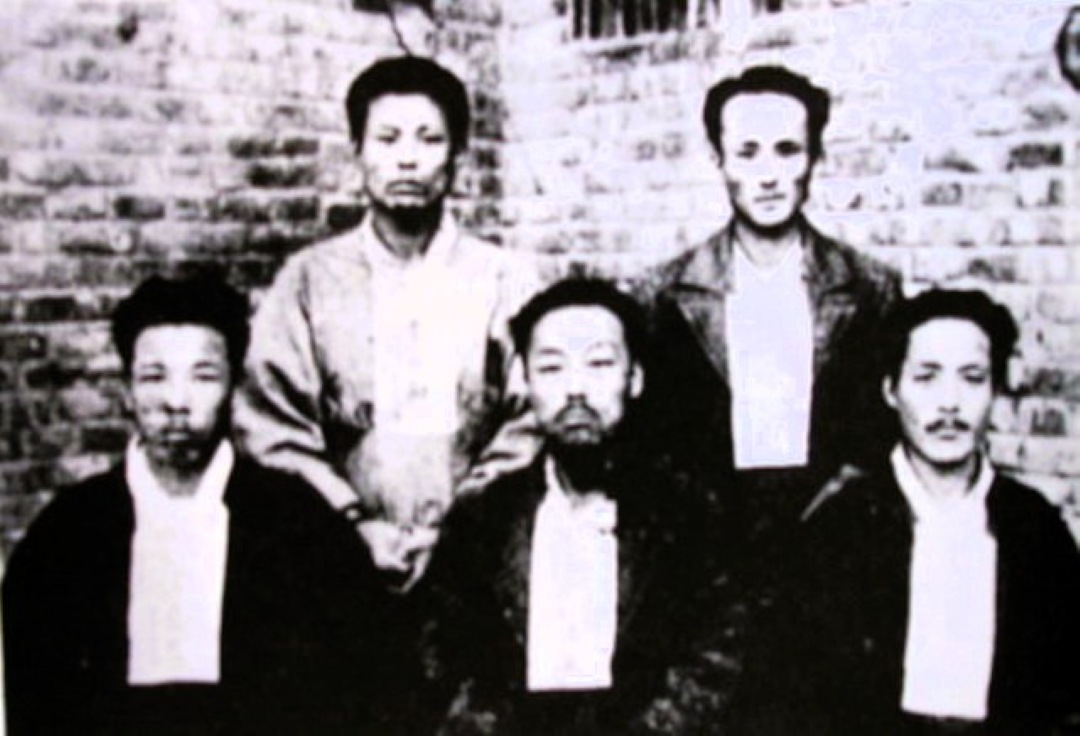
A fascinating document from the “Initiative Group of the Korean Communists” (do readers know which faction of the movement that was?), at a time when the Korean movement was not cohesive geographically or politically with the local movement, as it was in Japan, China and in the Soviet Union all divided by their own factions. Along with a background and political perspectives, there are an extensive set of immediate demands.
‘Platform of Action of the C.P. of Korea’ from International Press Correspondence. Vol. 14 Nos. 11 & 14. February 23 & March 2, 1934.
The Japanese imperialists, since the actual seizure of our country (1905) and its conversion into their colony, basing themselves on their economic and political domination, have not ceased to plunder and oppress our toiling people. The Korean toilers live in the condition of slaves, deprived of any right to decide independently the question of their fate and govern the country. The entire political power is concentrated in the hands of the Japanese Governor-General who has at his disposal the army, the police, the gendarmes, the courts, the jails, the reservist league, etc., and whose duty is in the interests of Japanese robbers to oppress and plunder the Korean people. “Koreans must either submit to our laws or die.” (Terauchi.) The White Terror is raging in the country and the slightest attempt to protest against the violence of the Japanese imperialists is crushed by military force. Special laws exist to suppress the national liberation movement–the decrees of 1907 of the Taisho governor, the laws on the preservation of public order and the law on dangerous thoughts, etc. All the political and economic life of the country is managed to derive profit for Japanese imperialists and increase national oppression of the Korean people and treat it as a lower nation–as is seen in the creation of special organs for Koreans, the prohibition to use the Korean language, inequality in wages. Privileges and rebates are reserved for the Japanese, while for Koreans there exist plenty of hindrances, etc.
The Japanese imperialists have converted our country into a market for their goods, a source of cheap raw material and labour, a place for capital investment and a strategic military point in the Far East.
The Japanese imperialists are holding back the development of our country. They control the national economy of our country, and maintain the feudal relics, especially in the village.
Owing to the domination of the feudal exploiters and Japanese imperialism, native industry develops very slowly and in a distorted way, and only to the extent permitted by the interests of the Japanese imperialists. Native industry consists of small workshops adapted to the primary manufacture of agricultural raw material for Japan. The share of native capital in industry is insignificant and is chiefly concentrated in light industry. Native capital plays a subordinate role to Japanese capital.
The same is seen in commerce (out of 1,547 commercial undertakings, 1,263 are Japanese or combined Japanese-Korean). The Japanese policy of national discrimination so far as taxation, excise, credit, etc., is concerned, is clearly to be seen both in industry and trade. The urban petty bourgeoisie–artisans, handicraft men and small traders–suffer very much from this. Unable to bear the burden of the taxes and the competition of the protected Japanese capitalists, they are being rapidly ruined. Most of them become unemployed paupers.
The Korean working class suffers most of all. It lives in the condition of slavery. On the average the workers work 13 to 16 hours a day and get beggarly wages. They get about half of what the Japanese worker, and even the Japanese youth, get for equal work. Wages vary between 10 and 70 sen per day, which is far from sufficient to support a worker and his family. Their wives and little children are therefore compelled to work. The women and children are subjected to the most brutal exploitation. Wages are not paid in full or on time. In all factories workers suffer from the system of fines, deductions, “presents” to the foremen, compulsory “savings,” delays in the payment of wages, payment by checks instead of money, which are later exchanged for money at 30 to 40 per cent. below nominal, etc. Among the seasonal and building workers, etc., where piece-work is in operation, the workers are robbed by the foremen, sidauke, siagada, etc. At the time of unemployment the Korean workers are doomed to death from starvation, the threat of which compels them to submit to the worst forms of exploitation and slavery of the moneylender and speculator.
The Korean workers suffer from chronic mass unemployment, constantly increasing, with the complete absence of any assistance from the government and the employers. The Korean workers have no rest days. There are no labour laws. In the factories a prison regime exists and the workers are at the mercy of the employers and their agents The insanitary conditions of the workers’ houses and the complete absence of safety devices lead to tremendous growth of sickness and accidents at work, for which neither the employer nor the Japanese oppressors take any responsibility. The women textile workers and the workers employed on work “for assisting the poor” are particularly exploited.
The poor development which is a result of subjugation of our country, render the lot of the Korean intellectuals extremely wretched. They cannot find employment and therefore are compelled to walk about unemployed or to take the shameful hireling path of becoming officials in the Japanese military occupational regime, and thus be utilised to oppress and plunder the Korean people.
Japanese capital in Korea is almost entirely used to plunder the Korean people, especially the peasantry. The Japanese agricultural and irrigation companies, money leagues, big landlords (latifundias and plantations), plans for increasing the sowing of rice, etc., are in the hands of the Japanese colonisers powerful means to drain super-profits out of the country while the Japanese colonisation forms the foundation of the military occupational regime in the country.
The Japanese imperialists own the best land, forests and unoccupied land in the country, control agriculture through the banks, companies (Eastern Colonisation Co., Sokusan Ginko, money leagues). They maintain simultaneously the domination of feudal-landlord landownership that leads to greater exploitation, ruin and oppression of the peasantry, chiefly the poor. The insignificant development of capitalism in agriculture connected with the domination of Japanese imperialism does not improve the conditions of the peasants but on the contrary makes it worse and increases their dependence on the Japanese imperialists and their allies–the Korean landlords, moneylenders and speculators.
Low monopolist prices of agricultural products, high tariffs and the compulsory distribution of seeds, fertilisers at high prices, etc., is a scourge for the Korean peasants. The Korean peasants are compelled to hand over their produce to the Japanese imperialists at the existing low monopolist prices, less than half of the market prices, while they are forced to take Japanese goods at prices increased three or fourfold. The peasants are crushed by all kinds of taxes and exactions. In our country there are 52 different kinds of exactions, of which eleven are in the form of direct taxes. The land tax has increased from 1919 to 1933 by 60 per cent. Local taxes for the upkeep of the apparatus of the governors-generals are growing and have increased during the last twenty years forty-three times, while the head tax had increased 240 times in eighteen years.
The Japanese imperialists have ruined our villages. The peasants, especially the poor and middle peasants, cannot bear the burden of the taxes, exactions and rents, and are rapidly being ruined. The ruined peasantry is either compelled to remain in the villages as enslaved tenants or to flee to Manchuria, where they again become serfs of Japanese and Chinese satraps. Some are forced to go to the towns where they remain unemployed or sometimes hire themselves as workers in Japan where they are subjected to the most cruel exploitation and are forced to play the role of strike-breakers. If they remain in their villages they have to try to cultivate new land, though as soon as they start they are again driven out by the Japanese imperialists. The land of the ruined peasants passes into the hands of the Japanese companies and Korean landlords, who possess over 54 per cent. of all the ploughed area. The Japanese companies and the Korean landlords do not cultivate the land themselves, but rent it out to the peasants on unbearable conditions. Rent in kind dominates in our country and amounts to 50-80 per cent. of the harvest. In addition to rent, the tenants have to pay land and water taxes to the landlord and for seed and fertilisers. They pay the same amount of rent in years of bad harvest. The recently introduced law on rent conflicts does not improve the position of the tenants. It legalises the existing oppressive conditions and entirely defends the interests of the landlords.

As a result of the mass ruin of the Korean peasantry, the central figure in our villages are the poor peasants, who form over 50 per cent. of all the peasants. Most of them live in perpetual want in years of good harvest as well. The harvest of the poor peasant does not remain for his own consumption, and very often does not even suffice to pay rent. Failure to pay rent in time brings often the confiscation of the whole harvest and property of the peasant and deprives him of tenant rights. When bad years come, then the peasants are doomed to death from starvation.
The middle peasants who form a relatively small section of the peasants are in a very difficult and poverty-stricken situation. Most of them are being ruined and turned into poor peasants, and only a small number of them become kulaks. The middle peasants are also oppressed by all kinds of taxes and exactions, including the water tax for the irrigation company. The middle peasants of Korea live in constant danger of being ruined for not paying rent and taxes in time. Owing to agrarian overpopulation, caused by the policy of the Japanese colonisers and owing to the increasing poverty, most of them have already become semi-tenants and are being turned into poor peasants.
The agricultural labourers are in specially difficult conditions. Owing to the domination of pre-capitalist forms of exploitation, which is the result of the weak development of capitalism in agriculture, the agricultural workers are subjected to unheard-of exploitation. Although they are workers like the town workers, they work unlimited hours. They have the most varied duties to perform, working as household servants as well, receiving 20 to 25 sen per day, which is about 1/5 of the wages of Japanese workers.
In addition to being plundered by the Japanese imperialists, the Korean peasants are severely exploited by the Korean landlords, rich peasant exploiter, moneylenders and speculators who are supported by the whole existing system. Poverty drives the Korean peasants, especially the poor peasants, to accept every kind of slavery and oppression by these parasites. The present total indebtedness amounts to 700 million yen.
In our country, owing to the robber policy of the Japanese colonisers, based upon landlord ownership, agriculture is on the downgrade. During the last ten years it has not emerged from a state of chronic agrarian crisis. The position of the Korean peasants and toilers is getting worse year by year.
Since the present world crisis, especially since Japanese invasion of China, the conditions of the Korean toilers have greatly deteriorated. Japanese imperialism, torn to pieces by the contradictions of the growing crisis, tries to find the way out of it by increased reaction, fascism, and an attack on the standard of living of the toiling masses of Japan and its colonies, by a new imperialist war and intervention in the U.S.S.R. The war in Manchuria has already ruined and worsened the position of the toilers of Korea, Japan and China. The real purpose of the war is not the defence of the Koreans in Manchuria, or improvement of the life of the masses of the people in Korea and Japan, as is falsely stated by the Japanese imperialists and their lackeys. It is an attempt to get out of the deep crisis by forcibly seizing new territories and plundering new millions of people. This war will bring new sufferings and evils for the toilers of Korea and Japan. Since the war of Japan in Manchuria, the urban petty bourgeoisie and the peasants, especially the poor and middle peasants, has been greatly ruined. Every day the property of the toilers and the peasants is sold by auction because they are unable to pay taxes, debts, rent, etc. Besides this the Japanese imperialists, under the pretense of “emergency times,” prohibited the export of Korean rice to Japan, imposed high tariffs on lentils from Manchuria, made the subscription to government loans compulsory, etc., which are additional forms of robbery of the toiling masses.
The wages of the Korean workers have fallen by 32 per cent. during the last year and the working day has lengthened by one to two hours. At the same time unemployment is growing, not only owing to the closing of factories, but as the result of the reduction in the number of workers because of the greater exploitation of those who remain and as the result of the replacement of adult workers by low paid underaged youths. The number of unemployed at the present time amounts to 700,000, which is over 50 per cent. of the number of workers in the country, while there are six million starving peasants. The toilers of town and village are being ruined in masses, the unemployed Koreans are being forcibly sent back from Japan and refugees from Manchuria are concentrating in large numbers in the country.
The Japanese imperialists not only do not help the Korean toilers, who are starving and unemployed, but on the contrary take advantage of their helpless conditions to engage them as cheap labour on the construction of military works in the country. There the workers are subjected to a prison regime. And all the expenses for this are again transferred to the toilers of Korea and Japan.
In connection with the crisis and the war of Japan in Manchuria, the reaction and terror have increased against the revolutionary movement of the toilers of Korea and Japan. Workers’ and peasants’ organisations are suppressed, the anti-popular laws are reinforced. Strikes of workers and conflicts of peasants are suppressed by police and the army. Thousands of revolutionaries are pining and dying in the jails.
While the masses of the people are starving and facing ruin, Japanese imperialism makes every effort to support the Korean aristocracy and landlords. It has introduced the rice law, which gives help to the aristocracy.
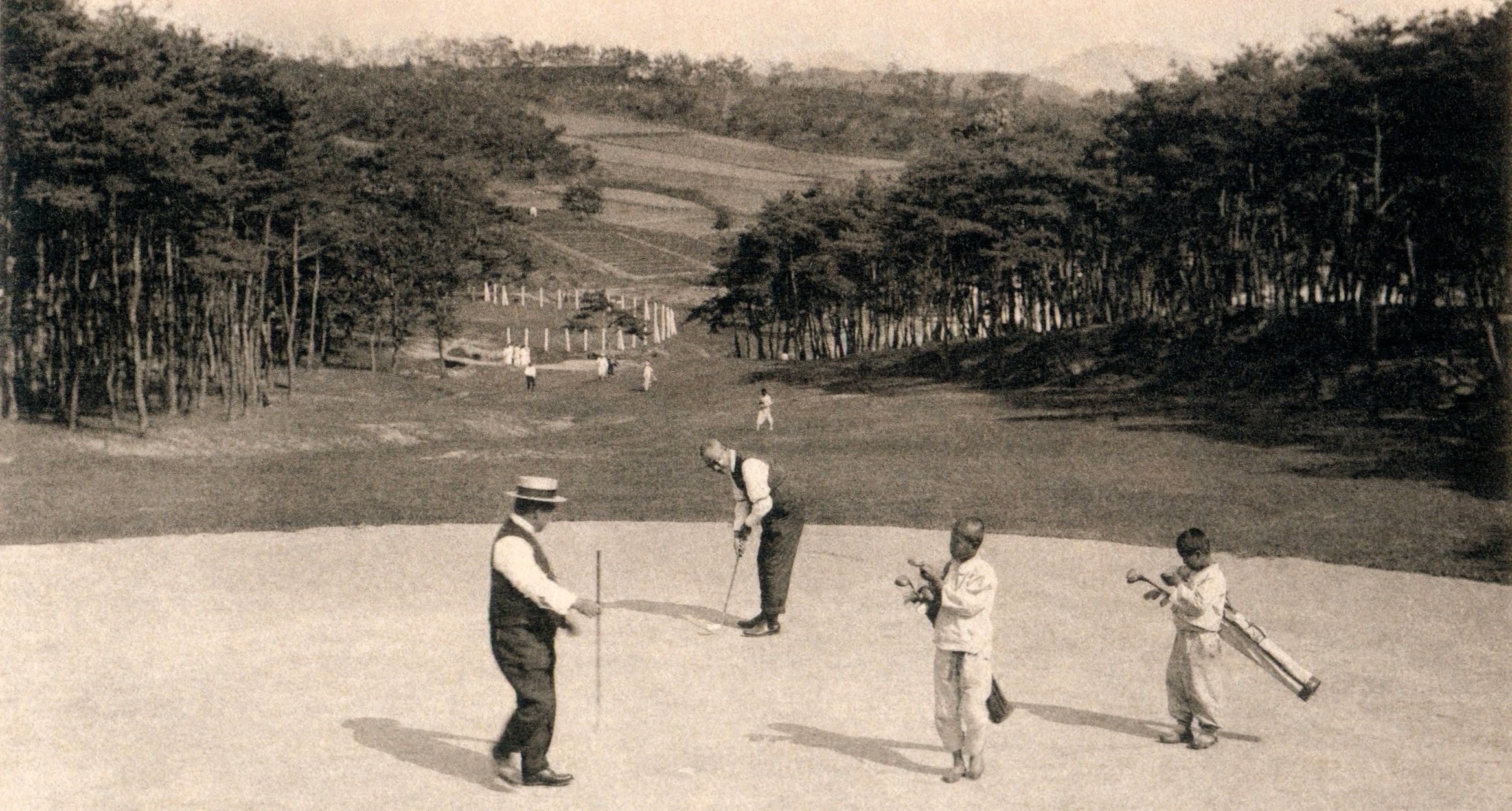
The Korean bourgeoisie, in spite of their different status from that of the landlords and their contradictions with Japanese imperialism, are more and more adapting themselves to the system of the colonial regime. Their contradictions with Japanese imperialism are contradictions arising from the monopolist possession of the right to exploit and plunder the masses of the Korean people, and above all, the workers. Although Japanese imperialism appropriates tremendous profits and the surplus product squeezed out of the toiling masses of Korea, the Korean bourgeoisie also have the possibility of exploiting the Korean workers.
The noose on the neck of the Korean people is drawing tighter and tighter. This will continue as long as the Japanese imperialists rule in our country.
Only the revolution of the Korean toilers in alliance with the Japanese and Chinese toilers can save the Korean people from the yoke of the Japanese imperialists. For the complete destruction of the unbearable slavery of the Korean toilers it is necessary to win the independence of Korea by the revolutionary overthrow of the economic and political rule of Japanese imperialism. It is necessary to raise the banner of the national liberation revolution, which by its character will also be anti-feudal and anti-imperialist, directed against the rule of the Japanese imperialists and landlord ownership. The agrarian revolution (bourgeois democratic) forms the axis of the national liberation revolution of the Korean masses. For the struggle against the oppressors and the victory of the revolution, it is necessary to organise the struggle of the revolutionary forces of the country, forming a united national revolutionary front against the Japanese imperialists and their allies.
In our country there is not a united nation, but there are classes which are not all interested in the revolutionary smashing of the existing system and regime.
The Korean landlords who plunder the Korean toilers under the protection of the Japanese imperialists and who are their allies, against whom the revolution will be directed, are in the camp of the imperialists, are struggling and will struggle against the people’s revolution.
The position of the Korean bourgeoisie is somewhat different. Objectively, it is in their interests to get rid of Japanese rule, and establish their own rule so as to plunder our people as monopolists. This circumstance puts them against the Japanese imperialists. But at the same time, being considerably connected with Japanese capital directly and indirectly, with landed property, usury, they fear the revolution of the toilers which will destroy all landlord ownership and money-lending capital, and will destroy imperialist and feudal property. Therefore, they manoeuvre between the revolution and imperialism and take up a national reformist position. They try to strengthen their position by reforms, utilising for this purpose the national liberation movement of the masses. On the other hand, they try to take advantage of the contradictions and conflicts between Japanese imperialism and its competitors so as to bargain for better conditions for themselves.
In March, 1919, at the time of the highest rise of the opposition to Japanese imperialism, the Korean bourgeoisie tried to limit the anti-Japanese movement among the masses of Korea, orientating them on Versailles and the U.S.A. But when the mass movement against their will began to grow into an armed revolt, the Korean bourgeoisie fearing the revolutionary revolt of the masses betrayed their struggle and accepted the reforms of 1919.
The position of the Korean bourgeoisie in the succeeding years is characterised by ever-greater capitulation to the Japanese imperialists and desertion of the national revolutionary front. The determining factors of their political position are: (1) the growth and development of the peasant movement in the country; (2) the rapid growth of socialist construction in the U.S.S.R., which is rousing ever new sections of the toiling masses of the whole world, including the toilers of Korea, in the struggle against their enslavers; (3) the Korean bourgeoisie have drawn their conclusions from the great Chinese revolution which not only sweeps away the foreign imperialists but also the native exploiters.
In the present conditions of crisis and the growth of the revolutionary movement of the toiling masses in Korea, the Korean bourgeoisie have linked up their fate with Japanese imperialism. The contradictions between the bourgeoisie and the toilers of the country have become the chief ones which determine their political positions. They are trying in every way to slur over the contradictions between them and Japanese imperialism. This explains their defence of the robber war of Japan in China, their support of the open plunder of the toiling masses of Korea, and the struggle against the revolutionary movement.
The support of the Japanese imperialists by the Korean bourgeoisie at the time when the imperialist Powers, above all Japan, are waging or preparing a new imperialist war and intervention in the U.S.S.R., the basis and stronghold of the world revolutionary movement, shows that the bourgeoisie has no desire and is unable to carry on the anti-imperialist struggle.
The path of the Korean bourgeoisie is the path of systematic betrayal of the national liberation struggle of the Korean toilers. In future, they will do everything to disrupt this struggle. All the bourgeois political organisations, such as Chen-Do-Gio, the group of the paper Ton-a-Ilbo, Chosen-Ilbo, etc., have taken this line already.
The Korean bourgeoisie, in spite of their reformism and treachery, have not lost their influence on the Korean toilers. And the possibility of manoeuvring once more and betraying their struggle still exists. They try to keep control over the National Liberation Movement of the Korean people through their agents, such as the group of the journals “Bifan,” “Sin-Kadea,” etc., which by using “left socialist” phraseology, try to win over the toiling masses, above all the workers.
In these conditions the historic task of the complete liberation of the Korean people from the Japanese yoke and the carrying on of all revolutionary democratic changes can be carried out, as was shown by the experience of the October Revolution in Russia and the Chinese Revolution, only by the revolutionary struggle of the Korean toilers under the leadership of the working class and in alliance with the Japanese and Chinese toilers. The working class of Korea is the only consistently revolutionary class. It has already entered into the struggle against its enslavers as an independent social force (Genzan strike). Its struggle is growing year by year and at the present time already contains the elements of a counter attack. If the struggle of the workers is properly combined with the struggle of the peasants against the landlords, which is rapidly increasing also, it will form the basic link for leading the Korean toilers in the approaching revolutionary struggles.
In order to organise the working masses, to crystallise the proletariat as a special class force which realises its special class interests, able to lead the national liberation movement, in order to bring about the revolutionary alliance of the working class and the peasants under the leadership of the proletariat, in order to liberate the Korean toilers from the influence of national reformism and correctly direct their revolutionary struggle, the working class needs its proletarian Communist Party.
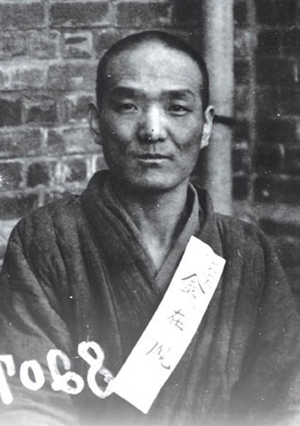
The Communist Party of Korea is the Party of the working class, the final aim of which is to bring about socialism and then the complete Communist society. It struggles for the socialist path of development, for the complete destruction of all exploitation and the oppression of man by man. At the present bourgeois democratic stage of the development of the Korean revolution, it fights for the complete independence of Korea, for the establishment of a Workers’ and Peasants’ Soviet government in it, for the liquidation of landlord ownership.
The only government which can look after the interests of the majority of the Korean population–workers, peasants and toilers in general–is the Workers’ and Peasants’ Soviet government. The Soviets, formed in the course of the revolutionary revolt of the toilers, under the leadership of the proletariat, as the organ of revolt and the overthrow of Japanese rule, are the only genuine. organ of power, elected by the workers, peasants and toilers, able to carry out the confiscation of the land of the landlords, confiscation of the enterprises of the imperialists and the fulfilment of the basic interests of the toiling masses.
Taking this position, the Communist Party of Korea puts forward the following chief slogans for the present bourgeoisie democratic stage of the Korean revolution:
(1) Complete State independence, by the violent overthrow of Japanese rule. The abolition of all government debts, the expropriation and nationalisation of all the Japanese factories, banks, railways, sea and river transport, plantations and irrigation equipment.
(2) The establishment of a Workers’ and Peasants’ Soviet government.
(3) The confiscation, without compensation, of all the land, forests and other property of the landlords, monasteries, governor-generals, officials and moneylenders, handing them over to the toiling peasants. The annulment of all oppressive agreements and all the debts of the peasants to the moneylenders, banks, money leagues and companies.
(4) The 8-hour day and a radical improvement in the conditions of labour, the increase of wages, introduction of social legislation, insurance against accidents and sickness and State provision for the unemployed.
The Communist Party of Korea, struggling for these basic demands, expresses the interests of the masses of the people. The carrying out of these demands will create the prerequisites and ensure the further development of our country in the direction of the construction of socialist society, with the aim of developing the mass revolutionary struggle of the toilers, at the same time putting forward a series of partial demands, the struggle for which will help to mobilise the masses for the revolutionary revolt for the independence of Korea.
The Struggle for the Partial Demands of the struggle against imperialist war and the defence of the U.S.S.R., Revolutionary Movement
The Communist Party of Korea declares that the only way to win the complete independence of Korea is the path of the revolutionary struggle of the broad masses, carried to the point of a nation-wide armed revolt against Japanese rule.
The partial demands put forward by the Communist Party of Korea differ in principle from the “partial” demands of the Korean bourgeoisie and their political organisations. Our demands are completely linked up with the tasks of the revolution, the struggle for which will help to mobilise the masses for the struggle against Japanese imperialism, while their slogans have the aim of bringing about the autonomy of Korea within the system of Japanese imperialism and to avert the armed revolt of the entire toiling masses against Japanese imperialism. The Korean bourgeoisie put forward partial demands in their own class interests. The Communist Party of Korea puts forward partial demands in the interests of the workers, peasants and urban poor.
A great danger for the victory of the Korean revolution is the fact that the toiling masses of the country still have illusions about Chen-Do-Gio and other so-called national organisations. They have not understood that these are the class organisations of the Korean national reformist bourgeoisie which oppose the basic interests of the toiling masses of Korea. The Communist Party of Korea declares that it will mercilessly expose all shades of national-reformism and especially the autonomist trends led by the leaders of Chen-Do-Gio. The exposure of and struggle against the national-reformists is one of the main tasks of the Korean Communists. Only a merciless struggle against national reformism will make it possible to win the working and peasant masses away from them and mobilise them under the banner of the Communist Party for the struggle against Japanese imperialism. Only the revolutionary struggle against imperialism can liberate the toilers from the influence of national-reformism.
In the struggle for the toiling masses, the Communist Party of Korea calls on all the Korean Communists:
(1) To make full use of legal and semi-legal possibilities for wide actions and the mobilisation of the masses under revolutionary slogans, always exposing the treacherous role of national-reformism, exposing the bourgeois conciliatory front and calling on the masses to form the united workers’ and peasants’ front from below on the basis of concrete revolutionary demands and actions.
(2) To develop mass revolutionary actions and the struggle of the working class for political and economic demands, the mass refusal of the peasants to pay taxes, exactions, rent, debts, mobilising and preparing the toiling masses for the revolutionary struggle against imperialism.
The Communist Party of Korea calls on all honest revolutionaries in Korea to rally under its slogans for the struggle against Japanese imperialism. While welcoming the loyalty and self-sacrifice which they show, it declares at the same time that the liberation of the Korean toilers cannot be won by the individual terroristic acts which they carry out. It points out that the path of the Korean revolution is the struggle and the revolutionary revolt of the broad masses under the leadership of the Korean proletariat. The supporters of individual terror do not see and do not understand the connection between the agrarian revolution, the struggle of the proletariat and the overthrow of Japanese rule. They do not see and do not understand that it is not the individual struggle of isolated heroes but only the revolutionary mass struggle which can liberate our country from the yoke of imperialism.
The Communist Party of Korea, in view of the special and urgent danger of a new imperialist war and armed intervention in the U.S.S.R., especially since the robber war of Japan against China, the war which is the beginning of the new war and preparations for invading the U.S.S.R., calls on all its supporters to widely organise the anti-war struggle of the masses of Korea, linking it up with the everyday struggle for their interests. At the present time the stronghold of the revolutionary movement, is an inseparable Our part of the struggle for the national liberation of Korea. struggle against war, in defence of the U.S.S.R., must be accompanied by a merciless struggle and exposure of the position of all national reformists, including the “left” groups like “Bifan,” “Sin- Kadan,” etc., the Japanese socialists who advocate Pan-Asiatism.
(a) General Demands
(1) The expulsion of the Japanese troops, the abolition of the police and the gendarmes, the disbanding of the Reservist Union, the general arming of the toilers.
(2) The immediate liberation of all political prisoners. (3) Unlimited freedom of speech, press, assembly, conscience and combination for the toilers and the repeal of all laws directed against the people.
(4) The destruction of privileges of rank, etc., and the complete equality of all citizens irrespective of sex, nation and religion.
(5) The repeal of the assimilation policy in regard to education. Free general education in the native language under the control of the toilers.
(6) The establishment of free government help for the population in cases of natural calamity.
(7) The abolition of the system of monopolist prices on agricultural products.
(8) Free medical treatment for all the toilers.
(9) The election of judges and officials from among the toilers and the right to recall them at any time at the demand of the majority of the toilers.
(b) Special Workers’ Demands
The Communist Party of Korea, in order to organise the broad masses of the working class and give them mass education, to defend the everyday interests of the workers and support the general revolutionary struggle of the toiling masses of our country, calls on all class-conscious workers to concentrate their efforts on the strengthening of the left-wing of the trade union movement. The Communist Party of Korea considers it necessary to organise mass class trade unions, above all among the factory workers. They must become regularly functioning mass organisations, acting in the spirit of the class struggle. It is necessary to isolate and expel the reformist leaders from the trade union movement and simultaneously to organise factory committees in the enterprises, the railways, docks, mines, etc.

The Korean Federation of Labour, basing itself mainly on the semi-feudal guilds of porters, seasonal workers and fishermen, and led by the national-reformists and the petty bourgeois elements, by repudiating the revolutionary class struggle has become a weapon for crushing and disrupting the struggle of the workers for the benefit of the exploiters. The Communist Party of Korea will carry on systematic everyday stubborn work in the reformist unions with the aim of winning the working masses to the side of the revolutionary trade union movement and isolating all the reformist leaders from them.
The Communist Party of Korea will struggle against the government trade unions, which are agents of Japanese imperialism among the workers. At the same time, on the basis of the united front from below, it will organise joint actions for the defence of the legal and material interests of the workers to improve their condition and do its utmost to form a fighting Korean centre of the Labour Movement. To carry out these tasks, the Communist Party of Korea thinks it necessary to form groups of supporters of the left-wing in the reformist unions and to organise class trade unions, above all, in the factories.
The Communist Party of Korea calls upon all its supporters to organise the movement and struggle of the unemployed, to form committees to fight for regular relief at the expense of the government and the employers, to hold demonstrations and carry on a joint struggle together with the organised workers for the partial demands of the unemployed-monthly relief, free supply of fuel, light, etc., by the local municipalities, etc.
The Communist Party of Korea calls on all the workers to help and take part in the formation of trade unions of farm workers. The struggle for the complete abolition of all pre-capitalist relations, compulsory and contract labour, deprival of rights and the unheard-of exploitation of the agricultural proletariat is one of the chief tasks of the struggle against imperialist rule.
The Communist Party of Korea, realising the importance of bringing the foreign workers in Korea (Japanese and Chinese) in the united front with the Koreans, calls on its supporters to make every effort to attract and organise the basic masses of them on the side of the revolutionary T.U. movement, to carry on joint struggle for everyday needs and develop the spirit of international proletarian solidarity and the united front against Japanese imperialism.
The Communist Party of Korea especially emphasises that, realising the hard conditions of the Chinese workers in Korea, it will struggle against every attempt of the imperialists and the national-reformists to destroy the united front and the class solidarity of the proletariat of the two countries by provoking and instigating national antagonisms.
The Communist Party of Korea will carry on a struggle for the following demands of the working class of Korea:
(1) For higher wages, for reduced working hours. Against the lengthening of the working day, for the 8-hour day and the 6-hour day in industries injurious to health and the mining industry.
(2) Against wage-cuts, for the establishment of a compulsory minimum wage on the basis of the minimum cost of living for a worker’s family. The prohibition of the payment of wages in kind or in checks. Against delays in the payment of wages, for weekly payment. The complete prohibition of fines, compulsory savings, “presents” to foremen in the factories. Double payment for overtime.
(3) Equal pay for equal work, irrespective of sex, age and nationality.
(4) Against police supervision in the factories, the abolition of the system of overseers. The prohibition of compulsory contract labour, the abolition of the barrack system and searchers. For the introduction of control over engaging and dismissing workers through workers’ committees.
(5) A weekly rest day and a yearly vacation of two weeks for adults and a month for youths, with full pay.
(6) For complete State social insurance against unemployment, sickness, accident, disablement, old age, orphanage at the expense of the government and the employers on not less than the minimum cost of living.
(7) The provision of overalls at the expense of the employers not less than once a year, and for miners and workers in industries injurious to health not less than twice a year.
(8) The building of houses and baths for the workers at the expense of the employers and the government, under the control of workers’ committees, and the fixing of rent through them. The organisation of clubs, reading rooms, clean dining rooms, etc., in all factories at the expense of employers and managed entirely by the workers themselves.
(9) Against the fierce exploitation of the home workers. The payment of home workers on a level with workers in factories.
(10) The abolition of the system of contractors. For the election of the independent organisers by the workers and the signing of agreements. The abolition of the system forcing workers to buy their own tools.
(11) Against dismissals, for insurance for the unemployed at the expense of the government and the employers. For the free distribution of rice and relief equal to the minimum cost of living. The abolition of all forcible deductions from wages under the pretence of supporting the unemployed.
(c) Peasant Demands
The Communist Party of Korea will fight:
(1) For the confiscation, without compensation, of all the land and estates, forests, fishing grounds and pastures of the landlords, money-lenders, companies, governor-generals, and their transfer to the peasant masses for their use through peasant committees.
(2) For the nationalisation of the entire system of irrigation, the complete annulment of all the debts of the peasants to the irrigation companies and the establishment of peasant control over irrigation systems through peasant committees elected by the toiling peasants.
(3) For the lowering of rent; against the eviction of peasants and tenants from their accustomed places and against deprival of the right of tenants to rent land, no matter what form it takes.
(4) For the complete abolition of all taxes and exactions from the peasants who have suffered from natural calamities, and the establishment of special taxes on the landlords to give help to those who have suffered from floods, droughts, etc.
(5) For the immediate confiscation of the rice reserves of the governor-generals, the Japanese and Korean landlords, to be freely distributed among the starving peasants and those who have no seed for sowing.
(6) For the complete abolition of all privileges, particularly the abolition of the system of sub-renting, and criminal prosecution for sub-renters.
(7) For the complete abolition of the debts of the peasants to the landlords, money-lenders, companies, money leagues, irrigation companies and their agents.
(8) The Communist Party of Korea, with the aim of disorganising the rule of the Japanese and to develop the revolutionary attack on it, calls on the peasants and form workers to hold all kinds of demonstrations, to refuse collectively to pay contributions and taxes and to refuse to carry out the orders and decrees of the government organs and their agents.
(9) The Communist Party of Korea calls on all peasants to struggle against the confiscation of the harvests and property of the peasants for the non-payment of taxes, rent, debts, the education of their children, etc.
(10) Against police supervision in the evening courses and for the repeal of the law prohibiting evening courses.
(11) The Communist Party of Korea calls on all its supporters to help to organise delegate meetings of tenants, to work out general demands and to carry on joint activity in their struggle.
(12) The Communist Party of Korea will struggle for every demand of the peasants which is directed against the rule of Japanese imperialism, the landlords, money-lenders, etc.
(13) As a slogan for agitation among the peasants and as a means of giving the greatest consciousness to the peasant movement, the Communist Party of Korea thinks it necessary to organise peasant committees to carry on a struggle for bringing about all the revolutionary democratic changes in the interests of liberating the peasants from the oppression of Japanese imperialism and its feudal allies.
(14) The Communist Party of Korea calls on the agricultural workers to organise independent trade unions, to combine with the town proletariat under the banner of the Communist Party and to elect representatives into the peasant committees.
(d) The Struggle for the Interests of the Urban Petty Bourgeoisie
The Communist Party of Korea calls on the small toiling strata of the towns to support the revolutionary struggle against the Japanese rule, the landlords and the money-lenders. The Korean bourgeoisie and their organisations, Chen-Do-Gio, etc., by making a compromise with Japanese imperialism, not only betray the interests of the workers and peasants, but also of the broad strata of the urban petty bourgeoisie (artisans, handicraftmen, street traders, etc.).
Only the complete destruction of Japanese rule can radically improve the conditions of life of the broad masses of the urban petty bourgeoisie, handicraftmen and the city poor.
The Communist Party advocates tariff autonomy to defend the national industry against ruinous imperialist competition.
The Communist Party of Korea struggles for the annulment of all money-lenders’ debts which enslave the urban poor. It struggles for the abolition of all direct and indirect taxes, excise and other kinds of taxation of the wages and small earnings of the ruined handicraftmen, employees, etc., and for their replacement by progressive taxes on all the incomes of the capitalists, rentiers, banks, inheritance, etc. The Communist Party of Korea struggles for all revolutionary measures which serve the interests of the proletariat and which are directed towards improving the conditions of the urban poor.
The Communist Party of Korea calls on all piakchen (pariahs) to form a united revolutionary front with all the toilers of the country against Japanese rule and the landlord system. The Communist Party of Korea struggles for the complete abolition of all forms of slavery (social, cultural, etc.), and for the equality of the toiling pariahs with all the toilers of our country.
(e) The Liberation of Women
The women of Korea are in a state of slavery, suffering from feudal relics, economic, cultural and legal inequality. They have no right whatever to decide their personal fate and are compelled to live a pitiful existence without the right to participate in social life.
The position of women workers is specially hard. Exploitation and the conditions of labour for working women, who form 30 per cent. of the factory workers, is really unprecedented in its inhumanity and robber character. The slavish position of women in Korea is the result of the existence of enormous feudal relics in the entire social system of the country, which is jealously guarded by Japanese imperialism.
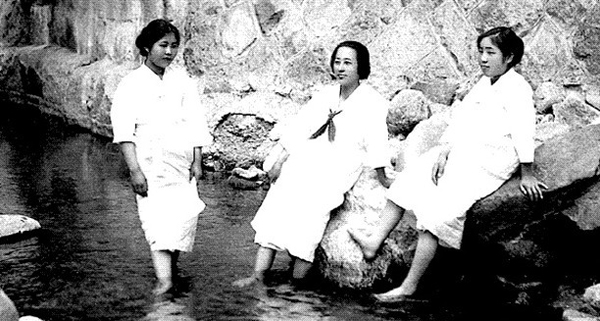
The Communist Party of Korea points out that the bourgeois feminist organisations like Kikhunoi, etc., do not carry on a real struggle for the liberation of women. The Communist Party of Korea calls on the masses of women to join the general revolutionary struggle of the toilers of Korea under the leadership of the Communist Party for the overthrow of the system which supports the slavish position of the Korean women. Only in alliance with the toilers and in the fight against Japanese imperialism can the toiling women of Korea obtain their freedom.
The Communist Party of Korea calls on all women workers in the factories and women farm labourers in the villages to join the class trade unions and carry on an untiring struggle against all kinds of reformists, including Kikhunoi.
The Communist Party of Korea fights (a) for the complete abolition of night work for women and the prohibition of all women’s labour below ground (in the coal mines, etc.) and in all industries which are harmful to women’s health; (b) for the abolition of national and sex inequalities in wages, putting forward the demand for “equal pay for equal work”; (c) for complete social, economic and legal equality for women; (d) for exemption from work and full wages for two months before child-birth, and two months afterwards and free medical treatment and medicine. The formation of children’s nurseries at the expense of the employers in all factories and enterprises, with women workers to care for the small children and rooms for feeding them and the reduction of the working day for nursing mothers to six hours a day.
(f) Demands of the Youth
The Communist Party of Korea calls on the revolutionary proletarian youth to restore the Young Communist League. In the conditions of terror and barbarous oppression, the Y.C.L. of Korea as an illegal organisation must carry out directly and through a number of auxiliary legal and semi-legal mass organisations (youth sections in the trade unions) the task of organising the broad strata of the working, peasant, and revolutionary student youth under the banner of the Communist Party.
The Y.C.L. of Korea, as the assistant of the Party, has the special task of organising the toiling youth under the banner of Communism. The Y.C.L. of Korea must act as a political organisation, subordinating all forms of the struggle and the organisation of the masses–economic, cultural, sport–to the interests of the political struggle, to the interests of the overthrow of imperialist slavery and the winning of the independence of Korea and the establishment of the Workers’ and Peasants’ Soviet Government of Korea.
The Communist Party of Korea, while declaring that the national reformist youth leagues–the Korean Federation of Youth and the religious organisations of youth–cannot struggle for the everyday interests and the final aim of the oppressed and exploited Korean working youth, calls on all the supporters of the Communist Party to carry on persistent work to win over the revolutionary toiling youth in the national-reformist leagues to our side, so that by putting up a revolutionary struggle inside their organisations against the reformists the revolutionary youth will be drawn into the organisations of the Y.C.L. of Korea and the organisations under its leadership.
To protect the interests of the toiling youth and to develop their revolutionary activities for the national and social liberation of the toiling masses, the Communist Party of Korea fights:
(a) For the limitation of the working day to 6 hours for the youth between 14 and 16 years, and the prohibition of the employment of children under 14.
(b) General compulsory free education in the native language up to the age of 14. The supply of food, clothing and school necessities for children at the expense of the government. The introduction of vocational teaching of children at the expense of the government and the employers. The abolition of Sunday schools for children and the freedom of organisation of children’s Communist groups of Young Pioneers.
(c) A yearly paid holiday of six weeks for young workers.
(d) Equal pay for equal work.
(e) The abolition of all those systems in industry and agriculture that help to oppress and exploit the youth.
(f) State support for the unemployed youth that ensures the minimum cost of living.
The Korean toiling youth can realise the above demands only under the leadership of the Communist Party of Korea and only if they carry on a merciless struggle against Japanese imperialism and national reformism and against all those who confuse the toiling youth.
Conclusion
The Communist Party of Korea, by putting forward its programme of demands for the Korean revolution, calls on the toiling masses to rally under the revolutionary banners of the Party and to carry the struggle to the point of the successful winning of State power and the establishment of the revolutionary-democratic dictatorship of the workers and peasants in the form of Soviets.
The Communist Party of Korea declares that the successful fulfilment of the tasks of the anti-imperialist and anti-feudal revolution opens up the possibility that with the support of the international proletariat and, above all, the workers of Japan and China, and the class struggle of the exploited masses of our country, our revolution through a number of stages will develop into a socialist revolution, and thus create the prerequisites for the reconstruction of our country on socialist lines. In this struggle the Korean people are not alone. In the U.S.S.R. Socialism is achieving victory after victory, which strengthens the basis of the world revolutionary movement. The Korean people have allies in the international proletariat and, above all, the working class of Japan and China. Japanese imperialism oppresses not only the Korean people. The toilers of Japan and China are under its yoke and are also struggling against Japanese imperialism. Therefore the victory of the national liberation revolution of the Korean toilers is only possible by their joint struggle with the Japanese and Chinese toilers against the common enemy–Japanese imperialism. The workers of the world are struggling to overthrow international imperialism and destroy the entire capitalist system which is passing through a general crisis. As the E.C.C.I. pointed out, the end of capitalist stabilisation has come. We are at the turning point in the development of the general crisis of capitalism, at the moment of transition to a new cycle of revolutions and wars.
The attack of capital brings the growth of the stubborn resistance of the international proletariat and the colonial peoples against their enslavers.
The revolutionary front of the world proletariat and the colonial peoples is growing and strengthening day by day in spite of all the cunning of the imperialists and their agents, the reformists and social fascists.
But for carrying on the struggle and to achieve the victory of the Korean revolution the Communist vanguard of the proletariat of Korea, the leader and organiser of the toiling masses of our country is necessary. The formation of a centralised, disciplined ideologically united mass underground Communist Party is now the basic and long mature task of the revolutionary liberation movement of the country.
To carry out this aim, the Communist Party of Korea exerts every effort to form a united monolithic ideologically firm fighting mass underground Party which will be able to rouse and organise the struggle of the Korean masses against the Japanese imperialists.
The Communist Party of Korea states with pride that it considers itself as a part of the organised international Communist Movement, a section of the Communist International. The Communist Party of Korea calls upon all the advanced workers and the revolutionaries who are loyal to the cause of the working class to join the ranks of the Communist Party which is being formed to fight for the historic tasks of the Korean revolution. Owing to the oppression of the Japanese rule and terror the Communist Party can exist and develop only as an underground organisation that utilises all legal and illegal forms in order to develop mass struggle and to win the toiling masses for the struggle to establish the revolutionary democratic dictatorship of the proletariat and the peasants at the first stage of the Korean revolution.
The Communist Party of Korea is forming its Party organisations and groups in all towns and in all the factories and mines of the country.
The Communist Party of Korea will organise the working class and the basic masses of the peasants under the banner of the Korean revolution, and in spite of all difficulties and sacrifices will carry the struggle of the toiling masses to the point of the complete destruction of Japanese rule and landlord ownership so that then, together with the world proletariat, it will be able to move ahead to building up of a socialist society in our country and throughout the world.
Long live the independence of Korea!
Long live the working class, the leader of the toiling masses! Long live the revolutionary uprising for independence, land, freedom and bread!
Long live the revolutionary alliance of the toilers of Korea, Japan and China in the struggle against Japanese imperialism! Long live the Communist Party of Korea!
Long live the Comintern–the leader of the world revolution! Long live the world proletarian revolution!
Initiative Group of the Korean Communists.
International Press Correspondence, widely known as”Inprecor” was published by the Executive Committee of the Communist International (ECCI) regularly in German and English, occasionally in many other languages, beginning in 1921 and lasting in English until 1938. Inprecor’s role was to supply translated articles to the English-speaking press of the International from the Comintern’s different sections, as well as news and statements from the ECCI. Many ‘Daily Worker’ and ‘Communist’ articles originated in Inprecor, and it also published articles by American comrades for use in other countries. It was published at least weekly, and often thrice weekly.
PDF of full issue: https://www.marxists.org/history/international/comintern/inprecor/1934/v14n11-feb-23-1934-Inprecor-op.pdf
PDF of issue 2: https://www.marxists.org/history/international/comintern/inprecor/1934/v14n14-mar-02-1934-Inprecor-op.pdf
 Revolution's Newsstand