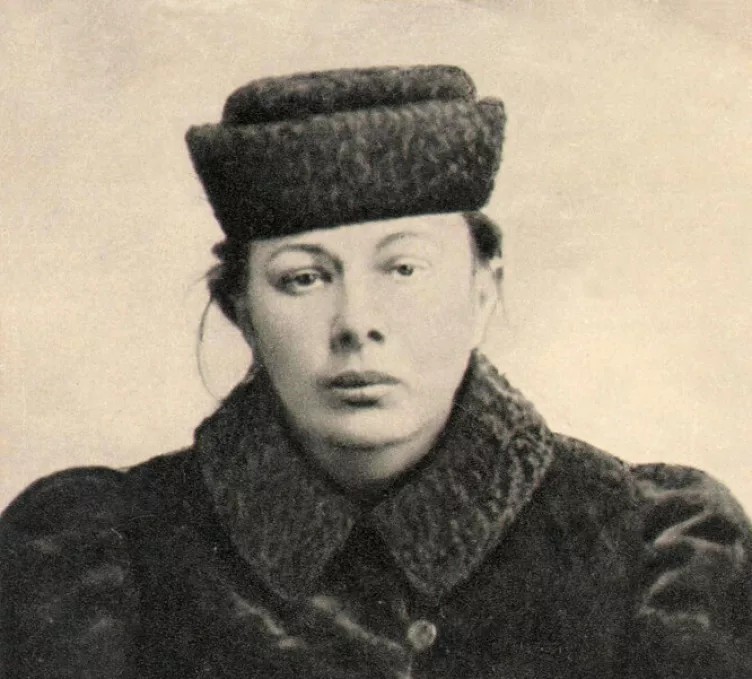
Nadezdha Krupskaya was, quite apart from being Lenin’s co-worker and wife, a remarkable comrade in her own right. A veteran revolutionary and Marxist intellectual who focused on workers’ education and the organization of working class women, Clara Zetkin pays tribute to her labors and her character on her sixtieth birthday.
‘Nadezdha Konstoninova Krupskaya and the Working Woman’ by Clara Zetkin from International Press Correspondence. Vol. 9 No. 11. March 1, 1929.
The men and women communists of all countries, and especially the women comrades of the Soviet Union, do not need the occasion of the 60th birthday of Nadeshda Konstantinovna Krupskaya, which occurs on 27th of February, to remind them of the thanks they owe to this undaunted fighter, builder, and leader. Comrade Krupskaya has passed through the fiercest struggles and severest conflicts, through bitter experiences and painful sufferings. And yet her life is rich in what really make life precious, rich in strivings and labour for the highest idea which moves humanity: the emancipation of all the exploited and oppressed of the world as the conscious work of these exploited and oppressed themselves. Comrade Krupskaya’s service for the realisation of this idea, this conception rising on the foundation of revolutionised conditions of production and expressing the new order of society, is written in indelible letters in the history of the Russian Labour movement, of the revolution of October 1917, of the proletariat of the Soviet Union and of the world. But its content is not a glorious past; it is an active present, filled with labour and struggle.
Ever since day when Nadeshda Konstantinovna, still a young girl, recognised that every individual destiny is bound up with the social whole, and gave her own life thereby a conscious social import, she has steadily kept only one goal in view: to liberate humanity through Communism and to make human beings the mature masters of their fate. She is the embodiment of self-sacrificing devotion, of unshakable faithfulness to this aim. To serve this purpose is for her the fulfilment and happiness of life. Comrade Krupskaya, in her work for that abolition of capitalism and that victory of Socialism which will emancipate humanity from the enslaving bonds of the possessing class, has never forgotten that every state of society recognising private property has made woman its slave and servant, and that the struggle of down-trodden-womankind for liberation is one of the most powerful revolutionary forces in history.
When Comrade Krupskaya, still a young student, joined the movement of the revolutionary workers and student youth, she did not find it necessary as many women sharing her ideas in Western Europe have done to assert her right to take part in the work and struggle. Conspirative work would have been scarcely possible without the co-operation of clever and energetic women, devoted to the cause. Passing forward from the work of winning over such women co-workers, Comrade Krupskaya devoted herself to propaganda and teaching among the proletarian women. To enlighten working women, to induce these to join the groups, to see them working among their fellow working women, this was the work in which she found particular satisfaction.
In the midst of revolutionary will and deed, there sprang up and developed that firm and intimate community, both of conception of life and fighting steadfastness, between Lenin and Comrade Krupskaya, which was to be determinative for the course of Comrade Krupskaya’s life. During the hard years of banishment to Siberia and exile abroad, Lenin grew into not only one of the best leaders of the Russian Labour movement, but into the over-toweringly great leader, in impassioned conflicts of opinion over theory and practice with the various socialist and revolutionary schools and trends of that time, he created the ideology and organisation of the Bolshevist Party. Comrade Krupskaya took an active part in the fervid intellectual battles of these years, and rendered an especially valuable service in maintaining and helping communication between Lenin and the comrades, groups, and organisations in Russia.
In the first Social Democratic Labour Party, and later in the revolutionary wing separating from this, the Bolshevist Party, Comrade Krupskaya urged unceasingly the awakening of the women workers to class consciousness and their inclusion as schooled fighting forces in the movement. She followed carefully the development of the proletarian women’s movement in the capitalist states, especially in Germany. As a schooled and revolutionary Marxist, Comrade Krupskaya stood decidedly on the side of those in Germany, and in the II. International, who fought for a definite dividing line between the proletarian and the bourgeois women’s movements and for the participation of working women, the proletarian women, in the trade union and political organisations of their class. Guided by this fundamental standpoint, she demanded energetic and systematic work among the working women on the part of the revolutionary social democratic associations, and promoted this work by fruitful suggestions, proposals, and advice, and by contributions to the Party organs, etc., especially the publications of the Bolsheviks. In Siberia Comrade Krupskaya wrote the first Russian propaganda pamphlet for the working women: “Woman and Woman Worker”. This pamphlet appeared anonymously February 1901, and had such a successful effect that a second edition could be issued by August. The object of the pamphlet was to induce co-operating solidarity between the working women gathering together in Russia and their sisters in Western Europe. The International Women’s Day resolved upon by the International Women’s Conference at Copenhagen in 1910 was celebrated also in Russia as a proclamation of the solidarity of the proletariats of the world. The Bolshevist Party demanded that this Day should not be regarded as purely a women affair, but as a task incumbent on the whole Party and as a proletarian demonstration without difference of sex. It was due to Comrade Krupskaya that this standpoint, class-conscious and true to purpose, was maintained. After the outbreak of the great imperialist war, the Bolshevist Party dashed courageously into the breach to rescue the banner of international revolutionary solidarity of the proletariats of the world, trodden into the mire by the Second International. Despite enormous difficulties, it strove to gather the working women, too, around this banner, and to make them a driving force of international and national action against war and for revolution. It lent energetic support to the execution of the first international action with this aim. This was the International Socialist Women’s Conference at Berne on 26th, 27th, and 28th March 1915, which preceded and thereby encouraged the International Conference of the revolutionary section of the socialist youth. The Women’s Conference became an important stage on the path of the vanguard of the proletariat to Zimmerwald and Kienthal. Comrade Krupskaya, collaborating with comrades Inessa Armand and Lilina, took part in the Conference, and thereby ensured the sharp stressing of its revolutionary character.
Comrade Krupskaya never ceased to urge the importance of revolutionising the working women in the great industrial centres of Russia. Thanks to her efforts, the success won by the systematic and purposeful detail work of the Bolshevists among the working women swelled into an event of historical importance. The International Woman’s Day held on 8th March, 1917, in the then Petrograd gave the signal for those mighty demonstrations against war and tsarism which became the starting point of the February-March revolution.
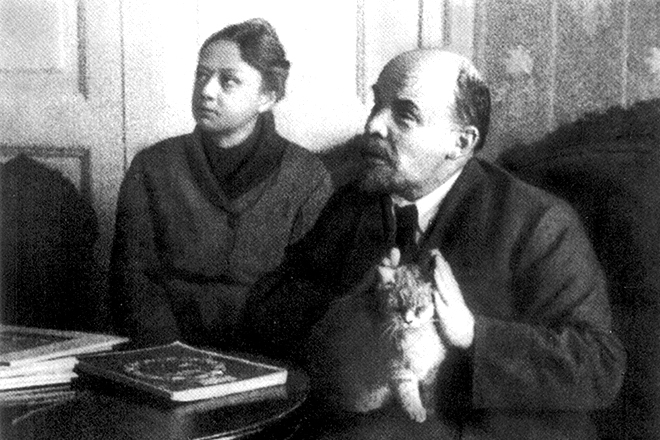
With Lenin’s return to Russia there began for Comrade Krupskaya a new period of intenser active effort among the proletarian masses themselves. Lenin, the most unwearying, clear of purpose, and strong of will of the proletariat in the gigantic struggle, was forced to remain on the other side of the Finnish frontier, to hide himself. It was none the less necessary that he should be kept rapidly and accurately informed of all occurrences in the public life of Petrograd, and especially of the currents influencing the great industrial undertakings and the barracks. Nadeshda Konstantinovna Krupskaya as also Lenin’s sister Maria Ilyninischna undertook in the most dangerous and responsible situations the confidential post of secretary, intermediary, and propagandist, again proving the embodiment of revolutionary faithfulness to duty. In Leningrad there are still proletarian women and comrades who ‘ell of Comrade Krupskaya’s self-sacrificing activities during these months.
The conquest of State power by the proletariat with the aid of the peasantry, in a country capitalistically undeveloped and culturally backward, made in every respect enormous demands on the leading Bolshevist Party cadres and especially on Lenin. The civil war flamed up furiously.
This gigantic and chaotic struggle brought to light more clearly than ever the extent of the decisive importance of the revolutionary masses of the women. Women worked in the trenches, in industry, on the land, in the administration; they kept the wheels of social life running. They grudged themselves even an hour of rest from tending the sick and wounded. They helped untiringly in distributing the scanty stores of food and other necessaries. They organised communal kitchens, homes for mothers and infants, creches, kindergartens and educational institutions for older children. They worked, fought, and died at the military fronts. Their deeds proclaimed even more forcibly than the text of the Soviet law their social right to emancipation. In this period again Comrade Krupskaya merged herself completely in the mass of actively revolutionary women. With the women comrades Kollontay, Lilina and Inessa Armand, Samoilova and others, she was to be found everywhere where the historical dawning day of creation for women called to new and responsible tasks, everywhere where among women the inner foes of revolution had to be fought: starvation, nakedness, doubt, discouragement, sabotage. Comrade Krupskaya never pushed herself into the foreground, but she was always ready to lend a hand when needed: in the leaders’ consultations, in mass demonstrations, in the execution of practical measures. Comrade Krupskaya did her duty simply and as a matter of course. One witness of this is her co-operation in the great All-Russian Women’s Conference in October 1918.
Comrade Krupskaya is one of those men and women comrades whose participation ensures the success of an undertaking, for they realise its far-reaching effects.
In March, 1919, the Communist International was founded. Nadeshda Konstantinova aided the initiative taken by the Russian women comrades to ensure that the inaugural Congress should establish the fundamental communist principle of the historical necessity and importance of the participation of women in the proletarian struggle for emancipation. The Congress passed a resolution in accordance with the motion proposed by the women comrades, containing the passage:
“The Congress of the Communist International declares that both the success of all the tasks which it sets, and the final victory of the world proletariat and the complete abolition of the capitalist order, can be secured only by the closely united joint struggle of the women and men of the working class The dictatorship of the proletariat can be realised and maintained only with the active and energetic participation of the women of the working class.”
In 1920 the Second World Congress of the communists was followed by the First International Women’s Conference, organised for the purpose of gathering together the women communists for systematically organised work in the national sections. It need not be said that these efforts were supported by Nadeshda Konstantinova Krupskaya by word and deed at their central point, Moscow. She took an active part in the consultations of the women’s commission which examined, in the late summer of the same year, the programmatic “instructions” proposed by the international communist women’s movement, agreed to by the Second International Women’s Conference in 1921, and confirmed by the Third World Congress. She attended the Conference and those which followed, as also other women’s conventions working for the same aim, as delegate and speaker.
It need scarcely be emphasised that these dry and scanty data are far from giving any real idea of that profound solidarity making Comrade Krupskaya one with the proletarian woman, the exploited, the oppressed of the whole world, and especially with the down-trodden women now striving to raise their heads. And this solidarity is more than a mere feeling; it is a clear and firmly founded recognition and conviction of the indestructible unity of the great family of humanity, now to be liberated and joined together by Communism.
Comrade Krupskaya strives unceasingly to unite the workers and working women of the Soviet Union in understanding and active sympathy for the struggles of their sisters and brothers in the capitalists States and colonial countries. She is fully conscious that the proletarian revolution can only give full effect to its creative force when it strides triumphantly over the whole globe, destroying the old and building up the new.
Scarcely had the Soviet State forced counter-revolution to its knees, when it took up without pause for breath its historical task of revolutionising the economic and cultural conditions of society, of socialising these. The Communist Party of the Bolsheviks, the administrator of proletarian State power, had not only to provide the proletarian leaders ready to seek the path to this goal, to lay it down and furnish it with landmarks; it has at the same time to provide the executive, constructive, and creative forces. Nadeshda Konstantinova found here the activity corresponding to her gifts and many-sided capabilities, and adapted to the innermost essence of her nature. Whilst remaining the same active Party comrade as before, indissolubly bound un with political life and with the life of the organisation, at the same time the greater part of her labours now began to be devoted to the specifically cultural tasks of this organisation. Comrade Krupskaya became a member of the People’s Commissariat for Education, and applied the full powers of love and devotion, in the highest sense of the words, to the cause of the enlightenment and education of the people. In doing this she acted with Lenin’s full agreement, for to Lenin the highest possible education of the workers was always the prerequisite and result of the further development of proletarian revolution to Communism.

Nadeshda Konstantionvna Krupskaya experienced the greatest of happiness: she experienced the proletarian revolution. She was not spared the greatest of sorrows: Death tore Lenin from her side. The cruel wound of this loss can never heal. But the strength of her will to work for the revolution is such that though bereavement may bend her, she remains strong and unbroken. With undiminished energy and devotion Comrade Krupskaya continues to work for the creation and development of every description of educational institution, for the organisation of cultural possibilities enabling the rich gifts slumbering in the working millions to be awakened and utilised. All knowledge for the people! All art for the people! All joy in nature and in full-blossomed active humanity for the people! This is the leading motive of her endeavour as educator of the whole people: Everything through the people, thanks to the realisation of Communism, of the social order without class or exploitation, as the achievement of the fighting revolutionary proletariat.
In the wide sphere of cultural work Nadeshda Konstantinova Krupskaya again finds opportunity for the furtherance of international solidarity. She supports the international alliance of the teachers and educators of the Soviet Union with their colleagues abroad, and promotes the international exchange of results and experiences in educational science. The masses of creatively working women possess in her a faithful defender of their right to win knowledge and culture. Comrade Krupskaya understands the burning longing of the working woman, the workman’s wife, the peasant woman, to throw off the crushing burden of backwardness and lack of culture. Every achievement of advancing cultural revolution is for women as well as men! Comrade Krupskaya, in realising this principle in socially creative work, is the faithful executrix of Lenin’s will, for Lenin was the greatest of all champions of the emancipation and equal rights of the female sex.
Comrade Krupskaya’s nature and work are a granite unity, are a shining example. Innumerable are the hearts which turn to her in love and reverence on her 60th birthday. We international communist women step forward with our comrades, the working women of the Soviet Union, and join our birthday wishes to theirs with the words: We thank you for what you give us and what you are to us. An upward striving and ever active human life.
International Press Correspondence, widely known as”Inprecorr” was published by the Executive Committee of the Communist International (ECCI) regularly in German and English, occasionally in many other languages, beginning in 1921 and lasting in English until 1938. Inprecorr’s role was to supply translated articles to the English-speaking press of the International from the Comintern’s different sections, as well as news and statements from the ECCI. Many ‘Daily Worker’ and ‘Communist’ articles originated in Inprecorr, and it also published articles by American comrades for use in other countries. It was published at least weekly, and often thrice weekly.
PDF of full issue: https://www.marxists.org/history/international/comintern/inprecor/1929/v09n11-mar-01-1929-inprecor.pdf
 Revolution's Newsstand