Unlike in most European countries, the Italian working class registered their opposition as the world slid to war with the Red Week (Settimana Rossa), which saw strikes and anti-militarist demonstrations engulf large parts of the country. The resistance was too little, too late and the Italy joined the slaughter.
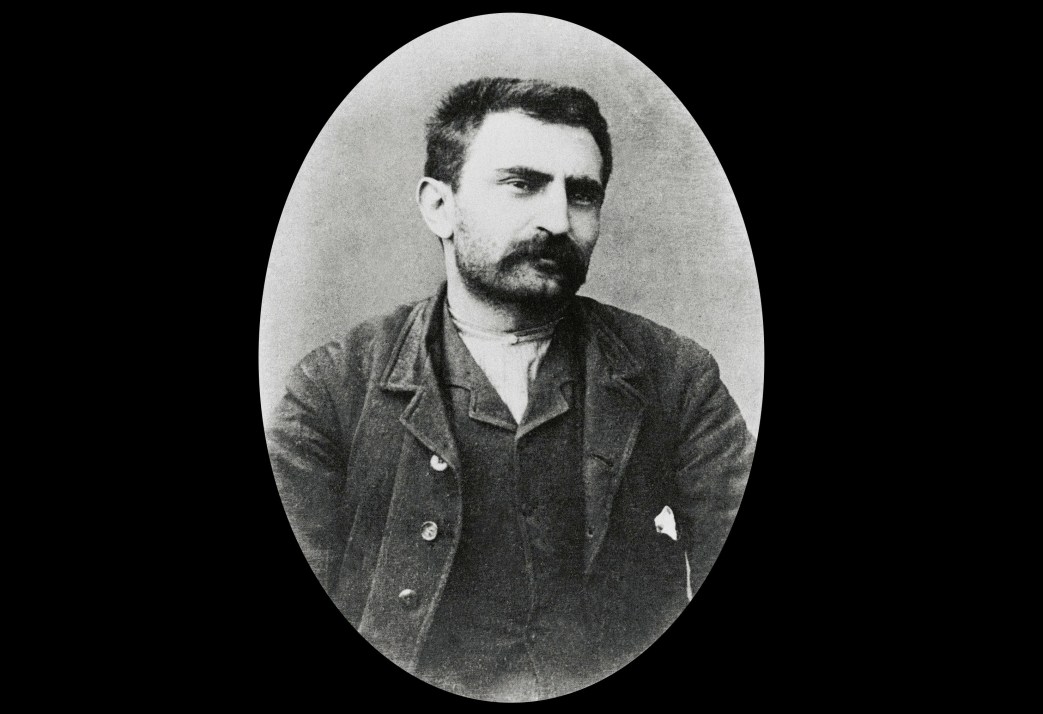
‘Italy, Also!’ by Errico Malatesta from Mother Earth. Vol. 10 No. 5. July, 1915.
WE had hoped that the Italian workers would beable to resist the governing classes and affirm to the last their brotherhood with the workers of all countries, and their resolution to persevere in the struggle against the exploiters and oppressors, for the real emancipation of mankind. The fact that the great majority of Socialists and Syndicalists, and all the Anarchists (except a very few) were solid against war, added to the evident general disposition of the masses, gave us this hope that Italy would escape the massacre and keep all her forces for the works of peace and civilization.
But, alas! no. Italy, too, has been dragged into the slaughter. The same Italians who were oppressed and famished in the country of their birth, and were compelled very often to go and earn their bread in far-off lands; the same Italians who to-morrow will be famished and compelled to emigrate again, are now killing and being killed in defence of the interests and ambitions of those who deny them the right to work and live a decent life.
It is astonishing and humiliating to see how easily the masses can be deceived by the coarsest lies!
All these dreary months the Italian capitalists have been enriching themselves by selling at enhanced prices to Germany and Austria an immense quantity of things useful for the war. The Italian Government has been trying to sell to the Central Empires Italian neutrality in exchange for more additions to the dominions of the Savoyan King. And now, because they could not obtain all they wanted, and have found it more advantageous to cast in their lot with the Allies, they speak, with brazen face, as if they were disinterested knights-errant, of the defence of civilization and the vindication of “poor Belgium.” Yet their mask is very transparent. They say that they go to war for the liberation of the peoples from foreign domination, and they try to inflame the young men with the glories of the Italian struggle against the Austrian tyranny; but they try to crush into submission the Arabs of Tripoli, they want to keep the Greek islands “provisionally” occupied at the time of the war with Turkey, they ask for territories and privileges in Asia Minor, they occupy a part of Albania, which certainly is not Italian in any sense of the word, and pretend to annex Dalmatia, where the Italians are only a small percentage of the population. Really, they pretend to have a claim on every country which they have, or think they have, the power to take and keep. One place ought to belong to Italy because it was once conquered by the Romans of yore, another because there was a Venetian counting-house there, another because it is inhabited by many Italian immigrants, another because it is necessary for military security; and every other place in the world because it may be useful to the development of Italian commerce.
But there is nothing astonishing in this: Governments and the dominating classes in every country have always invoked international justice when they were weak; but as soon as they are, or think they are, strong enough, they begin to dream of universal domination. They protest now against the domineering spirit of the Germans, but as a matter of fact they are all “Germans.”
What seems less natural, and is more disheartening, in Italy is the conduct of the Republicans. They affected to put above all the question of the form of government; for them the first, the all-important question was the abolition of the monarchy. But it has been sufficient appeal to their national passions, and all their desire of liberty, all their hatred against the House of Savoy, has disappeared. They have done their utmost to resuscitate in the masses the old ideal of patriotism, which was developed in the time when national independence seemed to be the means for attaining emancipation from poverty and bondage, and which had decayed in consequence of the experience that a national government is as bad as a foreign one. They have raised the cry “War or Revolution” and when the King, perhaps to save himself from the revolution, has declared war, they have put themselves in the mass at the service of the King. What, then, about the Republic? Many of them still say that they want war in order to facilitate the revolution; but what nonsense! If Italy is victorious, certainly it will be to the exclusive advantage of the Monarchy; and, on the other hand, we cannot conceive that the Republicans would be capable of the infamy of pushing the people into war with the secret hope that they would be beaten and their country invaded and devastated.
We do not know, for want of reliable information, the present situation in Italy, and what are the true factors that have determined so quick a change in her attitude. But one redeeming feature is revealed by the news received in London.
The Italian Government has felt that it was not safe to make war without suppressing every liberty, and putting in prison a great number of Anarchists.
This means that the Anarchists remain loyal to their flag to the last, and, what is more important, that the Government fears their influence on the masses.
This gives us the assurance that as soon as the war fever has calmed down we will be able to begin again our own war—the war for human liberty, equality, and brotherhood—and in better conditions than before, because the people will have had another experience, and what a terrible one! That from the Government can be expected only injustice, misery, and oppression, and then, as a change, slaughterings on a colossal scale; that patriotism, nationalism, racial rivalry are only means for enslaving the workers, and that their salvation lies in the abolition of Government and Capitalism.
Mother Earth was an anarchist magazine begin in 1906 and first edited by Emma Goldman in New York City. Alexander Berkman, became editor in 1907 after his release from prison until 1915.The journal has a history in the Free Society publication which had moved from San Francisco to New York City. Goldman was again editor in 1915 as the magazine was opposed to US entry into World War One and was closed down as a violator of the Espionage Act in 1917 with Goldman and Berkman, who had begun editing The Blast, being deported in 1919.
PDF of full issue: https://archive.org/download/mother-earth/Mother%20Earth%20v01n05%20%281906-07%29%20%28c2c%20Harvard%20DSR%29.pdf
 Revolution's Newsstand