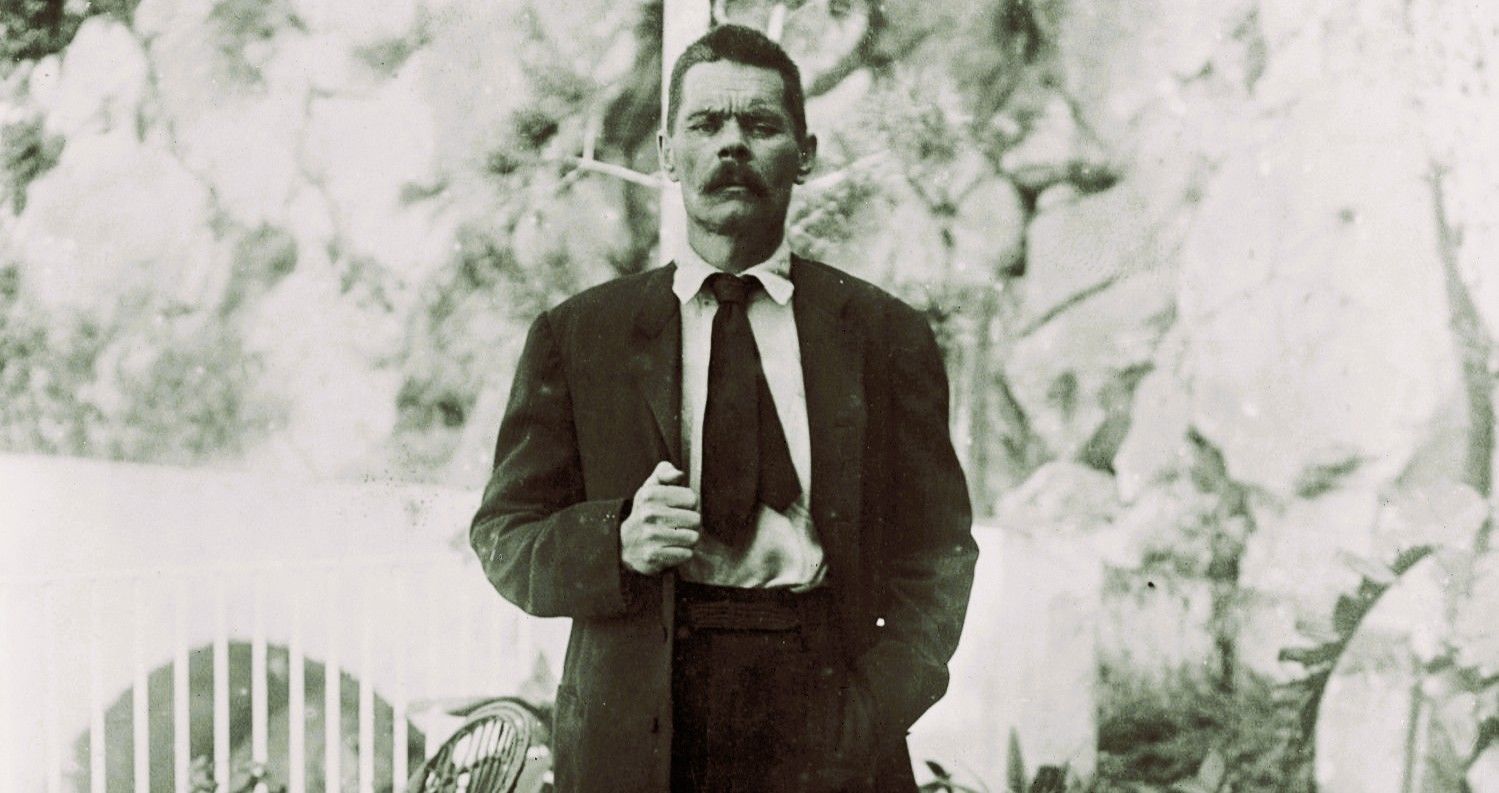
Gorky understood that the stakes could not be greater, the consequences more profound, than in the struggle for power that emerged after the First World War. A struggle whose ultimate failure has led us to today. Gorky understood.
‘Yesterday and Today’ by Maxim Gorky from Workers World (Kansas City). Vol. 1 No. 18. August 1, 1919.
YESTERDAY was the day of the great lie–the last day of its power.
Of old, thread by thread, mankind carefully span the stout spiders’ web of cautious, commonplace life, and imbued it more and more with lies and greed. The cynical lie, that man must feed on the flesh and blood of his neighbour, and that the instruments of production–instruments of the struggle against nature–should serve as instruments of the oppression of man, was counted unassailable truth.
And behold, yesterday, marching along this road, they reached the madness of a European war; its ghastly glare suddenly lit up the whole abominable nakedness of the old, close-spun lie; and we see the old world shaken to its foundations, shattered, its dark secrets laid bare; and today even the blind, made whole, see all the abomination of the past.
Today is the awful day of requital for the lie that ruled yesterday.
By the force of the breaking patience of the nations the old rotten life is destroyed, and can never again be regenerated in the old shape. Is everything dead that is of yesterday? No. It will be killed tomorrow.
There is much that is horrible today, but it is all natural and comprehensible. Is it not natural, that those poisoned with the strong poisons of power–with alcohol and syphilis cannot be magnanimous. Is it not natural that men steal, if theft was the fundamental law of yesterday? It is natural to kill men by the ten, by the hundred, by the thousand, when in the course of four years we have grown accustomed to kill them by millions. Yesterday’s seed cannot but crop up today: the present day is cruel, but cruelty was born before it. Evil is worked by the deeds of men; nothing comes into being without us. Amongst the ruins of the past, all that it was bound up and blended with is clearly and distinctly visible, and all that was hidden in the souls of the downtrodden today rouses them to tread down others. Man stands before the mirror of history naked as a beast, all aflame with the fire of belated and needless vengeance; much evil may be said of the man of these days.
But it must be remembered that the shadows are so deep because the day is all too bright. It must be understood that today, in the dust, rubbish, and chaos of destruction, the great work of freeing mankind out of the strong, iron cobweb of the past–a work awful and arduous, even as the pangs of birth–has already begun. It must be felt that the evil of yesterday is living out its last hours, together with the men of yesterday.
It so happened that, into the fight for the triumph of justice, in the van of the nations, there marched the very weakest and most untried champions, the men of Russia–men of a country backward economically and culturally, men crippled by their past more than any others. It was but yesterday that the world counted them half savages, and today they march, starving, towards victory or death, glowing and intrepid as old war-worn warriors.
Every man who sincerely believes that the unconquerable striving of mankind after freedom, beauty, reasonable life, is not a fruitless dream but a perfectly real force, the only one capable of creating new forms of life every man who believes that this force really is the lever which may shift the world: every honest man ought to recognise the world significance of the deeds of the most honourable revolutionaries of Russia.
What at present is being done in Russia ought to be looked on as a gigantic attempt to turn into real life, into real fact, the high ideals and words created and spoken by the teachers of mankind, the sages of Europe. Yesterday it was European Socialist thought that taught the Russian nation to think–today the Russian working man works for the triumph of European thought.
And should the honourable Russian revolutionaries–small in number, surrounded by foes, tortured by hunger as they are–be vanquished, the consequences of this frightful disaster will fall heavily on the shoulders of all the revolutionaries of Europe, of all its workers.
For this catastrophe–should it happen–all those will have to pay with their life and blood who do not feel, do not understand the terrible struggle carried on day by day by the Russian workers.
An honest heart does not waver, honest thought is strange to the temptation of compromise, honest hands will not cease to toil while the heart beats–and the Russian workman believes that his brethren in spirit will not allow the revolution in Russia to be crushed, will not let all be resuscitated anew that is mortally wounded, expiring, disappearing, that will surely disappear–if the great tasks of today will be understood by the revolutionary thought of Europe.
The Workers World, published weekly in Kansas City, Missouri during much of 1919 was a mix of regional and national working class news, international socialist events, and the growing fights within the Socialist Party. It was one of many left-wing Socialist Party journals inspired by the Russian Revolution to emerge. Edited alternatively by future Communist Party leaders James P Cannon and Earl Browder, The Workers World ceased publication in November, 1919 as writers and readers moved on to build the Communist movement and its early parties.
PDF of full issue: https://www.marxists.org/history/usa/pubs/workersworld/n18-aug-01-1919-workers-world-G.pdf
 Revolution's Newsstand