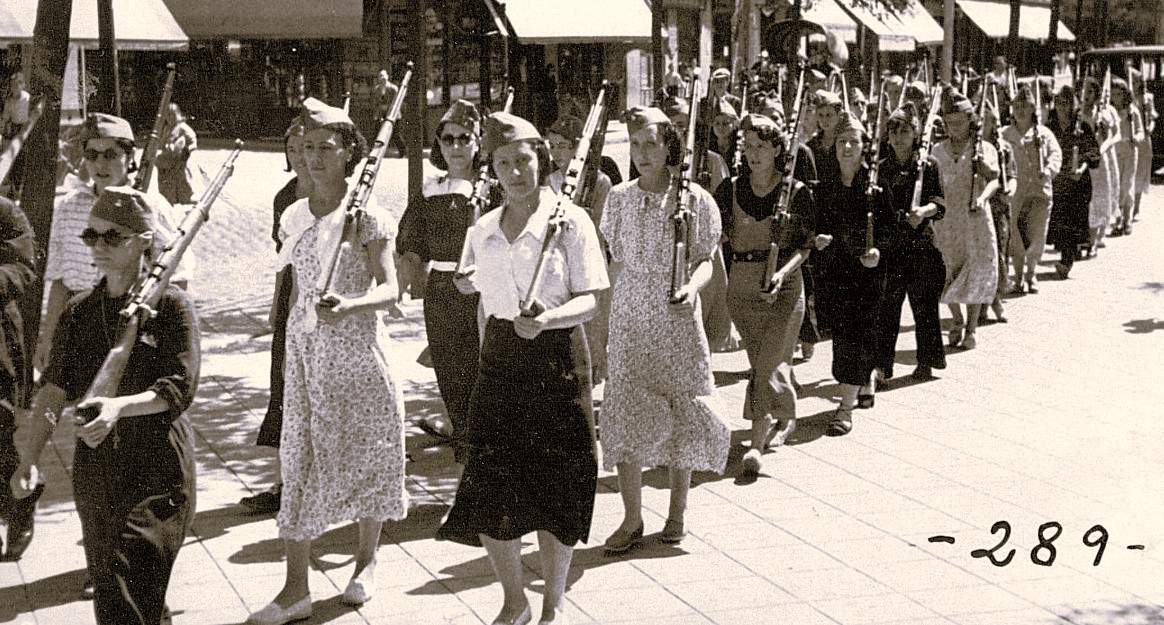
Perspective of the Partido Obrero de Unificación Marxista for the struggle at hand in the Spanish Civil War after the initial months saw a determined and energized working class prevent the overrunning of Spain by fascism’s revanchist gangsters.
‘The Socialist Revolution or Fascism’ from The Spanish Revolution (POUM, New York). Vol. 1 No. 1. October 21, 1936.
The violent struggle which is taking place in Spain is not, as the Stalinists and reformist socialists proclaim, a struggle between democracy and fascism, but a sharper phase of the world-wide battle already begun between fascism and socialism.
The POUM (the Workers Party of Marxist Unification, the fusion of the Workers and Peasants Block with the Communist Left as a result of the lessons of red Octobre 1934) has the duty of bringing the realisation of this truth to the workers who, in Spain, are fighting on the battlefront or working behind the lines for the development and the security of the proletarian revolution.
Nothing less than a proletarian revolution is being carried out in our country today. It has dropped like a rock into the stagnant water of reformism which the leaders of the IInd. and IIIrd. Internationals had made of the workers’ movement in Europe. They would repeat in our case the crime they committed against Ethiopia, by offering the care of our defence to some organisation of the decayed League of Nations. But the workers of all countries have rebelled and forced their leaders to march forward according to their will. It was possible for French, English, American and even German and Italian workers–as well as the workers of the Soviet Union–to look on with a certain amount of unconcern when, by the democratic derivation given to the Ethiopian question, the opportunity of dealing a death-blow to Mussolini’s fascism was lost. But they can not take up the same passive attitude when they see how the whole fascist world has arisen unanimously against the Spanish proletariat. Class sense has been able to do more this time than the preaching which the leaders of the proletariat had accommodated to their own interests.
After the first moments of stupor, seeing the heroic reply which the workers of Madrid and Barcelona gave to fascist provocation, proofs of solidarity from the proletariat of all countries were not slow in reaching the Spanish workers. A week had not gone by before there appeared in the workers’ militias, which had been formed by every party, workers who had come from different countries all over the world to shed their blood side-by-side with their Spanish brothers. Once more the proletariat was more clearsighted than its leaders.
At the very same time that the leaders were calling out to the world in general, in order not to alarm the bourgeoisie, that the struggle begun in Spain was only a prolongation of the struggle between democracy and fascism, (a political motto engendered by the Popular Front) the workers threw themselves into the struggle, certain that they were fighting, not for democracy, but in the final battle against the bourgeoisie. And the bourgeoisie, instead of being deceived by this democratic gibberish, realised perfectly well the real significance of the military rising. Moreover, the bourgeoisie of all countries without exception, from the most “democratic” to the most fascist, had already taken a hand in preparing the fascist insurrection which they intended to be the tomb of the workers’ movement in Europe for many years to come.
It was not without forethought that they chose Spain as their field of battle against the European proletariat. The Spanish proletariat had learned the lessons of October 1934, and the bourgeoisie knew that the workers who had fought then until they had triumphed over all the bourgeois state forces in the Asturias, constituted the proletariat who would offer the greatest resistance to the progress of fascism. They wished to destroy the germs of the revolution before the revolution could break out. They took the slogan “he who takes the offensive wins”, and they attacked. But they were fated to return frustrated. The Spanish proletariat, hardened by an interminable series of struggles against the backward system of our country, with the October lessons still fresh in their minds, the wounds of two years’ persecution from the reaction still unhealed, the spectacle of the German, Italian and Austrian workers always before their eyes, the Spanish workers were ready to perish to a man in the fight rather than to let themselves be vanquished. If they had been vanquished, it would have been by leaving to the conquerors a country in ashes and destitute of its proletariat. A proletariat so disposed is only beaten with the greatest difficulty.
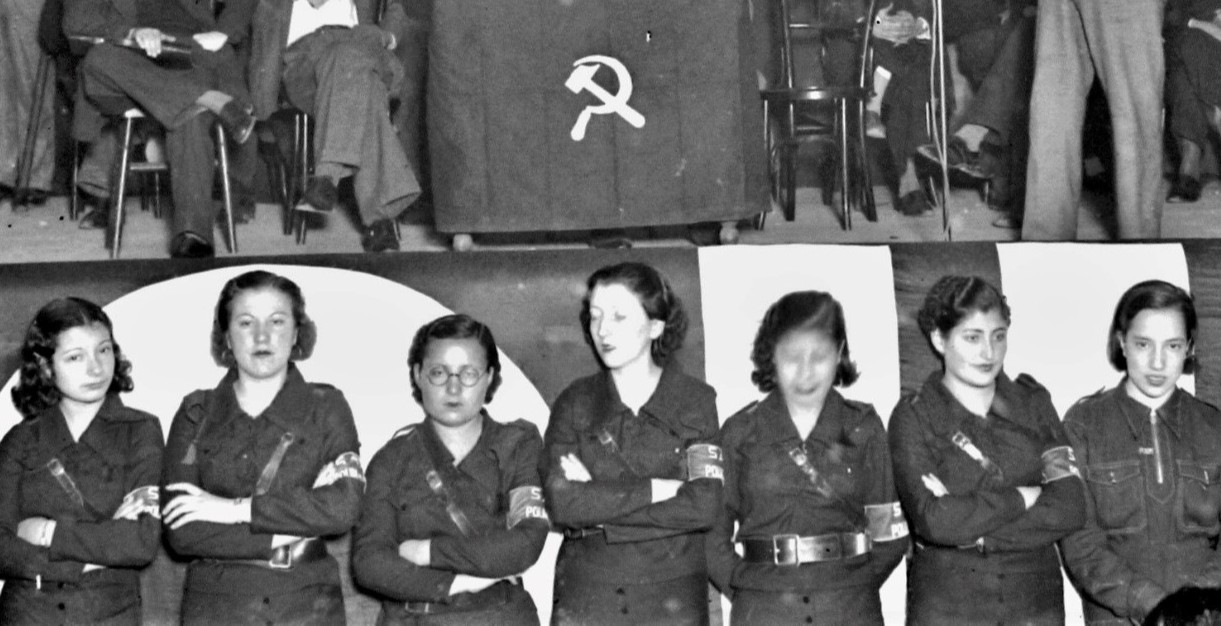
Nevertheless, the excitement of the first combats once over, the army and the reaction once defeated, almost by bare fists, the Spanish proletariat were forced to see how the leaders of the big workers’ organisations of all countries, adherents of the IInd. and IIIrd. Internationals, were to make a mockery of the spilt proletarian blood by proclaiming that the Spanish workers were struggling for the continuance of democracy and not for the establishment of socialism. Under this ambiguous slogan, in France and Belgium the leaders of the IInd. International, and the leaders of the IIIrd. international in the Soviet Union and other countries, proclaimed the neutrality policy to be the policy that would save our revolution; and they converted this policy into an infamous trick. Meanwhile Hitler, Mussolini, Oliveira Salazar and the bourgeois of England, France and every other country were not losing a second in sending help to the Spanish rebels and fascist generals whom they had changed into the “pioneers” of their class-war. Naturally, the bourgeoisie, well guided as usual in their class interests, knew that what was being fought out in Spain was not war between democracy and fascism, but war between socialism and fascism. By their suicidal and counter-revolutionary policy, the only thing the workers’ leaders achieved was to put the Spanish revolution in danger and run the risk of letting the European working class be smothered by the fascist wave for a long time to come. This is what the high priests at Amsterdam and Moscow had in their power to do. Surface rectifications, more literary than effective, made in order to prevent the working masses from realising the counter-revolutionary path their leaders had intended to make them follow, have done no more than augment the responsibility of these leaders for the wrong they have done; for if they have been unable to defeat the Spanish revolution, the least they have done has been to cost the Spanish workers many more hundreds of lives than triumph would have cost, through a decided and energetic attitude of the whole proletariat united in our revolution.
But the foreign workers are not afraid. The Spanish workers, and the workers from other lands who are fighting side-by-side with them at the front, know that there are great difficulties to be overcome and hard battles to be won, but they are not willing to let themselves be beaten. They will win because they know that they are fighting not only for themselves but also for the world proletariat who has placed its confidence in them. Although they realise the seriousness of the situation, they do not allow themselves to be overcome by the pessimism which has percolated through to certain layers of the international proletariat. They know that this is a fight to the death, without quarter, and they know what role history has reserved for them in the movement for the total emancipation of the proletariat.
Willing to give their lives, if need be, their blood to the last drop, they expect from you, workers of English-speaking countries, as from workers everywhere, your most effective solidarity.
Remember that our defeat would be your defeat, just as our victory must be your victory.
The POUM, at the head of the revolution, is the best guarantee that the revolution will not be set at nought or undone. We will not allow it, and neither will it be allowed by all the millions of workers who make up the red army of the Spanish proletariat.
The Spanish Revolution (not to be confused with the CNT supporters’ paper of the same name, time, and look)) was the English language journal of the Partido Obrero de Unificación Marxista (POUM). Edited by American couple Charles and Lois Orr, she a member of the POUM women’s militia, the journal was aimed at British and US audiences through the International Revolutionary Marxist Centre, sometimes called the “Three and a Half International,” from October, 1936 until the arrest of the Orrs and the banning of the POUM after Barcelona’s “May Days” 1937 uprising.
PDF of full issue: https://www.marxists.org/history/spain/poum/spanishrevolution/v1n1-oct-21-1936-Spanish%20Revolution.pdf
 Revolution's Newsstand