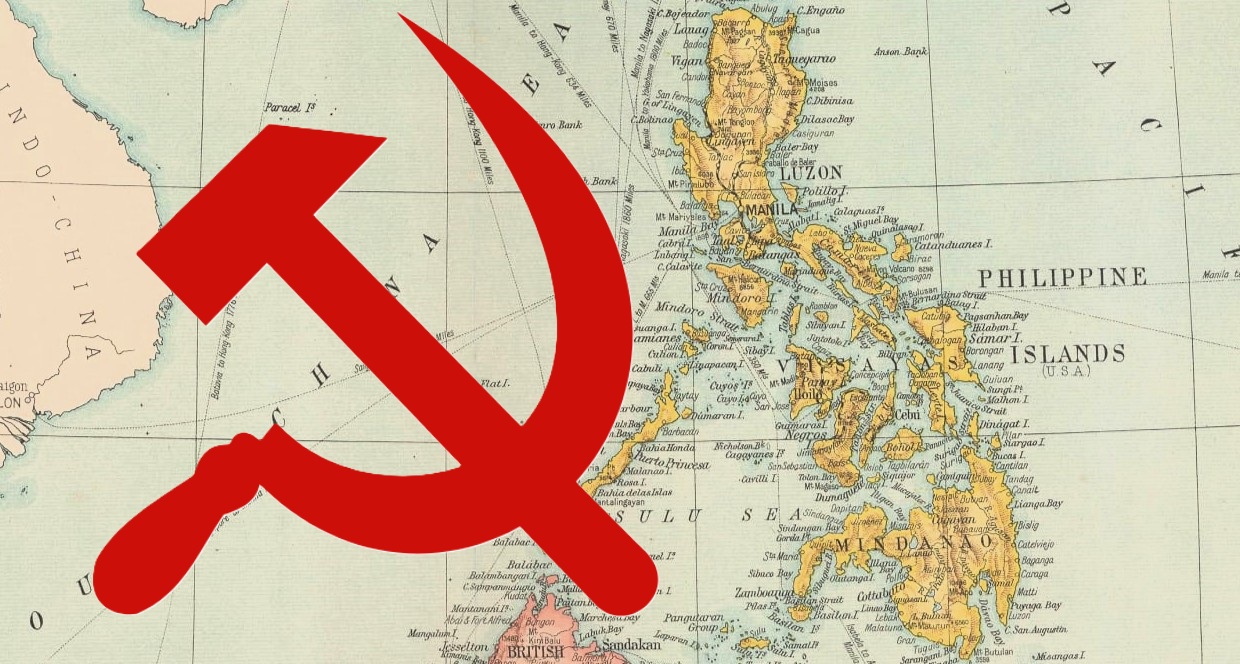
With 5-600 members, the Communist Party in the Philippines was blamed for a series of peasant conflicts, leading to severe repression. Here, D. Caprio analyzes events and gives criticisms on the perceived failures of analysis and inability of the Party to take positive advantage of the situation.
‘Situation in the Philippines and Tasks of the Communist Party of the Philippine Islands’ by S. Carpio from The Communist. Vol. 11 No. 12. December, 1932.
More than one year has now passed since the formation of the Communist Party of the Philippine Islands. This has been a year of concentrated historical events and development throughout the world. The world economic crisis of capitalism, unprecedented in duration and intensity, is entering upon its fourth year, working havoc with the productive forces of the capitalist world, sowing destruction, devastation, poverty, unemployment, pauperism and starvation, along its path. And, while the period of relative stabilization of world capitalism has come to an end, the economic and cultural growth and development of the U.S.S.R. is making such rapid progress that even the worst enemies of the First Workers’ Republic are compelled to admit it as a fact. But, while the world economic crisis is becoming ever more acute, and as the revolutionary upsurge of the toiling masses is growing, the contradictions between the imperialist powers are becoming ever sharper (tariff wars, occupation of Manchuria by Japanese imperialism, conflict between Japan and U.S.A., between U.S.A. and Britain, and race in armaments, etc.), and the preparations of a war against the U.S.S.R. are being carried on by the imperialist powers more feverishly than ever.
The effects of the world economic crisis were felt extremely by the toiling masses of the Philippines, as may be seen from the lowering of their standard of living, the worsening of the already terrible conditions of the poor peasants who are being driven off the land by the native and imperialist land-grabbers, and exploited by combined feudal and modern imperialist methods; the growing mass unemployment, the general capitalist offensive against the revolutionary trade union and political organizations of the Philippine worker and peasants.
THE RADICALIZATION OF THE PHILIPPINE TOILING MASSES
We have been the witnesses of a definite radicalization of the toiling masses in the Philippine Islands. During the past year there there were serious mass movements of a definitely revolutionary character among the peasants (armed peasant rebellions for land and independence, and struggles of the poor peasantry and agricultural laborers in Pangasinan, Bataan, Bulacan, Neuva Ecija, Pampanga, etc.). It is characteristic of the extent and depth of the peasants’ movement that the native capitalist and landlord press, as well as the American imperialist press, which until quite recently was in the habit of characterizing all peasants’ rebellions and mass movements as “mere fanatic-religious bands,” aroused and led by “Bolsheviks,” this time are compelled to admit more or less truthfully and soberly the true causes of the peasants’ rebellions and movements, and to reveal to some extent at least the terrible conditions of exploitation, usury, land-grabbing and mass pauperization to which the poor peasants are subjected. Even the official organ of American imperialism in the Philippine Islands—the American Chamber of Commerce Journal, finds it necessary to give publicity to the recent peasants’ movements in the provinces of Bulakan, Nueva Ecija and Pampanga, where the so-called “Tangulan” movement against the terrible usury and “pasuned” practice, compelled the landlords of these regions to make some “concessions” in the planting, harvesting, marketing, and general tenantry terms. The seriousness and extent of the peasant movement of recent months may further be judged from the fact that, under the auspices of the Bureau of Labor, a group of reformist trade union leaders of the Congress Obrero and of the Oriental Labor Union (Messrs. Domingo Ponce, Hugo Ritaga and others (are being sent out to the central provinces of Luzon, where the agrarian movement is most serious, in order “to promote good-will among the tenants and landowners,” and “to lessen as much as possible the labor troubles arising from the widespread discontent among the farmers and factory workers in the provinces”… (Philippine Herald, August 3, 1932).
During this period, since the foundation of the Communist Party, Philippine Islands, there were also serious strike struggles and mass movements by the proletariat of the Philippine Islands (transport workers in Iloilo, occidental and oriental Negroes, Cebu and Manila, railway workers in Iloilo, oil and tobacco workers in Manila, etc.). More recently there was the Malaban sugar factory strike, the Magdalena cigar factory strike, the La Helena strike, the La Yabana cigar workers’ strike, the Nueva Ecija autobus strike, etc.
This was also a period of intensification and further development of the national independence movement, in which all the bourgeois and landlord national-reformist parties and organizations revealed themselves more clearly than ever as agents and allies of American imperialism, who most of all fear the revolutionary upsurge of the proletarian and peasant masses, and who are interested directly and immediately in the getting of as large a share as the imperialist masters of the country will permit them from the profits and surplus profits derived from the combined feudal and modern plantation and imperialist methods of exploitation of the peasant masses and the working class.
The past year has brought with it further concrete developments in this field. Everything that has happened only serves to clarify and emphasize the following points:
AMERICAN IMPERIALISM IN THE PHILIPPINES
1. American imperialism is preparing for the war which it considers inevitable against Japanese imperialism in the Pacific (recent developments in Manchuria and China generally have accelerated war preparations in the Pacific, and, as a matter of fact, Japan has been and is today carrying on a war of conquest in Northern China and Manchuria and thus preparing its imperialist attack against the Soviet Union).
2. American imperialism will under no circumstances give up the Philippines, its most important military and naval base in the Pacific. American imperialism may, and is compelled to, manouvre in relation to the national independence movement, with various vague promises and intimations of “autonomy” and the like, especially now—when the perspective of war with Japan is drawing ever nearer.
3. The Filipino landlord and bourgeois classes have already openly capitulated and have officially given up their demand for independence; they now speak only of “autonomy”—in full accord with the dictates of American imperialism. This open treachery of the national-reformist parties and leaders now serves as a springboard for various demagogic “left” national reformist leaders whose aim it is to put up a dam against the radicalization of the masses,—in the form of such organizations as the Civic Union (which pretends to be criticizing Quezon and Osmena and Roxas for their treachery to the independence movement).
In the absence of a strong, well-organized Communist Party, well-rooted among the masses of workers and peasants and carrying on a consistent and systematic struggle against all forms and shades of national reformism, such organizations as the Civic Union may, for a longer or shorter period, depending upon our strength and activities, succeed in paralyzing the spontaneous mass movement for independence and in holding back the anti-imperialist movement from further radicalization and revolutionary forms. From this arise definite concrete tasks for the Communist Party, Philippine Islands,
Actual facts and events of the past year glaringly illustrate and confirm this analysis: War Secretary Hurley’s 1931 visit to the Philippine Islands and his special report to Hoover, after which Hoover declared that “the time has not yet come for the independence of the Philippine Islands.” ‘The agitation for “independence” or “autonomy” by certain sugar and oil interests in the U.S.A. who are interested merely in putting up tariff walls against Philippine exports into the U.S.A. has, of course, been gladly taken advantage of by the national reformist leaders in order to bring about any sort of “compromise” that would help them camouflage their treachery. Both the Hare Bill which was approved by Congress, and the Hawes-Cutting Bill which was adopted by the Senate Committee, make the vaguest of suggestions of “autonomy” after a certain period (eight to fifteen or more years), in the meanwhile securing for the American sugar and other interests what they wanted (the restriction of Philippine exports).
But what is most important is the provision of both the House and Senate Bills that the U.S.A. retains sovereignty over the Philippine Islands and the “right to retain and maintain its military and naval bases in the Philippine Islands after independence is granted.” Such is the “independence” American imperialism is manoeuvring with in the face of growing radicalization of the anti-imperialist and agrarian movements in the Philippine Islands on the one hand, and in the face of the approaching war against Japan on the other. And it is such “independence” and “autonomy” which the official leaders of national reformist parties and organizations are giving their blessing and approval.
THE NATIONAL REFORMERS IN THE PHILIPPINES
No wonder then, that for fear of their political positions at home, and of the radicalization of the independence movement among the masses, a certain section of the national reformist front, following the example of “left” national reformists in other colonial countries, are trying to capitalize the situation with unheard-of demagogy, and even with threats of “general strike” and “boycott.” In the manifesto of the latest national reformist creation, the so-called Civic Union, we read the complaint that the “The Filipinos were terribly disillusioned by the inexplicable conduct of the constitutional leader of the Filipino people, the Hon. Manuel L. Quezon, who on his own responsibility…submitted to the American authorities///the question of autonomy, in contravention of the express instructions which he received from the Philippine Legislature, as head of the Legislative Mission”…The Civic Union therefore goes on to threaten, to serve “as an instrument of our people in an economic boycott, general strike or civil disobedience—without violence and within the bounds of law and order.”…
The Civic Union frankly declare themselves followers of Mahatma Gandhi, and of his methods of non-violence, i.e., of the Indian national reformist method of betrayal of the independence of the Indian cause.
Less than two years ago a similar step was taken by the national reformist leaders, when the Ang Bagong Katipunan was launched with Roxas as its head. Now the Ang Bagong Katipunan is dead. Roxas approves of Hoover’s schemes of “autonomy,” and the role of “Left” national reformism is now taken over by such old hands at the game as Gabaldon, Sandko, General Aguinaldo & Co. Only this time, developments have entered a higher phase, because the open treachery of the official leaders of the nationalist movement and of the politicians threatens to raise a new wave of discontent and radicalization among large sections of the workers and peasants, and among the petty-bourgeois intellectual circles.
The proposal of some of the Democrata leaders to organize a Labor Party in place of the now defunct Democrata Party; the launching of the so-called Catholic Workers’ Federation, which is nothing but an attempt by American imperialism and the native exploiters and the Catholic church to capitalize the present situation for splitting the labor and national independence movement still further and of diverting it to non-radical counter-revolutionary channels; these and other facts, such as the incident with the open series of radical pro-Communist articles in the Collegian (student organ of the Philippine University),—indicate the internal dislocations that are taking place among the masses, and the reaction of American imperialism and the native bourgeoisie to these events.
Such are the objective conditions, national and international, in which the Communist Party, Philippine Islands has to work, and which determine the basis, the forms and content of the tasks and tactics of the Communist Party, Philippine Islands. The general tasks, both political and organizational, and the general tactics of the Communist Party, Philippine Islands during the present period, were dealt with in detail in various Party documents (of the First Party Congress, etc.) and there is therefore no need of repeating them here. However, judging by reports and communications from the Philippine Islands, we are under the impression that the Communist Party, Philippine Islands has not been able to use to full advantage the extremely favorable objective conditions for its activities, for the purpose of mobilizing, organizing and leading the revolutionary forces of the Philippine Islands, and of entrenching the Communist Party, Philippine Islands among the masses. We realize, of course, the great obstacles and real difficulties created by the imperialist and native government organs, judiciary and police, which hampered the Communist Party, Philippine Islands in its work by means of white terror, persecutions and banishments. However, difficulties of this nature are there precisely for us to overcome, for we know of no really revolutionary movement and of no Bolshevik Party which has grown and developed without difficulties.
In one of the letters received from the Philippine comrades after the first wave of persecution, we read:
“At the beginning we were at a loss, and knew not what to do to cope with the situation…Many of our comrades got scared and began to adopt a passive attitude…Under the circumstances we adopted the policy of legalism in order to fight within the law and inside the capitalist courts.”…
THE FREEING OF THE COMMUNIST PARTY FROM NATIONAL REFORMIST INFLUENCES
It should be noted that even before the high wave of white terror, before and during the First Congress of the Communist Party, Philippine Islands, the serious attention of the Philippine comrades was called to the probable wave of persecution and to the organizational measures and methods of work necessary to adopt in order to establish the Communist Party, Philippine Islands securely in the shops, factories, plantations, in the city and country. Subsequent events seem to indicate, however, that after the first blow dealt at the Communist Party by the capitalist and imperialist police and courts, the Communist Party, Philippine Islands, as a Party, as the only revolutionary political Party of the working class, the Party which declared itself to be the mobilizer, organizer and leader of the struggles of the workers and peasants went underground, and so deeply underground that it could not be said to have functioned as a Communist Party at all. For instance, what was done by the Communist Party, Philippine Islands to mobilize the masses in defense of the Communist Party and its rights to legal existence, after the Party was outlawed and the votes it received in last year’s elections declared nil? The Communist Party received about 50,000 votes which were not legally recognized. At that time the Party counted nearly two thousand members, and yet, the Communist Party, Philippine Islands has failed to use this circumstance to develop a real mass campaign in defense of the Communist Party and of the revolutionary trade union and peasant organizations. In another document, the comrades of the Communist Party, Philippine Islands attribute our weaknesses to the…“Deep rooted fear characteristic of the colonial enslaved and oppressed masses”…(!!!) This is not true. Not only the workers and peasants of China and India but the workers and peasants of the Philippine Islands who have carried on two wars against Spanish and American imperialism and who have carried on serious struggles against the native cacique and usurer (see the peasant uprisings) and against the foreign imperialist exploiter and oppressor, have demonstrated before the whole world that their “characteristic” is not “deep-rooted fear,” but that whenever and wherever we succeed in freeing them from the ideological influence of imperialism and national reformism, wherever the Communist Party organizes and leads their struggles, they follow our lead and fight heroically.
The Party membership at present is between 500 and 600, with about 130 local nuclei, with no provincial committees yet functioning. This tends to show that our comrades in the Philippine Islands were unable to secure organizationally the political influence we had in the early months of the Party’s existence, and even to retain the membership we then had (about 1,500). We also notice that although the first Central Committee meeting dealt with most of the political and organization problems confronting the Party (for certain critical remarks on the resolutions adopted by that Central Committee Plenum—see below), there were no reports on the work and activities of the various nuclei or local Party organizations. In the future it will be necessary for the Central Committee and Political Bureau to receive and hear regular and systematic reports from the local units and most important nuclei, to check this work, to give concrete leadership and make proposals for improving their work.
A most positive feature and achievement in the work of the Communist Party, Philippine Islands, is the opening of a workers school with over 160 enrolled students. It will be necessary to concentrate at first on a few of the more essential subjects, since, as the comrades themselves complain, they suffer from a lack of cadres. One of the first courses to be organized is: The Program of the Communist International, the Program of the Communist Party, Philippine Islands and the decisions and resolutions of its First Congress. Other subjects of central and immediate importance are: the struggle against imperialism and imperialist war; the struggle for national independence and against national reformism; problems of the agrarian revolution in the Philippine Islands, and the revolutionary alliance of the proletariat and peasantry in the struggle against imperialism, capitalism and feudalism; tasks of the revolutionary trade unions of the Philippine Islands; Socialist construction in the U.S.S.R. and defense of the Soviet Union against threatening intervention by the imperialists.
Titis, the central organ of the Communist Party, Philippine Islands which played such a tremendous role in the early organizational period of the Communist Party, and which was suspended for technical reasons and because of persecution, is not yet republished. This is a most serious setback. No effort should be spared to continue the publication of Titis. The experience of the Russian Revolution, of the Chinese Communist Party and of our revolutionary movement in all countries with an illegal movement, has shown that the publication and maintenance regularly of the central organ of the Party is of the greatest importance, not only as an agitational, but as an organizational center, around which the Communist Party gathers all revolutionary elements, members and sympathizers. It is to be urged again and again to concentrate all efforts on the republication of Titis.
Regarding the resolutions and decisions adopted by the First Plenum of the Central Committee, it is necessary to call the serious attention of the Party to the following important points:
The main general defect of the resolutions as a whole is that these resolutions are still too general, too abstract, too little concretized to Philippine needs and immediate tasks.
In the general political resolution adopted by the First Central Committee Plenum there are formulations such as these:
“The peasants are becoming strong competitors of the town and factory workers…The peasants become the hopeless rivals of the industrial workers,” etc.
THE REVOLUTIONARY ALLIANCE OF WORKERS AND PEASANTS
It is absolutely wrong and politically dangerous to characterize the impoverished peasants as “rivals” of the industrial workers. They are the victims of the most inhuman exploitation at the hands of native landlords, usurers, feudal barons, church estates on the one hand, and of imperialist land-grabbing, pauperization and plantation slavery on the other. It is precisely the argument that the worker is the “rival of the peasant’—that is being used in every colonial and semi-colonial country for the purpose of putting up a Chinese wall between the peasant masses and the proletariat and to prevent the revolutionary proletariat from organizing and giving ideological political leadership to the poor peasantry and agricultural laborers, who constitute our class ally without whom the agrarian and antiimperialist revolution is unthinkable. It is therefore extremely strange to read in the resolutions of the Communist Party that the “peasants become the hopeless rivals of the industrial workers.” Not rivalry is the main element in the relation between these two classes, but the revolutionary alliance of the workers and peasants, under the leadership of the proletariat and its vanguard, the Communist Party—in the struggle against imperialism, capitalism and the remnants of feudalism.
In the resolution on the national independence movement, one of the immediate slogans put forward by the Party reads:
“…The most important of all is the immediate organization of local Soviets in every town and rural district.”
This fact indicates that there seems to be no clarity in the minds of even our leading comrades as to the true significance and content of the slogan “Immediate organization of Soviets’ and of the term “Soviet” as such.
In the first stages of the revolution, in the concrete circumstances of the Philippine Islands, Soviets will be the organs of power of the proletariat and peasantry, with the perspective of being transformed into organs of the dictatorship of the proletariat, in the process of the growth of the bourgeois-democratic revolution into the Socialist revolution.
This means that in order to establish Soviets, the proletariat and peasantry, under the leadership of the Communist Party, must carry on a struggle for power, in other words, it means that Soviets can only arise out of revolutionary situations, that Soviets are created in the process of the revolutionary battles of the workers and peasants for political power.
Our Philippine comrades realize of course, that to put up such a slogan for the “immediate organization of Soviets” at a time when the Communist Party has until now extremely little contact with the peasant movements in the most important rural districts, when our revolutionary trade unions can hardly be said to have rooted themselves among the real proletarian masses in the shops, factories, transport enterprises, plantations, etc., when the Communist Party, Philippine Islands has not yet succeeded in securing a sound footing, and when both the objective and subjective conditions in the Philippine Islands are not yet ripe for it,—means simply to play with the slogan of establishing Soviets.
The idea of Soviets as organs of power of the workers and peasants themselves, must of course be explained and popularized, on the basis of the Russian and Chinese experiences. But while popularizing and explaining the slogan of Soviets, we must prepare the ground; but preparing the ground means to organize and lead the immediate, concrete daily struggles of the workers and peasants, for their immediate and direct demands (regarding rent, land, usury, debts, working hours, wages, unemployment, living standard, etc., etc.). Only such work of organization and leadership of the daily economic and political struggles of the workers and peasants, will make it possible for the Communist Party, Philippine Islands to raise the ideological and political level of these struggles and to combine the daily economic struggles with the general class struggles of the masses against imperialism, and against native landlordism and capitalism. This is lacking in the resolutions of the Central Committee of the Communist Party, Philippine Islands.
FOR A LENINIST UNDERSTANDING ON THE WAR QUESTION
In the resolution dealing with the Manchurian situation, we find such a phrase as “all wars are imperialist wars.” This is wrong, and only plays into the hands of bourgeois pacificism and even imperialism. Not all wars are imperialist wars. The wars carried on by the workers and peasants against imperialism, for independence, against feudal and capitalist exploitation, are not imperialist wars. The revolutionary wars for national independence by the Chinese, Indian, Philippine, Korean, Turkish and other oppressed peoples are not imperialist wars; they are anti-imperialist, and therefore are to be supported by the toiling masses of all countries. The war of the Chinese Soviets against the native militarist and feudal barons and against the imperialists, is a revolutionary war and is therefore supported by the international revolutionary movement. The war of the U.S.S.R. against the imperialist interventionists and in defense of the Soviets of the First Workers’ Republic, is also a revolutionary war in the interests of the international proletariat. Hence, it is wrong to pronounce “all wars—imperialist wars.”
In the document addressed by the newly formed National Unemployed Committee to the Governor-General, we note first of all, that every time the danger of a new imperialist war is mentioned there is a definite tendency to speak only of Japanese imperialism. (See point 7: “We protest against imperialist wars and possible imperialist intervention against the Soviet Union which is now being brewed by Japanese imperialism”). It is both wrong and dangerous to create any illusions among the Philippine masses that American imperialism is playing any less active role in the preparation of war and intervention against the U.S.S.R., than Japan, or Britain, or France. That would only be playing into the hands of the American imperialists and of the enemies of Philippine independence, who use the argument of “Japanese danger” for their own imperialist purposes. The war started by Japanese imperialism in Manchuria and Northern China, the attitude and tactics adopted by American imperialism from the very outbreak of this war, and the policy pursued by the League of Nations, particularly by French and British imperialism, revealed clearly that Japanese imperialism started its Manchurian war with the full knowledge and approval of French and British imperialism, and that the American imperialists were doing their utmost to provoke a war between Japan and the U.S.S.R. The virtual conquest of Manchuria by Japan means that Japanese imperialism has made the first step for its attack on the Soviet Union (see the now famous Tanaka Memorandum* where these plans are outlined in detail). The conquest of Manchuria by Japan, and the attitude adopted by the rest of the imperialist powers (U.S.A. included) means that the U.S.S.R. is in immediate danger of imperialist intervention.
In the same document of the National Unemployment Committee we find such a demand:
“If the government of the Philippine Islands is unable to provide work or adequate relief for its thousands of unemployed, we demand that those unemployed who wish to work and live peacefully and comfortably under the aid and protection of the workers’ and peasants’ Soviet state, should be given at least free passports and transportation to the Soviet Union.”
We are of the opinion that such a demand, formulated the way it is, is not correct politically. It is of course very important to popularize the achievements of the Russian proletariat and the great unparalleled improvements in the condition of the Russian toiling masses, due to the revolution and to the great Socialist construction in the U.S.S.R. But it is wrong to divert the attention of the unemployed masses in the Philippine Islands from the necessity of fighting right there and then, jointly with the rest of the working class, against misery and poverty, against capitalism and imperialism, and for concrete demands for relief, for work or wages, unemployment insurance, etc., etc.
FOR A CORRECT TRADE UNION POLICY
These are only some of the more important points in the resolutions to which we thought it necessary to call the attention of our Philippine comrades.
In regard to the trade union movement: In one of the recent reports on the trade union movement, our Philippine comrades report on the mass meeting organized by K.A.P. in the early part of the year. About this event the comrades write that “it was the first open meeting since last year’s Congress.” Does this mean that for nearly one whole year, i.e., since last year’s K.A.P. Congresses, there were no mass meetings held by our trade unions? Is it possible that the K.A.P. was not functioning all this while? What were the local organizations and the various trade and industrial sections of the K.A.P., (our Trade Union Federation) doing? What concretely, were the tobacco workers, printers’ and transport workers’ union affiliated with K.A.P. doing during this past year. It is extremely difficult to suppose or imagine that none of these unions of K.A.P. were functioning during this year, or that no membership or mass meetings had been organized during this period. If this was K.A.P.’s first mass meeting in a year, how then could the K.A.P. Annual Congress (which was also to have taken place in May or June) have been properly prepared and organized? From the latest information at hand, we learn that during the past six months K.A.P. has succeeded in organizing several unions, such as the Cocoanut Oil Workers’, Auto Drivers’ and Construction Workers’; also that 500 women workers have been organized. It is necessary to report in detail about these organizations, their strength, their activities, their leadership, etc. In what unions are the women workers organized? It is very important to study in detail the strike movement; for example: the Malaban sugar factory strike, the Magdalena cigar factory strike, the La Helena and La Yabana strikes, etc. K.A.P.’s central organ has not yet been republished, which fact greatly hampers our trade union work. Another question of importance: The Philippine Herald reported that among the labor leaders sent out into the provinces to pacify the rebellious tenants in Neuva Ecija, Bulacan, Panpanga and Pangasinan, there are certain leaders from the Oriental Labor Union which, as we believe, is still affiliated to the K.A.P. If this is true, what is the attitude adopted by K.A.P. on this matter? Failure to react on such a matter would mean that K.A.P. and the Party will be discredited among the revolutionary peasantry and among the workers.
While the Party and trade union organizations are, despite the white terror and persecutions, showing signs of life and activity with at least their central executive organs making some attempts to rally the masses and to lead their struggles, the condition of the Peasants’ Confederation seems to be extremely bad, with very little effort to improve it. In a country like the Philippine Islands, where the antiimperialist, agrarian revolution under the leadership of the working class is the central problem of the movement, and where, during the past two years we have been the witnesses of every serious peasant movements (armed revolts for land and independence), it would be nothing short of criminal for us to neglect the peasants’ movement. And yet, according to report from the Philippine Islands, the Peasants’ Confederation seems to be extremely inactive and out of touch with the peasant masses, especially so during the past year, since the breakup of the Sixth Congress of the National Confederation of Peasants. We are of the opinion that it is not a matter that concerns any one single comrade alone; the work of the National Confederation of Peasants and among the peasant masses is a most urgent and serious matter for the Communist Party (see resolutions of the First Congress of the Communist Party, Philippine Islands). Why has the Executive of the National Confederation of Peasants not been convened during the past year? Why has our program of peasants’ demands and program of action not been circularized and popularized among the peasant masses? The recent tenants’ movement in Candaba (Pampanga) and the struggle of the peasants for the return of their receipts, seem to have had absolutely no contact and no leadership whatever from our National Confederation of Peasants. The Colorum movement, the Tangulan movement, and nearly all other peasant movements of the past two years were not only spontaneous movements that arose, took place and were ended without the least initiative or leadership on our part, but even after these movements abated or were crushed, neither the National Confederation of Peasants nor the Party seem to have undertaken anything to establish contact with the peasant masses, to acquaint them with our program and demands, etc. Quite recently there have been written and published by leading comrades of the National Confederation of Peasants four pamphlets (two on the history of the secrets and mysteries of the Roman Catholic Church). We agree that it is a very good thing to write and publish pamphlets on these and similar subjects, but it would have been very timely to publish at least one pamphlet on the peasants’ question and the demands and tasks of the revolutionary peasants’ movement.
***
THE CENTRAL TASKS
The central immediate tasks that arise before the Party of the Philippine Islands at the present juncture and in the face of the objective and subjective conditions considered above are as follows:
1. To consolidate and build up the Party. To entrench the Party nuclei in the shops, factories, transport enterprises, arsenals, plantations and in the villages. The content of the work of the Party nuclei is to be based on the daily, immediate, economic and political needs and demands of the workers in the given enterprise, trade or industry, and on the popularization of the Party’s policies and activities among the workers of the given enterprise.
The form of activity of the Party and its nuclei is, under the present circumstances, to be a combination of legal and illegal methods of work: the Communist nuclei in the enterprises are to be secret, their meetings illegal, the names of the members of the Party in the given enterprises not to be published or revealed; but this illegal form of nucleus work is to be combined with the most active, open and energetic mass activities in the given enterprises, the initiative always to be with the Party nucleus which, under the direction of the higher and central Party organs are to initiate, organize and lead the movements and struggles of the workers, to gather around them the best and most active elements from among the organized and unorganized workers of the given enterprises, to take the initiative in activizing the work of the revolutionary union in the given enterprise (wherever K.A.P.’s organizations already have a footing in the given shop or factory) or to recruit new members for our trade unions.
Furthermore, the central organ of the Communist Party, Philippine Islands must under all circumstances be revived and regularly published. If there is no possibility of republishing the Titis openly and legally in its previous form, it is urgently necessary to revive it in illegal form, printing it and circulating it secretly in any form or size possible under the circumstances (mimeographed or printed). But in any case the Party paper must be transformed into a real mass organ (the example of the Chinese Party which has to work under the most terrible conditions of white terror shows that this is possible). An attempt should be made to form district or provincial committees with the best and most tried and tested comrades at their head,—in at least the most important industrial and agrarian districts, so that the work of the Pary as a whole should be decentralized. The fractions must at last start functioning in the trade unions, peasants’ unions, M.O.P.R., and other mass organizations. The Y.C.L., the M.O.P.R., the Defense League, the Anti-Imperialist League, must be built up into real mass organizations.
The Twelfth Plenum of the Executive Committee of the Communist International which took place recently, and whose resolutions and decisions have already been published, has laid particular emphasis on the following tasks confronting all Communist Parties: Concretization of the struggle (meaning that the Communist Parties must operate not only with general political slogans, but with concrete slogans and demands actually relating to the given daily economic struggle of the workers and peasants as a basis for developing these struggles into political mass movements); to lead the struggle against the capitalist offensive, against reaction and fascism; to lead the struggle against the approaching imperialist war and intervention against the Soviet Union.
2. To fight and expose national reformism in all its forms. Here again, not mere general epithets, denunciations, slogans and phrases, but concrete, serious analysis and differentiation of the various currents and counter-currents in the national reformist movement, reacting to every new event and development, to every new and higher phase of development in this field, and explaining understandably and on the basis of fact the true meaning of the often clever and refined demagogy which so often succeeds in fooling and misleading the workers and peasants. A very glaring example for the Philippines is the course of development, the birth, first stages of “progress” and “popularity,” and quiet and infamous death of the Ang Bagong Katipunang and now the birth of the Civic Union, which should not be considered merely as a simple repetition of the A.B.K. and nothing more, but as the result of certain events that took place during the past year on lines indicated above.
The Communist Party, Philippine Islands must therefore expose concretely the true class composition of the various national reformist organizations, the leaders of these bodies, their past and present treachery and demagogy, opposing to all this our own positive and concrete program and demands. The students’ movement, the Anti-Imperialist League should be utilized for this work and for winning over large numbers of sympathizers and fighters whom we cannot otherwise reach. The experience of the Chinese and Indian, Korean and Indonesian revolutionary movements aid the treachery of national reformism in these countries should be utilized in our agitation and propaganda.
3. In the struggle against imperialist war and the threatening intervention against the Soviet Union, the recently held Plenum of the E.C.C.I. lays special emphasis on the following: To carry on a systematic ideological struggle against chauvinism and bourgeois nationalism and against all militaristic measures adopted by the bourgeoisie in preparation of the coming war; to react immediately and actively on all anti-Soviet campaigns, (as for example the recent campaign of lies in the American imperialist and other press in the Philippine Islands; to use united front tactics from below (with the masses of workers and peasants, whether organized in our peasant or trade union organizations, or altogether unorganized as yet) ; and as a special task for the Communist Party of the U.S.A. (which in the given case also directly concerns the Communist Party of the Philippine Islands)—to expose the bigotry and falsehood of the Wilsonian phraseology of American imperialism (such as the “Disarmament” proposals of Hoover, the phrases about defending the sovereignty of China, etc., etc.), but which in reality is leaving nothing undone to provoke a war of Japan against China and the U.S.S.R.
4. In regard to the revolutionary trade unions and our Peasants’ Confederations, the general tasks have already been pointed out in previous Party documents and resolutions. Here again we wish to call the attention of our Philippine comrades to the resolutions and decisions of the recent Twelfth Plenum of the E.C.C.I., which more than ever emphasize the need of leading partial struggles of the proletariat, on the basis of the most immediate, even the smallest daily needs and demands of the workers and peasants, and to strive to gain control and leadership of the spontaneous movements against the capitalist offensive (the past two years in the Philippine Islands were rich with spontaneous struggles of the workers and peasants on a grand scale). The fighting capacity of the masses will thus increase on the basis of their own experience, and thus it will be possible to raise their struggles to a higher level of general political and general class tasks. The unemployed movement must also be organized under our leadership to carry on the struggle for partial, concrete, immediate demands, on the basis of the united front of the unemployed with those still employed.
There are a number of journals with this name in the history of the movement. This Communist was the main theoretical journal of the Communist Party from 1927 until 1944. Its origins lie with the folding of The Liberator, Soviet Russia Pictorial, and Labor Herald together into Workers Monthly as the new unified Communist Party’s official cultural and discussion magazine in November, 1924. Workers Monthly became The Communist in March,1927 and was also published monthly. The Communist contains the most thorough archive of the Communist Party’s positions and thinking during its run. The New Masses became the main cultural vehicle for the CP and the Communist, though it began with with more vibrancy and discussion, became increasingly an organ of Comintern and CP program. Over its run the tagline went from “A Theoretical Magazine for the Discussion of Revolutionary Problems” to “A Magazine of the Theory and Practice of Marxism-Leninism” to “A Marxist Magazine Devoted to Advancement of Democratic Thought and Action.” The aesthetic of the journal also changed dramatically over its years. Editors included Earl Browder, Alex Bittelman, Max Bedacht, and Bertram D. Wolfe.
PDF of full issue: https://www.marxists.org/history/usa/pubs/communist/v11n12-dec-1932-communist.pdf
 Revolution's Newsstand