Olgin, who was a leading voice of the Bund during the 1905 Revolution, came to the Bolsheviks critically, spending several months during 1921 in Soviet Russia on which the words below conveying their incredible accomplishments, and sacrifices, are based.
‘The Fourth Anniversary of the Russian Socialist Federal Soviet Republic’ by Moissaye J. Olgin from Workers Council. Vol. 1 No. 9. November 15, 1921.
SUFFERING, Hunger, Loneliness. A shattered economic machine. A disorganized, disordered agricultural system. Millions are stared in the face by hunger-death.
A weary land. Empty, vacant faces. Starved, wasted bodies. Ruin, sorrow.
And the petty-bourgeois sits back comfortably in his cozy home, gleefully rubs his hands and gives thanks unto the fates that have spared him and his country the unhappiness of “Bolshevik” experimentation. And the calmer intellectual sits back and asks–“Really, what was the idea of this whole affair? Was it necessary?”
New Worlds Born in Pain
We take leave of the petty-bourgeois that can still feel themselves comfortable. Their kind have never yet heard the wild screech of historic winds. The thundering storm of revolutionary epochs is not for them.
We turn to those who themselves know that new worlds are born only in suffering, pain, and fierce struggling.
Let us turn together to examine briefly the gains and the losses of Russia’s working classes, and Russia’s masses, in the four years of revolutionary strife.
A Brief Review
1. The Russian revolution has first of all guaranteed the existence of the Russian state and the intactness of Russian territory.
Not one enemy turned to Russia to tear the land to shreds.
There was a time when Russia was so weak that it seemed sure that every one could come to tear part of Russia away and do with it as he willed. That is now long past.
Now, on the threshold of the fourth year of the November (1917) revolution, Russia is once more a strong, united power which every other power must reckon with carefully.
Poland is on the outside, but Poland never was an organic part of the Russian state.
Finland is on the outside. But Finland never was an integral part of Russia.
Baltic Provinces to Join Republic
The Baltic provinces are economically bound up with Russia, and they are now outside of the country, but sooner or later these provinces will have to become part of the Russian Federated Republic.
All the other divisions of Russia are consolidated, unified, and form one mighty power, notwithstanding the fact that they are composed of different nationalities with various languages, and various cultures.
2. The Russian revolution has permitted all the non-Russian nationalities freely to develop their national life and culture. Not only is there national autonomy for the Ukraine, for White Russia, for the Tartars, and the other peoples that occupy definite territories.
But there has also been established intra-territorial autonomy, national autonomy for those people who do not happen to compose a majority in a given stretch of land.
Jews Obtain Free Conditions
The Jews in Russia, for example, have obtained the freest conditions possible for developing their national language, their national teaching, and every other phase of national culture.
For the first time in the history of modern peoples there has been created the possibility for free co-operation among different nationalities within the boundaries of one country.
3. The Russian revolution has established an armed power to protect the country.
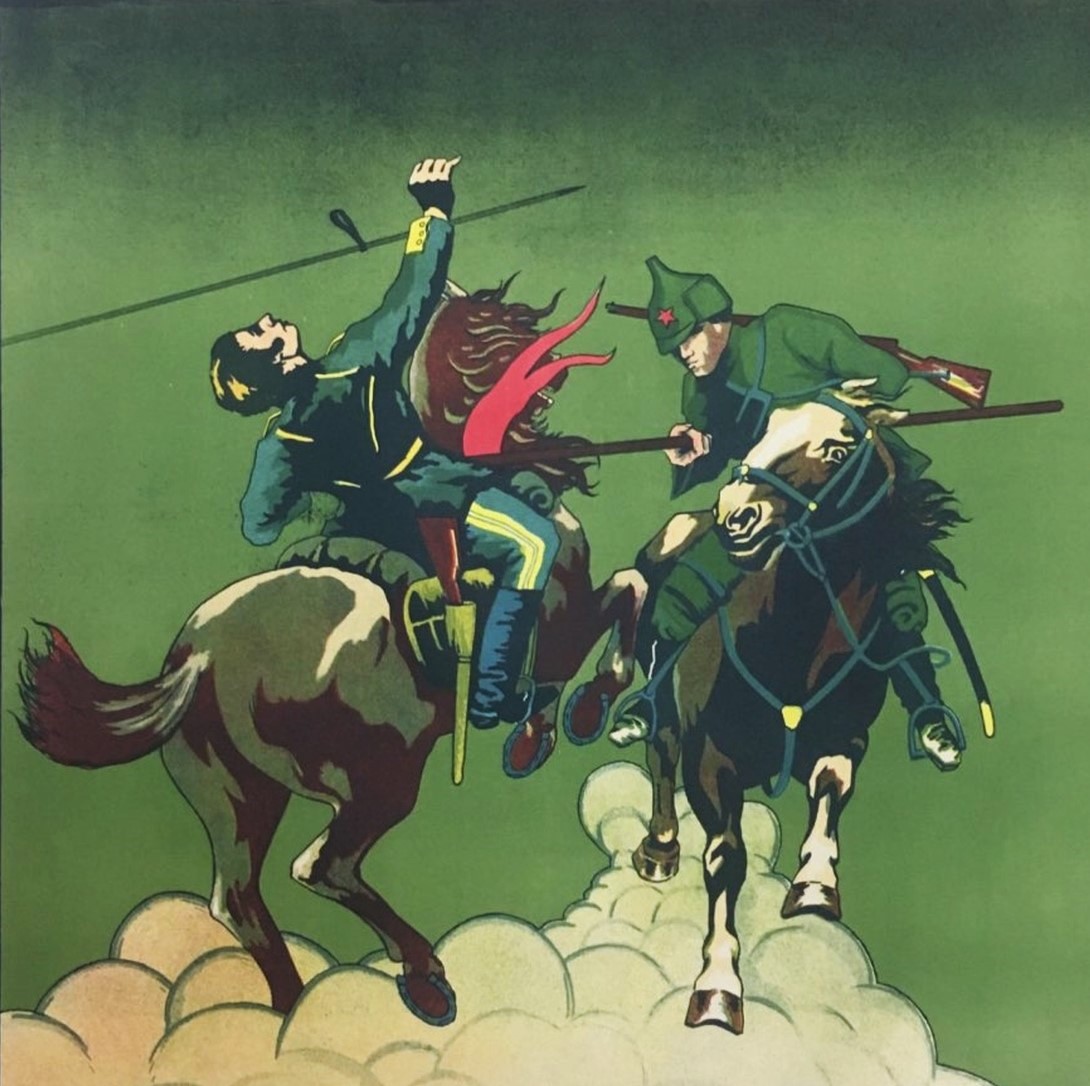
If, in 1917, the old army was in continual demoralization, and in constant retreat from the slightest attack by the enemy; if, in 1918, Russia was totally unprotected and it seemed as if a few thousand Czecho-Slovaks would easily be able to overturn the new order; their new revolutionary army in 1919 and 1920 proved that the revolutionary masses have the will and the courage to organize themselves into a new military power, to sacrifice themselves and to die on the battlefields in the struggle for their country.
Calls Red Army a Miracle
It looked like a miracle–this building up of a new army on the ruins of the old.
It was possible only because a new hope shone for the workers of Russia, because a new ideal roused their spirits to the rebirth–the stirring of a new life. If at present, after four years of imperialistic onslaught, there are but few contenders to attempt to overthrow the new order thru armed force, it is because the young republic has proved that she can wield an iron fist.
4. The Russian revolution has instituted a new political system where the old order had left only barrenness.
Eight months after the fall of Nicholas II. the coalition government attempts to establish law and order in Russia, but it was not successful.
Its law was to be bourgeois law, and its order such as to protect the privileges of the ruling classes.
It was not for that that the revolutionary workers, the revolutionary peasants, and the revolutionary soldiers sacrificed themselves.
Power of Soviets Established
For a period of eight months there was no central power in Russia to carry on the affairs of the government.
It seemed as if anarchy would take the place of organized society, that uprisings, civil war, and unceasing strife would tear the government to shreds.
Then came the power of the Soviets instituting the new proletarian law and the new revolutionary order and the masses followed, and they signified their approval, for it satisfied their demands and their social ideals.
Thus there was again established in Russia an organized governmental power to carry on the affairs of the land.
The Soviet government is one of the most powerful in the world; it is wielding a vast and profound influence on the minds of the masses.
This was possible, of course, only because the Soviets were born from the deepest needs of the masses. It was possible because the Soviets are now the most constant and direct expression of the daily needs of the people.
Old Bureaucracy is Abolished
5. The Russian revolution has abolished the old bureaucracy which, even in Kerensky’s regime, occupied so important a place in the governmental machinery.
The administration of all branches of social existence is now in new hands.
The administrators of the new order have not always had the requisite experience or the most far-seeing vision as to the needs of the government. But they have never feared to admit errors, and have constantly sought new methods. The whole tone of Russia’s political and social life has assumed a new character. The old has disappeared. The new may seem untimely and unworkable. But the new is here, and the way back is closed.
Dreams Have Been Realized
6. The Russian revolution has abolished private ownership of the means of production, and for the whole of four years Russia has maintained the new anti-capitalist system.
Never before in the annals of a great modern people has such a system been tried.
This is the new, the mighty contribution that the Revolution has given to the social experience of mankind.
That which Socialist theory foretold on the basis of its research has now become a living fact in Russia.
What the dreamers and militant spirits of different lands yearned for and hoped for, and yet themselves hardly dreamt was possible, has been realized by the Dictatorship of the Proletariat.
For four years Russia has been free from private ownership. There has been no profit system, no exploitation, no domination of man over man.
For four continuous years the law of the land has been that he who does not work shall not eat.
If the Russian revolution has in the last six months recognized that it must call private initiative and private undertaking to its aid, it was due not to the collapse of the Dictatorship of the Proletariat, but rather to the realization that this dictatorship cannot of its own sheer strength rebuild the economic ruin left by six years of war.
The New Economic Policies
7. The new economic policies of the Soviet Government are a concession to the peasant class. The revolution gave to the peasants the soil of the land-owners, to the workers control over the factories and workshops. So long as the war against the internal and external foe was on, both classes were united in their defense of the revolution.
The peasant sent his sons to the Red Army to withstand the white generals and landowners who, if victorious, would take back the confiscated properties.
The working class gave all its strength to ensure the Dictatorship of the Proletariat.
When the war was over, however, and the country turned to the work of reconstruction on a peaceful basis, it became clear that the peasant was not yet ready to institute a Socialist system.
It became clear that the peasants are not willing to work for the whole land, but for themselves, and to satisfy their own interests.
Peasants Temporarily Victorious
If Russian industry were not so terribly crippled after the long years of war, the workers would be able to satisfy the peasants with manufactured goods and so provide the state with agricultural products. But the factories and workshops were stricken harder than the agricultural districts. The peasantry found itself in an advantageous position and able to dictate its demands to the working class. It demanded that the government surrender its monopoly on agricultural products.
Temporarily the peasants have won. The proletarian government was forced to recognize the right of the peasant to his own labor–that is, to recognize the principle of bourgeois exchange in agriculture.
That necessitates giving up government monopolies.
The end of the fourth year of Proletarian Dictatorship finds the peasant once more a small proprietor, the storekeeper and trader private owners.
Faces Final Dismissal Soon
8. The capitalistic world gloated over the temporary return to capitalism. The bourgeois Socialists gloated even more perhaps than the bourgeois themselves over the “failure of the Communist experiment.”
The truth is that these gentlemen are glorying over something which they cannot understand.
For in fact capitalism comes back to Russia not like a ruler, or a conqueror, but like a discharged worker who is called back to finish a certain task before final dismissal.
The administration of the government remains as before in the hands of the peasant and working class.
The Dictatorship of the Proletariat’ is not broken. Both the peasant and the worker are opposed to capitalism, even though their motives may not be the same. Neither of these ruling classes, the worker or the peasant, has any desire to institute in Russia the rule of capital.
Both classes will watch each step, every move of the capitalist groups, and will not permit them to become the rulers of the country.
Capitalism Is Merely Tool
Capitalism in its present form is no more than a tool in the hands of the workers and peasants, whereas in all other lands the workers and peasants are mere tools in the hands of capitalism.
Therein is the fundamental difference between the Soviet republic and the capitalistic governments.
How long the temporary stay of the recalled capitalism will endure will depend on the speed of Russia’s economic reconstruction.
When the factories are running again, when the railroads are improved, it will be possible to ask capitalism again to leave the social field, and it will not have power enough to oppose the request. Even if Russian capitalism were to become a significant factor in Russian life, its power is undermined, its backbone broken.
It will never again have the might and the audacity which characterizes capitalism in other countries.
The four years of Communist administration without capital and without private ownership cannot be wiped from the face of the earth.
Even if the Russian merchant and banker should once more revel in prosperity, Russia has nevertheless given capitalism its greatest blow. On the one side the government, on the other side the trade unions will stand guard over the workers’ interests and will not allow the profit-makers to become lords over life. Now they are servants in the employ of the Proletarian Dictatorship, not rulers.
Building the New World
9. The Russian revolution has begun to build a new world. It has called into existence unknown powers; it has spread a flood of thought among the vast masses, has opened up a world of education and knowledge to the workers and peasants of Russia.
It has created the foundation for a new mass-culture, for a new literature, for a new art.
And so, though the country writhe in pain on the present anniversary, and though millions suffer inhuman woe, and though hunger-death stares millions in the face, and though they of narrow vision all over the world see only misery and suffering in the revolution, nevertheless, in the light of history, on the broad path of historic development, the Russian revolution is a momentous step forward.
It is a beneficent storm which at the same time. has uprooted a whole world, but raised it to a higher stage of development and growth.
*Translated from the “Naye Welt.”
The Worker’ Council purpose was to win the Socialist Party of America to the Third, Communist, International and later to win locals and individuals. Published (mostly) weekly by the International Education Association in New York City, Workers Council included important members of the SP, mainly from its Jewish Federation like. J. Louis Engdahl, Benjamin Glassberg, William Kruse, Moissaye J. Olgin, and J. B. Salutsky, editor of the radical Jewish weekly, Naye Welt. They constituted the Left Wing that remained in the Socialist Party after the splits of 1919 and were organized as The Committee for the Third International. Most would leave the SP after its1921 Convention, joining the Workers (Communist) Party after a short independent existence later that year.
PDF of full issue: https://www.marxists.org/history/usa/pubs/workers-council/09-workers-council-1921.pdf
 Revolution's Newsstand