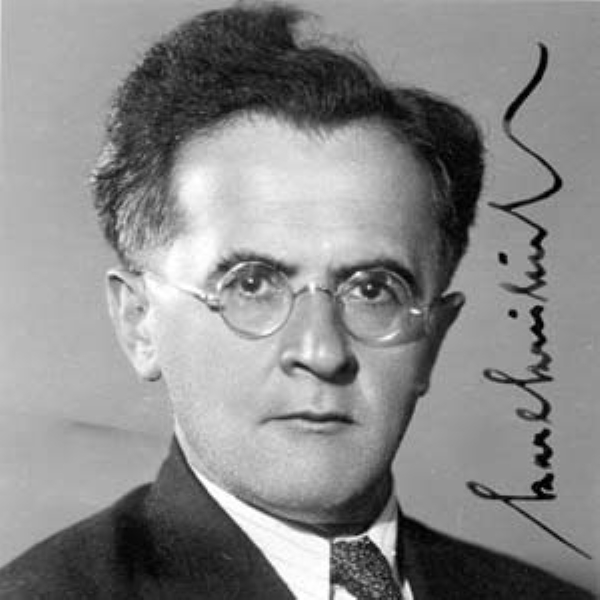
From modest beginnings, the Czech–Slovak Communist Party quickly became the largest in the Comintern outside of Soviet Russia. Karl Kreibich with a useful summary written for the 4th World Congress on the the party’s early development.
‘The Advance of the Communist Party of Czecho-Slovakia’ by Karl Kreibich from International Press Correspondence. Vol. 2 No. 98. November 13, 1922.
The second world congress of the Communist International was not able to greet any representatives of a communist party of Czecho-Slovakia; only some delegates from a small minority of the Czecho-Slovakian Social Democracy took part in it. These however were able to report that the mass of the proletarian members of this party were in a state of profound ferment. Two months later this ferment came to a climax; the majority of the members freed themselves from the reformist leadership, in order to form a left Social Democratic Party. The counter-revolutionary social democratic leaders were left without followers, without a party apparatus, without a central organ and without any premises for the majority of the party membership had transferred all these to the new party. The bourgeoisie could not possibly suffer this weakening of the firmest support of its power; if it could not recover the masses for the social democratic traitors it hoped yet to save the party apparatus. By the exertion of its whole powers, police, gendarme, military and the courts, it seized in December 1920 from the class conscious Czechish proletarians the property belonging to them, handed it over to the clique of reformist leaders, and crushed with force the ardent resistance of the masses. Yet the bourgeoise was not able to rejoice long over this success. After a short time of confusion and delay the revolutionary masses assembled again and in May 1921 they accomplished their final breach with the whole of the social democratic ideology by the founding of the Czechish Communist Party, which with quite negligible exceptions was joined by the whole of the left wing of the Social Democrats.
Meanwhile the German minority in the working class of Czecho-Slovakia had also carried out the process of liberating the revolutionary elements from the Social Democracy. As the German Social Democrats for reasons of national opportunism had no opportunity for practical application of social opportunism in the form of coalition policy, the split in this case developed more straightforwardly under purely communist slogans, and thence resulted (six months later) the direct formation of a communist party, whereby however only a minority broke away from the Social Democrats. It must be mentioned here that in both cases the split and the development into a Communist Party meant not only the overcoming of social opportunism but also of national opportunism, which in Czecho-Slovakia, as was the case in the old Austria, formed the chief symptom of opportunism in the labor movement as a whole.
The next thing to do was to fuse the two Communist Parties into one united party. Opposed to this were differences of a tactical nature. These differences were in no way of a national character. They were connected with the tactical differences which arose in the whole International after the German March action, and were rooted in the different developments which the German and the Czechish revolutionary proletariat had taken in coming into the Communist Party. The third World Congress tore in two the paper screen which still divided us Czechish and German communists. It did this in the first place through the thorough debates upon tactics and through the formulation of its theses over the world situation and tactics, which purified the air and laid the foundation for the future co-operation of communists of all shades of opinion and temperaments, not without also finally repudiating the non-communist elements, the left as well as the right. This basis which the congress laid down for all communists, was also the basis by means of which the last misunderstandings between the German and Czechish Communists could be laid aside.
The carrying out of the order that the fusion of the two parties in Czecho-Slovakia must take place within a few months was therefore more a question of discipline. Within four months all preparations were settled and on the 1st November 1921 there took place the unity conference, the conference constituting the united Communist Party of Czecho-Slovakia. It was preceded already before the World Congress as well as after by the uniting in some circles and districts, of the party organizations for common action and as during the world congress there was also formed a united central Committee of Action, the unification was in fact already accomplished and the fusion at the conference was more the formal carrying out and demonstrative confirmation of an already accomplished fact. The unification has succeeded better than was expected by the most optimistic comrades, and the very least of all the difficulties which the Party has is that of bringing together the proletariat of five nations. In this the difficulty is only of a technical nature.
This does not at all mean that the Communist Party of Czecho-Slovakia is on a bed of roses and has no great difficulties to overcome. It is a mass party, the strongest proletarian party in Czecho-Slovakia, but it has not yet passed through the fire of severe struggles, and has not learned in the school of its own experience, which can only be passed through in such struggles.
There are in Czecho-Slovakia, no outspoken syndicalist, left-radical or Communist Labor Party tendencies, hence there is no gathering point for such elements. Such elements as do exist in much less clear, indefinite form are united in the Communist Party. The theoretical training of the proletariat in Czecho-Slovakia is somewhat deficient, it was always badly neglected in the Social Democratic Party. These reasons explain for instance, why the party during the Karl-Putsch did not take up so prompt, clear and decided an attitude as would have been necessary. Also with regard to the trade union question the clear standpoint of the R.I.L.U. comes out but slowly. There are here two opposing streams among the trade unionists belonging to the party, from whom however there is nothing clearly outspoken. The one will not go to the right to capture the trade unions, the other desires the dissolution of the Amsterdam trade unions. It was only in November 1921 shortly after the unity conference that the communist trade unionists succeeded in shaping a united policy before all for the general Trade Union Congress of the Czechish central trade unions standing under the leadership of the Czecho-Slovakian Social Democracy. Unfortunately we did not succeed in bringing the land workers, who are under the leadership of Bolen and whose union already in the early part of 1921 had obtained a communist control and had then left the general trade union federation, to follow the trade union policy of the party and of our trade unionists, which is not to withdraw from but to remain in the federation! As a consequence of the absence of the land workers the Amsterdamers obtained the majority at the Czecho-Slovakian Republic on its Trade Union Congress. In spite of this the work in the trade unions made great progress, so great, that the Amsterdam Trade Union leaders who saw one union after the other pass into the hands of the communists, used all their powers to bring about a split. Whole unions which had a communist leadership were thrown out of the General Trade Union Federation, while the unions with an Amsterdam leadership expelled whole local branches which had elected communist officers.
These unions and local groups were compelled to link up in some form or other. Thus there is today in Czecho-Slovakia a strong trade union organization under communist control, which stands outside of the general trade union organizations. As there is not yet therefore a united single trade union organization in Czecho-Slovakia–we have German Social Democratic and Czechish National Social Democratic Trade unions–it is exceedingly difficult for our trade unions to always sufficiently emphasize the character of the general trade union united organization, the more so as there is a “left radical” element which speaks of “communist trade unions”. The influx of members into our trade unions, which have, as one, unfurled the flag of united international organization, is extremely strong; at the same time they must now pass the acid test of severer struggles. If they stand the test, then the power of the Amsterdamers in Czecho-Slovakia will be broken.
It was the endeavour of the party politically, to bring the masses into movement through the slogan of the united front and so put them into a position to successfully offer resistance to the attacks of the capitalists. But here also it was not an easy matter to bring the party into one line. Many of the leading comrades did not know how this slogan is to be converted into living reality, and the “left radical” elements in the party imaged that opportunism lurked behind it. As the “left radical” element had the majority in the party administration the same was unable to develop the initiative here. It came about therefore that in this question Brünn obtained the lead in the party. The sitting of the Enlarged Moscow Executive of February brought clearness and the party went more eagerly into the matter. The movement for the united front has today already acquired a great extent and embraces a great portion of the Social Democratic and Czechish national socialist working class. In many localities action committees for the united front have been elected and the election of such committees as well as their tasks were eagerly discussed. The masses are on the move, the bourgeois press is thoroughly roused, the Social Democrats rage like mad and the national socialist leaders vacillate hither and thither. At the last national conference of the party on the 24th September, there was issued, against the resistance of a very limited “left radical” opposition, the slogan of the workers government. As the Czecho-Slovakian “Democracy” is now involved in a government crisis, and the economic crisis is becoming continually worse and the masses are more and more embittered against the whole government system, the confusion and the uncertainty among the coalition parties is great. To this is to be added the strained situation in foreign politics which shatters the belief fostered by the bourgeoisie and social patriots, in the democracy and wisdom of the Entente and its Peace Treaties which alone give peace and order to the world. The whole economic and political situation was never so favourable for the party as it is now. But in this situation, at the very time when everything depends upon the readiness of the party for conflict, its solidarity and its manoeuvering capacity, the party is brought into great danger by a “left radical” opposition. This “left” wing has, in its fundamental expression, great similarity to the Communist Labour Party of Germany. There are also similar tendencies among a portion of the masses–impatience, loathing and suspicion against all leadership, aversion to labor bosses, etc., only its capacity to theoretically formulate these moods is still more limited. The leadership of this opposition was in the hands of people who belonged to the central of the party, among them being the Chairman of the central and the organizing secretary.
The last national conference of the party however dealt with this opposition, and six of their most active spirits were expelled from the party. It is the first time that the party has been compelled to act against a group in this manner,
The representatives of the Communist Party of Czecho-Slovakia will appear at the 4th World congress as one of the strongest communist parties, which in its international composition is a model for a country with several nationalities, and which is on the way to complete inward consolidation and whose influence over the masses is increasing most rapidly. The conditions in Czecho-Slovakia are sharpening so rapidly that the party will very soon be able to prove its fighting capacity.
International Press Correspondence, widely known as”Inprecorr” was published by the Executive Committee of the Communist International (ECCI) regularly in German and English, occasionally in many other languages, beginning in 1921 and lasting in English until 1938. Inprecorr’s role was to supply translated articles to the English-speaking press of the International from the Comintern’s different sections, as well as news and statements from the ECCI. Many ‘Daily Worker’ and ‘Communist’ articles originated in Inprecorr, and it also published articles by American comrades for use in other countries. It was published at least weekly, and often thrice weekly.
PDF of full issue: https://www.marxists.org/history/international/comintern/inprecor/1922/v02n098-nov-13-1922-Inprecor.pdf
 Revolution's Newsstand