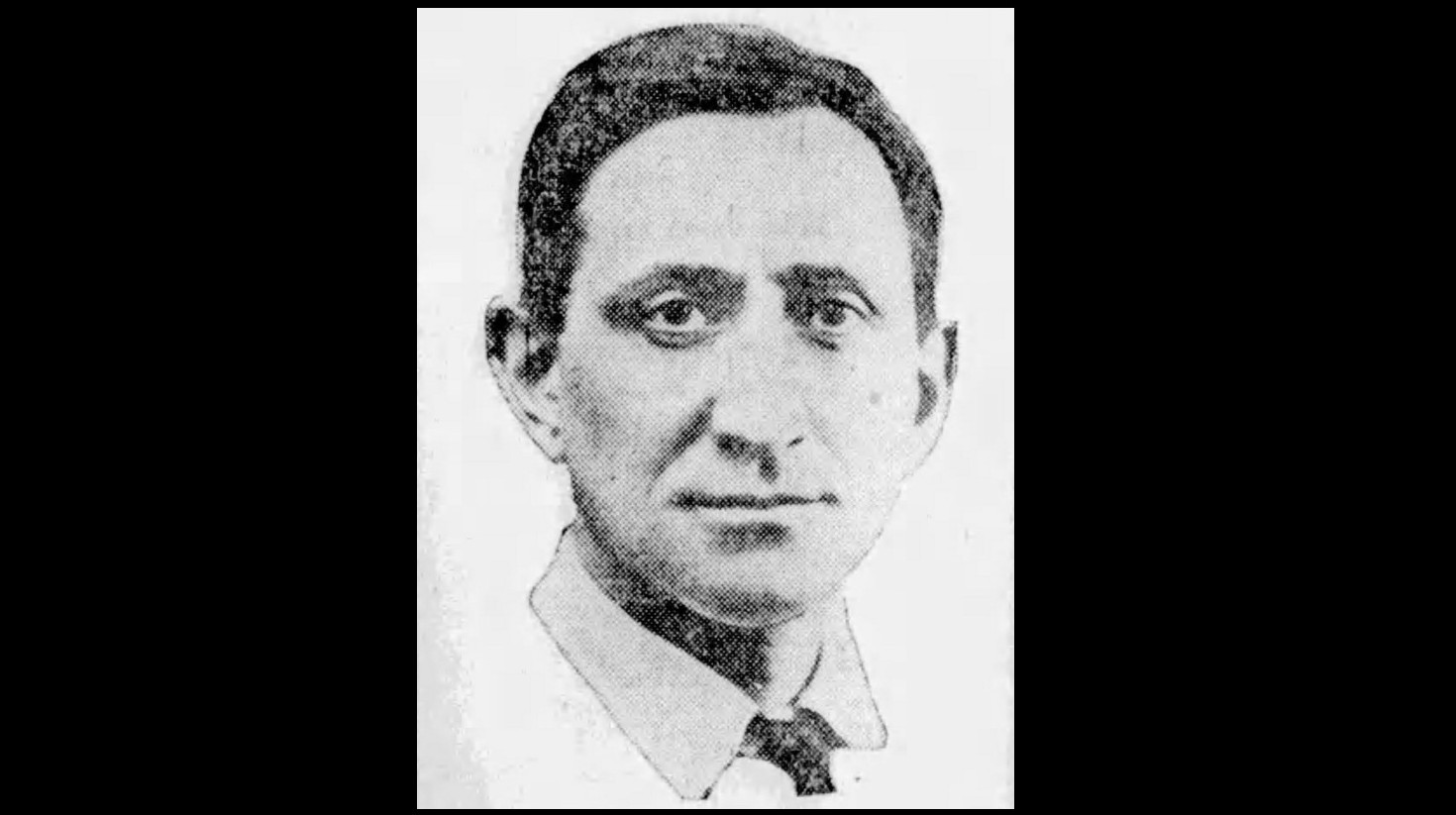
A founder of the Party and lead Comintern correspondent, Israel Amter was a partisan of the Ruthenberg-Lovestone-Pepper faction during the 1920s and gives a valuable summary of their, then minority, position on the Farmer-Labor Party for an international Communist audience.
‘Discussion in the American Party’ by Israel Amter from International Press Correspondence. Vol. 5 No. 7 January 22, 1925.
We print the following article by comrade Amter as representing the Minority view in the present discussion in the Workers Party of America. We hope to publish shortly an article by a representative of the Majority section. Ed.
A violent discussion is taking place in the American Party a discussion dealing with the application of the united front on the political field, opportunism in the Party and the industrial work. The struggle for a time was confined chiefly to the Central Executive Committee of the Party, but has now been taken down into the ranks, owing to the fact that the Central Executive Committee called a Party convention, and therefore issued its theses on the problems facing the Party.
The struggle arose far earlier than the date of the issuance of the theses. In fact it is now more than 1/2 years old owing to a fundamental difference of opinion on what constitutes Communist work.
On July 3, 1923, there was formed the Federated Farmer Labour Party, a party that proved to be an abortion owing to the fact that no efforts were made to organise the Party, because of the opposition of the Foster-Cannon group, then the minority of the Central Executive Committee, but in charge of the industrial work. It was furthermore an abortion because it was purely a united front at the top. The united front was made with Fitzpatrick and Nockels, leaders of the Chicago Federation of Labour, and when these gentlemen decided to break with the Communists, they took with them the entire mass of the workers belonging to the Chicago Federation of Labour.
On June 17, 1924, another attempt was made to form a farmer-labour party, this time the negotiations being conducted with Mahoney, leader of the Minnesota Farmer-Labour Party. Mahoney was a typical La Folette man and was easily frightened by the anathema issued by La Follette against the June 17th convention and against the Communists in particular. Hence, when La Follette’s convention was called on July 6th and put up La Follette as candidate for president, Mahoney went over to his camp. In leaving the farmer-labour party, he took with him the whole Minnesota Farmer-Labour Party. The Communists, therefore, decided to put up Communist candidates in place of the candidates who had been nominated at the June 17th convention and secured the endorsement of the committee elected at the June 17th convention for the Communist candidates.
The Communist ticket secured 33,000 votes, La Follette who conducted a broad campaign, enlisting the sympathy of the workers, poor and rich farmers, the small business men and liberals generally, procured nearly 5,000,000 votes.
Gompers had been forced to endorse the candidacy of La Follette; still, some of the bodies affiliated to the American Federation of Labour, as for instance, the New York Central Trades and Labour Council, at the eleventh hour, withdrew its endorsement and supported Davis, the Democratic candidate.
At the convention of the American Federation of Labour on November 16, Gompers conducted a vicious campaign against the very idea of a farmer-labour Party. In this attack, he was supported by the entire capitalist press, which recognized that even a moderate farmer-labour party would ultimately be a danger to the capitalist class.
The Executive Committee of the Progressive Political Action met on December 12, at which the railroad brotherhoods, (Organizations of the railways workers) decided not to participate in the formation of a progressive party, only the socialists being insistent upon the formation of a party. La Follette did not give his consent to the formation of a party and later stated that he would not associate himself with the socialist party, but would be willing to admit them only individually.
The Minnesota Farmer-Labour Party had two Communists as candidates during the recent campaign. One of them received 13,000 votes, more than twice as many as Foster and Gitlow on the Workers Party ticket. The two comrades on the F.L.P. ticket conducted a Communist campaign and were a credit to the Party. Another comrade is still a member of the Farmer-Labour Party of Minnesota, and attempts have been made to remove him, but his union retains him as their delegate to the St. Paul Trades and Labour Assembly, which is part of the F.L.P. of Minnesota.
In the States of Washington, South Dakota, Massachusetts, Colorado, Montana, there are farmer-labour parties. The F.L.P. of Colorado refused to be swallowed up by the progressive party of La Follette, running a separate ticket, with La Follette as their presidential candidate. In the city of Buffalo, there is a movement for a farmer-labour party. The same is true of the miners of Pennsylvania. In the Massachusetts there is a move for a “third” party, made up of organised workers.
The most significant thing, however, is the fact that the convention of the American Federation of Labour after all the ranting and violent talk of the Gompers machine, had to make a compromise with the rank and file demand for a “new policy”. The convention decided that local committees for independent political action may be formed, despite the non-partisan policy of the A.F. of L. This is very important, and indicates the trend within the organised labour bodies.
The elections revealed that La Follette received support not only in the agricultural states, where the crisis was most keenly felt, but also in the industrial states, such as Ohio,” Illinois, Pennsylvania, New York and New Jersey. They demonstrated that a large number of workers and poor farmers are ready for a “new policy”. They also indicate that the prediction of Comrade Foster in the month of May before the Executive Committee of the Communist International was correct, viz., that if the Workers Party refuses to support La Follette, the farmer- labour movement will pass into the hands of La Follette. These masses of workers and farmers assumed that that for which the farmer-labour parties stood was embodied in the La Follette progressive party, and that they would be able to attain their ends trough the progressive party. Hence the swallowing up of the farmer-labour party by the La Follette movement.
The conditions that gave rise to the progressive movement of La Follette have not materially changed. Although there has been a slight rise in the prosperity of the farmers, it is only temporary. An industrial crisis is bound to come in the near future. The trade unions are weaker than they have been for 20 years, today only 2,829,000 workers being organised in the A.F. of L. The reactionary bureaucracy will refuse to lead the workers in the coming struggles. The capitalist government will use force to an ever greater extent. During such periods, the workers and poor farmers are bound to be driven to political action.
The majority of the Central Executive Committee of the American Party, led by Foster and Cannon, declare that there is no soil for the propagation of the idea of a farmer-labour party, since the whole movement has been “absorbed” by the La Follette movement. They have therefore dropped the slogan. This, however, occurred far earlier than the date of the elections, November 4. In July, after the La Follette convention, when it was decided to drop the Farmer-Labour Party candidates and to carry on the campaign under the banner of the Workers Party, the majority stated that in dropping the candidates, they dropped the idea of the farmer-labour party.
The minority, led by Ruthenberg, declares that the conditions that made for a farmer-labour party continue to exist: in fact, that they will be emphasized in the near future. The coming crisis will force the workers to think politically and to undertake the formation of a farmer-labour party. But irrespective of whether a farmer-labour party is formed or not, the minority maintains that the continuance of the use of the slogan of a farmer-labour party, based upon a united front with the rank and file of the workers and the poor farmers, brings us politically into contact with the mass of American workers, who are politically very backward. Before the presidium last May, Comrade Zinoviev compared the state of the American worker to that of the European workers of the year 1848. The minority states that results have proved that our campaign for the farmer-labour party has developed our Party into a political force in the country (this is also admitted in an official pamphlet issued by the C.E.C.). This is also demonstrated by the fact that during the months of March, April, May and June of the past year, when the Party was carrying on a campaign for a farmer-labour party, it secured 2782 members for the Workers Party, whereas, during the months of July, August, September, October, when the election campaign was at its height and the Workers Party was sailing under its own banner, it secured only 2442 members.
The most significant factor of all, however, is whether the Communists are to be the leaders in this separation of the masses from the control of the capitalist parties and of the progressive party that is to be formed under the leadership of La Follette; or whether they are to wait for the movement “spontaneously” to form. That would be, in the words of Stalin, sheerest opportunism. The minority recognises as the Executive Committee of the Comintern recognized last May, that “the main task of the Workers Party is to become a mass Communist Party of workers. It can fulfil this task only by most actively participating in the establishment of a labour party which will embrace all elements of the working class willing to conduct a policy independent of the capitalist class and by establishing a bond with the farmers who are at present in a state of strong fermentation.” The resolution then states that this bond takes the form of a common party of workers and poor farmers. The resolution of the R.I.L.U. states that a labour party “teaches the workers their first lesson in class political action”. This is obvious, for although all action led by the Communists are political actions, through participation in a farmer-labour party, the workers and farmers for the first time conceive of gaining political power by the workers and farmer.
The majority misunderstands Communist tactics in stating that there is no demand for a farmer-labour party and therefore it would be unprofitable for the Workers Party to waste energy and money on attempting to form a farmer-labour party.
They do not understand that we do not subscribe to every mass demand, but emphasize all needs of the working class. And as the Communist International recognised the backward state of the American workers, due to the economic conditions, it therefore laid down the fundamental tactics and almost a policy for the Workers Party to “create a labour party”, a farmer-labour party, as far as possible under Communist leadership to be used for furthering the class struggle.
To raise the issue of a genuine farmer-labour party against the leadership of La Follette is to bring the Workers Party to the fore as the sole leader of the workers against the capitalists and the trade union bureaucrats who are militantly fighting against the farmer-labour party.
To contend that the Workers Party can become a mass Communist Party in a country like the United States, where the workers and poor farmers have little consciousness, is utopian. To awaken their consciousness is the duty of the Communists. They must create a slogan and the Farmer-Labour Party slogan furnishes this means. The masses must be prepared; the rank and file of the labour movement, of the unorganised and unemployed must be won for the idea. The time for actually creating the party on a national scale will be during the economic crisis, when the broad masses of the Workers and of the farmers will be so oppressed that they will turn to political action for relief.
A movement of this nature by the use of the slogan brings the Communists into close contact with the masses. It naturally will be based upon the daily needs of the workers, embodied in the immediate demands. It draws the workers close to the Workers Party, brings them under Communists influence and prepares them for joining the Workers Communist Party.
The insufficiency of the industrial work of the Party, and the failure to carry out the primitive political aspects of Communist industrial work, are further subjects of heated discussion in the American Party. The failure of the majority of the C.E.C. to carry on an ideological campaign against the opportunism represented in the Party by Comrade Lore, member of the C.E.C. and editor of the German organ of the Party, is a further cause of dissension. On the contrary, the organisational alliance which existed at the time that the Communist International branded Comrade Lore and his tendency as “remnants of the 2 1/2 International in the American Party” has been maintained to date. This alliance has been used to carry on a campaign against the minority and was further solidified only two weeks after Comrade Foster’s return to the United States, after the decision of the Comintern was rendered, by a conference between the Foster group and the Lore group, at which it was determined to fight the other (Ruthenberg) group “to the point of extermination”. The situation in the American Party is such that the majority not only is not carrying on a campaign to extirpate the social democratic tendency in the Party, but, on the contrary, is itself succumbing to the influence of this 2 1⁄2 International group.
The minority of the C.E.C. upholds the policy laid down in the resolution of the Communist International. It maintains that the slogan for a farmer-labour party is “the most effective weapon we have for drawing the workers close to our Party and for building the Workers Party”. It demands that the Party conduct a Communist policy on the industrial field. It demands that the majority break its alliance with the social-democratic opportunistic tendency in the Party. It demands that the alliance, which is best manifested by the fact that the 2 1/2 Internationalists in the C.E.C. have consistently supported the majority in the C.E.C. even to the extent of unanimously adopting the majority thesis on the present situation and the tasks of the Party be ended. Only in this way can the bolshevisation of the Party, after placing it upon the revolutionary basis of shop nuclei and conducting Marxian-Leninist education of our membership, be achieved.
International Press Correspondence, widely known as”Inprecorr” was published by the Executive Committee of the Communist International (ECCI) regularly in German and English, occasionally in many other languages, beginning in 1921 and lasting in English until 1938. Inprecorr’s role was to supply translated articles to the English-speaking press of the International from the Comintern’s different sections, as well as news and statements from the ECCI. Many ‘Daily Worker’ and ‘Communist’ articles originated in Inprecorr, and it also published articles by American comrades for use in other countries. It was published at least weekly, and often thrice weekly.
PDF of full issue: https://www.marxists.org/history/international/comintern/inprecor/1925/v05n07-jan-22-1925-inprecor.pdf
 Revolution's Newsstand