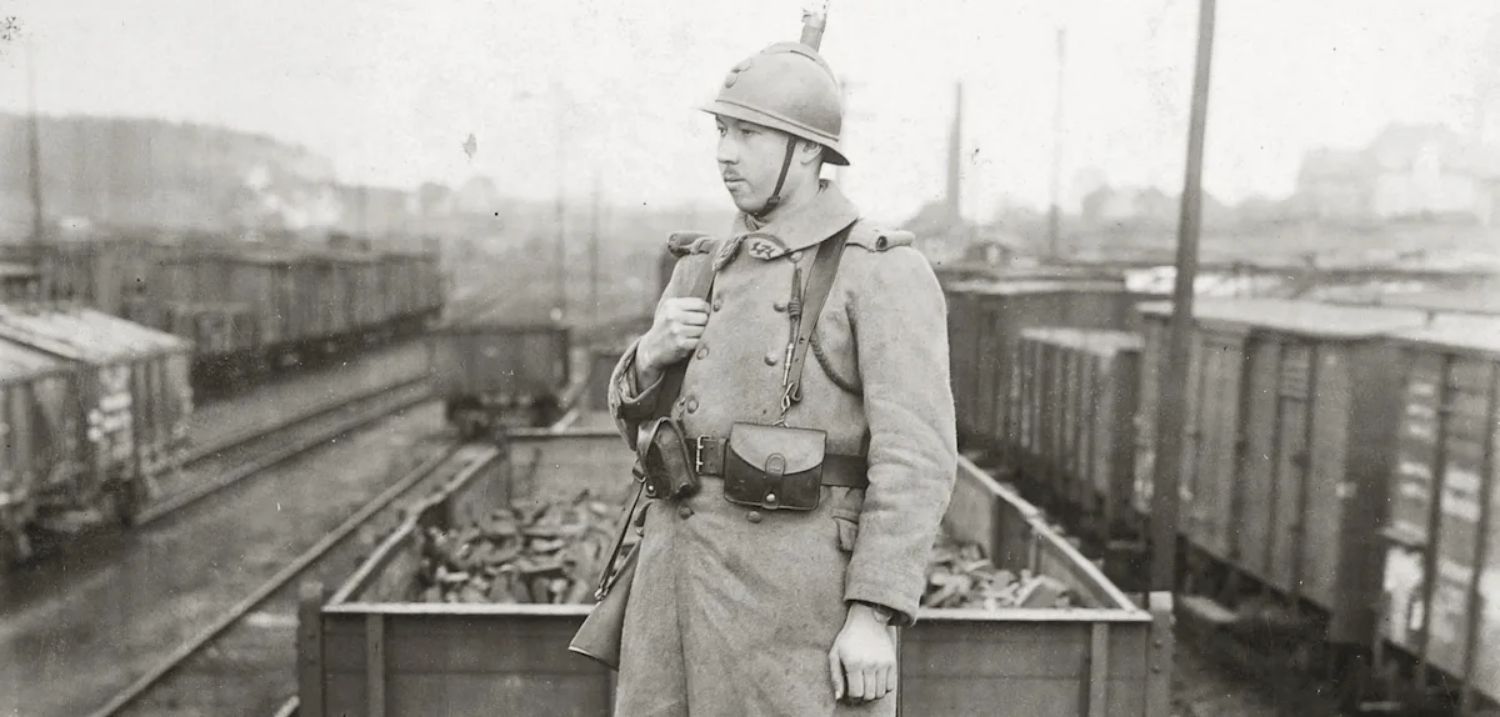
Germany, and the wider post-war Versailles peace, was badly shaken by the January, 1923 French occupation of the Ruhr as part of a dispute over war debts. A general crisis broke out with both the failed Hamburg Rising and Hitler’s Munich Putsch resulting. The U.S. would step in at the end of the year with a loan to Germany, and a new plan, the Dawes Plan, for German economic subservience not to the Allies, but to the United States. Resistance by the German working class to the restructuring saw mass strikes in Spring 1924 and proved that the October defeat need not be permanent. Peter Maslovsky with a fine piece on the specific background to the response of the Ruhr miners.
‘The Great Struggle of the Ruhr Miners’ by Peter Maslovski from International Press Correspondence. Vol. 4 No. 32. June 4, 1924.
Since the following article was written it appears that the strike of the Ruhr miners is practically at an end as, according to the latest telegrams, large numbers of the strikers have returned to work. The article nevertheless retains its interest as setting forth the origin of the strike and its tremendous importance for the German and international proletariat. Ed.
Preliminary.
The mining proletariat the Ruhr is that proletarian class of the population upon which is concentrated with a special weight and hardship all the results of the wasteful conduct of industry in the war, all the costs of the post-war period and all the burdens of the international understanding of the capitalists at the expense of the working class, whether it be through the Micum agreement or the Experts’ Report.
Already in the war, when Stinnes still had the proud plans of uniting the coal of the Ruhr with the ore of Lorraine by means of huge annexations, the chief burdens of the bloody armament madness fell upon the Ruhr miners in their role as producers of the costly raw material, coal. In the mines, where a completely military driving system prevailed, the miners worked like niggers at a feverish rate “for the fatherland”, that is for the profit of the mining magnates of the type of Stinnes who before all others became the richest man in Europe during this time when the Ruhr miners, along with thousands of prisoners of war, had to work themselves to death for him under bayonets and hunger.
After the November storm in 1918 the revolutionary wave in the Ruhr district was decidedly the strongest of all. The miners demanded the socialisation of the mines. One strike wave followed the other. The undertakings were occupied and attempts at socialisation were made until Noske, the Social Democratic Field Marshal Commander-in-chief of the counter-revolution, drove the rebelling miners back into the mines with machine guns to slave for the coal barons.
During the Kapp rising the mining proletariat raised an army practically out of the ground, and if the discussion of the Bielefeld points had not taken place, if an unexampled treachery had not induced the struggling miners to give up their weapons, it is highly probable that the Social Democratic republic of Stinnes and Ebert would have gone to the devil before an army of about 100,000 armed miners.
After the Kapp rising came the blossom time of bourgeois democracy. Real wages sank more and more under the madness of inflation which ensured the mine-owners huge profits. It was the Social Democrats in leading state positions who always succeeded in imposing overtime upon the necks of the miners. The seven hour shift, which practically dropped into the lap of the miners without any effort in the November revolution, was lost in the course of the swindle of reconstruction, of the community of interests between the mining capitalists and the trade union bureaucrats.
Then came the march into the Ruhr and with it the passive resistance. Suddenly the Ruhr miner saw himself lauded by the German bourgeoisie and sought after by the generals of the Entente capitalists. But already in May 1923, four months after the invasion of the Ruhr when the huge shrinking of his pay through the inflation forced him into a great strike, he was nothing else than a traitor for the German capitalists and for the Entente generals a disturber, who had to be kept in the pits with the bayonet. Herr Lutterbeck of Düsseldorf wrote at that time that historical, but for the German bourgeoisie the shameful letter to General Degoutte that he should lend the French bayonets to the German authorities for the defeat of the German workers in the same way as Bismarck had lent Prussian cannon to the French bourgeoisie in 1871 in order to drown the Communards in a sea of blood. In this period of the reconciliation between Stinnes and Poincare the mining capitalists managed splendidly to extend their workings at the cost of the state by the Ruhr credits, that is at the cost of the proletarian tax payers.
When in autumn the Micum agreement was finally concluded, the mines were technically in a higher condition than they had ever been and ready, in spite of the alleged terrible burdens of the Micum agreement, to yield new greater profits for the coal barons. Micum was the magic word with which it was hoped to be able to ward off all demands of the miners. Because of Micum the eight and a half hour day-shift was dictated and the twelve hour night-shift. Because of Micum tens of thousands of miners were thrown onto the street. Because of Micum the slight social gains that still remained from the November revolution were done away with.
All that took place after the October defeat of the German proletariat, at a time when the depression was naturally very great and when even the Ruhr miners, who are always struggling, did not have the strength for a successful defence, although at the same time the metal workers of the Lower Rhine and the coal miners of Cologne were defending themselves in a desperate struggle that had lasted several weeks.
The rising wave of the movement began again only in the spring of 1924. The Communist Party, well knowing that the Micum agreement and the Experts’ Report would as a matter of course lead to social explosions, prepared and organized systematically in order to give the coming struggles the greatest amount of force and the greatest chance of victory.
Conditions of Life of the Ruhr Miners.
The greatest swindle has always been carried on concerning the alleged high wages and special privileges of the miners. The telegraphic news agencies in the hands of the bourgeoisie are always supplying lying reports over the satisfactory conditions of life of the miners. For that reason we give here the actual starvation wages which were received just prior to the present struggle. From this one can see how justified is the boundless indignation of the miner over his misery.
Before us lies the pay book of a miner who had worked 23 shifts in the month of April. Including household and children’s bonus he earned 5,17 marks per shift which made 118,91 marks (about £ 6-10-0) in the whole month. For benefit funds, taxes, tools, and repairs for lamps etc. 31 marks were deducted, so that he received a total of 87,91 marks. 15 Marks for rent and lighting for the month were also deducted so that for himself, wife and three children there remained a total of 72,91 marks (about £4) which works at 2,43 marks per day for the family or 48% pfennigs per head.
This shameful wage was paid at a time when the production of the hewers in most of the pits of the Ruhr had already exceeded the pre-war figure. For 48 pfennigs a day an impoverished miner must buy enough food, not to speak of clothing and other needs, in order to have the bodily strength to work for eight and a half hours hundreds of feet below the earth in a glowing heat, in a crouching position in coal dust and surrounded by a thousand dangers. In order to complete the measure of the exploitation, the coal barons have introduced a sharp differentiation of the wages and a still sharper record, that is a driving system. The price of coal for personal use was raised, holidays were shortened and the quite minimal rights of the still existing factory councils were as good as abolished.
The Course of the Struggle.
The struggle which was awaited with certainty broke out on May 1st. After the expiration of the collective agreements which had been in force since 1922 and which in that period had been repeatedly worsened by the dictatorial mine lords, Mehlich, the well-known Social Democratic state commissioner and twelve-hour dictator, gave judgement in an arbitration whereby the eight hour shift by day and all other disadvantages of the new conditions of labour were retained, the 30% increase in wages rejected and a 15% increase granted dating from April 15th which, however, it should be noted, had already been made illusory by the rapid rise in prices. All district conferences of the miners of all the different unions rejected this award of Mehlich’s against the wish of their leaders. With splendid unanimity all the miners lent ear to the watchwords of the Communists and in all pits in the Ruhr district they left work after seven hours, whereupon the coal barons replied with partial lock-outs.
The government soon became anxious. It sent that Centre-priest, Braun, the Federal Minister of Labour to Hamm in the Ruhr district. This faithful Fido of the mine-owners rendered Mehlich’s award worse to the extent that the 15% increase was to be reckoned from May 1st instead of from April 15th. For the rest he demanded the eight hour day. In a district conference the executive of the reformist union sought to force through this award of Braun’s but it was unanimously defeated. This was a crushing vote of censure for these professional traitors. The leaders of the Christian union suffered the same fate. The Christian miners also rejected the idea of surrender to the mine owners and to those who smooth the way for the capitalist state. A factory council conference which was called by the Communist Party and the Union of Hand and Brain Workers and which was participated in by the factory councillors of the most varied organisations, decided upon a strike with all means, to refuse emergency work, and the unconditional hindering of all work by strike breakers.
Once more the government intervened. The reformist and Christian leaders of the miners were invited to Berlin and bargaining went on there for three days with the result that the terms were made still worse, in that the coke making shift should be a 12 hour shift.
Once more the leaders of the “community of interest” unions endeavoured to induce the miners to accept this government award and once more the miners shoved aside these leaders, who had betrayed them long enough with a laugh of scorn and declared: “Seven hours and not a minute longer”. A second conference of the factory councils which was attended by all organizations decided to sharpen the strike.
The horror of the bourgeoisie is especially great on account of the fact that the masses are no longer following the reformist and Christian trade union traitors and are consciously placing themselves under Communist leadership. One thing remains. Every possible trick is being tried to impose upon the miners in some way or other. Legal advisors, doctors and professors have been named who are to clear up the question “scientifically”, from “the legal point of view” as to who is right in the dispute over the hours of labour in the Ruhr district, the miners or the capitalists. Naturally this famous commission of intellectuals, including Dr. Sinsheimer, the Social Democratic professor of the University of Frankfurt, stated that the mine owners were completely right. Now the reformists and Christian leaders who have been beaten by the masses are grasping at this “scientific” opinion like a drowning man at a straw. They are already making propaganda in favour of the declaration of the Berlin award being binding, that “all legal means have been exhausted” and that one “must submit to the existing laws”.
But the mass of the miners will not give a damn for capitalist laws, they will give these profiteers just the same booting out as they have done in the case of the various awards. The strike is going on with all means in a powerful united front. Even the capitalist press must confess that the strike is complete. The number of strikebreakers is exceeding small. Where these fellows venture at all to hit their struggling comrades from behind, they can only do so under the protection of great forces of police, and even then the miners break through the police cordons, before all the wives of the miners, and hand out a few clouts to the traitors. Bloody collisions have therefore taken place here and there between strike pickets and police.
For the time being the food question is better than one would expect from the prevailing conditions. Not only the small merchants and middle class are making collections for the striking miners, because they know very well that the gaining of higher wages by the great consuming mass of the miners will be to their advantage, not only have the new large Communist fractions in the city councils compelled the feeding of the strikers by the municipal authorities, but the relief transports of our Russian brothers and the International Workers Relief are beginning to come in. The feeling of the strikers is one of confidence.
Already the dock workers on the canals of the Rhine and the Ruhr have declared their solidarity with the miners and will unload no English coal. Also the metal workers in a congress have declared their solidarity with the miners and have decided to take the first step in the struggle and to leave the factories at the and of eight hours.
There is still a relative quiet in the coal district but it is the sultry calm before a great social storm and in a short time it will break with terrific force.
The Significance of the Struggle.
Against the continuous crying of the trade union bureaucracy that the miners are not keeping to the trade union rules in their struggle, the Communists, who are the leaders in the great struggle, point out correctly that in this case it is more than a question of merely a seven hour shift for the Ruhr mining industry. At the moment when the Micum agreement is to be followed by the plans of the Experts against the German proletariat, at a moment when the Upper Silesian miners and sections of the miners in Middle Germany and Saxony are engaged in a struggle, the battle for the regaining of the eight hour day in Germany has begun. The strike for the seven hour shift for the miners is in its political consequences the passing over from the defensive after the October defeat to the offensive. That is the first practical struggle against the thievish plans of international capitalism.
In this matter the Communist Party has already performed enough work of instruction in the Ruhr district. The Ruhr miners, to whom the united front of the international exploiters against the proletariat was demonstrated by the Ruhr occupation over a year ago, say that the Communists are right and are prepared to conduct the struggle with them right up to the final consequences.
At the moment however when the Ruhr miners have begun the struggle, against the Micum agreement and the plans of the Expert’s Committee and for the regaining of the eight hour day in the whole of Germany, their struggle is at the same time a vital question for the proletariat of the unoccupied districts of Germany and from there for all other capitalist lands. Therefore all Communist parties have the duty to support the great struggle in the Ruhr with all the means at their disposal.
The wave of the German revolution is rising. This time the flood must not ebb again as it did in October of last year and this time possibly in missing various stages it must set out straight ahead for the victory of the proletarian dictatorship.
International Press Correspondence, widely known as”Inprecor” was published by the Executive Committee of the Communist International (ECCI) regularly in German and English, occasionally in many other languages, beginning in 1921 and lasting in English until 1938. Inprecor’s role was to supply translated articles to the English-speaking press of the International from the Comintern’s different sections, as well as news and statements from the ECCI. Many ‘Daily Worker’ and ‘Communist’ articles originated in Inprecor, and it also published articles by American comrades for use in other countries. It was published at least weekly, and often thrice weekly.
PDF of full issue: https://www.marxists.org/history/international/comintern/inprecor/1924/v04n32-jun-05-1924-inprecor.pdf
 Revolution's Newsstand