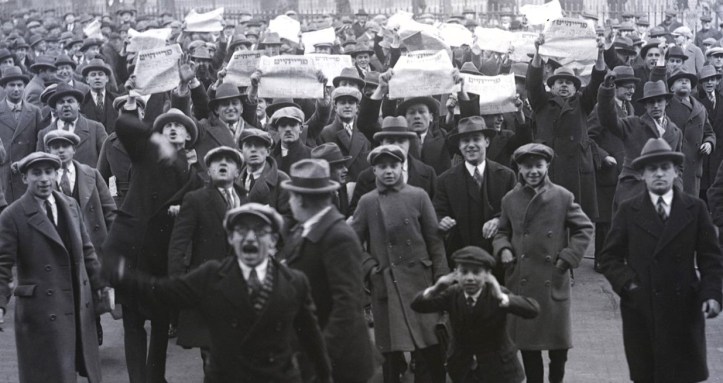
One of the highlights of the T.U.E.L.-era Communist trade union work was in the 13,000-member New York Fur Workers’ Union. While the 1920s generally saw a retreat of union militancy, an exception was New York’s largely Jewish, many radical, fur workers where Ben Gold, a Communist and veteran fur workers, was elected to the Joint Board of fur unions with a general strike of all workers in the industry called the summer falling the convention reported on below.
‘The Left Wing at the Furriers’ Convention’ by William Weinstone from Workers Monthly. Vol. 5 No. 4. February, 1926.
THE ousting of the bureaucratic socialist Kaufman machine took place at the seventh International Fur Workers’ Convention, held in Boston, November 10th to 19th inclusive. This convention, regularly scheduled for May, 1926, was called as a special convention because the International officials, who dominated the union, could no longer continue in office. The revolt of the rank and file against the policy of terror and gangsterism which had ruled the organization for the past four years, and which was intensified after the reactionary convention held in Chicago in 1924, brought the Kaufman machine to its knees. The New York Joint Board, representing 80 per cent of the membership of the entire International, had been won by the Left Wing and this victory broke the backbone of the Kaufman machine.
The administration refused to recognize the New York Joint Board but it was powerless in face of the tight grip of the Left Wing over the New York membership. The convention was ostensibly held in order to settle the issue of the New York Joint Board and the International, but in reality it was to decide the fate of the Kaufman machine, which already considered itself defeated before it entered the convention.
The Attacks of the Kaufman Machine on the Left Wing.
The Kaufman machine had formerly controlled New York, but when the Left Wing was organized in 1922, the growing discontent of the rank and file with the Kaufman administration caused the latter to resort to a policy of gangsterism and suppression in order to root out the Left Wing. The administration went so far as to attempt a murderous assault upon B. Gold, present manager of the New York Joint Board, in December 1923, in order to paralyze the Left Wing. It suspended M. Suroff, a vice-president of the organization, Fanny Warshawsky, and other leading Left Wingers and used the entire underworld in order to break up the meetings of the Left Wing. At the last convention, it established complete autocracy in the organization, ruled out the T.U.E.L. and empowered the G.E.B. to suspend or expel any member “who attempts or takes part in a protest meeting or unauthorized meeting against the union, or anyone who will slander or libel the union or the officialdom.”
The Work of the Left Wing in New York.
In July, 1925, through a united front of the Left Wing with a former section of the Kaufman machine which had agreed to a policy of cleaning out gangsterism in the organization, the New York Joint Board was won against the Kaufman opposition. With the Left Wing dominating the united front, gangsterism was cleaned out, the paralysis in the local organization overcome, the grievances of the workers adjusted, and a campaign for the organization of the workers resulted in 1,500 Greek workers (that had formerly been an obstacle to the progress of the union) being organized.
With the opening of the convention, the influence of the New York organization was dominant and the Kaufman machine demoralized and weakened in the other locals in the country.
Relation of Forces at the Convention.
The relation of forces at the convention was as follows: The Kaufman machine controlled 34 votes, representing about 2,000 members, chiefly of the out-of-town locals; the opposition to the bureaucrats numbered 41 delegates, divided between 26 Left Wingers and 15 controlled by the Sorkin group, which made up the united front in the New York organization.
The Attacks on the New York Joint Board.
The Left Wing opened up the convention by striking a militant note with the demand for. the removal of scabbing taxicabs from in front of the American House, in which the convention was held. The machine hesitated, maneuvered to get rid of the issue. but was finally compelled to submit upon ultimatum from the Left Wing that they would not remain in the convention. The first fight arose over the proposal of the credentials committee, appointed by the G.E.B., to unseat B. Gold, who was the manager and delegate from the New York Joint Board. The machine raised objection because the New York Joint Board was not recognized by the International. Realizing the opposition forces against it and that it was outnumbered, the machine attempted to postpone the seating of Gold until after the whole case against the Joint Board was heard. In this way they wished to prejudice the convention against Gold and put the Left Wing under a disadvantage. But the opposition correctly argued that the Joint Board had been properly recognized by the acceptance of tens of thousands of dollars in dues by the International office.
The machine, which had built up a Chinese wall of constitutional provisions during 13 years of existence, proceeded to the employment of every device, even to the walking out of the hall, when it realized it was defeated. The opposition was firm and Gold was seated, even against the votes of the Kaufman machine.
The Struggle Over the “Supplementary Report.”
The chief fight, which lasted three days, was devoted to the issue between the New York Joint Board and the International. The latter had cleverly drawn up its general report into two parts, one devoted to its activities outside New York, and the other a 32-page document, dealing with the New York situation, known as the “supplementary report.” In this it adopted a policy which was later used by Sigman at the International Ladies’ Garment Workers’ Union convention, of separating the Left Wing fight from the general issues of the union, so as to give the impression that the Left Wing fight was one of political issues and outside interference, and unconnected with the policy of class collaboration and the ruinous economic policy of the administration.
The machine at first maneuvered to prevent the fight and it brought pressure on the Sorkin group, proposing to them a compromise which would declare the fight at an end and clear the administration. The Sorkin group was at first ready to yield to these proposals, which came directly and indirectly from the administration, but it was dragged into the fight by the ultimatum of the Left Wing, who used the club of the New York membership over them to get them to join in the discussion. Gold of the Left Wing and Shachtman of the united front Sorkin group were the chief spokesmen for the opposition. In a speech lasting two hours, Gold related the story of the corruption and terrorization and the foul practices of the Kaufman machine, until the machine was stripped naked of every vestige of decency and of any pretense to its rights of leadership in the organization.
The Betrayal of the Right Wing Sorkinites.
The Kaufman machine, realizing that it was defeated, again resorted to a maneuver of compromise proposals under the cover of “peace” in the organization withdrawing its resolution of condemnation of the New York Joint Board, and in this move it was successful through the betrayal of the right wing elements of the Sorkin group, led by Sorkin, Woll and Winnick. The latter entered into a deal with the Kaufman machine to accept the compromise in exchange for support by Kaufman to office in the organization, and for the defeat of the Left Wing in the elections to the G.E.B. Sorkin himself did not participate in the battle. He kept ominously silent. He had been involved in a sordid deal in the 1920 strike, with which the report cleverly began, in which he surrendered the strike to the bosses. The less he therefore said about the matter, the better.
Following the betrayal, the Left Wing rallied their forces and through pressure brought to bear upon the Left Wing of the Sorkin group, the fight was reopened the following day in an attempt to reconsider the question and to get a record of clear-cut condemnation of the activities of the International machine.
The Kaufman machine, sensing the situation, offered a further concession in the form of an interpretation of the compromise proposal adopted the day before, which promised not to reopen the fight in any way, and which offered support to the New York organization in the coming fight with the bosses.
The Left Wing Triumphs.
This the Left Wing rejected, and in’ spite of all constitutional and parliamentary maneuvers, the machine was compelled to yield to the Left Wing, to a resolution which held the International office responsible for the violation of democratic principles of the organization, and for suspensions in the course of the fight. In spite of the weak formulation of the resolution, it was nevertheless a victory over the Kaufman machine.
The Issue of the General Report.
In the fight on the general report of activities, the lefts did not measure up to the level of the fight which they had made on the supplementary report. They exposed the class collaboration policy of the machine which had gone as far as the use of injunctions against the bosses in Boston, against long-term agreements with lower standards and poorer wages in South Norwalk, against the wastefulness of the machine, its lack of any policy of organizing the unorganized and the pitiful results brought about in this field at an exorbitantly high payroll, but the Left Wing did not bring up the full strength of the opposition in this fight. Sorkin and his right wing of the united front were too ready to submit to the demagogy and flim-flammery of class collaboration arguments made by Kaufman in his reply, and the latter was able to “get away with it” on this issue.
Labor Party and Russian Recognition.
The Kaufman machine recognized that because of the instructions given by the New York membership to the delegation from their locals, the Kaufman machine could not win on the clear cut Left Wing issues, such as, for a Labor Party, recognition of the Soviet Union and amalgamation. They therefore, adopted tactics of uniting with the Sorkin group members on issues which they could call Communist. The resolution for a Labor Party, for the recognition of the Soviet Union, against class collaboration, for a delegation to Russia, for amalgamation, were all unanimously carried, the Kaufman machine making no opposition. However, on other issues, such as release of political prisoners in Russia, the endorsement of the Freiheit, the combined vote of the Kaufman machine and enough of the Sorkin group, were able to defeat the Left Wing.
Elections to the G.E.B.
In the elections to the G.E.B., the deal which had been consummated by the Sorkin group with the Kaufman machine, came to the surface. The Sorkin group, whose ideology fundamentally does not differ from that of the Kauffman machine, had from the very beginning attempted to reach an agreement with the Kaufman machine, which was that Kaufman should retire in favor of Weiniss, the present secretary and a common slate which the Sorkin group put up. Not being successful in this, they agreed to accept the support of the Kaufman machine for their candidates against those of the Left Wing.
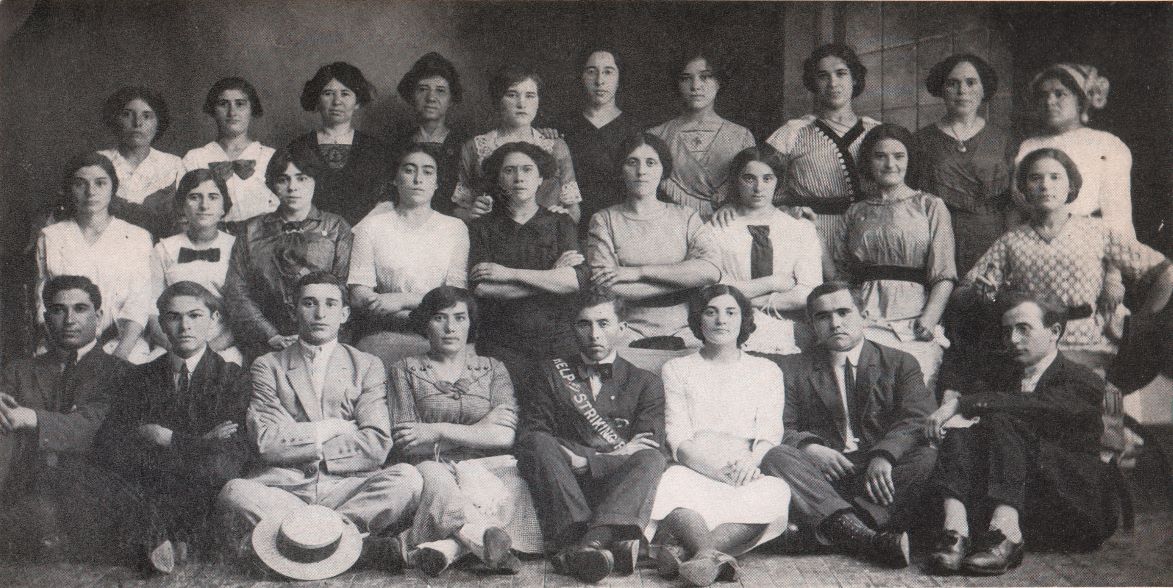
They, however, had agreed to the slate proposed by the Left Wing which was for Shachtman (the Left Wing of the Sorkin group) for president, Skolnick, a Left Winger, for secretary, B. Gold as first vice-president and several of the Sorkin group and other Left Wingers for the remaining posts. But the Sorkin group betrayed this agreement. They put up Woll, a Sorkinite, for secretary against Skolnick and Winnick, another of the same type, against Gold for vice-president. With the votes of the Kaufman machine, they secured the domination of the new G.E.B. A. Gross of New York, and Englander of Canada, were the two lefts elected to the G.E.B.
Lesson of the Convention—the United Front.
In spite of this betrayal of the Sorkin group, the convention represents a marked advance for the Left Wing. The betrayal of the Sorkin group prevented the Left Wing from gathering more of the fruits of its activities. The Left Wing forced the Kaufman machine out of office. It won upon the issues of class collaboration, a Labor Party, amalgamation and Russian recognition. It made a fine fight on the issues in the union in the debate on the supplementary report.
The convention, however, holds a lesson for the Left Wing on the issue of how to make a united front, which if it had been properly conducted would have still further strengthened the Left Wing and brought it more organizational gains. The Left Wing failed to realize that it would inevitably be betrayed by the right wing of the Sorkin group at the convention. The united front which had been made between the Left Wing and the Sorkin group upon the issue of clearing out gangsterism had outlived its usefulness in the New York organization. The Sorkin group itself began to realize this when it secured 12 out of the 30 delegates to the convention. Sorkin and his group were discredited before the New York membership and sooner or later the Left Wing would be forced to clear them out of the organization.
In the election of delegates to the convention, the Left Wing had its opportunity. Its prestige among the membership was high, due to its victories for the rank and file in the short period in office. The Left Wing, however, turned their united front into a marriage with the Sorkin group. They failed to realize that the united front has for its object to strengthen the Left Wing at the expense of the leaders of the other group. The 12 delegates of the Sorkin group, by no means represented corresponding strength among the members, on the contrary, the membership meetings which were held after the convention showed that Sorkin and the right wingers represented an infinitesimal section of the membership, the resolutions demanding their removal from office because of this betrayal in the New York organization, were unanimously carried.
It was the task of the Left Wing in the elections to have cleared away such unreliable elements as Sorkin, Woll and Winnick, so that they could successfully continue their fight for the organization. The Sorkin group, however, utilized the fight correctly for themselves, to further their position and to entrench themselves with the support of Kaufman in the International office. It used the united front for its advantage at the expense of the Left Wing. This lesson must be learned. The united front made on the issue of gangsterism was correct, but the united front required a policy of differentiation from the Sorkin group, a policy of criticism when necessary in order that the Left Wing may not carry the responsibility for this group.
This was not always carried out by the Left Wing in the New York organization. The Left Wing, which is one of the most vigorous in the needle trades, has shown real heroism in the fight against the Kaufman machine and gangsterism; nevertheless, at the convention, it failed to introduce a resolution for shop committees, one of the vital demands of the Left Wing. It was not sufficiently prepared for its fight upon the general issues of the trade. Its failure to introduce the resolution for shop committees can be attributed in fact to its nervousness and hesitation in the face of the unreliability of the Sorkin group, which sought an opportunity to bolt the united front and find a pretext for lining up with the Kaufman elements.
The Tasks of the Left Wing.
The future will see the growth and consolidation of the Left Wing within the Furriers’ Union, provided the lessons of the united front with the Sorkin group are learned. The Left Wing must make clear that Shachtman can secure support as president only on condition that he breaks with the Sorkin group, carries through vigorously the fight for amalgamation of the unions, fights against class collaboration, continues the war against Kaufman, who while defeated, has not yet been wiped out of the organization.
The Left Wing, which has the overwhelming backing of the membership in the New York organization, must be broadened out and made into a national Left Wing in order to destroy the hold of the Kaufman machine on the out-of-town locals, which are now the centers of Kaufman strength. Within the G.E.B., the Left Wing must continue its policy of opposition, sharply drawing the line between its own policies and the practices of the Sorkin group. It must do everything to raise the ideological level of as well as the endorsement of Communist institutions, the Left Wing and draw more leading elements into the leadership of the organization.
With the adoption of a militant fighting policy in the administration of the New York locals, the re construction of its machinery for greater response to the needs of the rank and file, the victories already achieved in the Furriers’ Union will grow in volume and Kaufmanism and Sorkinism will soon be completely wiped out in the organization.
The Workers Monthly began publishing in 1924 as a merger of the ‘Liberator’, the Trade Union Educational League magazine ‘Labor Herald’, and Friends of Soviet Russia’s monthly ‘Soviet Russia Pictorial’ as an explicitly Party publication. In 1927 Workers Monthly ceased and the Communist Party began publishing The Communist as its theoretical magazine. Editors included Earl Browder and Max Bedacht as the magazine continued the Liberator’s use of graphics and art.
PDF of full issue: https://www.marxists.org/history/usa/culture/pubs/wm/1926/v5n04-feb-1926-1B-WM.pdf
 Revolution's Newsstand