
A key to the victory of the U.A.W. at the Flint Sit Downs of 1937, a strike that changed labor history, was the development of the Women’s Auxiliary early in the struggle. Out of the Auxiliary was born the crack-squad of militants, the red-tammed Women’s Emergency Brigade. Captain of the Brigade was the indefatigable Genora Johnson, then a member of the Socialist Party.
‘Militant Leader of Auto Women: An Interview with Genora Johnson’ by Hy Fish from Socialist Call. Vol. 5 No. 1. Late February, 1937.
“The women got together and they formed a mighty
throng.
“Every worker’s wife and mom and sister will
gelong.”
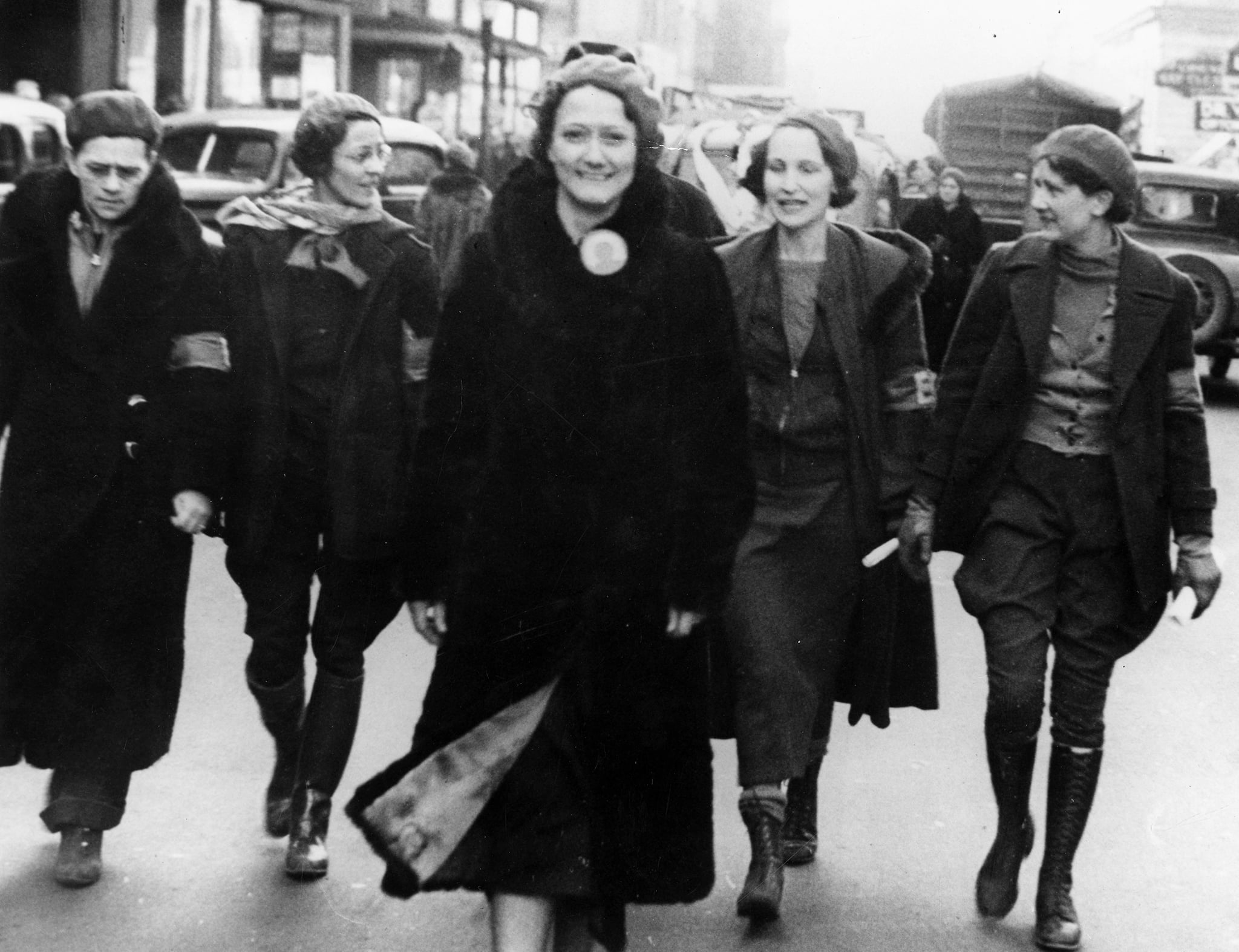
These two lines come from the theme song of the Women’s Auxiliary of the United Automobile Workers’ Union during the sit-down strike in Flint. These women with their red berets and Emergency Brigade armbands have been front page publicity all over the country.
Back of the organization of this flashing, militant organization of “worker’s wife and mom and sister” is the story of Genora Johnson, vice president of the Women’s Auxiliary and Captain of the Emergency Brigade. She is young, fiery, slim, with soft brown eyes that flash when she speaks proudly of the ‘EB.’
She talks freely about the strike, about the future of the union and the Women’s Auxiliary; but I had to hunt elsewhere for facts about herself. Her husband is Kermit Johnson, chairman of the strike plant committee in the Chevrolet Plant No. 4, the last plant to be closed during the sit-down strike. Before marrying Kermit she worked long hours in a department store.
Kermit working in the auto industry barely made enough for them to live in a trailer outside of town. Kermit’s father, active union man in Chevrolet No. 4 brought them into the Socialist party.
The places of responsibility that Kermit and Genora occupied in the strike were the result of their understanding of the needs of the crisis. Kermit was simply a rank and file member of the union. When the strike broke he recognized the need for recreational activity. He became chairman of recreation.
When it was decided to close Plant No. 4 his experience in the plant make him the logical chairman of the plant committee.
Genora’s story is the same. Running errands, doing odd jobs, she became interested in the problems of the women. It was she who, desirous of bettering the morale of the strike, called the first meeting of the Women’s Auxiliary. I asked her about the origin of the auxiliary. “You see some of strikers’ wives did not understand why the men were striking. When the strike started many of the women called to the men and threatened to walk out’ on them. Some of them even started divorce suits. Well, that convinced us that women had to be organized for support of the men in the plants.”
As she told about the work of the auxiliary the pronoun was always ‘we’ never ‘I.’ The first meeting was called Jan. 12 with about fifty women in attendance. A sick committee with trained nurses was organized; a speakers department set-up; and the Emergency Brigade with a membership of over 300 women was formed for defense of the men in the plants.
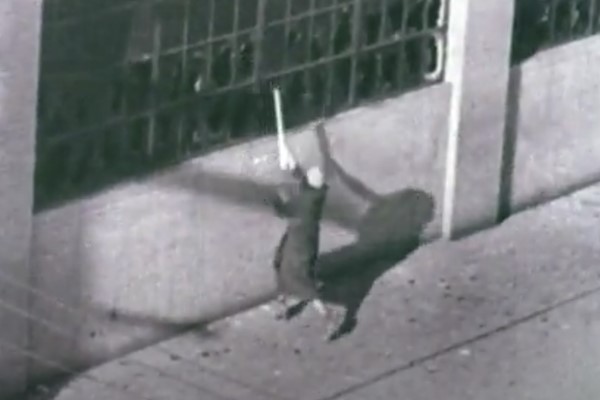
Genora told me of the gassing of the men in Chevrolet No. 9 the night that Chevrolet No. 4 was closed. Her story is decidedly different from the description by Lowell Thomas, newsreel commentator, who described the breaking of the windows by the EB as a mad riot. As Genora talked, I could see the flash of red as the women went into action. With almost military precision, using their hammers, they did break the panes of glass but only so their men might breathe after tear gas had been thrown in the plant by company police. She is proud of the fighting ability of the women she captained during the strike–she is proud of their untiring activity; “They did a noble job. So did our men. For all of us the union and collective bargaining means security and release from fear.”
As we finished our conversation, Genora told of the long range program the auxiliary is planning in Flint.
“We all know the job of our men is to build a system of shop stewards and increase our union membership. The job of the auxiliary must be to learn the reason why the picket line was necessary and the way Flint and the rest of the country can be organized so that picket lines will not be necessary. We are planning classes in labor history, public speaking and workers’ political movements.”
Genora, the Socialist the unionist, looks now to the future with all the quiet determination that has marked sleepless nights and militant strike activity: “United we can build our workers’ world of security, peace and happiness.”
Socialist Call began as a weekly newspaper in New York in early 1935 by supporters of the Socialist Party’s Militant Faction Samuel DeWitt, Herbert Zam, Max Delson, Amicus Most, and Haim Kantorovitch, with others to rival the Old Guard’s ‘New Leader’. The Call Education Institute was also inaugurated as a rival to the right’s Rand School. In 1937, the Call as the Militant voice would fall victim to Party turmoil, becoming a paper of the Socialist Party leading bodies as it moved to Chicago in 1938, to Milwaukee in 1939, where it was renamed “The Call” and back to New York in 1940 where it eventually resumed the “Socialist Call” name and was published until 1954.
PDF of full issue: https://www.marxists.org/history/etol/newspape/challenge-of-youth/370220-challengeofyouth-v05n01.pdf
 Revolution's Newsstand