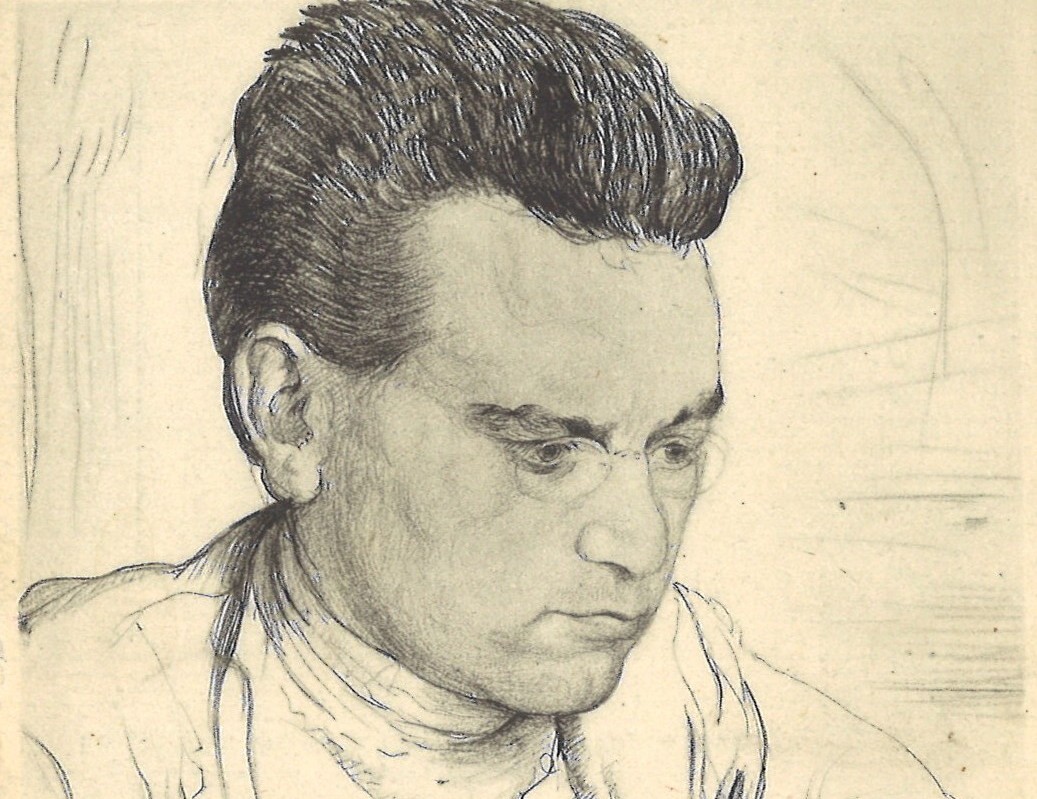
The early Comintern had the most ferocious of debates on central questions with a rarely an expulsion or disciplinary action until Zinoviev’s ‘Bolshevization’ came in after Lenin’s death. Here Bordiga sharply argues with Lenin (Bordiga was one of the ‘infantile’ targets of ‘Left Wing Communism’) and others over the Theses on Parliamentarism, a major dispute in the Communist International as it cohered and developed. Bordiga was in a minority, but not alone, when he–de facto–led ‘Left Communists’ at the Second World Congress…and would stay in the International for years after.
‘On Parliamentarism’ by Amadeo Bordiga from from Proceedings of the Second Congress of the Communist International, 1920.
Bordiga: The left faction of the Italian Socialist Party is antiparliamentarian in its views, and that for reasons which are not valid for Italy alone but which have a general character.
Are we dealing here only with a question of principle? Certainly not. In principle we are all, after all, opponents of parliamentarism, because we reject it as a means of liberating the proletariat and as a political form of the proletarian state. The anarchists are antiparliamentarian on principle since they declare themselves to be against any agency of power. The syndicalist opponents of the political action of the Party, who have a completely different conception of the process of the liberation of the proletariat, are also against it. As far as we are concerned, our anti-parliamentarism is based on the Marxist critique of bourgeois democracy. I shall not repeat here the arguments of critical communism, which unmask the bourgeois lie of political equality as a means to blur economic inequality and the class struggle. This conception is based on the idea of a historic process in which the liberation of the proletariat is achieved after a violent class struggle which is supported by the dictatorship of the proletariat.
This theoretical conception, which is elucidated in the Communist Manifesto, found its first historical realisation in the Russian revolution. Between these two facts there is a long time-span. During this the development of the capitalist world has advanced a long way. The Marxist movement has been debased into a social-democratic one, and has created a field of common work for the petty interests of the collaboration of individual groups of workers and bourgeois democracy. The same phenomenon is to be observed in the trades unions and in the socialist parties.
The Marxist task of the Marxist party, which ought to have spoken on behalf of the whole working class and remembered its old historical tasks, has therefore been almost completely forgotten. A new ideology has been fabricated which has nothing in common with Marxism, which rejects violent measures and ignores the dictatorship of the proletariat in order to put in its place the illusion of a social development on peaceful and democratic paths.
The Russian revolution has realised Marxist theory in an admirable manner by proving the necessity of a violent struggle and the introduction of the dictatorship of the proletariat. But the historical conditions under which the Russian revolution developed are different from the conditions for the proletarian revolution in the countries of Western Europe and America. The position in Russia could perhaps be compared with the position in Germany in 1848, where two revolutions broke out one after the other, one bourgeois-democratic and one proletarian.
The tactical experiences of the Russian revolution cannot be transferred to other countries where bourgeois democracy has already long since been introduced and where the revolutionary crisis will consist of a direct transition from this order to the dictatorship of the proletariat.
The Marxist significance of the Russian revolution lies in this, that in its final phase (the dissolution of the Constituent Assembly and the seizure of power by the soviets) it was built up on a Marxist basis and prepared the ground for the development of every new movement, the development of the Communist International, which has finally broken with the social democrats who, be it said to their shame, completely failed during the war.
The revolutionary problem demands, above all in Western Europe, an abandonment of the ground of bourgeois democracy, the proof that the bourgeoisie’s demand that every political struggle should only be carried out through the mechanism of parliament is false, and that the struggle for the conquest of power must be carried out in a new way, through direct revolutionary activity.
The Party needs a new technical organisation, that is to say a new historical formation. This is realised through the Communist Party which, as the Executive Committee’s Theses on the question of the role of the party say, was born ‘in the epoch of the direct struggle for the dictatorship of the proletariat’. (Thesis 4.)
The first mechanism of the bourgeoisie that must be destroyed before one can move on to the economic construction of communism and create the new mechanism of the proletarian state that is to represent the government apparatus, is parliament.
Bourgeois democracy works among the masses with indirect means of defence, while the state apparatus stands ready to apply direct means of violence which are set into activity as soon as the last attempts to draw the proletariat onto the ground of legal democratic politics have failed.
It is therefore of extreme importance to unmask this ploy of the bourgeoisie and to show the masses the whole deception of bourgeois parliamentarism.
Even before the world war the practice of the traditional Socialist Parties had brought about an anti-parliamentarian reaction in the ranks of the proletariat: the anarcho-syndicalist reaction that denied the value of ‘any political activity in order to concentrate the activity of the proletariat in the field of economic organisation and which thus spread the false idea that there is no political activity outside of electoral and parliamentary activity. This idea must be fought, as must social democratic illusions. This conception is far removed from the true revolutionary method and leads the proletariat on a false road in its struggle for liberation.
Great clarity is needed in propaganda; the masses need a clear and simple mode of expression.
Starting from Marxist principles, we propose that, in countries where the democratic order has long since developed, the agitation for the dictatorship of the proletariat should be built up on the spreading of the boycott of the elections and of the bourgeois democratic organs.
The great importance that is ascribed to electoral activity in practice contains a double danger: on the one hand it gives the impression that that is the main activity, and on the other it absorbs all the party’s forces, which paralyses the work of all the other branches of the Party. The social democrats are not the only ones who ascribe a great importance to the elections. Even the Theses proposed by the Executive say that it is important to use all means of agitation in the election campaigns. (Thesis 15).
The organisation of the Party which carries out electoral activity, develops a quite special technical character which is sharply different from the character of the organisation which corresponds to legal or illegal revolutionary needs. The Party divides into a number of election committees which are solely concerned with the preparation and mobilisation of the electors. If the Party in question is an old social democratic party that has affiliated to the Communist movement, there is a great danger in the carrying out of parliamentary action as it was previously practised. We have numerous proofs of this.
As far as the Theses proposed and defended by the speakers are concerned, they are preceded by a historical introduction with the first part of which I am in almost complete agreement. It says there that the First International used parliamentarism for the purposes of agitation, criticism and propaganda. Later, in the Second International, there emerged the harmful effects of parliamentarism, which led to reformism and class collaboration (the ‘Burgfrieden’). In the Introduction the conclusion is drawn from this that the Communist International should return to the parliamentary tactic for the purpose of destroying parliament from the inside. The Communist International must, however, if it adopts the same doctrine as the First International, take the completely different historical circumstances into account and develop a completely different activity, that is to say, not collaborate with bourgeois democracy.
The first part of the Theses that follow do not stand in any way in contradiction to the ideas I support either. The difference only begins where it is a question of the use of the election campaign and the parliamentary tribune for mass actions. But they cannot be used in the same way as the press, the freedom of association, etc. Here it is a question of a means of action, there of a bourgeois institution which must be replaced by proletarian institutions, by workers’ soviets. We are not thinking of giving up the use of the press, of propaganda, etc. after the revolution; but we do strive before all else to destroy the democratic apparatus and to set up the dictatorship of the proletariat in its place. We do not put forward that argument any more than we do the one about the ‘leaders’ of the movement. There can be no question at all that leaders can be abolished.
We know very well, and we have told the anarchists since the beginning of the war, that it is not correct to reject parliamentarism in order to abolish leaders. We will always need them as propagandists, journalists, etc.
Certainly in a revolution a centralised party that leads the activity of the working class is necessary. Naturally this party also needs leaders. But the role of the party, the role of the leaders, is completely different from what it was with the social democrats. The party leads the activity of the proletariat in the sense that it carries out the most dangerous work which demands the greatest sacrifice. The leaders of the party are not only the leaders of the victorious revolution, they are also the first to fall under the enemy’s blows in a defeat. Their position is quite different from the position of the parliamentary leaders, who occupy the most advantageous posts in bourgeois society.
We are told: ‘One can also carry out propaganda from the rostrum of parliament.’ I would like to answer that with a somewhat childish argument: What one says on the rostrum of parliament is repeated in the press. If it is the bourgeois press, everything will be distorted, and if it is our press, then it is a waste of time to say from the rostrum what will later be printed.
The evidence quoted by the speaker will not harm our Theses. Liebknecht worked in the Reichstag at a time when we recognised the possibility of parliamentary activity, all the more so for the fact that it was not then a matter of sanctioning parliamentarism itself, but of criticising bourgeois power.
But if we weigh Liebknecht, Höglund, and the few other cases of revolutionary activity in parliament, against the whole mass of the treachery of the social democrats, then the result will be thoroughly unfavourable to revolutionary parliamentarism.
The parliamentary activities of the Bolsheviks in the Duma, in Kerensky’s Pre-parliament and in the Constituent Assembly were carried out under conditions completely different from those under which we propose to abandon the parliamentary tactic. I shall not come back to the difference there is between the development of the revolution and the revolution in the other bourgeois countries.
I am also not in favour of the idea that elections for bourgeois local government institutions must be used. But I cannot pass over a very important problem in silence. I mean using the election campaign for the purposes of agitation and propaganda for the communist revolution. But this agitation will be all the more effective, the more powerfully we preach the boycott of bourgeois elections to the masses.
It is moreover impossible to foresee what the disruptive activity that the communists could carry out in parliament is to consist of. The reporter proposed to us the draft of a rule concerning the activity of communists in bourgeois parliaments. That is, so to speak, the purest utopia. It will never develop a parliamentary activity that contradicts the principles of parliamentarism and goes beyond the bounds of parliamentary rules.
Now a few words on the arguments quoted by Comrade Lenin in his pamphlet on ‘left’ communism.
I do not think that one can take our anti-parliamentary tendency to be one that demands withdrawal from the trades unions.
However rotten, the trade union is still a workers’ milieu. To withdraw from the social democratic trades unions would be to share the conception of the syndicalists, who wish to unite themselves in revolutionary fighting organs of a different economic type.
From the Marxist standpoint that is a mistake that has nothing to do with the argument on which our anti-parliamentarism rests.
The Theses, however, say that the question of parliamentarism is only secondary for the communist revolution; but with the question of the trades unions, matters stand differently.
I do not think that one can pass a final judgement on individual comrades or Communist Parties on the basis of opposition to parliamentary activity. In his interesting work, Comrade Lenin describes a communist tactic, by deciding his very broad activity, on the basis of a very attentive analysis of the situation in the bourgeois world, and he proposes that the experience of the Russian revolution should be applied in this analysis in the capitalist countries.
He also emphasises the necessity of taking account of the differences between the various countries.
I shall not here undertake a discussion of this method.
I would only like to note that a Marxist movement in the democratic Western countries requires a much more direct tactic than the tactic that was applied during the Russian revolution.
Comrade Lenin accuses us of trying to avoid the problem of communist action in parliament because his slogan seems too difficult to us and because the anti-parliamentarian tactic costs the least effort.
We completely agree that the tasks of the proletarian revolution are very great and difficult. We are convinced that if, after dealing with the problem of parliamentary action, we go on to discuss and decide on the other, far more important, problems, we will still not have made any progress, and that their solution will not be as simple as we think.
Therefore we intend to use the main forces of the communist movement in fields that are more important than parliament.
We do not flinch in the face of any difficulties. We only note that the opportunist parliamentarians, who also chose an easy tactic, are not for that reason any the less burdened with work by their parliamentary activity.
From that we conclude that we will need enormous effort and tireless activity for the solution of the problems of communist parliamentarism according to the proposed Theses (if we adopt this solution), and that then little energy and few resources will remain for really revolutionary activity.
In the bourgeois world, one cannot go through those stages in the political field that will have to be fought out only after the revolution, through the economic transformation of capitalism into communism.
The transfer of power from the exploiters to the exploited brings behind it a change in the apparatus of representation. Bourgeois parliamentarism must be replaced by the soviet system. The old democratic mask of the class struggle must be torn up so that direct revolutionary action can be introduced.
That is our standpoint on parliamentarism, a standpoint that is in complete harmony with the revolutionary Marxist method.
I can close with a view that we share with Comrade Bukharin. This question can and must not lead to a split in the Marxist movement.
If the Communist International wishes to take on itself the creation of a communist parliamentarism, we will submit to its decision. We do not think that this plan will succeed; but we declare that we will do nothing to disrupt this work.
I hope that the next congress of the Communist International will not need to debate the results of parliamentary action, but will much
rather examine the victory of the communist revolution in a great number of countries.
Should that not be possible, then I wish for Comrade Bukharin’s sake that he will be able to present us with a less dreary picture of communist parliamentarism than that with which he had to begin his introduction this time.
Comrade Bordiga thereupon reads the following Theses:
Theses on parliamentarism, drawn up by Comrade Bordiga on behalf of the communist abstentionist faction of the Socialist Party of Italy.
1. Parliamentarism is the form of political representation peculiar to the capitalist order. The principled criticism by revolutionary Marxists of parliamentarism and bourgeois democracy leads in general to the conclusion that the franchise granted to all citizens of all social classes in the elections to the representative bodies of the state cannot prevent every government apparatus of the state from becoming the committee for the defence of the interests of the ruling capitalist class, and the state from organising itself as the historical organ of the struggle of the bourgeoisie against the proletarian revolution.
2. Communists deny the possibility that the working class will ever conquer power through a majority of parliamentary seats. The armed revolutionary struggle alone will take it to its goal. The conquest of power by the proletariat, which forms the starting point of communist economic construction, leads to the violent and careful abolition of the democratic organs and their replacement by organs of proletarian power – by workers’ councils. The exploiting class is in this way robbed of all political rights and the dictatorship of the proletariat, i.e. a government system with class representation, is set up. The abolition of parliamentarism becomes a historical task of the communist movement. Even more, representative democracy is precisely the first form of bourgeois society that must be brought down, and moreover even before capitalist property, even before the bureaucratic state machinery.
3. The same must happen with local government institutions, which should not be theoretically posed as an opposite to the state organs. In reality their apparatus is identical with the state mechanism of the bourgeoisie. They must similarly be destroyed by the revolutionary proletariat and replaced by local soviets of workers’ deputies.
4. At the present moment, the task of the communists in mentally and materially driving forward the revolution is to free the proletariat above all from the illusions and prejudices that were spread in the muses by the treachery of the old social democratic leaders. In those countries which have been ruled for a longer time by a democratic order which is rooted in the habits and thoughts of the masses, and also in the old socialist parties, this task is of special importance, and assumes the first place among the problems of the preparation of the revolution.
5. Participation in elections and in parliamentary activity at a time when the thought of the conquest of power by the proletariat was still far distant and when there was not yet any question of direct preparations for the revolution and of the realisation of the dictatorship of the proletariat could offer great possibilities for propaganda, agitation and criticism. On the other hand, in those countries where a bourgeois revolution has as yet only started and is creating new institutions, the entry of communists into the representative bodies, which are still in the formative stage, can have a big influence on the development of events in order to bring about a favourable outcome of the revolution and the final victory of the proletariat.
6. In the present historical epoch, which has opened with the end of the world war and its consequences for the social organisation of the bourgeoisie – with the Russian revolution as the first realisation of the idea of the conquest of power by the working class, and the formation of the new International in opposition to the traitors of the social democracy – and in the countries where the democratic order was introduced a long time ago, there is no possibility of exploiting parliamentarism for the revolutionary cause of communism. Clarity of propaganda no less than preparation of the final struggle for the dictatorship of the proletariat demand that communists carry out propaganda for a boycott of the elections on the part of the workers.
7. Under these historical conditions, under which the revolutionary conquest of power by the proletariat has become the main problem of the movement, every political activity of the Party must be dedicated to this goal. It is necessary to break with the bourgeois lie once and for all, with the lie that tries to make people believe that every clash of the hostile parties, every struggle for the conquest of power, must be played out in the framework of the democratic mechanism, in election campaigns and parliamentary debates. It will not be possible to achieve this goal without renouncing completely the traditional method of calling on workers to participate in the elections, where they work side by side with the bourgeois class, without putting an end to the spectacle of the delegates of the proletariat appearing on the same parliamentary ground as its exploiters.
8. The ultra-parliamentary practice of the old socialist parties spread the dangerous conception that all political action consists only of election campaigns and parliamentary activity. On the other hand the proletariat’s aversion for this treachery has created a fertile soil for syndicalist and anarchist tendencies which deny that the political action and activity of the party have any value. Therefore the Communist Parties will never achieve great success in propagating the revolutionary Marxist method if they do not base their work directly on the dictatorship of the proletariat and on the workers’ councils, and abandon any contact with bourgeois democracy.
9. The excessively great importance ascribed in practice to the election campaigns and their results, the fact that the party dedicates to them all its forces and human, press and economic resources for quite a long period of time means on the one hand that despite all the speeches at meetings and all the theoretical statements to the contrary, the conviction is strengthened that this really is the main action for the achievement of communist goals. On the other hand it leads to an almost complete renunciation of any work of revolutionary organisation and preparation by giving the party organisation a technical character that stands in complete contradiction to the requirements of legal and illegal revolutionary work.
10. As far as those parties are concerned that have affiliated to the Communist International by a majority decision, further participation in election campaigns prevents the required sifting out of the social democratic elements, without whose removal the Communist International will not be able to carry out its historic role.
11. The actual character of the debates that take place in parliament and in other democratic organs excludes any possibility of moving on from a criticism of the opposing parties to propaganda against the principle of parliamentarism, to action that exceeds the limits of the parliamentary constitution. In exactly the same way it is impossible to obtain a mandate that gives the right to speak if one refuses to submit to all the formalities of the electoral process.
Success in the parliamentary fight can be achieved merely by skill in the use of the common weapon of the principles on which the institution bases itself and by using the nuances in the rules, just as success in the election campaign will be judged more and more according to the number of votes and seats obtained.
Every attempt by the Communist Parties to lend the practice of parliamentarism a totally different character will simply lead to a bankruptcy of the energies that will have to be sacrificed to this labour of Sisyphus. The cause of the communist revolution calls summarily for direct action against the capitalist system of the exploiters.
PDF of book: https://archive.org/download/2nd_congress_of_communist_international_proceedings/2nd_congress_of_communist_international_proceedings.pdf
 Revolution's Newsstand