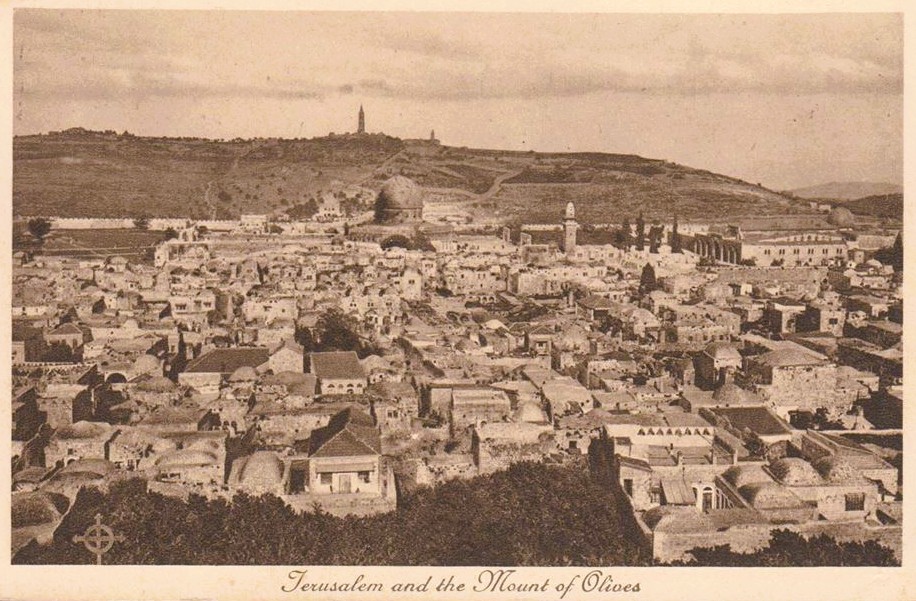
Ten years of British occupation, Zionists colonization, and Arab disfranchisement led to an explosion a decade after Balfour. Initial reporting from Joseph Berger and the riots and revolts that broke out in Mandatory Palestine between Jews and Arabs during August of 1929, including the role small Communist Party in attempting to steer it toward an open confrontation with imperialism.
‘The Blood Bath in the ‘Holy Land’’ by Joseph Berger from International Press Correspondence. Vol. 9 No. 50. September 13, 1929.
The street fight, which began on the 23rd August at one o’clock in the morning between Jews and Arabs at the two main gates of Jerusalem, was the signal for a general Arab rising in Palestine, which also spread to the neighbouring country of Transjordania. The insurrection, an expression of the long suppressed and smothered fermentation among the Mohammedans and especially among the peasant and Bedouin masses was in the first stage not anti-British in character, but anti-Jewish: a crafty co-operation of the imperialist government, of the Zionist Fascists and of the Mohammedan clerical “Medshless Islami” saw to it that the question of the “Wailing Wall” was raised to a question of supreme political significance, to the symbol of a fight for supremacy in the “Holy Land”.
The Arabian feudal chiefs and bourgeoisie, discredited through their compromising with British imperialism and through their national treason, grouped themselves about the Medshless” and with the help of a portion of the British-imperialist official staff (which the socialist MacDonald had maintained unchanged in its conservative splendour) inflamed the fanatic hatred of the Moslems against the Jewish “unbelievers”, who desired to lay hands upon Mohammedan sacred relics. The Zionist Fascist clique incited by the illusions raised by the group of British Social-imperialists around Wedgewood & Co. concerning the erection of a seventh “Jewish” dominion in Palestine, replied with the fomentation of the Jewish-Zionist chauvinism and with provocative nationalist demonstrations. The government itself manoeuvred between the two camps, dropping a little oil wherever the fire threatened to go out and trying at any price to destroy the Jewish-Arab rapprochement observable in recent years, in spite of all the treacherous imperialist, Zionist and national efforts at treachery, especially among the workers.
The witch’s cauldron was bound to explode–the national movement was unchained and a bloody flood swept the ‘holy land”. Amidst this uncurbed mass movement the Zionists paid for permitting themselves, through the Balfour declaration, to be thrust into an outpost of British imperialism in the Arabian countries. To state the facts simply: the unscrupulous Zionist leaders left the poor Jewish populace to pay the cost of the pro-imperialist policy. For the fanatic masses of Mohammedan peasants and Bedouins, under the leadership of obscurantist clericals, feudal chiefs and bourgeois elements, fell with fire and sword chiefly upon the unarmed poor Jewish settlements, Jewish synagogues and schools, where terrible bloodshed took place. At the Talmud school of Hebron sixty Jewish scholars–also children–were killed and mutilated. In the colony of Moza a Jewish family was slaughtered with the women and children. Other colonies were burned to the ground. Then came the English–in the good old Tsarist fashion–usually when the row was over, or just in time to massacre the Arab peasants with machine guns, bombs and armoured cars.
Right to the last moment Jewish-Zionist Fascism remained loyal to its imperialist mission: it occupied itself with the murdering of the individual Arabs who had not been able to get out of the Jewish “zone” in time (the murder of two Arab workers on August 24th by Jewish Fascists in the main thoroughfare of Jerusalem was particularly gruesome) an burning of Arab houses, etc.
Up to August 27th the number of victims, dead wounded, had risen to several hundreds, and 90 per cent of them were innocent Jews and Arabs not concerned with the conflict. But the movement began to get out of the hands of the national-reformist leadership and of the British authorities and to be transformed from a pogrom into an anti-imperialist insurrection: in the purely Arab towns, such as Nablus and Tulkrum, where there was not a Jewish-Zionist Barrier, the Government was attacked and the Arabian national flag was hoisted places. In Transjordania the Bedouins rose to help their brothers in Palestine. The fact that among the victims there were American citizens led to energetic American pressure (and to a secret threat to land American troops!), so that the government was obliged to acknowledge that the pogrom provoked had a more serious effect than was desired. The British were reinforced and very shortly British military occupation to be increased. Thereby, however, appear the outlines of the big political plans, which make the bloodbath comprehensible in the light of the world political interests of the British Empire: the protection of the east bank of the Suez Canal must be secured for the coming war and, if possible, at the cost of the native population; at the same time the Arab national movement is to be discredited through pogrom excesses, completely demoralised and later on terrorised so that no purely revolutionary insurrection will be possible!
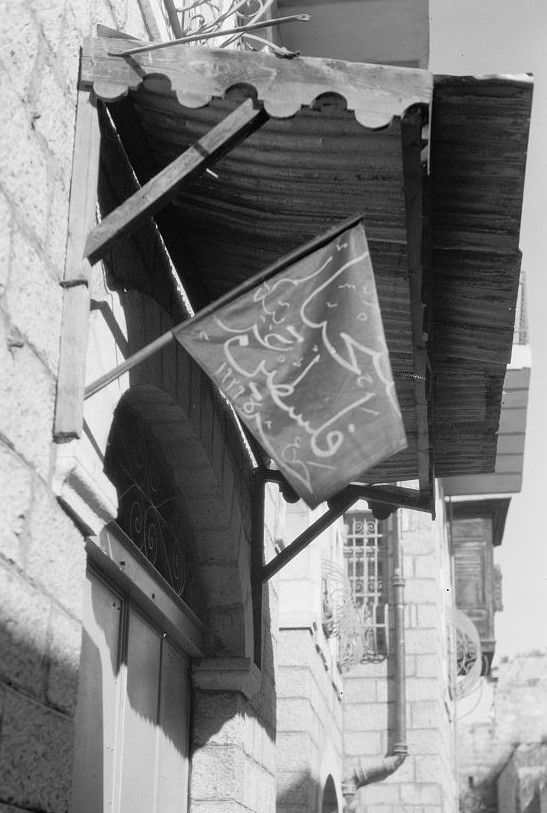
During the complete bankruptcy of the Zionist parties which are mere pawns on the imperialist chess-board, Zionist-reformists (II. International) who are partly responsible for the bloodbath in Palestine perpetrated in the name of MacDonald’s “Labour Government”, as also of the Arab national-reformists, who have proved objectively to be demoralizers of the Arab national movement (the still weak national-revolutionary group of Hamdi Hussein, whose leader was put in prison by the imperialists for issuing a warning against pogroms and calling upon his people to march against the imperialists.) Communists were the only group who worked indefatigably for the fraternisation of the Jewish and Arab workers and for a fight against British imperialism. On the very morning of Black Friday (August 29th) all the walls of Jerusalem were covered with proclamations: “Do not murder one another! Arab Jewish workers, turn against the common enemy. British imperialism!”, “Set up an independent workers’ and peasants’ government!”, etc.–and every Communist was at his post in the streets, agitating in this sense. In view of their Arab cadres and their big losses after August 1st, the Communists could not gain influence on the mass movement as it grew from hour to hour and was inflamed by blind religious fanaticism. Their slogans nevertheless became the common property of the Arab and Jewish workers of the town: thus did not express itself merely in the general agreement of the workers as to the question of the responsibility of the British imperialists, of the necessity for fraternisation, etc., but also in act international Labour solidarity (the defence of Jewish workers by Arabs and vice versa) which stood out in marked contrast to the bestial cruelty on both sides in the pogroms. The Communists were, however, not able to play an organisatory role, but the experience of the mighty movement (which has by means come to an end and, which, by the way, also proved how “firm and strong” the imperialist stabilisation is, in what degree MacDonald opened the era of “peace”, and how dangerous is this and similar nonsense hawked by the opportunists of the Right!) will serve the Communists as a position for further advance. To the intensified chauvinist agitation the Communists will oppose the slogan of international organisation and particularly the formation of international trade unions to spread and deepen the work among the Arab peasantry, and at the same time–in spite of the heavy blows the C.P. surely expect from the British military dictatorship, just as surely as it feels that its position is secure in the country—carry on still more intensively the fight for the creation of the independent workers’ and peasants’ republics of the Arab countries.
International Press Correspondence, widely known as”Inprecor” was published by the Executive Committee of the Communist International (ECCI) regularly in German and English, occasionally in many other languages, beginning in 1921 and lasting in English until 1938. Inprecor’s role was to supply translated articles to the English-speaking press of the International from the Comintern’s different sections, as well as news and statements from the ECCI. Many ‘Daily Worker’ and ‘Communist’ articles originated in Inprecor, and it also published articles by American comrades for use in other countries. It was published at least weekly, and often thrice weekly.
PDF of full issue: https://www.marxists.org/history/international/comintern/inprecor/1929/v09n50-sep-13-1929-inprecor.pdf
 Revolution's Newsstand