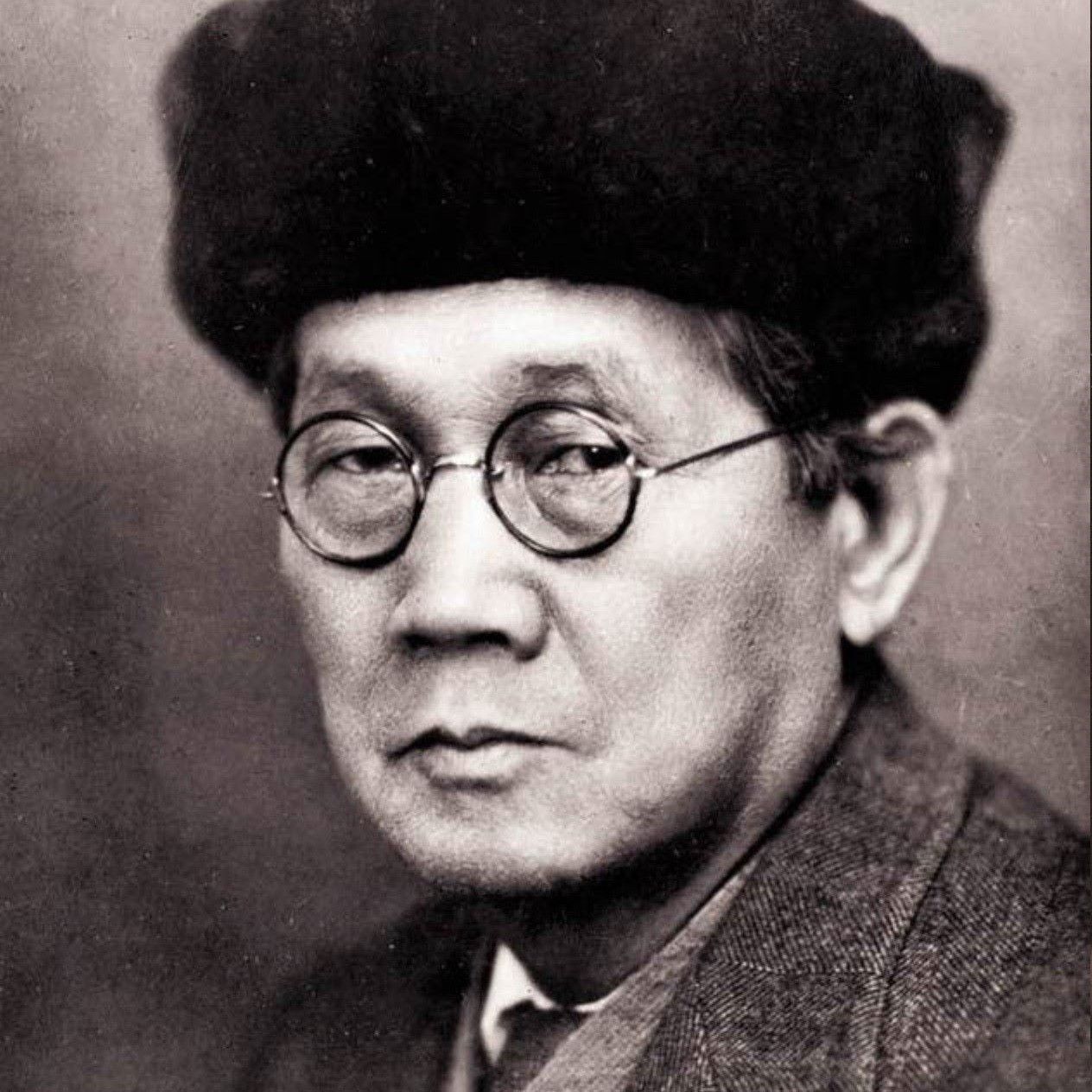
Sen Katayama on the life and death of his comrade, Ichizo Yamamoto.
‘What it Means to be a Socialist in Japan’ by Sen Katayama from International Socialist Review. Vol. 14 No. 8. February, 1914.
ON the 5th of November, at 5 o’clock in the morning, there was a shock to a locomotive engine that runs on one of the Tokio suburban lines for Shinagawa. The shock came at Okubo and was caused by the death of our respected Comrade Ichizo Yamamoto, aged twenty-four years.
It was found that he killed himself, and according to a short note which he left addressed to his room-mate at his lodgings, he was perfectly content with this termination of his life.
But why did he feel so tired of life, and what was the cause of his suicide? This will interest my foreign readers, because it will show you how our government still oppresses Socialists. It is almost unbearable to be a Socialist and live under the present conditions.
Ichizo Yamamoto’s death was a result of the treatment of Socialists in Japan. It will tell you how our comrades are hounded in their peaceful pursuits or when occupied in study. Yamamoto was a graduate of Count Okuma’s College. He entered on his studies four years ago and graduated last June at the head of his class. He was always a brilliant student. He spoke and read French and English well and was a great admirer of the works of Karl Marx. He became a Socialist while in high school and there edited a magazine printed by the papyrograph. When the magazine began to circulate among the students it was stopped.
Ichizo’s parents died while he was young. His father belonged to the old Samurai class and became early interested in the Liberal movement. He traveled all over Japan, sometimes working as a coal or copper miner, in order to teach the political freedom. Ichizo Yamamoto carried on his father’s work by becoming a Socialist. Four years ago he entered the Waseda University at Tokio to study literature and philosophy. During his university terms he was not only studious but active in the cause of Socialism. At the time of the Russo-Jap war he joined the “anti-war” movement and was befriended by Kotoku and Sakai and others.
All who knew him admired and respected Yamamoto. His professors had predicted great things for him, but with the execution of Comrades Kotoku, Sagano and the others, he was persecuted and watched constantly by detectives, even when only going to his classrooms. His aunt was giving him his education and he kept bravely at his studies in spite of all kinds of intimidations and oppressions. Upon his graduation he determined to support himself and accept no more aid from his aunt, who was growing old.
His professors gave him the highest recommendations, but now the detectives were always upon his heels. Many good positions were offered to him for which he was best equipped, but always at the last moment the detectives would poison the mind of the employer, whether in a college or in a business house, and he would be rejected. At Aoyama Gakuin, a Methodist university, these detectives prevented his enrollment by stating that the university would be surrounded by detectives watching
Yamamoto. No institution wishes to have the footprints of the police department about its doorsteps.
For many months he tramped the streets, securing one position and then another, all of which were torn away from him by police interference. At last, finding that it was the determination to ruin him, he decided to terminate his own life.
There are many suffering here who do not go quite so far, but who are always persecuted.
After Yamamoto’s body had been inspected duly, our comrades and a few of his friends took his remains to the cremation grounds. His ashes were sent to his old home in Shinain!
Not only are Socialists hounded in Japan, the natives in Korea and Formosa are revolting sturdily under oppression. A plot of revolt was recently discovered in Formosa and 300 Formosans were arrested. Next month I shall write of conditions in the island of Formosa, the great Japanese “possession,” and the rebels there.
The International Socialist Review (ISR) was published monthly in Chicago from 1900 until 1918 by Charles H. Kerr and critically loyal to the Socialist Party of America. It is one of the essential publications in U.S. left history. During the editorship of A.M. Simons it was largely theoretical and moderate. In 1908, Charles H. Kerr took over as editor with strong influence from Mary E Marcy. The magazine became the foremost proponent of the SP’s left wing growing to tens of thousands of subscribers. It remained revolutionary in outlook and anti-militarist during World War One. It liberally used photographs and images, with news, theory, arts and organizing in its pages. It articles, reports and essays are an invaluable record of the U.S. class struggle and the development of Marxism in the decades before the Soviet experience. It was closed down in government repression in 1918.
PDF of full issue: https://www.marxists.org/history/usa/pubs/isr/v14n08-feb-1914-ISR-gog-ocr.pdf
 Revolution's Newsstand