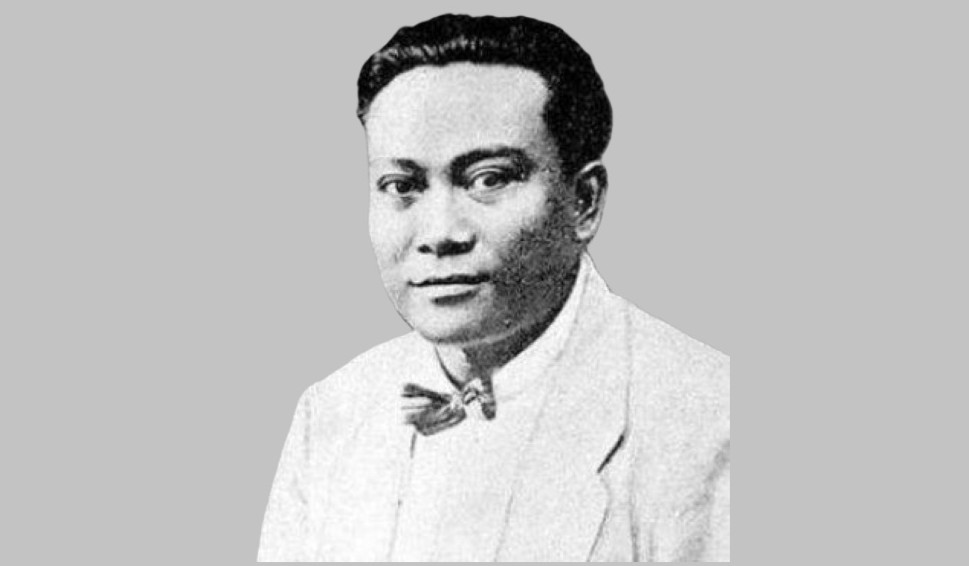
P.K.I. leader Munawar Musso on the Left Nationalists, formerly allied with Dutch Social Democracy, finding themselves in increasing conflict with the Social Democrat’s defense of imperialism.
‘The Conflict between the Nationalists and the Social Democrats in Indonesia’ by M. Musso from International Press Correspondence. Vol. 9 No. 22. May 10, 1929.
Left nationalism, which is strongly represented by the revolutionary national party of Indonesia and the Sarekat Islam, has in the last period experienced more and more strained relations with the social democracy. At the present time, when the national organisations are gaining an ever more firmer foothold among the population, the yellow socialists are doing everything in their power to get the nationalists under their influence. But in Indonesia, where the imperialists proceed very aggressively against any efforts towards the liberation of the colony, the chances of the social democrats to gain influence among the masses are very poor.
The left nationalist organisations are pursuing the policy of non-co-operation. They refused to have any contact or relations with the ruling class, and they are also boycotting all existing organs of the government, such as the district council, the municipal council, the Volksraad etc.
The Dutch imperialists, in their attempt to buy off the nationalists and to weaken the spirit of non-co-operation, have always enjoyed the full support of their lackeys, the yellow socialists.
The government, in order to get the nationalists over to its side, introduced in the Volksraad a “reform” in the shape of the so-called “native majority”. By this reform the natives have the majority of the seats and the composition of the membership is now 30 natives, 25 Dutch and 5 other Eastern peoples, (Chinese, Arab, British-Indians etc.). But the election is carried out in such a way that the government can always ensure a majority. The chairman is a Dutchman appointed by the crown.
But in spite of this concession, the nationalists are still sceptical regarding the sincerity of this reform and are still hostile to the government.
In order further to demonstrate the sympathetic policy of the government towards the nationalists, the Governor General De Graeff, in his speech at the opening of the Volksraad at the beginning of 1928, declared that he was not opposed to the nationalists but only to the Communists. The social democrats came forward as the loyal servants of the government and stated that the new governor is a splendid man, the right man in the right place, and that the appointment of the new governor is a guarantee that a new era is dawning in Indonesia and therefore the nationalists must no longer doubt the generosity of Jonkheer de Graeff.
This manoeuvre of the governor and the social democrats considerably shook the position of moderate nationalists like Dr. Sutomo, who was always wavering between the right and left tendencies. The government afterwards appointed Dr. Sutomo as member of the Volksraad, whereupon that nationalist spontaneously came down on the Right side of the fence and accepted the appointment without reservation and without the consent of his party. But subsequently, owing to the protest of the members of the “Study Club”, of which Dr. Sutomo was the leader, the appointment was rejected, the reason given being that he was exceedingly occupied with his private business.
The Left nationalists, however, regarded the policy of the social democrats in trying to bring the nationalists into the Volksraad as a treacherous act entirely contrary to the principle of the Left nationalists. The conflict went so far that a native social democratic leader resigned from the leadership of the Batavian section of the Indonesian social democratic party. The Sin Po of May 29th, 1928, wrote as follows regarding this incident:
“One of the results of the strained relations between the social democracy and the nationalists of Indonesia is that Y. Manoppo, the first social democratic leader and the chairman of the Batavian district, of the Indonesian social democratic party, has resigned from the party and joined the Nationalist Party of Indonesia.”
As a matter of fact the Brussels Congress of the II. International aggravated the bad relations between the social democratic leaders and the Indonesian nationalists by its decision on the colonial question, according to which Indonesia cannot obtain complete freedom, but on the contrary must remain at semi-independent country, a Dutch protectorate. This decision roused the animosity of the Left nationalists, and articles appeared condemning international social democracy as the agent of imperialism. Also Hatta, the leader of the nationalist organisation in Holland, wrote an article, which was published in the organ of the Left nationalists of Indonesia, the “Soeloch Indonesia Moeda”, of October 1928 and was also reprinted in the organ of the Indonesian social democratic party “Het Indische Volk” of October 20th, 1928, in which he fiercely attacked the treacherous decisions of the II. International regarding the colonial problem and also the treacherous policy of the Dutch social democrats concerning the freedom of Indonesia. The article concluded with the following words:
“The policy of the international social democracy is in contradiction to our aim: “immediate freedom of Indonesia from Holland”! The national movement of Indonesia must be doubly careful not to fall into the trap of the social democrats. We can and wish to co-operate, but only with those who really support our ultimate aim a free Indonesia! The Brussels Congress has furnished us with the lesson that we must strengthen our belief in our own means and power. Our policy of self-help is obviously right.”
The social democrats of Indonesia did not remain idle in face of the attacks and reproaches of the nationalists. Stokvis, the leader of the I.S.D.P., attempted to parry the blow of the nationalists by writing very indignantly in his organ “Het Indische Volk” of October 20th, 1928, and declared that the nationalists were hot-headed in attacking the social democrats in such a manner. Finally he naively asked:
“What other white people have given to Indonesia anything that is directly better and more useful than what the Brussels Congress has proposed? What, for example, has the highly-praised League against Imperialism, which is an instrument of Moscow, done for Indonesia, except loudly to proclaim its good intentions. The League does nothing beyond agitating and demonstrating; it is dying.”
To the above question the nationalists made the following reply, which was printed in the “Soeloeh Indonesia Moeda of October:
“Stokvis’ accusation that the League is a Moscow machination and that it does nothing beyond agitating and demonstrating, is entirely untrue. The League is still a young organisation, having existed little more than a year. We are sure that the League is not an organisation which confines itself to loud and noisy demonstrations. That the League has become a real anti-imperialist body is shown by its activity everywhere. Anyone wishing to know further about the League should read the article, written by its secretary Willy Münzenberg in the Anti-Imperialist Review, No. 1, entitled “from demonstration to organisation”.
The Left Indonesian nationalists, therefore, perceived the treacherous role of the social democrats from the fact that most of them slander and insult the League against Imperialism. The Left social democrats Fimmen and Smith in Holland deserted the Dutch section of the League and likewise made great efforts to win over the nationalists.
The really treacherous character of international social democracy is becoming clearer every day, and not only the Communists but also the nationalists of Indonesia, who have exposed the treacherous role of international social democracy, are the enemies of the yellow International.
International Press Correspondence, widely known as”Inprecorr” was published by the Executive Committee of the Communist International (ECCI) regularly in German and English, occasionally in many other languages, beginning in 1921 and lasting in English until 1938. Inprecorr’s role was to supply translated articles to the English-speaking press of the International from the Comintern’s different sections, as well as news and statements from the ECCI. Many ‘Daily Worker’ and ‘Communist’ articles originated in Inprecorr, and it also published articles by American comrades for use in other countries. It was published at least weekly, and often thrice weekly. A major contributor to the Communist press in the U.S., Inprecorr is an invaluable English-language source on the history of the Communist International and its sections.
PDF of full issue: https://www.marxists.org/history/international/comintern/inprecor/1929/v09n22-may-10-1929-inprecor.pdf
 Revolution's Newsstand