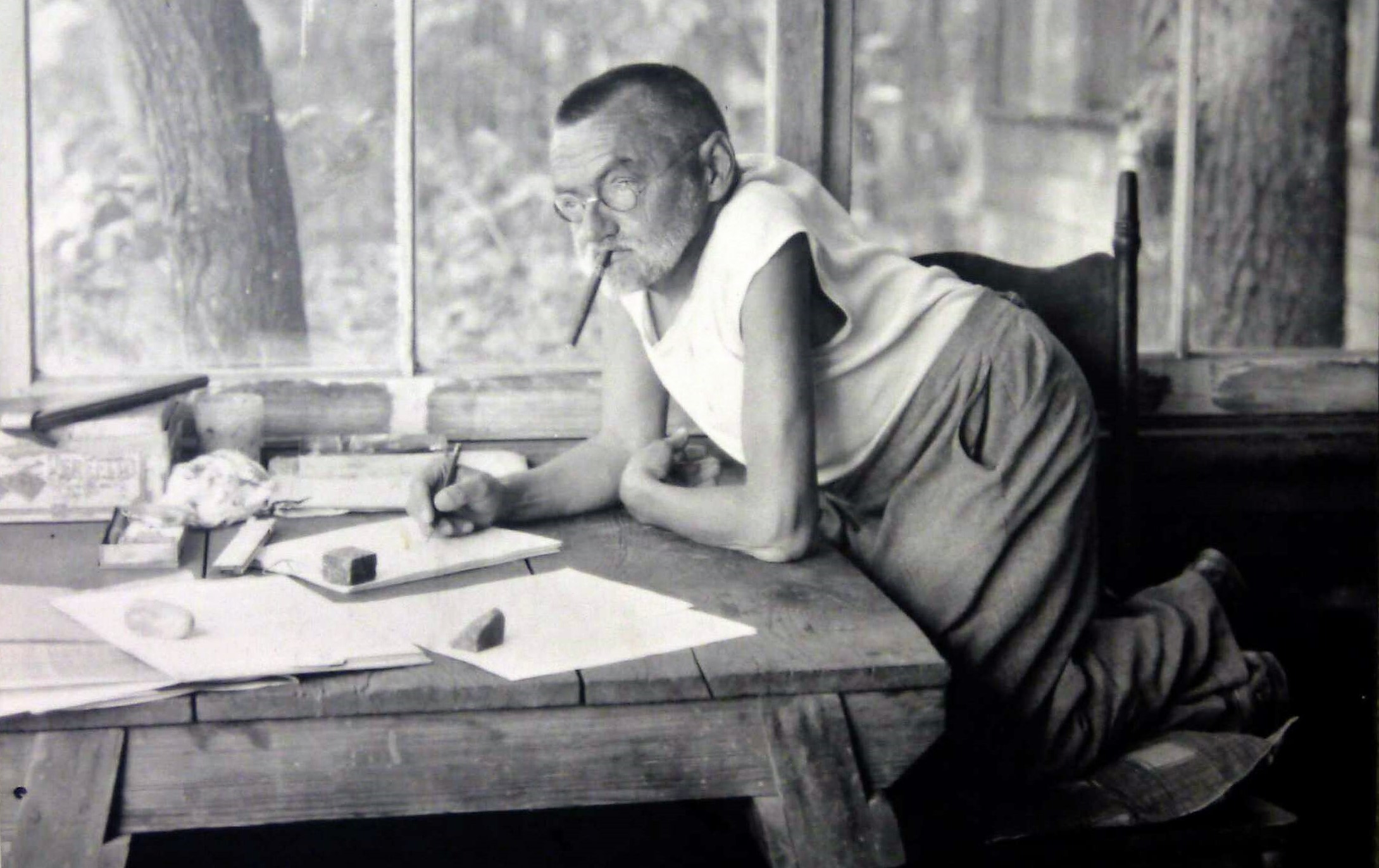
An interview with foremost electrical scientist of his generation, Charles Proteus Steinmetz, on working hours, remuneration, and drudgery under capitalism and the possibilities opened by Socialism.
‘World’s Greatest Electrical Engineer Talks on Socialism and Its Aims’ from Washington Socialist (Everett). No. 179. June 11, 1914.
LEADING ELECTRICAL SCIENTIST SHOWS UP SLAVERY OF CAPITALIST SYSTEM.
Greed for Gold No Incentive to Man of Genius.
In a recent issue of the New York World (a reactionary sheet), was published a moat interesting interview with the great Socialist scientist, Dr. Charles P. Steinmetz, who is generally regarded as the nation’s leading electrical scientist, now the head of the greatest electrical concern in the world, the General Electric Company.
Dr. Steinmetz startled his interviewer by the declaration that “What Society should aim at is the abolition of work.”
“What I said about work” the wizard explained, “will have no meaning at all unless we understand what is meant by work. I do not want to abolish energy or occupation. In one sense of the word we shall work more when we work less.
“Doing the things we want to do is not work, not the work we impose on the workman. Engineering is not work to me. It is my life, my way of expressing myself. I spend twelve or fourteen hours a day at engineering. I spend half an hour a day at work, reading things or doing things which I feel that I must read or do but that are in themselves disagreeable and uninteresting.
But standing in front of a punch press is all work. No one can possibly be interested in the monotonous turning of the machine. No one does it because he wants to do it. Men do it because they are paid to do it, and they must have the pay.
Degrading Influence of Toil.
“If anyone uses his faculties constantly at a disagreeable task he cannot use them to express himself. They become dulled. The more disagreeable the task, the greater the deadening process.
“Eight hours a day is too long, far too long for a human being to tend a machine. The man who works in a shop eight hours today works longer than the man who worked twelve or fourteen hours years ago. In those days his occupation may have been crude, but he could get interested in it. He was making something, a shoe or a wheel or a box. There was much disagreeable labor thrown in, but his occupation gave him some play for his creative faculties. The machine has taken that opportunity away.
Day’s Work Should Be Four Hours.
“The day’s work should be reduced to four hours. Men could stand that much drudgery and have initiative enough left to enable them to take up interesting occupations. Society, instead of being impoverished by the shorter workday, would be enriched by all the greater accomplishments these men would undertake.
“The tendency of the machine itself is to bring about the very change. There is no reason to believe that the labor-saving machine has reached a final stage of development. Inventions will go on. But heretofore the labor-saving machine has meant a tremendous increase in production, instead of an actual reduction in the hours of labor, and each machine has required the service of a machine tender.
“Yet now automatic machines, the machines which superintend themselves, are coming in. These are sup- planting human drudgery. I see no reason why the factory may not be changed as much in this respect as it has already been changed in the transformation from hand to machine production.
“A little drudgery will perhaps always be necessary. But this is not a hardship where it is associated with the thing we like to do. Lying on your back in the hot sand and letting dirty oil truckle in your face, is not a pleasant occupation in itself. But you don’t mind it occasionally if you own the automobile and you have a passion for automobiling. You get out and under with considerable pride in yourself for knowing how to fix the machine.
What Makes Work “Work.”
“But suppose you are doing the same thing, for $3 a day. Then it is unadulterated work. The automobolist does not work. The chauffeur does.
“Society is organized or disorganized, today, so that all the disagreeable things associated with disagreeable occupations can be shifted to the shoulders of a certain class of people. We call them the working class. To that class even many of the potentially agreeable occupations become drudgery due to the social stigma attached to them.
“If we had a rational organization of society very much of the drudgery of today would be round exceedingly interesting. You can hire a man to work in your garden for starvation wages, and the work at once becomes disagreeable, socially dishonorable. Yet when fortune smiles on you and endows you with leisure and a home of your own, the chances are that you will put in your time at the same occupation and it will prove delightful.
Disagreeable Work Should Receive Highest Pay.
“If it is necessary for the disagreeable duties of life to be shifted to certain shoulders, there ought to be a premium on that particular work. If there is to be a distinction in rewards and honors the people who do the most distasteful work of all should receive the greatest rewards and the highest honors. Why should I be honored or paid more than the ditch digger? Society could worry along for some time without its engineers, but it couldn’t get along without its laborers.”
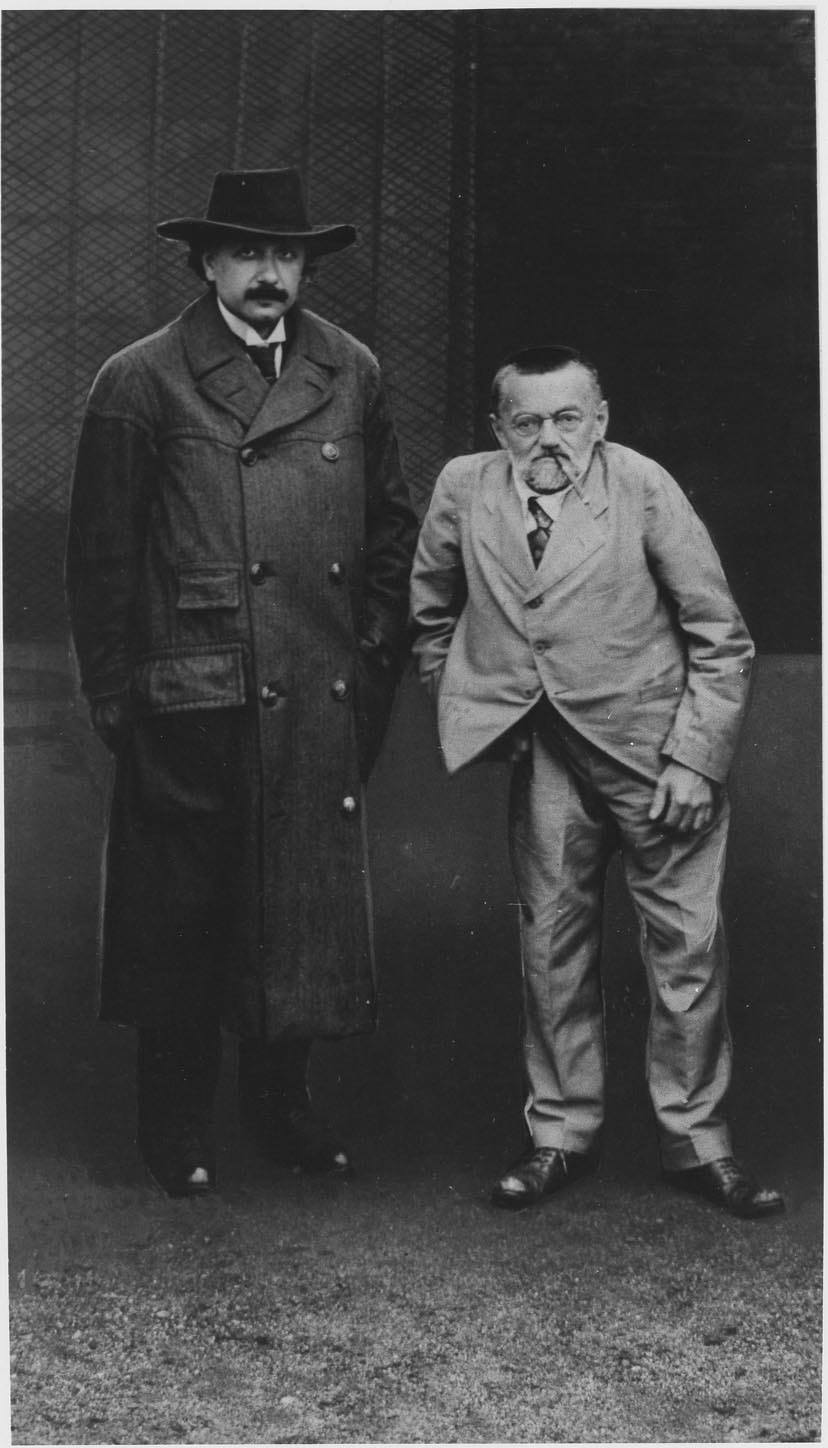
Dr. Steinmetz was sitting in the marvellous laboratory of his Schenectady residence. His salary is fabulous, but there is no evidence of extreme luxury here. Mysterious electrical apparatus is installed throughout the building, giving the impression that much of his income is spent in forcing nature to yield up more and more of her wonderful secrets. Several acres of rather wild ground, where he delights in studying plants, and butterflies, and a capacious conservatory, filled with rare cacti and orchids, are apparently his only extravagance.
Does Not Want Exceptional Reward.
“I don’t need more than any other person,” he said. “I don’t consume more than anyone could consume if society were organized. You may think I have more land than others could have, but comparatively few would want to be bothered with land if it were not for its commercial value.”
“What do you mean by a rational organization of society?” The interviewer had recovered himself enough to ask the question.
“Socialism,” said the wizard. “An organization of society in which the things we need would be manufactured in order to supply those needs. We make things today not to use but to sell. The result is a fearful social loss, not only in profit, interest and rent, but in the abnormal waste of wealth, energy and human life in competitive production.
“Eliminating the social waste of production means reducing work to a minimum.”
Great Genius Carries Red Card.
Dr. Steinmetz is a dues-paying member of the Socialist party, was the president of Schenectady’s board of education under the Socialist administration and the party’s candidate for president of the common council at the last election. Still he looks upon the Socialist party as only one of a number of influences tending toward Socialism. Its first function in office, he says, will be chiefly “to give first place to matters affecting human life instead of matters affecting private property.” Dr. Steinmetz does not expect any sudden or violent revolution.
The Washington Socialist was a weekly newspaper of the Socialist Party of Snohomish County published in Everett, Washington and edited by Maynard Shipley. Closely aligned with the Industrial Workers of the World, who were strong in the Pacific Northwest’s lumber industry, the paper ran for only 18 months when it was renamed The Northwest Worker with Henry Watts as editor in June, 1915, and again Co-Operative News with Perter Husby as editor in October, 1917. Like virtually all of the left press, the Co-Operative News was suppressed in June 1918 under the Federal Espionage Act.
PDF of full issue: https://www.marxists.org/history/usa/pubs/washington-socialist/179-jun-11-1914-WS.pdf
 Revolution's Newsstand