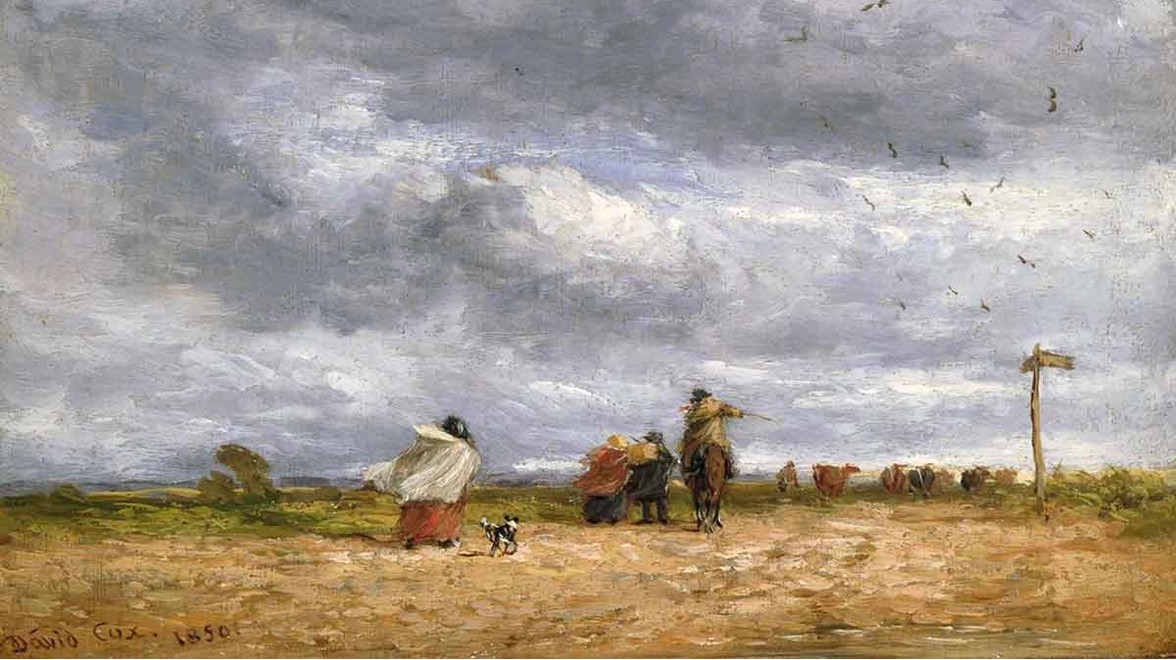
In looking how three different British poets–George Crabbe, Oliver Goldsmith, and Ebenezer Elliott–wrote on its effects, C.V. Boyer also gives a history of the enclosure of traditional common lands.
‘Three Poets of the Agrarian Revolution’ by C.V. Boyer from Modern Quarterly. Vol. 3 No. 1. October-December, 1925.
I.
Macaulay, speaking of Goldsmith’s Deserted Village, states that Auburn in its happy days is a true English village, but that the ensuing depopulation and misery are false. Goldsmith’s biographers, relying probably on Macaulay, have very generally taken the same stand, and have explained the destruction of the loveliest village of the plain as a poetic device to heighten the charm of Auburn in its prime. Complimentary as such judgments are to Goldsmith’s inventive genius, we can no longer accept them. The publication in rapid succession, during the past fifteen or twenty years, of special studies of the English village has completely discredited Macaulay’s dictum.
At the beginning of the eighteenth century, the whole of the cultivated land in England did not amount to more than one-half the total area, and of this cultivated portion, three-fifths was still farmed on the old open or common-field system, so called because the land was unenclosed by fences or hedges, the inhabitants dwelling in a cluster of houses at one end of the fields. For the poor, this system had decided advantages. If a man owned or rented any land at all—and nearly all villagers held some land–he was entitled to certain rights of common on the stubble, the fallow, and the waste, such as gleaning, pasturing his beasts, gathering fuel and the like, which enabled him to subsist even when wages were exceptionally low. But the system had also its disadvantages. Every man’s holding, whether five or one hundred and twenty acres, lay in tiny strips of an acre or less, scattered over the entire arable, no two strips belonging to the same household being contiguous; and one-third of the land was left idle every year to recover its fertility.
In the past, this method of farming, though wasteful, had, under ordinary circumstances, sufficed to supply the population with food. But during the latter half of the eighteenth century, while the population was increasing rapidly, there came a long series of crop failures. There arose, consequently, an urgent demand for more wheat, expressed in terms of higher prices. At the time of this growing demand, discoveries were being made in the use of fertilizers, drainage tiles, root crops, etc., which when introduced into husbandry promised to increase the yield of wheat per acre and otherwise augment the food supply. It was claimed, however, that scientific farming could not be carried on under the open-field system, owing to the obstruction of careless, stupid, or impoverished farmers. In order, therefore, that each man might improve his acres according to his ability, the scientific farmers set up a cry for enclosure, that is, the bringing together into a solid acreage, and the hedging, of each man’s holdings. To the argument in favor of consolidating strips of land already under tillage was added the even stronger argument of turning the non-productive waste into valuable arable by enclosing and cultivating it. That the waste produced no wheat was evident. That it contributed to the support of thousands who depended on it for fuel and pasture was no reason for hesitation on the part of great landowners whose common rights on the waste were insignificant, but whose profits would be enormous if the waste were enclosed. The scientific and commercial instincts united carried the day. An impetus was given to enclosure about 1760 that lasted for nearly a century, by which time the open-field system had entirely disappeared.
From the economic point of view, enclosure may have been an advance; but the means by which it was accomplished were wholly unjustifiable, and the suffering which resulted was quite beyond measure. Private bills which cancelled all leases were rushed through Parliament by interested landlords, and the land was redistributed without the consent of and with no regard for the rights of small holders. It is true that when enclosed land was sown to wheat, more wheat per acre was produced (though the small holder did not get the benefit of it); but quite as much land was turned to pasture as to arable. The profits from wheat were high, but so were the profits from sheep, owing to the slight labor cost. Since the waste was virgin soil and would, when cleared, produce heavy crops without fertilization, a tendency manifested itself to rely on conversion of the waste to satisfy the demand for wheat and to turn the long-used arable into sheep-runs. Whenever this occurred, all cottages were torn down, the families expelled from their homes, and their places taken by four or five shepherds. Whole villages were thus depopulated. Small farmers who could realize from £50 to £100 from their personal property, sold it and with the proceeds bought a passage to America. Others sought employment in factory towns or accepted the status of agricultural laborer and as laborers eventually fell on the parish as paupers.
II.
Such were the historical events of which Goldsmith gives us a version in The Deserted Village. The description of Auburn in its halcyon days is a glowing bit of fancy, in which Goldsmith went but a step beyond Thomson and Gray and other idealizers of country life. But Auburn, at the time the poem opens, has ceased to be. The common has been enclosed, all the cottages destroyed, and the inhabitants turned adrift.
One only master grasps the whole domain.
Some of the villagers have fled to the cities, there to drag out a pitiable existence. Others have taken ship for lands beyond the sea. One solitary matron remains, forced in her old age to eke out a living by gathering cresses from the brook and faggots from the thorn. In this portrayal of depopulation and its effects, Goldsmith is not drawing on his imagination. He is presenting as a single instance what history shows to have happened time and again.
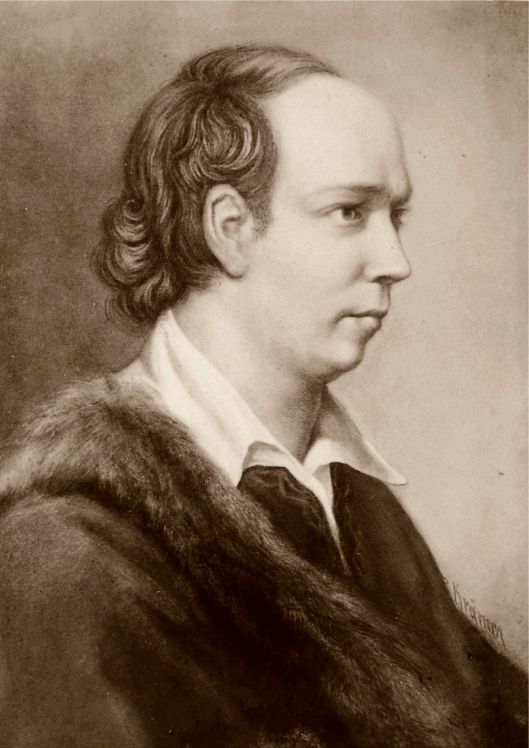
But it must be admitted that his explanation of events, as distinguished from his description, is superficial. The cause of all this desolation, he writes, is the growth of luxury and pride attendant on the increase of wealth. The village is depopulated and the common taken in to make way for the pleasure grounds of the rich. Here Goldsmith is at fault. Though instances might be cited of enclosure for the sake of establishing a country seat, such instances were isolated. The real cause of enclosure, as above outlined, was economic, the desire to make land more profitable. Certainly the method pursued was tyrannical, and the poet would have been amply justified in expressing indignation at such procedure, had he been aware of it. But it is more than doubtful whether he had any notion of the economic causes at work. His poem was published in 1770, and, according to its Dedication, the observations on which it was based were made some time before that, while the economic movement itself, we now know, only began about 1760. The deserted hamlets that he came across on his excursions were sufficient to stir a train of emotions, and when he needed to mention a cause, “luxury,” a cant phrase of the day, saved his turn.
Goldsmith’s treatment of the whole subject is sentimental. Despite its revelations, the poem arouses no indignation. Readers almost universally recall only the affectionate portraits of the schoolmaster and the parson, or the pastoral descriptions of the village sports. The woes of the villagers are presented, but not in a manner to render them provocative; and they are soon forgotten. The final mood is one of contemplation, a purely aesthetic experience. Beauty, not indignation, was the controlling force of the poet’s imagination. His tender feelings, when aroused, found relief in plaintive expression, regardless of the exciting cause.
III.
Even had Goldsmith been aware of the true cause of depopulation, however, and moved the public to put a stop to it, he would still have had cause to mourn. Depopulation was only one of the evils of enclosure. When land was not turned to pasture, the village did not disappear. But neither did it prosper. In general, where land continued under plow, the demand for labor remained about the same. But the plight of the laborer was infinitely worse Before enclosure he did not depend on wages alone; he always had his rights of common as a subsidiary. After enclosure he lost these rights and received nothing to take their place. Deprived of his land, his cow, his sheep, his poultry, his fuel, and his profits from gleaning, the peasant was rendered entirely dependent upon wages at a time when wages were low and the price of the necessaries of life steadily soaring.1 Demoralization and pauperism were the inevitable results. The records of the imprisonment show that crime kept pace with destitution. Owing to the expense of fuel, laborers or their children often stole twigs from hedges to make fires, although the penalty if they were detected was hard labor in prison for three months. The law against the sale of game had an effect precisely the opposite of that intended. It led the rich–those of them who had no preserves of their own–to pay such extravagant prices for the prohibited article that not even the shockingly severe penalties against poaching could stop the practice. The offenders simply organized in gangs to prevent capture. The consequence was many a fatal night conflict when the armed forces of the law met the armed and organized gang.
IV.
We have no poetical record of the effects of enclosure where the village was not depopulated until the appearance of George Crabbe’s The Village, in 1783. Crabbe does not specify enclosure as a cause of the distress he portrays; whether because having grown up with the movement,2 he regarded it as part of the natural order of things, or for some other reason, we can only speculate. Certain it is, however, if there is any truth in recent historians, the conditions that Crabbe describes as prevailing could not have prevailed under the old open-field system with its common rights. Probably Crabbe’s poetry can be best explained as the reaction against irresponsibility on the one hand and sentimentality on the other of a man who was both preacher and artist, but preacher of the unemotional strain of the early eighteenth century, and artist of the realistic stamp. A man who accepted the explanation of the world offered by the orthodox rationalistic divines would attach little importance to economics as a cause of good and evil, but his passion for art might lead him to a choice of material not patently illustrative of orthodox doctrine.
Goldsmith’s idealization of Auburn seems to have been Crabbe’s immediate inspiration, for it appeared to be a serious presentation of the pastoral convention that village life is one of happiness and virtue. Now, Crabbe had been born and reared in a village and had worked on farms at a remove of some distance from his home, but what he there experienced in no wise reminded him of what the poets of rustic life had recorded. He determined, therefore, for once to
“paint the Cot
As Truth will paint it, and as Bards will not.”
The opening scene of The Village is a hard-lensed photograph of Aldborough, the poet’s birthplace. Its light turf–the only fuel of the poor–is broken by lengths of burning sand; its harvests are thin and blighted; its rye fields choked with uncontrollable weeds. The inhabitants are a natural product of such a soil, poverty-stricken, sullen, savage.
Realizing, however, that no poem based solely on observation of a contracted area could lay claim to a just representation of life, Crabbe passes to the scenes of a more productive soil. But
“When Plenty smiles–alas! she smiles for few–“
A heavy crop adds nothing to the welfare of him whose hands helped harvest it. His food is stinted and unwholesome, inadequate to the demands of his strength. The fruits of exposure to the sun, the rain, and the marshes are exhaustion, rheumatism, and malaria. In winter, the laborer is unable to secure fuel to keep warm; parents and children huddle round a single smoldering stick, and shiver in their rags. Faithful workmen, grown old and feeble, are scolded and scorned, hustled from one task-master to another, and driven in the end to a shameful work-house.
Within this dilapidated structure, outside whose walls of mud “the putrid vapours, flagging, play,” are crowded promiscuously young children, aged workmen, deserted wives, unmarried mothers, blind men, crippled men, and idiots. The physician who attend the sick, lying on dirty mattresses in a dark room under the leaking roof, insults, neglects, even carelessly kills his patients, and departs sure of the protection of an indifferent bench of judges. The parson is a devotee of the card table and the chase and resents having to visit the workhouse. Called on to read a prayer over the grave of the man he has neglected while living, he neglects to attend, and the pauper is dumped into unblessed ground.
In 1807, twenty-four years after the appearance of The Village, Crabbe published The Parish Register, a series of character studies of the middle and lower class of people. Though the author had had time to mellow and had held livings as a country parson in various affluent parishes, he seems to have undergone no substantial change of opinion concerning peasant life.
One of the sharpest sketches is that of Isaac Ashford, whose future, for all his nobility of character, looms as dark as that of any spendthrift or slave of vice. Industrious, economical, intelligent, religious, he has been unable, nevertheless, to save anything from his wages, and his declining years are darkened by dread of having to end his days in the workhouse. Fortunately, he drops dead at his own cottage gate before this fear is realized.
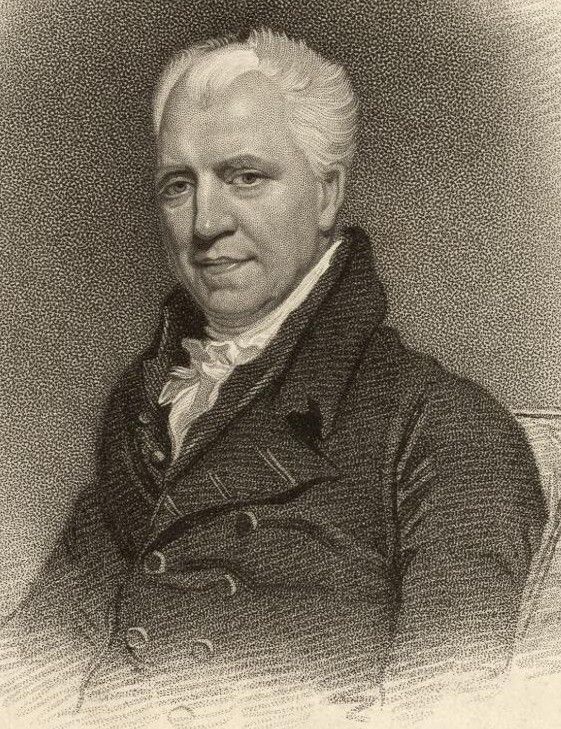
But virtuous characters are comparatively rare. The latter part of The Village was devoted to showing that the poor are not always virtuous any more than they are always happy. But less space was given to vice and folly than to misfortune. In The Parish Register the reverse is true, probably because of the predominance of narrative over general description, and because of the artist’s preference, in story telling, for characters whose disintegration or sudden break-down can be traced to some original flaw. Illicit sexual relationships are the commonest form of immortality. It was the custom of the parish, where an illegitimate child was born and the father known, to compel a wedding in order to avoid supporting the infant. Crabbe describes one such ceremony. A surly young savage is being forced by the authorities to marry a timid, poverty-bitten girl whom he has got with child. He already hates her, and the moment the ceremony is over seeks a public-house where he spends his final shilling on drink.
“Then to her father’s house the pair withdrew,
And bade to love and comfort a long adieu.”
Degradation is depicted at its worst in a section of The Parish Register that might be called “Our Street.”
“Here in cabal, a disputatious crew
Each evening meet; the sot, the cheat, the shrew.”
Gambling, drinking, and cock-fighting are their sources of pleasure. Before each door is a pile of refuse where pigs and chickens, dogs and children, quarrel for a meal. Within, tiny children sprawl and wail on unmade beds and unswept floors. Fathers and mothers, sons and daughters, sleep in a single chamber. “Whence all these woes?” asks Crabbe. And ascribes them solely to lack of will on the part of the sufferers.
The practice of poaching did not escape the poet’s attention. It appears among the vices of the villagers in several poems, but is treated at greatest length, and most dramatically, in “Smugglers and Poachers,” one of the Tales of the Hall (1819). This is the tragic story of two brothers, one a gamekeeper, the other a poacher, who meet in a night raid and kill each other. Crabbe does not excuse smuggling and poaching, nor does he intimate that the offenders resorted to law-breaking because they could support themselves in no other way. But he does recognize that the community sees no harm in the practice, and that its attitude is largely determined by that of the upper classes who themselves buy the unlawfully required goods. In regard to the punishment for poaching he has no doubts whatever. When the keeper departs to lead the attack on the poachers, he attempts to quiet his wife’s involuntary fears, but without success.
“That he would shoot the man who shot a hare
Was what her timid conscience could not bear.”
This is precisely Crabbe’s attitude. Stealing hares is immoral, but shooting the thieves is barbarous.
It is evident that Crabbe has no consistent theory of what is wrong with the world he depicts. He arouses pity for the unfortunate, and in describing such scenes as the workhouse he makes it clear that the bad treatment which the poor receive is to be laid at the door of the ruling classes. But why prudent, industrious workmen should be so underpaid that they cannot provide for their own old age, he does not say. As to vice, he is of two opinions. In a poem called The Hall of Justice, he excuses an old gypsy for her lawless life on the plea of environment, but frequently he represents the fallen as self-made victims. Good and evil are found mixed in the world,
“but man has skill
And power to part them, when he feels the will.”
If we were to regard the holder of such conflicting views as simply a reformer, we should have to pronounce his work futile. But Crabbe had also the instincts of an artist. The scenes and situations which appealed to the realist he portrayed, and portrayed movingly, whether the reformer in him could explain them or not.
V.
The Peace following the war with Napoleon might be expected to have slowed down the enclosure movement by lessening the dependence upon home-grown wheat. But the landlord Parliament of 1815 imposed an exclusive tariff on wheat–the famous Corn Laws–and thus gave a renewed impetus to the movement. Within a year discontent expressed itself in food riots and sporadic rick-burning. In some districts new enclosures were broken down and cattle turned in on the old common. But conditions grew steadily worse. Cobbett said of the laborers near Cricklade in 1821: “Their dwellings are little better than pig beds and their looks indicate that their food is not nearly equal to that of a pig.” As a matter of fact, the diet of the laborer’s family consisted of bread and potatoes when the bread-winner drew his full weekly wage of 9s., otherwise of roots and sorrel, unless the parish supported them. By 1830, conditions had become unbearable. An organized revolt spread through the south of England. Its purpose was to force the payment of a living wage–2s a day–but it was accompanied generally by the smashing of threshing machines, and occasionally by the burning of barns and the destruction of the hated workhouses. The only immediate result was the execution of the leaders and the transportation for life of hundreds who had been present in mobs which demanded higher wages. But the excitement contributed to the general agitation for a reform of Parliament as the only means of remedying grievances.
VI.
The last of the poets to take as his theme the degradation of the peasant was one whose reputation was built on his championship of the starving laborers in town–Ebenezer Elliott, the Corn-Law Rhymer. Elliott was a thoroughgoing radical individualist of the school of Adam Smith and Bentham. All his own financial troubles as an iron manufacturer, as well as the distress of the working people, he attributed to the Corn Laws. Against these laws he wrote and lectured all but incessantly. For a time, indeed, he transferred his energies to the support of the Reform Bill, but when the Reform Parliament allowed the tariff on wheat to stand, he returned to the attack. His political verse is profuse in stigmatic epithets. Landlords who prosper on a tax which the public pays are “palaced paupers,” “ghouls who drink our tears;” their mansions are “tax-built;” the waste which is enclosed and tilled only because the tariff makes its tillage profitable is “tax-ploughed;” the plow itself is “tax-bribed.”
“How God speeds the tax-bribed plough,
Fen and moor declare, man;
Where once fed the poor man’s cow,
Acres drives his share, man.
But he did not steal the fen,
Did not steal the moor, man;
If he feeds on starving men,
Still he loves the poor, man.”
His speeches and verses were so violent that his name was presented to the Attorney General as a breeder of sedition and instigator of revolution. But he was not silenced. Silence, in his estimation, was the real crime. “Whoever does not oppose the Corn Laws,” he cries, “is a patron of want, national immorality, bankruptcy, child-murder, incendiary fires, midnight assassination and anarchy.”
Though a townsman and a manufacturer, Elliott wrote two poems, The Village Patriarch (1829) and The Splendid Village (1831), which show that his knowledge and sympathy were not confined to the weavers in the cotton mills. The Village Patriarch is the more ambitious of the two, but defects of execution outweight the merits of design. Its peasant hero, Enoch Wray, is a centenarian, and the theme is the change for the worse which has come over England during his lifetime. Blind, unable longer to support himself by labor, Enoch yet maintains his independence by gradually pawning and selling all that he owns. He has but one fear, that of taking parish pay and becoming an inmate of the workhouse–
“That House where Want is fed by Scorn.”
As he parts with his last possession, he dies. Thus summarized, the narrative is not unlike that of Crabbe’s Isaac Ashford, but Elliott expands the tale in the telling to great length and makes the excursions of the old man about the country a string on which to hang his social comment.

Of the ten rather straggling books into which the poem is divided, the eighth is the most gripping. It contains the story of Hannah Wray, Enoch’s daughter-in-law. Hannah’s husband having wasted away in prison, where he was confined for killing a hare that was eating his cabbage, Hannah and her idiot daughter drag out a life of poverty in a little cottage on the edge of the moor. Ezra White, a prosperous farmer whose “two fat farms have swallowed seven,” now encloses the moor, un-roofs Hannah’s cottage, and turns her and her child out to beg. Furious, but helpless, the widow calls down a curse on Ezra and his coming nuptials. Some time later the landlord comes upon Hannah trying to reroof her cottage. In a rage, he seizes her by the throat and has strangled her into insensibility, when the idiot child strikes him a fatal blow on the head with a stone. In order to protect the child, the mother charges herself with guilt. The law allowing those who are accused of murder no counsel, Hannah is convicted and hanged. The child wanders about the country unable to understand why her mother does not return, and ever and anon repeats the curse which she has heard,
“God! Let nothing grow!”
This is only one example of the destitution, meanness, and brutality of Elliott’s England. Wherever Enoch strays in his country wanderings, he comes upon signs of decay among the lowly country folk. Poverty has become a disgrace. Hence, those whose income is not absolutely assured ape the manners of the well-to-do and snub the poor. This is evident at a time and under circumstances least to be expected, namely, when the congregation leave the church after the Sunday sermon, which the paupers are compelled to attend. Anticipation of contemptuous glances leads those who have fallen upon the rates to move away with bowed heads and averted eyes. The one man who being unable to support himself honestly yet shows nothing of this abjectness of manner is Jem, the poacher. He carries himself with all the bravado of a successful bully, but he represents the degradation of the village laborer none the less. The others have lost their self-respect; he has lost his honesty.
The Splendid Village, ironically so called, is reminiscent of both Goldsmith and Crabbe, of the one in its comparison of a village of the past to a village of the present, of the other in its emphasis on harsh and debased lives. But the iron monger’s stamp marks it as his own. When the wanderer, through whose eyes the village is seen, returns to the once simple and happy village of his childhood, he finds sad changes. His former home is in a tumble-down condition; not one square foot of garden ground remains. His brother, who occupies the house, is worn and dulled by poverty.
“His wife, in tatters, watch’d the fireless grate.”
The children are ragged, fierce and lawless, already in training for their coming life as poachers. One of his sisters, the wanderer learns, has become a pauper, another has emigrated, the third has died. His own house and family are indicative of the condition of the village at large. Only the heartless have prospered. The butcher’s son has become the rich and brutal steward of the lord of the manor and the oppressor of the poor. The old inn is no longer conducted by the hospitable hostess who made it a club for the peasants and a refuge for the poor on cold nights; it is now controlled by a wealthy bully, servile to the rich and tyrannical to the poor, who unites in himself the offices of Constable and Bailiff. There are two squires in the village, Squire Woolpack and Squire Brush, both upstarts, fawning, mean.
One is their creed–“Impoverish! Torture! Crush!”
Farms have been engrossed right and left. Where stood three cottages now stands the mansion of a rich lawyer. The new quack doctor has also got him a hall at the expense of the houses and lands of poor people. One great farmer now prospers where prospered five on smaller farms. The five have died in jail or become paupers, and their families have met with the same fate, or emigrated. The common, too, where once were fowls and sheep and cows, has disappeared. Even the churchyard fails to restore the village to imagination, for the gravestones bear no record of the names of those who died in poverty. Soul-sick, the wanderer welcomes once again the sea, his heart torn by mingled emotions of love for the woods, the birds, the flowers of his native land, and pity for
“Her blasted homes and much-enduring men.”
Much-enduring, but there is a limit to endurance:
“cropp’d with every drime, the tax-ploughed moor,
And foot-paths, stolen from the trampled poor,
And commons, sown with curses loud and deep,
Proclaim a harvest, which the rich shall reap.”
Obviously Elliott writes as a propagandist. Not that his descriptions lack truth. Quite the contrary. The picture of a suffering countryside which he lays before us does not differ materially from that of Goldsmith and Crabbe. But less aesthetic enjoyment is to be had from his poem than from theirs, because of the ever-present drive of the reformer. This aesthetic defect, however, is largely due to the progress of events. Goldsmith and Crabbe were presenting something new to their generation, but by Elliott’s time enclosure was an old story, and discontent as well as pauperism had increased to such proportions as to have become a sharp political issue. To a man of keen sensitiveness, like Elliott, one, too, who had such decided views as to cause and cure of the ailment, the creation of a beautiful poem was certain to appear far less important than the relieving of an oppressed class. Without any hesitation, therefore, Elliott used his powers of revealing misery to stir resentment against the measures, and, it must be admitted, the members, of that class which he regarded as responsible for England’s shameful condition.
Notes
1. In 1740, for example, the weekly wages of the laborer would purchase 102 pints of wheat; in 1760, 90 pints; in 1780, 80 pints; in 1795, 66 pints; in 1808, 60 pints.
2. Crabbe was born in 1754. Between 1702 and 1760, only 400,000 acres were enclosed; but between 1760 and 1843 the number rose to 7,000,000, and of this number, 4,500,000 were enclosed between 1760 and 1810.
Modern Quarterly began in 1923 by V. F. Calverton. Calverton, born George Goetz (1900–1940), a radical writer, literary critic and publisher. Based in Baltimore, Modern Quarterly was an unaligned socialist discussion magazine, and dominated by its editor. Calverton’s interest in and support for Black liberation opened the pages of MQ to a host of the most important Black writers and debates of the 1920s and 30s, enough to make it an important historic US left journal. In addition, MQ covered sexual topics rarely openly discussed as well as the arts and literature, and had considerable attention from left intellectuals in the 1920s and early 1930s. From 1933 until Calverton’s early death from alcoholism in 1940 Modern Quarterly continued as The Modern Monthly. Increasingly involved in bitter polemics with the Communist Party-aligned writers, Modern Monthly became more overtly ‘Anti-Stalinist’ in the mid-1930s Calverton, very much an iconoclast and often accused of dilettantism, also opposed entry into World War Two which put him and his journal at odds with much of left and progressive thinking of the later 1930s, further leading to the journal’s isolation.
Access to original issue: https://hdl.handle.net/2027/iau.31858045478306?urlappend=%3Bseq=74%3Bownerid=117563945-80
 Revolution's Newsstand