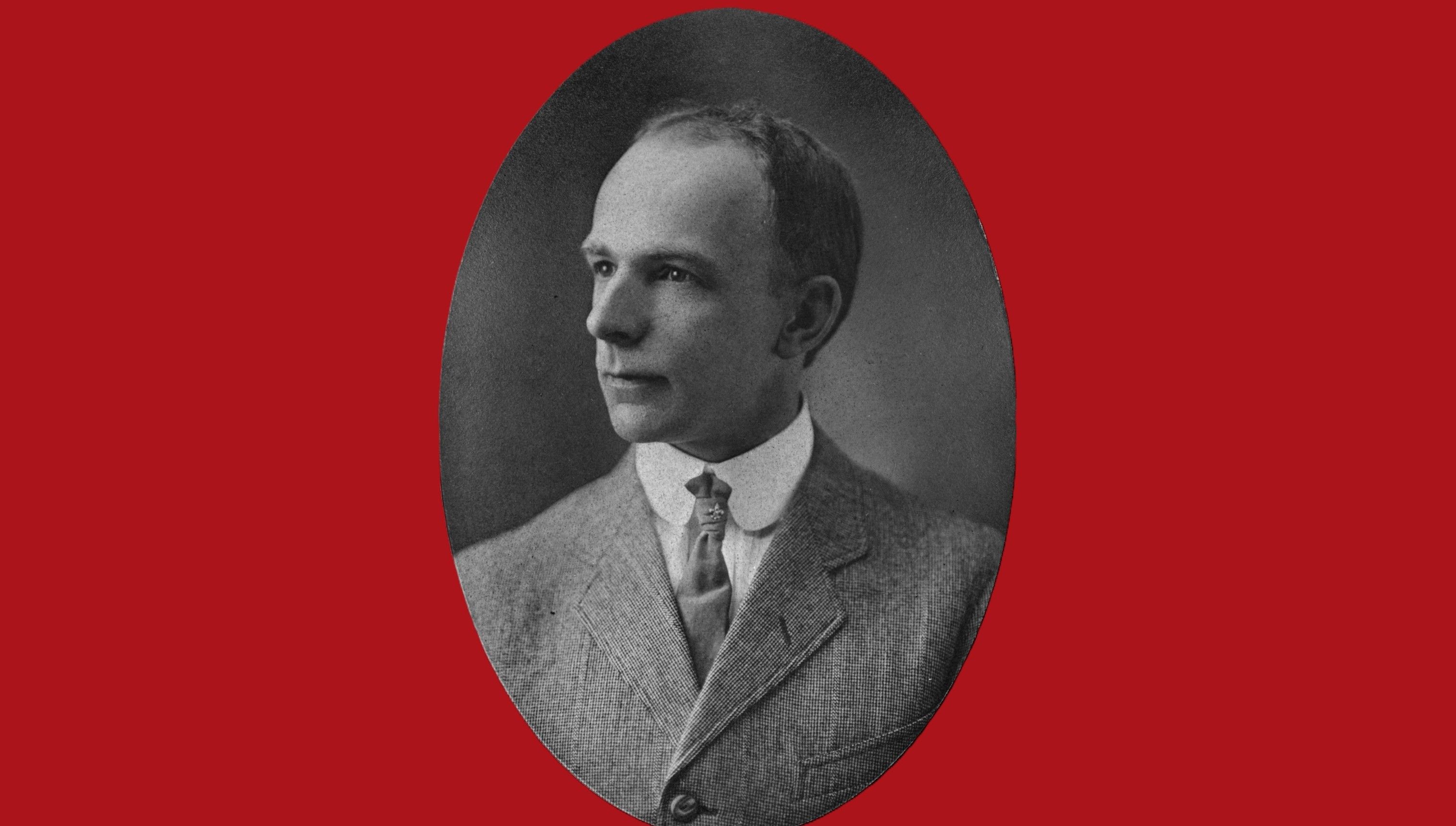
Just re-affirmed by the Comintern, Ruthenberg reports for the leadership majority at Party leadership meeting following the E.C.C.I. Plenum held in Moscow during April and May, 1926 deliberated on ‘the American question.’ From its inception through the 1920s, deeply ideological factional disputes were fought out over practically over a Labor Party and union work, but contained such profound issues such as class independence, ‘American exceptionalism,’ relations to farmers, the role of the Communist Party in a backward political climate, ‘stages’ of development, the ‘labor aristocracy,’ the power of U.S. imperialism, and the consequences of an expanding empire. In 1924 C.E. Ruthenberg was Executive Secretary of the Party, but in the minority, with the Central Executive Committee of 13 members being controlled by the Chicago-based majority of 7. The majority C.E.C. were William Z. Foster, Alexander Bittelman, Earl Browder, Fahle Burman, James P. Cannon, William F. Dunne, and Martin Abern; the minority were J. Louis Engdahl, Benjamin Gitlow, Jay Lovestone, John Pepper, and Ruthenberg. Ludwig Lore voted with the majority. The Comintern would determine that the minority should be the majority and in 1925 the leadership shifted to the Ruthenberg group with a new 20-person C.C. and a majority of 10 from the former minority, 9 from the former majority and Comintern representative Segrei Gusev the 20th vote just to make sure. In many ways, the factional divisions within the Party were only accentuated, with the 1926 Comintern meeting Ruthenberg discusses meant to, again, mediate the divide.
‘The Tasks of the Party in the Light of the Comintern’ by C.E. Ruthenberg from Workers Monthly. Vol. 5 No. 9. July, 1926.
This article is a comprehensive summary of the report of the Political Committee given by Comrade C. E. Ruthenberg, general secretary of the Party, at the plenary session of the Central Committee of the Workers (Communist) Party. May 26, 27, 28, 1926.
I. THE INNER PARTY SITUATION.
THE theses of the Enlarged Committee of the Communist International point out that the role which the United States is essaying is that of the “saviour” of the world capitalist order.
This country has become the dominant imperialist capitalist power. It is with the aid of the loans and investments of the American capitalists that the partial and temporary stabilization of European capitalism has been achieved. Every European country looks to the United States for the loans and capital with which to avert financial crises and to rehabilitate its industry. American capitalism, through its loans and investments, through the debt settlement made by the government under the pressure of the great banking houses, which actually represented partial cancellation of the war debts, is trying to save European capitalism from the undermining forces which were let loose by the World War, and at the same time trying to save itself.
American imperialist domination is extending itself to all parts of the world. In Latin-America, in Asia, the power of the American capitalists, as wielded through loans and investments, is constantly increasing.
In considering the status of the capitalist order as a world system we can say that American capitalism is the most powerful force fighting against the proletarian revolution.
The Role of the Party.
This fact is emphasized by the Communist International in its resolution on the controversy within our Party. The role which American capitalism is playing in the struggle against the proletarian revolution, places a great responsibility on the Workers (Communist) Party.
It is our task to carry on the revolutionary struggle against this mighty capitalist power, to mobilize the workers against it, and finally to overthrow and destroy it.
It is in the light of this task and this responsibility that we must consider the decision of the Communist International in regard to the controversy and factional struggle which has been going on in our Party for the past two years.
We are still a very weak Party, compared to the great task and responsibility which we must fulfill. We must work in a labor movement which, compared to that of Europe, is still very backward in the development of class consciousness. We must fight the mightiest capitalist foe which exists.
If, in addition to the great difficulty which we have to overcome in the objective condition in which we are working, we are unable to mobilize our full strength for the struggle because of our inner factional fighting, then indeed the outlook for us is dark.
Effect of the Past Factional Struggle.
We all know that the result of the factional struggle which has raged in the Party for two years now, has been a serious deterrent to the building of the Party influence among the working masses and to developing the organized strength of the Party. The greater part of our energy and strength was drawn into the factional fight in place of being directed against our capitalist enemy.
Comrade Zinoviev declared in his closing speech in the Enlarged Executive Committee of the Communist International, that if the factional struggle in our Party continues, there was great danger of the temporary disappearance of the organized Communist movement in the United States.
We all realize that our Party cannot stand further factional fighting. We must find a means of unifying the Party and directing its energies into constructive work among the masses.
The Decision of the Comintern.
The decision of the Communist International emphasizes over and over again that the factional struggle in our Party must come to an end. It lays down a basis for cooperation in the Party work of the comrades who have hitherto supported various groupings.
The division of work established by the Comintern decision is an unusual one so far as a Communist Party is concerned. To create within the Central Committee of the Party a sub-committee with a majority made up of comrades previously in opposition, was a step which only exceptional conditions could justify. The Comintern believed that these conditions existed in our Party and that such a step was necessary in order to create the condition for common work within the Party.
The present leadership of the Party will carry out this decision in letter and spirit.
Unifying the Party.
It has been the attitude of the comrades at present charged with responsibility for the leadership of the Party, from the beginning of their taking up this responsibility, that the factional alignment in the Party must be eliminated and the Party unified for common work. We have consistently followed the policy of achieving this goal The decision of the Communist International establishes the fact that substantial successes were achieved in this work, and endorses these efforts. Our policy in the future will be to carry on the work of the Party in such a manner that this work can be completed.
We must broaden the leadership of the Party and draw into it every comrade who can contribute to that leadership. We must try to draw into responsible Party work every comrade capable of carrying on such work without any discrimination based upon the previous factional alignment.
The Party tasks are so great that the services of every comrade who can contribute to the upbuilding of the Party are needed and should be used in the Party work.
Naturally, the greatest responsibility in carrying out the decision of the Communist International and carrying on the Party work in such a manner as to eliminate the factional struggle, rests upon the comrades entrusted with the majority in the Political Committee of the Party. We recognize that responsibility, and we will endeavor to direct the Party policy in such a way, and support such an inner Party line, as will create in the Party the conditions for the ending of the factional struggle. We will give the opportunity for full participation in the Party leadership to all the comrades irrespective of previous groupings.
At the same time we must, however, have the cooperation of the comrades who have previously been in opposition. They must work with us in banishing the factional atmosphere and creating the condition for cooperation and common work.
It cannot be expected that all of the bitterness and strife which has existed in the Party for so long a period can be banished over night. We will have difficulties to overcome. We will, however, approach the problem in the spirit of overcoming and eliminating the friction growing out of past conflicts, and if we cooperate in this spirit, we can quickly create in the Party a new atmosphere: that of unity and work.
The basis of such cooperation and the broadening of the leadership of the Party, is agreement on the line which the Party must follow. This line has been clearly established by our convention and in the decision of the Communist International.
On the basis of the policy accepted by the Party and in the spirit of the decision of the Communist International, our Party can go forward into a new period of united work and common struggle against our capitalist enemies and for the upbuilding of the revolutionary mass movement in the United States. The Plenum should mark such a new beginning in the Party life, the beginning of a period of achievement, of a forward movement by the Party.
ll. THE ECONOMIC SITUATION IN THE UNITED STATES.
IN order correctly to formulate our policies and tactics in relation to the present situation, we must take as the basis the economic situation and the prospects for the immediate future. Without such an estimate we cannot lay down the correct line for the Party. Capitalism in this country has been enjoying a period of economic prosperity. What are the indications so far as a continuation of this prosperity is concerned?
There are signs that we have reached the peak of the present period of high production and big profits for the capitalists, and that the trend from now on will be downward and not upward.
This does not mean an immediate period of economic crisis, but rather that the tendency is toward a period of depression such as we had, for instance, in the year 1924 and during part of 1925.
Capitalism in this country has had a number of ups and downs since the end of the war. The cycle of these changes has been in much shorter intervals than before the war. The period of great prosperity following the end of the war was succeeded by the deep-going crisis of 1921-22, which was accompanied by wide-spread unemployment, the open-shop drive and great industrial conflicts. Then in 1923, there was an upward movement bringing fairly good conditions for a period of something over a year. This was succeeded by the depression of 1924, which extended into the spring of 1925 This latter depression, however, was not of the deep-going character as the crisis of 1921. In 1925 industry again reached a high level.
Thus we see that during the years since the end of the war and since the exceptional prosperity of the immediate post-war period, American industry has gone through a quick succession of depressions and high levels of production. The present indications are that industry is again tending downward, and that within possibly a year we will have another period of depression.
Indications of this tendency are to be found, for instance, in steel production, which usually acts as tie barometer showing the direction in which industry is going. During 1925 steel production reached an unusually high level, passing above 100% of the theoretical level of capacity production. During the first four months of this year production of steel has fallen steadily and is now again below 90%. Advance orders placed in the steel mills have fallen from month to month for the past four months.
During the month of April we find that employment in manufacture as reported to the United States Department of Labor shows a falling off of 1%.
Reports of the building industry also indicate that the boom period of this industry which extended up to last year is over. New permits for building issued in 40 of the principle cities show a decline. The building industry for the past couple of years has been operating on the basis of production of six billion in new buildings each year. A large part of this activity was due to the fact that building in several lines was neglected during the war period and in the years immediately following the end of the war, because firstly, the building industry was mobilized to create new war industry, and secondly, because of the excessively high prices following after the close of the war. The shortage of houses and apartments seems now to have been made up, and the building industry is heading for a period of lower production.
Another factor in the situation is the agricultural crisis. The farmers are passing through a difficult period with debts and mortgages increasing, and the migration to the cities from the land is increasing again. When we remember that the farmers consume, in the form of agricultural implements and tools, more than 40% of the steel production in the United States, the effect of the agricultural crisis upon industry in general becomes clear.
Another factor in the situation is the difficulties which are developing in connection with the installment sales. The installment business has developed tremendously in recent years. It has been extended to lines of merchandise not previously sold on the installment plan. A part of the stimulation which industry has had in the last few years has been due to this tremendous development of selling on the installment plan. Warnings are being sounded in financial circles that the installment business is overdeveloped, that the discount houses which handle the notes of the installment business have reached the limits of their capacity to discount these notes. A curtailment of the ability of the firms selling goods on the installment plan to discount their notes will result in a curtailment of installment selling, with the natural consequences of curtailment in production in the industries producing goods sold on this basis.
The general estimate which we can draw from this analysis of the situation is that, while at present industry is still producing at a high rate and while it will probably continue to do so for some months, yet production is on the downward curve toward a depression which will make itself felt in a developed form possibly within the next twelve months. There are no signs that the depression will be a crisis such as we had in 1921-22, but rather a period of such slowing down of industry as in 1924.
Special Crises in Industry.
While industry generally has been enjoying a period of high production, certain portions of industry have not shared in this general prosperity, due to special conditions in the given industry.
This has been true of the coal mining industry where, due to over-development, the industry is in a state of crisis. In coal mining, we also have the phenomenoa of the industry drifting from the northern union fields to the southern non-union fields, which has accentuated the crisis.
There is also in the coal mining industry the additional factor of the great development of the use of electricity generated through water power.
The textile industry is facing a situation similar to that of the coal industry. The industry is moving from the north to the south and at the same time changes in style have resulted in reduced orders for the industry. The needle trades are in a state of crisis due to the factor of style, and the movement of the industry from the large centers to small towns.
It is in these industries, which have been going through crises or partial crises, that we have had the great struggles of the workers, and it is in these industries also that our Party has made its greatest gains.
The Workers’ Struggle.
The economic conditions outlined above have tended towards reawakening the spirit of struggle among the workers of this country. In the industries which have shared in the high level of economic well-being, there is a tendency for the workers to demand to share in this prosperity in the form of increased wages. Thus we have, for instance, a movement of the railroad workers for the higher wages, and the struggle of the 158,000 anthracite coal workers for higher wages and full recognition of their union (the anthracite coal regions are not deeply involved in the general crisis of the coal industry because of the special character of their product).
In those industries involved in special crises we have, on the other hand, the resistance of the workers against the attempt of the capitalists to make them bear the burden of the losses of the industry through lower wages, longer hours and worse working conditions.
With the present developing mood of the workers to demand a bigger share in the still existing prosperity, and with a depression in the offing, we may look forward to another period of sharper struggle between the workers and the capitalists. The coming of the depression will undoubtedly be the signal for attempts against the standards of the workers. It will result in resistance and wide-spread strikes.
Such a situation creates a favorable ground for the Party to take the leadership in the struggle of the workers and through fighting for their immediate demands extend its influence and strengthen itself.
III. THE POLITICAL SITUATION.
THE great victory which the capitalist reactionaries scored in the election of Coolidge in the 1924 presidential election has been followed by an aggressive use of the political power consolidated in the hands of the capitalists through this big victory.
President Coolidge has more frankly espoused the capitalist program than his predecessors. The law-making power of the government has been openly and continuously used to strengthen the position of the capitalists. The president’s message to congress for the first time acknowledged the partnership of the government with the great trusts and corporations. All appearance of fighting against mergers and trustification has been abandoned and the government sponsors trustified business.
Tax law revisions were made so as to relieve the big capitalists of the burden of taxes, and thus opened the way for greater accumulation of new capital.
The debt settlements with the war debtors have resulted in cancellation of from 20 to 75% of the debts owing this country. The partial concellations were made in the interest of the international banking houses and for the purpose of strengthening American and European capitalism.
At the same time the program of legislation directed against the workers is being put through congress. The adoption of the Watson-Parker bill, the proposal for the registration of foreign born workers, the proposal for legislation on the mining industry similar to the Watson-Parker bill, are the offensive programs of the capitalists against the workers.

With this open offensive of the capitalists in the use of the state power, signs of developing differences within the capitalist camp have made their appearance.
On two major issues, recently, there have been votes cutting across the party lines. This was true on the world court issue and in relation to the Haugen bill for relief of the farmers. In the vote on the world court we find expressing itself the opposition between that part of finance capital which is primarily interested in international loans and investment and which desires the entry of the United States into the world court and league of nations as a guarantee for its loans and investments, and capital which is primarily interested in industry and which sees no gain for itself in having this country become involved in the international collection agencies. In the second instance, the Haugen bill, we have the opposition of the middle class farmers against the predominant big capitalist interests which are ruling at Washington.
Another issue which will play a big part in the struggles within the capitalist class is the question of the tariff. The international banking houses with their loans and investments in Europe desire a lower tariff in order to create the condition which will enable their debtors to repay them, and the only possibility of their doing this is through selling in the United States. Hence, the tendency to favor the lower tariff in these circles Naturally this will be resisted by the industries which are profiting from the tariff. These economic conflicts become the basis for struggles with the capitalist parties and, together with the open use of the governmental! power by the capitalists against the workers, creates the condition for a new momentum in the development of the movement of the workers and exploited farmers for independent political action.
The Labor Movement.
The organized labor movement of this country has undoubtedly moved far towards the right, as is established in the analysis of the Enlarged Executive Committee of the Communist International. The approval given to the various forms of class collaboration such as labor banking, the B.&O. plan, the tendency to avoid strikes and to enter into agreement for all forms of arbitration, establish this fact clearly. At the same time we have the development of company unions, sham forms of industrial democracy, stock-selling and other schemes through which efforts are made to tie the workers to the capitalist machinery of production.
While the acceptance and approval of these schemes to prevent the workers from carrying on an open class struggle in their interest shows that the bureaucratic leaders of the labor movement have become the lackeys of the capitalists, at the same time we must not overlook the social significance of the fact of the movement by the capitalists to extend these sham forms of participation by the workers in the ownership and control of industry. We must ask ourselves why is it that the capitalists are making these tremendous efforts to extend these forms of class collaboration.
If we approach the question from a Marxian standpoint, we must come to the conclusion that the highly developed collective, monopolized industry in the United States necessarily will give birth to a demand among the workers for greater participation in the control of this industry. Fundamentally it is the development of such a yet unconscious and unclear desire on the part of the workers for greater participation in the control of industry which the capitalists are meeting through the sham forms which have had such a great development recently.
It is the task of our Party in such a situation to develop a clear program for actual control of industry by the workers and set this against the sham forms offered by the capitalists. Such a program would be the best method of fighting against the class collaboration schemes of the capitalists.
There is also the likelihood that this question will result in division within the labor bureaucracy itself, between those who fully accept and support the capitalist program as now developing and those leaders in the trade unions who oppose the making of the union an auxiliary of the capitalist machinery of production.
IV. THE WORK OF THE PARTY.
What are the tasks of the Party in the light of this situation, They are not new. They have already been laid down in our statement of Party policy. What is new is that we must take up the tasks with greater energy than ever before in order to take full advantage of the favorable situation which is developing for our work.
Work in the Trade Unions.
The work in the trade unions remains the major task of the Party. We must win the organized workers for the revolutionary class struggle. To do that we must establish our contacts on the basis of the existing development of class consciousness in the labor movement. Then, from that starting point, build up a left wing movement which we can, in the process of work and struggle, draw closer to us. We have outlined our program for this work. We have based it upon the realities of the present situation. Now we must transform it into action. It still remains part of the duty of the Party to draw its members into the trade unions where they are not already organized in the unions, and then to organize them into fractions, which can systematically apply the Party policies and aid in the crystallization of broad left wing movements in the trade unions.
Organization of the Unorganized.
The period of prosperity is a period in which the work of organizing the unorganized can be undertaken with prospects of success. The indications are that there still stretch before us some months before the economic depression will set in to such a degree as to interfere with this work. We must make the most of the opportunity which we have in this respect. We have gained some experiences as the result of our work in the past six months and this must be turned into account in carrying forward this work. The organization of the unorganized is part of our program for the winning of the organized labor movement for the revolutionary class struggle. The workers brought into the trade unions through our organizational efforts, both in stimulating the existing unions and through direct independent effort, will strengthen the left wing in the labor union The United Labor Ticket.
The campaign for a united labor ticket must be given major attention by the Party. The congressional and state elections this year will stir up new interest in political affairs among the workers. The open action of the Coolidge administration against the labor movement has created the foundation for a new momentum for the movement for a labor party.
Our Party must see to it that this year there are labor candidates on the ballot in every state and congressional district where we have Party organizations. We have not set hard and fast rules as to how the labor ticket shall be placed on the ballot. We will support existing farmer-labor parties, where they have been organized. We will endeavor to create united front conferences to nominate united labor tickets where the ground is sufficiently prepared and the conditions ripe for the nomination of a ticket on this basis. If we cannot achieve either one of these forms of developing a united front movement in the election campaign, we will nominate candidates on our own Party ticket and conduct a campaign directly under the Communist banner.
It should be possible for us to rally several hundred thousand votes for independent political action through this campaign. That will be a forward movement for labor in the United States. If we throw sufficient energy into this work, we may be able to drive this expression for independent political action up to a half million votes. That is within the realms of possibility. Such a vote for united labor candidates would be a big step forward for the labor movement in this country. We must put sufficient drive into the movement to make the election campaign this year count in the development of a class movement for independent political action among the American workers.
Agricultural Work.
We have again made a beginning in our work among the farmers. The crisis in the agricultural field creates favorable conditions for the progress of this work. As the Party strength increases, it must give more support to the development of the movement among the farmers. It must establish its nuclei among the agricultural workers and poor farmers, and make them the starting point for a broader mass movement against capitalism on the part of the farmers.
The DAILY WORKER.
We have considered fundamentally the situation in which The DAILY WORKER finds itself. We have carefully scrutinized our paper with a view of finding its weaknesses and developing the form that will enable it to become a mass labor paper, while not sacrificing its Communist editorial policy. The improvements must be carried through and the Party must be placed behind The DAILY WORKER organizationally so that we may make it a more powerful instrument in our work in this country.
The anti-imperialist campaign, the work among women, the work of the Young Workers’ League, the work among the Negroes, are phases of our work which must be coordinated with the major policies of the Party and aid us in developing a real movement for this country.
Building the Party.
We have not, also, given sufficient attention in the past to the strengthening of our Party organizationally. This becomes more than ever a question which must have systematic and persistent following up since the Party reorganization. Our Party, organizationally, is still very weak. We must teach the new Party units how to function. Until we do this, the reorganization will not be fully effective.
A number of thousands of Party members have dropped out of the organization through failing to register in the reorganization. There has been too much of a tendency to accept this without an energetic campaign to draw these members back into the reorganized Party. Many of them can be won back for the Party work. This work must be undertaken immediately.
In addition to these efforts to strengthen the Party, we must carry on an energetic campaign for new members to be drawn into the Party organization from the shop by the new Party units. We can greatly strengthen our organization and thus fit it for undertaking greater tasks in the work if given the proper attention. We must take full advantage of the extension of the influence and prestige of the Party to build the Party organizationally.
New Progress for the Party.
Our Party is breaking the isolation in which it has found itself now for nearly two years. The Party has for the first time actually undertaken the organization of the unorganized workers and has achieved successes in this field. The Party has become the leader in great strikes of the workers.
In the campaign for the protection of the foreign born workers, the Party has successfully applied the united front tactics and has drawn hundreds of thousands of workers with it into common struggle.
The opportunity which lies before us is favorable for the growth of the influence of our Party as the leader of the labor movement and for building the Party organizationally. What is now needed is that we throw our full energy into the work of taking advantage of the favorable conditions which are developing.
This requires of us the liquidation of the factional struggle within the Party. It requires of us that all the forces within the Party, irrespective of previous groupings, be drawn into constructive work for our movement.
This is the goal towards which all our efforts must be directed. The present leadership of the Party, taking the decision of the Communist International as its basis, will carry on the work of the Party in this, spirit, and with the cooperation of all the leading comrades, irrespective of previous groupings, will develop such an inner Party line as to carry forward to a successful conclusion the work of mobilizing the whole Party strength for mass work and liquidation of factionalism.
“Unity and Mass Work” is the slogan under which our Party will go forward.
The Workers Monthly began publishing in 1924 as a merger of the ‘Liberator’, the Trade Union Educational League magazine ‘Labor Herald’, and Friends of Soviet Russia’s monthly ‘Soviet Russia Pictorial’ as an explicitly Party publication. In 1927 Workers Monthly ceased and the Communist Party began publishing The Communist as its theoretical magazine. Editors included Earl Browder and Max Bedacht as the magazine continued the Liberator’s use of graphics and art.
PDF of full issue: https://www.marxists.org/history/usa/culture/pubs/wm/1926/v5n09-jul-1926-1B-FT-80-WM.pdf
 Revolution's Newsstand