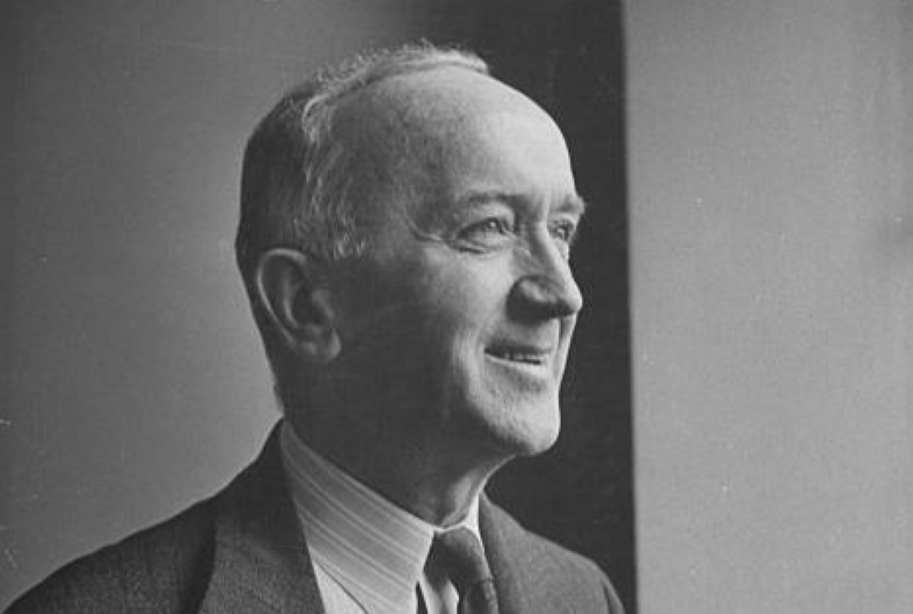
A very useful summary of Foster’s labor outlook in the mid-1920s. Now in the minority of the U.S. Party, Foster speaks to the Sixth E.C.C.I. Plenum in March, 1926 responding to Lozovsky’s admonitions of ‘ultra-left’ practices by the T.U.E.L.
‘On Our Trade Union Policy’ by William Z. Foster from International Press Correspondence. Vol. 6 No. 22. March 25, 1926.
Comrade Dorsey (America):
Comrades, Comrade Lozovsky, in his report, dealt at considerable length with the attempt to Americanise the Trade Unions of Europe, I shall deal to some extent with these tendencies which are classed under the head generally in his Report of the New Americanising with the manifestation of these tendencies in America.
American Imperialism is now on the upward swing. One of its necessities is a steady, uninterrupted and efficient productivity at home. In order to procure this the employers are developing a series of new movements, with the assistance of the bureaucracy of the Trade Unions. This is taking the form of an intensified and elaborated class collaboration.
There are four principal phases of this:
The first is in the industries. For example, the Company Union Movement. Previously it was the policy of the employers to crush every semblance of organisation among the workers.
That policy is being changed. The employers are coming to the conclusion that some form of organisation is necessary in order to secure a greater degree of control over the workers. These company unions are quite American in character. The employers carry out elections in their plants and build committees out of the various departments. These committees carry into effect the policy of the employers. Statistics are hard to find, but probably two million workers are organised in the Company Unions. Nearly all the big industrial corporations have them. Side by side with this there is also developing among the Trade Union bureaucracy a movement for the B & O Plan of unionism. Briefly, the B & O plan is an expression in principle of the idea of company unionism. It is based on the idea of increasing the efficiency of the workers in the plant. This movement has been supported by the American Federation of Labour and its programme is fast becoming the programme of the American Labour movement as a whole.
The tendency that is developing in America is for the Company Union movement and the B & O plan to merge into a new form of organisation somewhere between the two. The two movements are of course highly detrimental to the trade union movement proper. They check the revolutionary spirit and stand in the way or real struggles in the industries. One of our big problems is now to combat this new movement. As against the B & O plan unions we must fight against the bureaucracy for organisation of the unorganised and for the consolidation of the unions and fill them with a revolutionary spirit. As against the Company Unions, we must penetrate these unions where they have a mass character and utilise the committees in the shops as a means of agitation against the employers.
One of the greatest problems we have in America is the problem of organising the unorganised masses and one means to solve this, is by penetreting the company unions and issuing the slogan of destroying the Company Unions and setting up workers unions in their place. Experience has shown that we can use these company unions in the struggle against the bosses.
The second phase of the new and intensified class collaboration is in the realm of Finance expressed by labour banks and the whole system of trade union capitalism. In America a large number of workers are able to save a portion of their wages. The employers about 15 years ago recognised the importance of these savings and started savings banks and also sold stocks to the workers. Recently the trade union bureaucracy has begun gathering these funds and using them for their own benefit. The result has been the appearance of trade union banks and trade union capitalism in general. In these banks of which there are 40, there are already deposited 200 million dollars. Another feature of these capitalist ventures is the founding of insurance societies, coal mines, etc.
These undertakings are not of a co-operative character. The majority of the stock is in the hands of a clique of bureaucrats at the head of the trade unions. By means of these organisations they become financially independent of and estranged from the control of the rank and file. This trade union capitalism bas a very destructive effect on the trade unions. It diverts them from the struggle and kills their militant spirit. In this respect, in addition to our general campaign for the revival of the unions, we must have a special programme to combat this trade union capitalism. We must fight against the establishment of any more of these institutions upon a capitalist basis. We must try to separate them from the trade unions and we must turn these labour banks, etc. into workers’ co-operatives. We can go a step further and develop a movement that will direct the American workers into placing their surplus funds in the industries in Soviet Russia.
Now we have a third phase of the new orientation in the inner political situation, particularly with regard to the organisation of a new political party. The policy of Gompers was that of complete surrender of the workers to the capitalist parties. The workers are realising the need for a political organisation of their own and are repudiating Gompers’ old doctrine and demanding a political party of their own. The middle group in the trade unions the so-called progressive section of the bureaucracy is coming forward to divert the workers from the movement for a new political party into new forms of class collaboration with the old political parties and the capitalist class by the conversion of this movement for a Labour Party into a petty bourgeois third party and to various modifications of the old Gompers’ policy.
We have a fourth manifestation of the new orientation. This is the system of trade union imperialism that is developing in the United States of America. The American labour bureaucracy is committed one hundred percent to the imperialist programme of the American capitalists. One of the principal goals of American imperialism is absolutely to dominate the whole of the American continent; and in this it receives the entire support of the bureaucracy of the A.F. of L. In Latin America, the bureaucracy, by means of the Pan-American Federation of Labour, is working consciously on behalf of American imperialism. The entire programme of imperialism receives the support of the A.F. of L. The bureaucracy displays more hatred against Soviet Russia even than do the American capitalists themselves. Against this militant imperialism of the American labour bureaucracy, our Party has to make a struggle. Against the Pan-American Federation of Labour we have organised an anti-imperialist league and are carrying out a campaign against American imperialism throughout Latin America.
These four phases I have mentioned, constitute developments that must have the first attention of our Party. We cannot consider them as isolated movements, but as one tendency towards intensified class collaboration with the employers. Despite this new orientation there exists the basis of a considerable movement against the employers and the bureaucracy. There seems to be a vague feeling prevalent that the American workers are living in prosperity. But comrades, this is not the real situation. It is true the American workers have a higher real wage than the workers in other countries. But this is not so high as is commonly believed. The average wage is about wages are slowly on the decline. Real wages are 5% lower for unskilled and semi-skilled workers and the tendency is also downward. A recently published book has shown that real wages are slowly on the decline. Real wages are 5% lower for the workers as a whole now than they were 25 years ago. Comrades, this is a very important fact. It must have one result and that is, to create a widespread discontent among the workers. And where there is discontent among the workers there is a basis for the left wing movement.
In addition to this factor we have a series of sectional crises in industries which offer a favourable opportunity for work. The coal industry is being transferred from those sections of the coal fields where the workers are organised in the unions to those where they are not organised. This is producing tremendous unrest through mass unemployment, reduction of wages, etc. This forms a basis for a movement against the bureaucracy and the employers in this industry. We have a somewhat similar situation in the textile industry. The industry is moving from the North to the South. In the clothing industry the work was formerly located in the big cities. The clothing workers became the best organised and most revolutionary of any section in the American movement. The employers are moving this industry from the big cities to the smaller towns to escape union conditions, and the result has been to produce a crisis among the workers and to lay the basis for a strong left wing movement.
In order to take advantage of this situation and of such opportunities as do exist, we must as one of the first tasks of the Party, organise the left wing in the trade unions. We must build the T.U.E.L. In order to do this we must concentrate our struggle round such issues as wage reductions; we must take the lead in the struggle for increase of wages. We must carry out a campaign to organise the unorganised. The importance of this cannot be exaggerated. This is the thing we must concentrate our attention upon in every industry. As part of this campaign we must lay down a programme for utilising the company unions, as starting points for movements against the employers.
Another important plank in our programme is clearing out the corrupt bureaucracy. In this connection we must raise the slogan of the democratisation of the unions. The Labour Party must of course occupy a position in our programme, as well as the slogan of amalgamation. Upon this basis we must build up a broad left wing. We must make united front movements against the Right Wing bureaucracy with those oppositional elements which cannot be united in one organisation with the broad Left Wing.
A few points about some failures in our trade union policy. The greatest danger comes from the ultra-Left tendencies, and it is in that direction that we must turn our efforts to straighten out our policies. One of the ultra-Left weaknesses is the tendency to ignore the whole programme of building up a Left Wing in the trade unions and to use the Party machinery directly. Our principal instrument must be the broad Left Wing organisation in the unions. We failed in the anthracite strike to do this and so injured our work. The Party must realise that the Left Wing in the trade unions is not a rival organisation, but an instrument to do the Party work.
A wrong tendency is to bring the Trade Union Educational League too close to the Party. We must realise that the League has to be a separate organisation and proceed in that sense.
Another weakness, which is also a manifestation of ultra- Leftism, is wrong applications of the united front policy. The most striking example of this was the split at the Farmer Labour Party Convention in 1923 a split which might have been avoided. And worse than this, we find a justification for this split constantly made throughout the Party. The failure in this case was not analysed and recognised as a mistake, but was justified and it forms the basis of a further mistake of a like character.
Ultra-Leftist tendencies developed in case of the reinstatement of Howat in the United Miners’ Union of America. Seventy percent at least of the membership were behind Howat and in favour of his reinstatement and supported our big campaign. Things came to a climax in the Convention of the Miners Union in the winter of 1923. Our Party failed to realise the political significance of the struggle around Howat. At the very critical moment it came forward with a programme of political demands which were utterly incapable of being adopted or even being considered by the convention which would have the effect of diverting the attention of the delegates away from the Howat issue and to sabotage our fight for Howat. The Howat case fight in this convention was a classical example of how not to build up a Left Wing.
Another ultra-Left tendency is the underestimation of the struggle for organisational control of the unions. We had examples of this in the Illinois Miners’ Union and in the convention of the Garment Workers of Philadelphia. Some comrades only want to talk to the unions not to fight for their control. This tendency is being constantly manifested.
Another wrong tendency is that towards dual unions. This we must fight. It is growing in all corners of the Party now. This tendency towards dual unionism is no surface proposition. It has its roots in thirty years of dual unionism in America. We must turn attention to the elimination of this ultra-Leftist tendency.
Another feature of our general weakness in the unions is the tendency to neglect everyday work in the trade unions. This is a bad tendency. It militates directly against our influence among the workers. There is a tendency to look down on the comrades who do practical work for the unions and to concentrate upon simple theorising about broad political problems. Comrades, this must be corrected. It would be a fatal mistake to neglect the basic work in the trade unions of carrying on the everyday activities of these organisations.
In conclusion I want to say, that perhaps the basic manifestation of the ultra-Left tendency in our Party is the general underestimation of trade unions manifested by wholesale refusal to join the unions. Only 32% of our members are in trade unions. Why is not this figure doubled? The excuse put forward by some that there are no unions for them to join will not hold water. In fact comrades have definitely refused to enter the unions. The reason is to be found in ultra-Leftism.
A concluding word. We have before us a decision of the Comintern on the American question. Everybody in the Party looks forward to this decision. The important thing as to the decision is that it must give us a clear political decision. The worst thing that could happen would be a glossing over by this decision of our political issues. The decision must point out the mistakes we have made, especially in trade union work. And the principal mistakes we have made are ultra-Left mistakes.
International Press Correspondence, widely known as”Inprecorr” was published by the Executive Committee of the Communist International (ECCI) regularly in German and English, occasionally in many other languages, beginning in 1921 and lasting in English until 1938. Inprecorr’s role was to supply translated articles to the English-speaking press of the International from the Comintern’s different sections, as well as news and statements from the ECCI. Many ‘Daily Worker’ and ‘Communist’ articles originated in Inprecorr, and it also published articles by American comrades for use in other countries. It was published at least weekly, and often thrice weekly.
PDF of full issue: https://www.marxists.org/history/international/comintern/inprecor/1926/v06n22-mar-25-1926-inprecor.pdf
 Revolution's Newsstand