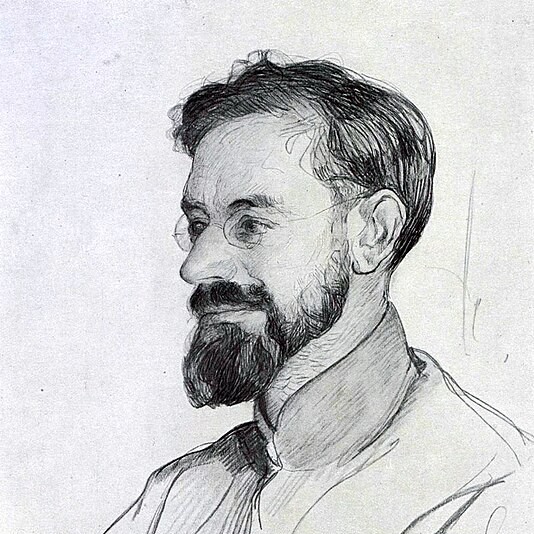
A valuable report from Kabatchieff on the situation in Bulgaria and the work of the 40,000 Communists there, one of the largest parties in of the time in the Comintern, for the Fourth World Congress in 1922.
‘The Situation in Bulgaria and the Bulgarian Communist Party’ by Christo Kabaktchieff from International Press Correspondence. Vol. 2 No. 98. November 13, 1922.
I. The Economic Break-down and the Crisis.
Bulgaria has not yet recovered from the economic break- down and crisis in which it has been involved by the wars from 1912 till 1918, and there is no prospect whatever of its recovering so long as the conditions of the peace treaty of Nuit obtain, and Bulgaria bears the colossal burden of reparation payments on its shoulders.
The losses in which the war involved our country have been enormous, the whole land is a scene of ruin: Almost all male inhabitants between the ages of 20 to 50 were mobilized and lost to productive work; two hundred thousand fell at the front. Two hundred thousand more returned as invalids. Industry, weak in itself, has been completely paralyzed, while handicrafts and agriculture have shrunk beyond comparison with pre-war years.
During the first years following the war, trade and industry were somewhat livelier, but this activity was insufficient and temporary. The economic crisis which broke out all over the world in the middle of 1920 has also been much felt in our country. Foreign industrial products have found their way into our home markets and into the markets of our neighbouring countries (as Constantinople, etc.), where we have been accustomed to selling our goods. As a result, the industrial undertakings which were just recovering, began to shut down, and vast unemployment ensued.
Since the autumn of 1921 fresh activity has however been noticeable in the development of industry and handicrafts. The capital which had been accumulated by the bourgeoisie during the war, and which has hitherto been chiefly employed in trading and speculation with the main articles of daily use, is now being used more and more in industrial undertakings. This development however, proceeds very gradually; the depreciation of Bulgarian currency is so great (the leva at the present time is only worth 3 Swiss centimes), the existing machinery is so worn out, and materials are so scarce and so high in price, that much capital is required to restore industry. With this object in view the bourgeoisie has taken to founding joint stock companies, into which 1,500 millions of leva have already been paid, 300 millions of which are foreign capital (chiefly French, Italian, English, Belgian, and German). Of this capital however, three quarters are invested in wholesale trade and in banks, and only one quarter in industry.
Despite the apparent activity, industrial undertakings are employing fewer workmen than before the war. Even though other statistical data may be lacking, this fact alone proves that our industry, never particularly strong, has not yet recovered. Handicrafts and agriculture are in similar plight; artisans suffer from lack of credit and raw materials, arising from the enormous rise in prices of raw materials. Despite the increased prices paid for agricultural products, small farmers are not in a position to restock farms totally devastated by the war; they do not possess the enormous sums required. Besides, they are still very heavily taxed.
Our foreign trade shows constantly increasing adverse balance: In 1919, the import exceeded the export by 411 million leva in 1920 by 570 millions, in 1921 by 870 million leva.
II. The Financial Bankruptcy.
During the war Bulgaria’s debts increased from 700 million leva to 30 billions, to which the reparation demands of 70 billions leva must be added, making a total national debt of over 100 billion leva. The state budgets show ever-increasing deficits, amounting in the course of the last three years to a sum of over 4 billion leva. Taxation has assumed colossal dimensions, rising from 150 millions–in round numbers–to 3,000 millions. The banknotes in circulation have been increased from 226 to 3,615 million leva, and at the same time the gold reserve has shrunk from 55 to 38 million leva, and the silver reserve from 28 to 20 millions.
This was Bulgaria’s financial position before it began to pay the reparation demands. Up to the present approximately 1 billion leva has been paid in commodities (coal, cattle, etc.), and for the maintenance of the reparations commission, but nothing has as yet been paid on the basic reparation debt. The Entente intends to grant a three years moratorium under conditions transforming the country in every respect, economically, financially, and politically, into a colony of the imperialist states of the Entente. From 1924 onwards Bulgaria is to pay more than 4 billion leva yearly on the reparations debt (at the present rate of exchange), this being a sum comprising the whole income and the whole budget of the state. In order to be able to pay the reparations debt, and at the same time to meet its daily expenses, the state would have to employ the whole yearly national income of the country. The hopeless and catastrophic position of Bulgaria’s state finances may thus plainly be seen. And this is the reason why Bulgaria is unable to undertake any social reforms for alleviating the misery of the broad masses of the people. It is not even possible to maintain or improve the means of transportation and traffic, as the state cannot pay the officials their wages.
III. The Rising Prices and the Misery of the Masses.
The price index for the most important necessities of life shows these to cost thirty five times as much as in 1914. Although Bulgaria is an agrarian country, the prices of agricultural products rise in the same measure as those for industrial products. During this same period, the worker’s wages have only risen eleven times, officials’ salaries only five times. This is equivalent to an actual reduction of wages–in the case of the worker to 1/3, in the case of the officials to 1/6 of the 1914 wage.
In the same manner the income of the half-proletarian peasant farmers has been reduced; these farmers possess 1 to 10 acres of land, and form the main part of the peasant population (548,000 of 705,000 land owners). These half-proletarian farmers only produce as much as they require for themselves, and the majority of them are forced to hire out in the town or country at certain seasons of the year. They are all obliged to buy what they require at the markets, and suffer under the high prices. Misery and want thus increase from day to day in town and country alike, enhanced by growing taxation and the depreciation of the Bulgarian leva.
The working class and small owners have experienced no improvement of their situation since the war; on the contrary, their position becomes more and more wretched. The bourgeoisie shifts the whole burden of the economic and financial crisis on to the shoulders of the proletariat and the small owners, by means of increased taxation and growing exploitation of production. (Reduction of actual wages, longer working hours, etc.)
This is the cause of the awakening and intensification of the class war in Bulgaria within the last three years. For three months Bulgaria has been overwhelmed by a tremendous strike wave, the only weapon of resistance against the capitalist offensive. This strike wave is carrying ever-widening classes of workers along with it, and has even reached the officials.
IV. The Bourgeois Parties and the Agrarian Government.
The old bourgeois parties, representatives of the industrial, commercial, and financial bourgeoisie, were forced to submit to the power of the present agrarian government after the war, their nationalistic policy having failed miserably, through the defeats in the years 1913 to 1918. The agrarian government originated with the farmers’ union, a party whose members are mostly small farmers, but in which the new village bourgeoisie plays the leading role. This new village bourgeoisie consists of middle and large farmers who have become rich during the war. The bourgeoisie, encouraged by the renewed activity of industry, and by the reaction in neighbouring states, is striving to regain power. This striving is the more energetic as the agrarian government has not succeeded in suppressing the Communist Party, despite the terror which it has exercised, especially during its first years of government.
In order to enable the bourgeoisie to shift the full burden of the reparations exclusively on the people, and to exploit the working class to the uttermost, the first task is the annihilation of the “red danger”, which in Bulgaria is indeed an immediate danger to the bourgeoisie. On the other hand, the agrarian government rather supports the interests of the farming bourgeoisie, thus causing a growing antagonism with the city bourgeoisie. The bourgeois parties have organized an energetic and extensive campaign for the seizure of power. But their political credit being but slight among the masses of the people, they are seeking support among the newly organized white bands of active and reserve officers, and among certain youthful elements of the bourgeoisie, provided with weapons by the bourgeoisie.
The bourgeois parties have approached Wrangel’s generals with a view of obtaining the aid of the counter-revolutionary troops for the purpose of seizing the state power by force. The immediate aim of this counter-revolutionary effort is the fall of the present agrarian government, to be followed by the most ruthless and cruel measures against the Communist Party.
The first attempt of the bourgeois parties–who had united themselves in the so-called constitutional block–to carry out their attack on the government, was frustrated in May of this year, mainly through the mass movement organized by the Communist Party. The Communist Party succeeded in discovering the conspiracy before it was too late, and in bringing it to public notice through the medium of the press. The bourgeois block now renewing its efforts to seize governmental power.
Despite the defeat suffered by the bourgeois block on Sept. 17th of this year in Pirnovo, where the leaders were arrested, the block continues to conspire and to make preparations. Its hopes of success are based on the fact that large numbers of officers belonging to the army which Bulgaria mitted to maintain, and members of the police and gendarmerie are followers of the old bourgeois parties. On the other hand the agrarian government is weakened by internal strife, one part of the village bourgeoisie striving for union with the old bourgeois parties, while another part continues to pursue the demagogic policy by which they hope to maintain their influence among the farmers, and are thus obliged to combat the bourgeois reaction now raising its head. These internal conflicts weaken the position of the bourgeois government. The pressure of the masses forces the government to combat the bourgeois block, but the village bourgeoisie–and this comprises the leaders of the Farmers’ Union in the villages, in parliament, and in ministerial councils drives the government into agreements with the city bourgeoisie, for the purpose of conducting a common campaign against the Communist Party.
V. The Communist Party.
The Communist Party is fighting independently against the bourgeois block and against the agrarian government. It maintains its independence, and carries on its fight against the bourgeois block parallel with the fight carried on by the agrarian government, forced into the conflict by the pressure of the masses, and obliged to fight the block in order to keep its own power. The widely spread general fight carried on by the masses from the cities and villages, organized by the Communist Party, and independently conducted with the greatest success against the bourgeois block and against the rising reaction, forces the agrarian government to face two alternatives: either to turn to the left under the pressure of the working masses of the cities and especially of the villages (who are organized in the Farmers’ Union, but who recognize our slogans against war, for the reduction of taxation, for the disarmament of the white organizations, for the sentencing of past ministers, etc.) and thus to support the struggle and the position of the Communist Party against the bourgeois block, or to turn to the right, to betray the masses once more,–tactics sure to result in losing the adherence of the masses, especially of the small farmers.
This is already happening. The ambiguous, inconsequent and vacillating policy of the agrarian government increases the movement of the peasant masses to the Communist Party. The large district meetings and demonstrations arranged by the Communist Party in the last two months, as well as the elections of village magistrates held on 1. October, have again been the means of uniting fresh tens of thousands of half-proletarian and small farmers under our banner. The number of our electors was here increased not only at the expense of the bourgeois parties, but also at the expense of the Farmers’ Union.
The Communist Party has courageously formulated the demands for the disarmament of Wrangel’s troops and of the bourgeois white guard organizations, and for arming the workers and small owners among the farmers. The preparations being made in both camps–in that of the bourgeoisie and of the Communist Party–for the approaching civil war, increase daily in intensity.
The first attempt of the bourgeoisie to organize attacks and pogroms against Communist homes took the form of a surprise attack on our People’s House in Sofia (24th of May 1921), and was successful. The Party, however, immediately set the masses into action, and an armed defence of the Communist Clubs and Communist organization was organized pogroms were thus frustrated. During the last few months the attacks of the bourgeoisie were renewed. Their Fascisti followers attacked the Communist meetings and manifestations in Dubnitza, Trovna, Gabrovo, etc. But all attacks were successfully beaten back, though at the cost of bloody conflicts in which many comrades fell. The losses of the bourgeoisie were considerably greater however.
On the 15th of October 1922 a division of troops, under the command of officers belonging to the block, surprised a Communist meeting in Kissendiel, killing three workers and wounding ten by a volley from their rifles. The reply of the Party to this attack has been energetic preparation for an armed struggle on the part of the working class. The offensive of the bourgeois reaction is directed in the main against the Communist Party, and therefore the Party calls upon the working masses in town and country to depend on their own efforts only, and to take up the fight against bourgeois reaction supported only by their own solidarity, arms, and class consciousness. The Communist Party emphasizes at the same time the burning demands of the moment–especially the demand that there be no war with Turkey, the demand for the union of the Balkan states and for a Soviet Republic for the Balkans, the demands against reparations and taxes, for higher wages, etc.
The Bulgarian Communist Party numbers 40,000 members, brings 220,000 voters to the polls, has 40 representatives in Parliament (out of a total of 216), and holds several city municipalities and several hundred village communities. At every election the number of Communist voters increases (in the election before the last the Party lost several majorities, although the actual number of voters had increased, a result arising from the action of the bourgeois parties, who joined with the farmers’ union and the social patriots to form a block against the Communist Party). The organ of the Party, the Workers’ Paper appears in an edition of 25,000 copies, the farmers’ organ in 10,000. Since 1919 the Party has published 1,500,000 Communist pamphlets in the original and in translations, and has used these for purposes of agitation. The People’s House in Sofia, burnt down by the members of the white guard, has been rebuilt by the efforts of the General Workers Guild “Oswobojdenie”, an association numbering over 100,000 members, who have erected a new building, much larger than the first, and one of the most beautiful and largest edifices in the capital.
The defeat of the Greek national bourgeoisie, and of English imperialism, the crisis in Greece, the forward march of the Kemalist troops on Constantinople, these are all events which considerably alter the position of Bulgaria, and render the crisis in the Balkans more and more acute. New perspectives are opened for the revolutionary movement of the workers and peasantry in the Balkans. The Communist Balkan Federation is working towards coordinating the fight in the Balkans and towards the acceleration of the victory of the proletarian revolution in the Balkans. The Communist Party in Jugoslavia and Roumania is gradually recovering from the severe defeat which it has suffered at the hands of the bourgeoisie. The Greek Communist Party is gaining more and more influence, and is the sole party in Greece able to offer any hope of salvation to the bleeding and desperate masses of the people, victims of the criminal policy of the Greek bourgeoisie. At the same time, not only the Bulgarian Communist Party is growing and becoming stronger and more united, but also the fraternal parties of the neighbouring Balkan countries.
We hope that the proletarian masses of the Balkan lands will be fully prepared to face the difficult but glorious tasks which history is likely to confront them with in the near future.
International Press Correspondence, widely known as”Inprecorr” was published by the Executive Committee of the Communist International (ECCI) regularly in German and English, occasionally in many other languages, beginning in 1921 and lasting in English until 1938. Inprecorr’s role was to supply translated articles to the English-speaking press of the International from the Comintern’s different sections, as well as news and statements from the ECCI. Many ‘Daily Worker’ and ‘Communist’ articles originated in Inprecorr, and it also published articles by American comrades for use in other countries. It was published at least weekly, and often thrice weekly.
PDF of full issue: https://www.marxists.org/history/international/comintern/inprecor/1922/v02n098-nov-13-1922-Inprecor.pdf
 Revolution's Newsstand