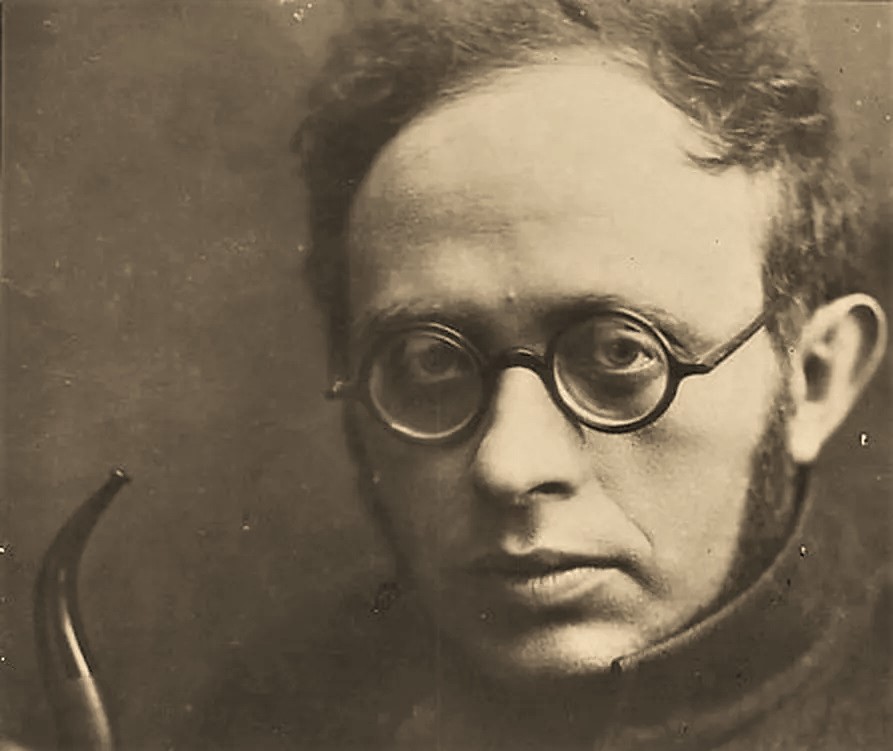
Radek reports to the Third Enlarged Plenum of the E.C.C.I. in June 1923, with a main focus of debate the crisis in Germany that would end in the failed ‘German October’ of that year. Along with Radek’s speech, the intervention of Czecho-Slovakia’s Alois Neurath on the danger of the left taking on nationalist talking points over the French occupation of the Ruhr sparked debate. Other speakers in the discussion, including about their own countries, were M.N. Roy from India, Paul Böttcher and Edwin Hörnle from Germany; T.A. Jackson and Walton Newbold from Britain; Alexander Trachtenberg from the U.S.; Paul Brand from Poland; Tan Malaka from Indonesia; Sen Katayama from Japan; Aparicio from Spain; Thibault from France; With Radek responding at the end. All included below.
‘The World Political Situation’ by Karl Radek from International Press Correspondence. Vol. 3 No. 46. June 28, 1923.
Speech of Comrade Radek on the World Political Situation
New Phenomena have appeared in world politics since the last Congress. The situation has changed in many respects. It is our duty to draw the necessary tactical conclusions.
Lord Curzon called the Communist International a mischievous organisation, presumably because it concerns itself with questions of world politics. We have not studied world political questions at Eton College. We, as the objects of world politics, studied world political questions in the school of bitter experience. It may be we have not studied sufficiently, and that would be bad. If we are to be successful we must have an exact knowledge of the world situation.
The first important fact during the last six months is the Anglo-American pact on the question of England’s debts. The second was the occupation of the Ruhr. The third, the Lausanne Conference, where on the question of Turkey, England and France exchanged parts. The fourth fact is the Anglo-Russian conflict, and the fifth, the liquidation of the Washington Treaty on the Far East.
All these facts are closely connected. Lloyd George also proposed an arrangement on the question of the debts according to which the burden of France was to be considerably diminished, but in return for which France was to reduce her armaments and her reparations demands on Germany. Had this proposal been adopted, it would have eased the struggle for the hegemony of Europe. A reduction of the burden of reparations would have increased the purchasing power of Germany and with the enlivening of trade relations between Germany and England, a decrease of unemployment in England, which is costing the State £100,000,000 annually, would have resulted.
Furthermore Lloyd George wished to draw Russia into world commerce as a capitalist state. Russia was to have renounced Socialist reconstruction and pay her former debts. This in practice would have led to her mortgaging her railways and harbours. Had the plan of Lloyd George succeeded, it would have led to the restoration of European capitalism. It was a great idea, the only defect of which was that, like Ario’s horse, it was dead. Lloyd George had counted without America and without Russia. America did not intend to mix herself up with European affairs, and that is quite understandable. Since the beginning of the war she has doubled her output of steel and more than doubled her wheat area. America feels no necessity for intervening in European politics. Nevertheless there were circles who believed in intervention. The farmers were very anxious to export their products to Europe, and certain banks were very anxious to finance the export.
But owing to the prevailing prosperity in America, the influence of this group was minimized. America was more concerned with Eastern Asia than with Europe. American capital feared the revolutionary situation in the old world. On the other hand, Eastern Asia rendered an alliance between England and America impossible. Furthermore, England and America were competitors for sea power. In a struggle between America and England, France might become the ally of America. Therefore at Washington, in spite of the great talk about disarmament, no measures were adopted against the French armaments.
Lloyd George’s plan revealed a slight error. He believed the new economic policy was a parachute with the aid of which we intended to lower ourselves to earth. We were prepared to make concessions for the sake of credits, but we were not prepared to hand over either our railways or our heavy industries to capital. At Genoa Lloyd George threatened that if we rejected his plans, and thereby made them impossible, we should lose our best friend. We, however, said to ourselves, God save us from our friends; with our enemies we know how to deal.
If one method will not do, we will try another, thought our enemies, and they changed their attitude towards Russia. Baldwin concluded the financial agreement with America on the question of the debts. On the subject of this agreement Lloyd George wrote that England experienced a cold shiver at the thought that for sixty years it will have to pay about 600,000,000 gold marks annually. Ten per cent of the revenue from taxation would have to be devoted to paying the debts to the Allies. The attempt at rapprochement with America was not the only result of the policy of Lloyd George. He brought up the question of future relationships with France. Speaking militarily, England had ceased to be an island. It consists now of nothing but Achilles’ heels owing to the overwhelming superiority of the French aerial forces. This disadvantage, England is seeking to balance by other means.
At the Paris Conference, England made a proposal on the question of reparations which it is true was not worse than the French plan, but which made no mention of guarantees. England’s plan was a gigantic piece of provocation. She knew that she was not in a position to defeat French imperialism, and therefore planned to break its neck against the wall of German opposition. While the British Government in England was declaring its neutrality on the question of the Ruhr conflict, the British Ambassador in Berlin, Lord D’Avernon, was encouraging the German, bourgeoisie to resist with the promise that England would assist Germany at the critical moment. England speculated that after Poincaré had run his head against the resistance of the German miners and the Germany bourgeoisie, the turn of the iron and the coal trusts would come, at which point English capital would have an important part to play. This plan was nullified by the German bourgeoisie itself. Events in the Ruhr proved that the bourgeoisie is not only not in a position to rebuild capitalism, but that the defeated bourgeoisie is not able to subordinate its own individual interest to its class interest. Owing to the colossal support given by the German Government to the Ruhr capitalists, which was used by them for monstrous speculations, the dollar which at the outset of the Ruhr occupation stood at 7,000 marks, rose to 99,000 marks. Resistance was thereby broken.
Prices are rising so high that the workers ought to receive wages many times higher that they receive now. Nevertheless the German Government demanded a reduction of wages and in order to dam the strike wave that was spreading over the whole of the Ruhr and the whole of Germany, Lutterbeck, the German, appealed to the French General Degoutte for assistance to break the resistance of the German proletariat. When 14 days after this incident Cuno declared that the German resistance on the Ruhr was broken, it implied a “restitutio in integrum” which notoriously never succeeds. The German bourgeoisie were willing to capitulate on the backs of the proletariat. The German heavy industry proposed that an annual payment of 500,000,000 gold marks be made for reparations, which they would guarantee on the condition that the 8-hour day was abolished, that the railways were handed over, the repeal of the Tenants’ Protection Law, and free exports. These points imply nothing more than that the German workers failed to confiscate the capital of the bourgeoisie, but that the bourgeoisie will confiscate in the literal sense of the word all the capital of the State. Poincaré’s victory on the Ruhr is not formally complete. The German bourgeoisie who let loose the hounds of nationalism against the communists find that they have released a spirit which they cannot now control. It endeavoured to thrust the responsibility for the collapse in the Ruhr on the Communists, but the German Party kept its head and did not permit themselves to be provoked by this manoeuvre.
The occupation of the Ruhr by France was directed not only against the German bourgeoisie, but also against the British. As a consequence of the struggle in the Ruhr, Germany has been thrown back economically for many years. For England it implies that its most important customer has been rendered incapable of buying for many years. Consequently, for many years Central Europe will be so disturbed that it cannot be regarded as a market for the disposal of goods. The only outlet therefore is the colonies, and it was this that the Curzon Note to Soviet Russia expressed. It is remarkable that on the very same day a Note was handed to Germany in which the British Government called upon Germany to pay the reparations sum demanded by France. At the first glance it would appear to be madness to make both Germany and Russia enemies, but there was method in this madness. Britain was prepared to surrender Germany to France, in return for which France was to be set against Soviet Russia? On the one hand it was the failure of the Lloyd George plan, on the other the development of affairs in Russia and the East. Lloyd George, whose hopes of a Russian capitulation, had, in spite of the civil war and the famine, been dashed, found himself also deceived in his expectations of the results of the new economic policy. Instead of bringing a return of capitalism, NEP only strengthened the existing regime. Russia was able to export grain, and given a favourable harvest, she will be in a position to export grain to the value of 150,000,000 gold roubles. This will bring about a revival of the light and heavy industries, which in turn will consolidate the country. The developments in the East are also strengthening the position of Soviet Russia. In this England sees a threat to her communications with the colonies, and therefore Curzon counted upon bringing Soviet Russia to her knees now before it was too late. All the Western States were to renounce their relations with Russia; Russia was to be isolated from the sources of foreign currency and to be subjected to a new economic blockade. At the same time the passive opposition of the Border States was to be enlisted against Russia. In other words, the Petlura bands, the S.R.’s and the Georgian Mensheviks were to be induced by British gold to unleash civil war in Russia. British policy counted also upon a Polish war against Soviet Russia. Another factor was the speculation upon the illness of Comrade Lenin. But England counted without the 25 years’ history of our party. An American journalist, who came from London, and whom I asked why Curzon wanted war with Soviet Russia, replied: Curzon wants to test how strong you are without Lenin!
We did not give the response these people expected. The Government of Workers’ and Peasants’ does not want war, but if it is forced into war, it will see to it that the Soviet Government is maintained with a minimum of sacrifice. Throughout all the speculations, Curzon forgot one side-the Russian side. He committed a similar error in India. He was the unwilling founder of the National Movement in India and was obliged to leave the country like a man whose political back was broken. In Russia, where the working class is in power, national consciousness is a part of the dictatorship, Mirbach and General Hoffmann were the fathers of this national movement when they forced the Peace of Brest Litovsk upon Russia. And Curzon, with his notes, is playing a similar role. We will see to it that these notes are translated into popular Russian and brought to the notice of every worker and peasant.
Curzon is also underestimating the situation in the East. The peoples of the East know that the Russian representative, Comrade Vorovsky, fell in the fight for their emancipation and that we are what we always were.
Lord Curzon wanted a break with Soviet Russia, but he did not dare to enforce it because not only was the resistance of the Labour Party and the liberals too great, but also because there was considerable opposition to such a step in the ranks of the Conservative Party.
The first act is at an end; but the new act is about to commence. The disruption of capitalism in Europe is proceeding. The only power which knows what it wants in this situation is the first Proletarian and Peasant Government.
Russia is not the only enemy of England. It has another enemy in the uprising Mohammedan World which finds a rallying point in the Turkish State. Therefore England thought to throttle Turkey also by setting Greece against her. Her speculations failed and the Greeks were beaten. England then adopted the policy of Lord Beaconsfield: war with Russia and peace with Turkey. Turkey is too weak to win back the territories England deprived her of, and therefore the attempt was made to make Turkey a friend in order eventually to play her off against Soviet Russia. Hence, too, the sudden change of front at the Lausanne Conference. The Conference ended by France becoming the enemy and Lord Curzon the friend of Islam. But here, too. Lord Curzon made a serious error. During recent years important social differences have arisen in Turkey. Soviet Russia supported the revolution in Turkey not from confidence in any Pasha who called himself the Peoples’ Commissary, and sent a telegram to Lenin, but from the conviction that the interests of the Russian peasant were in conformity with the interests of the Turkish peasantry. The result is that the mass of the Turkish population regard Russia not as an enemy, but as the only Dower which supported it in difficult times.
I must say a few words about the situation in the Far East. The Washington Treaty was intended to be the basis for the relations of power there. Russia was not recognized as a Great Power and was not invited because it was not Interested in the Far East. Since then, we have marched into Vladivostok. Meanwhile, the Washington Treaty was concluded. It fixed a certain number of dreadnoughts for each of the participating powers. England, America, and Japan.
Japan understood that this was meant to crush her and although she submitted, she changed her strategic plan and counted upon the construction of fast cruisers and submarines. This provoked counter measures on the part of America and England, America responded by an extensive scheme for the construction of fast cruisers and submarines, while England, who saw her base in Hongkong menaced, built a great harbour in Singapore. This situation renders Japan to a great extent dependent upon Soviet Russia. She absolutely requires peace and good relations with Soviet Russia in order to leave her hands free against America.
What conclusions are to be drawn from this analysis? Firstly, the famous reconstruction of Europe has given place to a trust for the destruction of Europe. We are able today to perceive the great lines of cleavage which will batter the whole world. li today reconstruction takes place, it is only confined to certain regions, as in America and England, where capitalism is experiencing a temporary revival. The old continent, however, is faced with new conflicts. The magnitude of the budgets for military expenditures is today far larger than before the war and consequently the danger of war is greater than in 1914.
Secondly, the only proletarian power in the world is today in a position of great danger solely because it is stronger than ever before and because the hopes of counter-revolution are being shattered. Lausanne and Curzon are the danger signals. We shall not allow ourselves to be defeated, but it will depend upon you whether this new attack upon Soviet Russia is to be the signal for the attack of the proletariat against capitalism.
Thirdly, the German working class is in a perilous situation and with it the German revolution.
The need of the German workers is so great that the admonition, “comrades, don’t allow yourselves to be provoked” is not sufficient. They will be forced to fight. Since Germany is a colony for French exploitation, and since it is impossible to exploit a territory where revolution reigns, the German proletariat will have to fight not only against German Fascism, but also against French Imperialism. It is the task of our French comrades to help our German comrades in this terrible struggle.
Fourthly, the revolutionary movement in the Orient is in danger. We have only just recently heard the news that in Teheran the National semi-Democratic Government has been overthrown and replaced by Anglophile elements. In Turkey also, the elements, who are anxious for an agreement with the Entente are also the bitterest opponents of communism. The attention of our English Party must be directed to this question.
During the last month we have gone through an experience, the awful consequences of which have not yet been realised by us all. Prior to the occupation of the Ruhr and the Curzon notes, the representatives of millions of organised workers had gathered in the Hague and this assembly did not raise a finger against the dangers which menaced us, although it foresaw them. We passed through the year 1914 a second time. If the bourgeoisie so determined, we should have a new war and there would be no revolution. We should be too weak to prevent it and we must therefore draw the conclusion that we must pay more attention to world political problems, not as spectators, but as proletarian fighters.
—
After several business announcements made by Comrade Neurath with reference to the work of the Commissions on the Italian and Austrian questions, and the question of Centralisation, the sitting was adjourned.
Fifth Day of Session
Morning June 16, 1923.
Comrade Böttcher opened the Session at twelve o’clock (noon), and called upon Comrade Neurath to open the discussion on the second item on the agenda.
Neurath (Czecho-Slowakia):
The Ruhr action is a question of more than local importance. It cannot be a matter of indifference for the Enlarged Executive what attitude the leading papers or the leaders of the German Communist Party take up towards it. The most important task was either to win over or neutralise the best part of the petty-bourgeois and proletarian sections of the population, and to carry on a policy which would enable the French proletariat to conduct a vigorous struggle against French Imperialism.
What efforts were made to solve this task? The question was: should one deal with the situation by making use of nationalist prejudices, or by combating them ruthlessly?
The International, the theoretical organ of the Communist Party of Germany, published an article entitled “Some Tactical questions of the Ruhr War”. This article contained the following paragraph.
“Although the German bourgeoisie is in its inmost heart counter-revolutionary, it has been given the opportunity to appear outwardly as an objectively revolutionary factor, owing to the cowardice of the petty-bourgeois democracy (principally the social-democracy). It is outwardly (at least for the time being) revolutionary in spite of itself (as Bismarck was from 1864 to 1870), and for analogous historic reasons”.
As a matter of fact, in this struggle, the German bourgeoisie has not played anywhere an objectively revolutionary role. Its role has been counter-revolutionary.
The German Party has taken the right view of the situation. In its political resolution, the German Party Conference made, among other things, the following statement:
“The only way out of the terrible situation (which grows daily worse) in which the German working and middle classes find themselves at present, and the only way to avoid the dangers which are threatening the very existence of Germany, is the establishment of a militant united front of the working class against its own bourgeoisie, and working class leadership of the nation.”
This means that French imperialism can only be defeated by the German proletariat, if the latter will, in the first instance, carry on a relentless struggle against its own bourgeoisie. It is only thus that the Party helps the French proletariat to defeat the French bourgeoisie. Comrade Thalheimer referred to Marx’ and Engels’ attitude to the Franco-German war. If a parallel is to be drawn at all, it must be this: just as Thiers arrived at an understanding with Bismarck concerning the slaughter of the revolutionary French proletariat, so has Lutterbeck (on behalf of the German bourgeoisie) arrived at an understanding with the French general concerning the slaughter of the German revolutionary proletariat.
In his reply, Thalheimer wrote, among other things, as follows:
“It must be one of two things: either the German working class must look upon its present defensive struggle against French Imperialism as a revolutionary aim, or, if it does not do that, then in the latter case this struggle should not be carried on at all. I am of the opinion that the struggle of the proletariat against imperialism in general cannot but be a revolutionary aim. But the question is, what is the best way for the German working class to conduct this struggle. I reiterate, the best way for the German working class to conduct the struggle against French imperialism is to realise that it must first of all overthrow the German bourgeoisie or carry on a relentless struggle/ against it, in order to establish a united fighting front with the French proletariat”.
Previous to that, in Nr. 5 of the International, Thalheimer said: The defeat of French imperialism in the world war was not a Communist aim, but its defeat in the Ruhr is a Communist aim.”
I confess that I do not understand this theoretical principle. I put the question: was the struggle against French imperialism in 1914-18 a Communist, and thus, a revolutionary socialist aim or not? If in 1914 the struggle against French imperialism was not a communist aim, the Entente social patriots were perhaps right in their assertion that the struggle against the Hohenzollern dynasty was revolutionary.
From the beginning of the war, the struggle against French imperialism, and every kind of imperialism, was naturally a Communist and a revolutionary aim. The proletariat of every State is under the obligation to fight against its own bourgeoisie, thus creating the pre-requisite for the overthrow of international reaction.
Such, then, was the situation between 1914 and 1918, and such it is today. Comrade Thalheimer pointed out that great changes have taken place since 1914. But what are these changes? Thalheimer wanted to know what German imperialism was, and where was its strength. But in his criticism he overlooked a small matter, viz. that during, and towards the end of the war the forces of the German bourgeoisie were shattered, that its militarism is practically non-existent, and can therefore not be considered as a force, as was the case in 1914 and later. The German bourgeoisie being today the weakest, it is occupying at present the weakest position in the world’s structure of capitalism. Overthrow of the German bourgeoisie, establishment of a Workers’ and Peasants’ Government, alliance with the Soviet Government and after the victory of the working class–if it cannot be avoided–a repetition of Brest-Litovsk, some compromise with French imperialism, such is the way not only to carry on a successful struggle, but, by such direct methods, to bring large masses of petty-bourgeois proletarian sections of society over to Communism. This will not happen, if we attempt to compete with the German nationalists, but only if we maintain in this critical situation the strictest internationalism.
Roy (India):
Radek’s review of the situation left little to be desired, but he wished to develop certain aspects and new tendencies of British Imperialism. The action of the International had not been properly adjusted to these new tendencies.
The British Government knew that the time was not suitable for war, that the Border States could not be driven to fight Russia. The whole manoeuvre was a piece of camouflage to terrify Russia. The curious thing was that what purported to be an ultimatum was based not upon European issues primarily, but upon propaganda in the East. The relation of the British Party to the colonial movement was involved. The British delegation unnecessarily took exception to Zinoviev’s remark. It was directed not against the British Party alone, but against the entire attitude of the International. Theory is not enough, we must define practical policy. The Communist Parties must help the revolutionary and nationalist movements in the colonies. British imperialism has changed its policy to the colonial and semi-colonial countries. It finds it advantageous to come to some agreement with the bourgeoisies of these countries: and this will counteract the influence of the Russian revolution in the eastern countries. A tremendous import of British capital into India is commencing. This coincides with the interests of the Indian bourgeoisie and they see no reason for a struggle against imperialism. The plan of British imperialism is to encourage the Indian bourgeoisie and to terrify them with the cry of Bolshevik propaganda.
But the masses of India are affected for the worse. We must therefore study what are the social classes who stand in conflict with imperialism. We must build big mass movements of workers and peasants against imperialism, and thus prove to the colonial bourgeoisie that they need not come to terms with imperialism and play the part of a secondary partner, but that with the help of the mass movement they can make a bid for power.
Böttcher (Germany):
Comrade Neurath dealt with the question of the tactics of the German Party in the national question. I will not enter into polemics with Comrade Neurath, but will deal with the main point of his speech. What role has the trend of history imposed on the German bourgeoisie in the Ruhr struggle, and what role has it actually played? The question is not, as Comrade Neurath put it, whether the German bourgeoisie is revolutionary, but that the German ruling class must now defend the German Fatherland against Poincaré, which means that it must do what is really the task oft the Socialist Republic. The failure of the German bourgeoisie must be accounted for by the inner discrepancy between its function as a class and its role of leader of the German nation. The task of the German Communist Party consisted in exposing this discrepancy, and to show itself to be the revolutionary leader of the class, which alone now is capable of reestablishing Germany’s independence. This was done by our Party, which stood up for the national interest and thus exposed the treachery of the German Bourgeoisie and made it possible for us to attract to our ranks considerable petty-bourgeois and proletarian sections of the population. Comrade Neurath said, that the betrayal by the bourgeoisie of national interests did not concern us as a Communist Party, as we are intransigent internationalists.” The German Party’s answer was: The struggle against Poincaré is a revolutionary struggle! This does not of course mean that the struggle against Cuno is only of secondary consideration, but that the Party must conduct the struggle against Cuno and against Poincaré with equal vigour. Neurath’s policy strengthened Fascism in Germany. The position of the German bourgeoisie became such, that it had to abate the nationalism which it had at first aroused as it was confronted on one side by the Fascists and on the other side by the Communists. There were three forces in the Ruhr struggle: Stinnes, the Fascists and the Communists. The social-democrats and the trade union leaders played no part whatever in this struggle. They were not an independent force, but merely an appendage of the Fascists. If the German Party practised nihilism in the national question in the midst of this grouping of forces in the Ruhr, it would have suffered a catastrophical defeat, instead of co-ordinating the struggles in the occupied and the unoccupied territories. Comrade Neurath’s conception was represented in Germany by Liebknecht at the Party conference of the Ledebour Group. His view is the same as the view of that group, namely, struggle not against Poincaré and Cuno, but solely against Cuno. In view of what Comrade Zinoviev said that we do not want a “craft” party in Germany now, but a Party whose psychology is such that it can lead the nation. Comrade Neurath’s policy means really ten steps backwards in the tactics of the Communist International. It would not be an extension of the basis of the Party beyond “craft” lines, but rather a narrowing down. I think that there will be a consensus of opinion that we must positively refuse to be a “craft” party of intransigent internationalism. I declare that the Central Committee of the German Party are in full accord with Comrade Thalheimer’s conception, and that the workers within the German Party have accented it as being absolutely necessary. These tactics are naturally not without their dangers. It would be ridiculous to deny the dangers of chauvinism and nationalism; but the best way of overcoming these dangers is to throw ourselves into the situation with the correct slogans, to combat all deviations from them, and to see to it that all mistakes are quickly remedied. Comrade Neurath did not say a word about his views at the special conference held a few weeks ago in Moscow between the opposition and the Party majority. The resolution which was carried at that conference, contains the following paragraph on this question: “Defeated in the war, the German bourgeoisie is compelled to carry on a struggle against the victorious Entente capitalists and to tug continually at the fetters of the Versailles Peace Treaty. While determined to maintain Its domination over the working class, and, with this aim in view, carrying on a counter-revolutionary policy, owing to Its position, it plays a revolutionising disintegrating role as far as the Entente capitalists are concerned”. Another paragraph contains the following: “Owing to the hopelessness of its efforts at compromise the German bourgeoisie is compelled to carry on the above described revolutionary policy, but, unable to depend for support on the masses in the struggle against the Entente. It is compelled by history to repel these masses”. At that time Comrade Neurath neither voted nor spoke against this conception. It is a mystery to me how a member of the Executive can bring up this question after the Executive has already decided on it. It is very important that the Communist International should know if Comrade Neurath’s opinions on the national question have the backing of the Czech Party.
(Radek interjecting: The Czeck comrades are for Czecho-Slovakian independence).
In his report Comrade Radek drew the conclusion that we must expect great upheavals, and that the German working class is in peril. This seems to me to be the crux of all further developments.
What are the possibilities now in Germany? Either Workers’ Government or passivity, viz, risk of Austrianization of the German working class, is very great, and every effort must be made to avert it. It is desirable that Comrade Radek should give us in his concluding speech a general analysis of the balance of power on an international scale, and that he should give an answer to the question if the capitalist offensive is ended or if the problem with which we are faced is still as it was defined by the Fourth Congress–organisation of resistance to the capitalist offensive and creation of pre-requisites for the offensive of the proletariat. Lately we have been able to achieve considerable success in our defensive struggle as can be seen by the latest news received from Germany.
Jackson (Great Britain):
He clearly recognised the importance of Radek’s exposition of the significance of British Imperialism in India and the East in the present world situation. The total effect of recent developments was to make the Empire a matter of life and death for Great Britan both for economic and military reasons.
The British Party recognised that its responsibilities were great. Its duty was to take advantage of and to support every national struggle against the domination and exploitation of the British imperial system. Especially must it develop every tendency to class-conscious expression on the part of the workers and peasants within these movements.
But the extraordinary difficulty of the problem must be stressed. No one could know this who had not studied the great complexity and haphazard illogicality of the structure of the empire.
Of Ireland and the changes of policy that are required, it was unfortunate that owing to the absence of a part of the British Delegation the material relative to the Colonial question was not to hand.
Although recognising its obligations, the British Party was very small, and faced with an old, experienced and cunning bourgeoisie. A beginning had been made. The Oriental Seamens’ Union had been formed to link together the sailors and port-workers of all the Oriental Colonies. Contact had been made with the Indian students in England. Wherever it was possible in the press or by propaganda to educate the British worker as to the true situation, this was done. But the extraordinary ignorance of the British worker, and his indifference to the empire must be remembered. It was, curiously enough, owing to this ignorance that Lord Curzon failed recently to arouse enthusiasm for an attack upon Soviet Russia, on the plea that the empire was in danger. There was, however, the section in the British Labour Party, who, because they hoped one day to take power, were concerned about the danger to the empire. But the masses of the workers were indifferent.
The British Delegation was conscious of its Inexperience and would welcome the advice of the more experienced members of the Congress.
Hörnle (Germany):
Comrade Neurath gave the impression that we must not enter into competition with nationalism but that we must represent intransigent Internationalism. This method of dealing with the question shows what dangerous conclusions one can arrive at when dealing with it abstractly instead of from the point of view of the actual relation of forces. In 1914, nationalism was a means used by the bourgeoisie to play its Imperialistic game. The question stands quite differently when taken in conjunction with the occupation of the Ruhr. Here it is no longer a chess game that the German bourgeoisie desires to play at the expense of the German proletariat. The German bourgeoisie is prepared to betray the national interests of the masses of the population if by this means it can protect its own private interests. At the present moment the German bourgeoisie is acting not as the leader of the nation but as its betrayer. The task of the German Party is to prove to the masses that the salvation of the German nation cannot be achieved under the leadership of the German bourgeoisie but under the leadership of the German revolutionary proletariat. Contrary to 1914 the question of the proletarian revolution today is not merely a subject for propaganda, but an actual aim of the struggle. The central point of Comrade Neurath’s argument was that the task was to fight Cuno and not Poincaré. But in order to overthrow the Cuno Government the Communist Party must have the broad masses on its side, and to achieve that it must imbue these masses with its own psychology. The success which the Party is achieving in this connection is indicated by a communication which was received today. In connection with the Ruhr strikes, a brigade of 1,000 Fascisti was mobilised in South Germany to be despatched to the Ruhr. As a result of our propaganda only 600 men reported, and when Lutterbeck’s letter to the French general, together with the manifesto of our Party was made known, the majority of these mutinied and declared that Communists were in the right and that it was the Government that was betraying the national interest. This is evidence of the revolutionary effect our attitude has upon the non-class-conscious masses. The question of the defence of the German revolution is not a question of the defence of the frontiers of Germany, but it is a question as to whether the revolutionary German proletariat is to be smashed up by French imperialism and its best section, the Ruhr proletariat, be torn away from it.
The Poincaré menace to the German nation Is In fact a menace to the German revolution. Thus, the national question presents itself in an entirely new light and therefore should not be confused with any question about the advocacy of “intransigent internationalism”. We must apply live internationalism in the manner in which it has been applied by the Communist Party of Russia.
The situation in the colonies is somewhat different. There it is quite possible that the rising bourgeoisie may conduct an active struggle against the imperialism of the mother-country and therefore the communists must take a step further by supporting the bourgeoisie in the national struggle while at the same time advancing the movement of the workers and poor peasants.
Trachtenberg (U.S.A.):
Speaking for the American delegation, he was of the opinion that Comrade Radek had not covered the whole field. He had left out American imperialism. It was the duty of the International to take American imperialism into account. Radek dealt with American imperialism only in relation to Europe, but American imperialism extended to the Pacific Ocean, the Caribbean Sea, and Central and South America. American Imperialism was young, but like everything American it grew rapidly and was very brutal.
The revolutions in South and Central America were engineered by American imperialism. The National City Bank of New York, which represented big American finance, was extending its activities into South America. Mexico was also a sore point. These places are small but they are suffering from exploitation as much as the big Asiatic peoples. And they are fighting alone. Recent revelations of the brutal excesses of American capital in the colonies had at last aroused the interest of the American workers. The American Federation of Labour was obliged to summon two congresses on the subject, but Gompers, instead of offering the support of labour, lauded the action of American capital.
It was time for the Comintern to devise ways and means for exposing American imperialism. Our Comrades should be got to take greater interest in the matter. A conference of parties of the countries involved should be summoned. Profintern, too, could perform important work.
Brand (Poland):
I would like to develop the description of the world situation given by Comrade Radek in connection with Poland. In spite of the fact the Poland has absorbed Upper Silesia, Vilna and East Galicia, it is not an element of stability, but, on the contrary, a standing menace of war. Only 62 % of the population of Poland is purely Polish, the rest is made up of other nationalities against which the agrarian capitalist Government is conducting a savage policy of exploitation and oppression. For three years from 60 to 70 % of the expenditure of the state has been covered by note issues, whereas in Russia, this has been done only to the extent of 20 to 30 %, and lately even less. Germany alone comes within the Polish ideal. Poland has much territory. In the East and South, in the North and the West it has conquered new territories, but for all that it feels that it is weak. It has a tremendous fear of Germany and therefore desires still further to weaken her. The Polish Stamboliski, and leader of the rich peasants, Witos, has come to an understanding with the large landowners and capitalists to betray the peasants. The Polish peasants must now give up their age long dream of legally acquiring land. The constantly rising prices have reduced the standard of living of the Polish workers and office employees below that of Russia. The situation there in this respect is somewhat similar to that in Germany and Austria. The apparent internal stability is made possible by a ruthless police regime, Poland has become a great prison for Ukrainians, White Russians, Jews, Germans and all the Polish workers and peasants. At the same time Poland is a great military camp. For three years the average sentences on communists have been twenty convictions to 70 years imprisonment per month. During the last few months this greatly increased and the monthly average has been 120 convictions to 400 years severe detention. The present Government is a tool in the hands of the Entente capitalists, particularly of France. The reason why a sharper tone is not adopted towards Soviet Russia today is because Poland’s master France is engaged with Germany, it is certain that at the command of France it will march against Soviet Russia in spite of the fact that the economic position in Poland demands a rapprochement with Soviet Russia. In the present situation, when the peasants have lost all hope and the oppressed nationalities have abandoned all hope of assistance from the Entente, the communists alone point the way to these masses. For that reason, we particularly welcome the watchword of Workers’ and Peasants’ Government for Poland. For Poland it signifies, down with war, down with militarism, land for the peasants, rapprochement with Russia, down with the alliance with France, freedom for the oppressed nations.
Katayama (Japan):
Japanese policy has changed since the Washington Conference. Japan formerly looked to England, and in return for her alliance, played the watchdog over India. But England was compelled to give up her alliance with Japan, and Japan was therefore forced to change her foreign policy. Japan achieved a diplomatic victory in the case of China at the Washington Conference, but she has since realised that without China she would be isolated and has therefore recently begun to make advances to China. By her intervention in Russia, which in the end turned out to be unsuccessful, the Government made enemies amongst its own people. The militarists became unpopular. As a consequence Japan was obliged to change her policy also as regards Soviet Russia. The visit of Joffe has inspired a great movement amongst the industrialists for a trade agreement with Russia.
He believed that the revolutionary movement in Japan would make greater strides in a few years than the European movement has made in as many decades.
Malakka (Dutch Indies):
I would like to speak of a few new phenomena in the International world situation. These new phenomena may be divided into two groups: those that are against us, and those that are in our favour. Against us is the occupation of the Ruhr and the influx of American capital in the East. The occupation of the Ruhr will terminate in a compromise between German and French capitalism, which may result in unprecedented development of capitalism in Europe, and become a strong menace to the German revolution. The second point is the migration of capital from Europe to the East. In 1870, the English textile industry was still dominant in the world market. Today the market is in Anglo-Indian hands. This situation is made even more acute by the appearance of America upon the world arena. America invests untold millions in the East. The danger now arises of a possible compromise between the liberal revolutionary bourgeoisie of the East and American capital. Such a compromise would mean a step backward in the political and economical world situation. Among the points favourable to us we note the competition between Japan and America in the East which is bound to lead to grave complications between these two countries. We also note the rising power of Islam, which contains many revolutionary elements. It should be the main task of our movement to see to it that Germany should remain a barrier for Russia, and to organise the scattered nationalists and proletarian parties of the East and co-ordinate them and bring them into line with the European proletariat, in this respect I would particularly urge our English comrades to give their utmost attention to the events Imminent in the East in consequence of England’s efforts to create a strong naval base at Singapore.
Newbold (Great Britain):
The British Delegation agrees with Comrade Radek in his criticism of Lord Curzon and the policy pursued by Lord Curzon. But they have reason to believe that Curzon is acting as the tool and mask of the King of England. There is a well grounded belief that the late King Edward bequeathed to his son and grandson large interests not only in Canadian railways and land, but also in Persia and the Middle East. And the threat to these is one of the reasons for the attack upon Soviet Russia.
On the other hand, the Baldwin group reflects the interests of the great English banking corporations, and it does not wish to have the credit system of England still further disorganised. The policy is to threaten Russia into giving concessions not only to the Urquhart group but to another group with 20,000,000 pounds at its disposal, and at the center of which is one of the chief organisers of the Conservative Party.
Radek expressed surprise that in Britain, the most advanced of bourgeois countries, the aristocratic nobility should have such a large influence in the government. But the British aristocracy is not a feudal, but a financial aristocracy, who mostly originated in the Sixteenth Century by the plunder of the monasteries. Certain King’s cousins are shipowners, and one is a manufacturer of artificial butter and soap. The British aristocracy is permeated by bourgeois interests.
The Communist Party was unable to rouse the British workers on the question of the Ruhr because the stoppage of steel, iron, and coal exports terminated the competition of Germany, France, and Belgium, increased the European demand for British coal and thus reduced British unemployment in the coal fields and in the metal industry. But a settlement of the Ruhr, whereby it will become internationally owned, will enable England to secure cheap coal from the Ruhr, which will mean a lowering of the economic standards of the British workers and will permit more successful agitation for international mass action.
The British bourgeoisie maintained good relations with France superficially, but meanwhile entered on a campaign of aeroplane building so as to be prepared for war with France, which she was now too feeble to enter on.
The British bourgeoisie has managed to re-establish London as the credit centre of the world. It intends to rebuild the world supremacy of Britain on the basis of money power, acute diplomacy, and development of aeroplane power.
The British workers depend upon colonial produce for their food supply and the British bankers intend to break the economic and political power of the workers by the threat of stopping their supplies and imposing a hunger blockade. This threat was made to the miners by Lloyd George in 1919. It is, therefore neccessary for the British Communists to agitate under the rallying cry: British machinery and coal in exchange for Russian corn. This would make the agitation for Russia more easily understandable by the workers. The maritime workers must be organised to facilitate the corn transport and an agitation must be carried on in the fleet for the same purpose.
Newbold analysed the complex structure of the British Empire and the strategic points of British world power. He showed, in view of the vastness and complexity of the British Empire, how great the difficulties and responsibilities of the British Communists were. They looked for advice from the Congress.
Aparicio (Spain):
Speaking on the colonial question, as it presents itself in his country, said: For many years the blood and the money of the Spanish proletariat has been poured out in Morocco in the interests of French and British capitalism. The Communist Party must make itself heard. If it had its way, this scandal would cease and we would succeed in widening the abyss between British and French imperialism.
Great Britain has Gibraltar, and France almost the whole of Morocco. Great Britain cannot tolerate France as mistress of the Mediterranean Ports just opposite Gibraltar. Imperialist France cannot tolerate Great Britain being their sole guardian. It is for these reasons that the insurgents of the Rif and the Spanish soldiers are killing each other in Morocco.
The Spanish Socialists are not able to solve this problem, They limit themselves to the question of civil and military responsibility for the recent failures in the Morocco war. The Communist slogan must be: The abandonment of Morocco.
Thibaut (France):
Thought it necessary to give some precise details about the situation in France and in the French Communist Party since the occupation of the Ruhr. The financial machine of the French State is completely upset. The deficit is enormous. The Poincare Government came to power on the programme of carrying out the Treaty of Versailles which was to improve the situation, giving the people to understand that the occupation of the Ruhr would bring almost immediate results. Such were its hopes. It also hoped to profit by this occasion to deliver the decisive blow to the Communist Party which was on the way towards re-organization and reinforcement after its long crisis.
Upon this item of internal politics, Poincare’s fiasco was complete. The French Party has done its duty. After the Conference at Essen it started a huge campaign of agitation throughout the country, which neither Poincare’s imaginary conspiracies nor the consequent arrests could stop. On the contrary, in the midst of repression, we have come to an understanding with the C.G.T.U. The United Front has become a real possibility, in spite of the refusal of the Socialist Party to enter the United Front with us. After the Essen Conference, the French masses perceived clearly the dangers of the imperialist policy in the Ruhr; our agitation has met with great success.
There are still many workers in France who believe that if Germany would pay, their material conditions would improve, for they would have less taxes to pay. It was the duty of the Party to counteract this frame of mind, particularly prevalent among the reformists. In this it was aided by the occupation, which had its sad effects on the economic situation. The cost of living has gone up, the exchange rate of the franc has gone down, The fight against wage reductions has become an urgent necessity. This was followed by strikes. It was easy for us to point out the disastrous effects of the policy of carrying out the Treaty of Versailles.
Thus the occupation of the Ruhr had its internal political effects in the anti-communist plot and in the fiasco of Poincare, followed by the movement against wage reductions. In external politics it was the source of conflicts within the French bourgeoisie, as was demonstrated in the crisis of the “Comité des Forges”, which has shaken the Entente.
Concluding Speech of Comrade Radek
Most of the comrades who took part in the discussion directed their remarks to the tasks which their parties had to assume in the present situation and thus elaborated my own report. In my concluding speech I shall confine myself chiefly to the remarks of two of the speakers. The speech of Comrade Neurath in reality did not belong to this item of the agenda but to the report already made by Comrade Zinoviev, since the German Party has done nothing, except what the Executive considered to be right; or else it belongs to the report upon Fascism insofar as it dealt with the manifestations of Nationalism. When we read the article of Comrade Neurath in the Reichenberg Vorwärts we declared that we were not in agreement with it, since it transferred far too mechanically the events of the year 1914 to the year 1923. The article is based upon entirely incorrect premises, Comrade Neurath is fighting windmills. He says that the German bourgeoisie is reactionary and is not even able to carry on a national defense. We know all that very well without Comrade Neurath telling us, His speech was a speech against a truce with Cuno. But when and where has the German Party ever proposed such a truce?
Comrade Neurath does not understand the essence of the national movement of Germany, and therefore he does not understand what tactics ought to be adopted against nationalism. The outstanding fact in the whole situation is that a great industrial nation has been forced back into the position of a colony. This defeat of the German bourgeoisie gives rise to consequences of the greatest revolutionary significance. If the German bourgeoisie will not permit itself to be flung from the saddle by the proletariat and refuses to assume the burden of the consequences of the Versailles Treaty, then it must attack the Versailles Treaty. This indeed It has done. The Ruhr incidents, regarded historically, signify the attempt of the German bourgeoisie to pass from passive to active resistance. It no longer declared that it is unable to pay, but now declares that it will not pay. When Poincaré, Instead of stopping up the holes in the French budget, breaks new holes, when the bourgeoisie, instead of restoring German economy with the help of the Entente, flings it back for a number of years, these facts are of the greatest revolutionary significance. In order to carry on the fight in the Ruhr, the German bourgeoisie was compelled to unleash all the dogs of nationalism and it is now the victim of its own agitation. The case of the French government is the same.
Our position is naturally that we protest against every form of nationalism. But we must ask ourselves whether the victory or the defeat of Poincaré would be a step forward. The victory of Poincaré would strengthen the counter-revolution throughout the whole Versailles system, and it would therefore be a counter-revolutionary fact. Therefore the German Party must say that the whole German working class and the working class of the whole world, the French included, has an interest in the defeat of Poincaré. Can this be called social-patriotism? It is true the German Social-Democrats in 1914 said that the overthrow of Czarism would be a revolutionary fact. What conclusion did they draw from it? They supported the German government. The difference between then and now is that the German Social-Democrats were not able to draw the revolutionary consequences from the overthrow of Czarism, The Communist Party, on the other hand, declares that simultaneously with the fight against Poincaré it is fighting the Cuno Government and that it is holding itself ready for every revolutionary possibility. Comrade Neurath says that a wave of nationalism was passing over Germany and that we should oppose it instead of adapting ourselves to it. The Party has not only not adapted itself to it, but has sharply opposed every form of nationalism. The German Party has not forgotten what Comrade Neurath has forgotten, namely, the difference between the national and the revolutionary-national interests of Germany, which latter are covered by the revolutionary interests of the proletariat. The German Communist Party must not support a policy which would open a chasm between the German and the French proletariat. It must resolutely fight the criminal attempt that has been made upon the workers and peasants of the occupied area. But at the same time it must remember that every act that drags Germany down is a danger to the German revolution.
The Russian Bolsheviks before the seizure of power. passed through a similar period when the German fleet attacked Dago and Oesel. At that time we had a majority in the Baltic Fleet and knew that we were on the eve of taking power. And for the very reason that we knew that on the next day we should have to assume responsibility for the fate of Russia we declared that we would take up the fight for the defense of Petrograd.
The masses of petty bourgeois and technical Intellectuals, who will play a great part in the revolution, face to face with de-classed capitalism, assume the form of a national opposition. If we want to be a workers’ party which desires to fight for power, then we must find a way of approach to these masses, and we will best find it not when we show ourselves afraid to assume responsibility, but when we say that the working class alone can save the nation.
If, when the French marched into the Ruhr, we had declared that we would first defeat Cano and then attack the French, we should very nearly have become the allies of Poincaré.
The Executive assumes full responsibility for the attitude of the German Party and only regrets that the German bourgeoisie, owing to its selfishness, submitted to defeat. We regard it as the duty of the German working class to take over this fight.
Let me say a word as to the remarks made by the French comrades. The occupation of the Ruhr seems an easier problem for the French workers and peasants. Either the Germans pay, or the burden of taxation in France will become intolerable. Of course, the Party cannot start an artificial movement, but the time for a movement will come in France when Poincaré either fails in spite of the abandonment of the German resistance, or else is unable to satisfy the masses, despite his victory. Victory will bring France nothing, since Germany for the next few years, even with the best will in the world, will be unable to pay her debts. The problem of the iron and coal trusts in the Ruhr is one of many years. If Poincaré was counting upon appearing before the electors in the 1924 elections with German payments, he has miscalculated. He will not be able to avoid a new taxation programme which will impose heavy burdens upon the French workers and peasants.
Later on in our discussions we shall have to adopt resolutions laying down a definite policy upon the important national questions. The intention of this debate was to bring the international significance of this matter clearly before the eyes of the comrades since the international situation does not permit us to adopt a national policy without paying consideration to the international situation.
International Press Correspondence, widely known as”Inprecorr” was published by the Executive Committee of the Communist International (ECCI) regularly in German and English, occasionally in many other languages, beginning in 1921 and lasting in English until 1938. Inprecorr’s role was to supply translated articles to the English-speaking press of the International from the Comintern’s different sections, as well as news and statements from the ECCI. Many ‘Daily Worker’ and ‘Communist’ articles originated in Inprecorr, and it also published articles by American comrades for use in other countries. It was published at least weekly, and often thrice weekly.
PDF of full issue: https://www.marxists.org/history/international/comintern/inprecor/1923/v03n46-jun-28-1923-Inprecor-loc.pdf
 Revolution's Newsstand