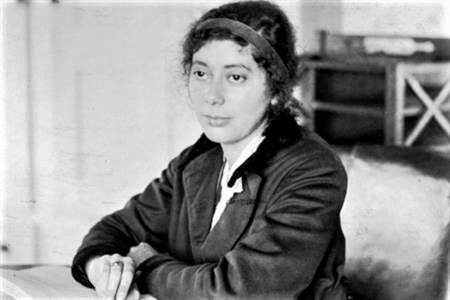
Strunsky peers back twenty years and enters revolutionaries into history with this marvelous memory of people and places of the vast 1905 Revolution. Rose Strunsky (1884-1963) was born in Russia, emigrating with her family emigrated as a child to San Francisco. There she attended Stanford University and, with her older sister, Anna, were militants of the Socialist Labor Party and then the Socialist Party. Joining with the Friends of Russian Freedom in San Francisco, which included Austin Lewis, Jack London, and William English walling, the Strunsky’s traveled to Russia and participated in the 1905 Revolutions there. Returning to the US and New York’s Greenwich Village Rose was active in revolutionary bohemian and intellectual circles as a writer and translator, including Tolstoy, Gorky, and Trotsky. She married Louis Lorwin in 1920 and together they traveled to Russia. She and her sister were comrades with Du Bois and founders of the NAACP, her interest in Black liberation lasting her life. She was also involved in the Women’s Peace Party and other pacifist and anti-militarist groups.
‘Another Unknown Soldier’ by Rose Strunsky from New Masses. Vol. 3 No. 7. November, 1927.
I too would sing to an Unknown Soldier. I would lay wreaths on him. He is much more mysterious than the figure so symbolic of unity in the Nationalist cause that lies in Arlington or under the Arc de Triomphe, for even in life he walked literally an unknown soldier, a nameless one. And his heroism was incomparable.
He is the soldier of the revolutionary wars in Russia. He is that revolutionist who for a century had each generation gone forth solitary and alone, in single file, and laid down his life, that in the end a new order could prevail.
No trumpets urged him forth, but the trumpet of his own conscience; not to rest till tyranny be destroyed. And he went forth wiping off all marks of his identity as surely as the gaunt Grey Figure destroyed those other Unknown Ones. He became homeless and nameless, that the hand of the enemy fall not too easily on him or on his own. He therefor never used his name, he never gave his address, he never wrote an address down or a name of a friend or a comrade, he never saw his own people except by a tap at night to ease some aching mother’s heart.
My mind is crowded with many of these figures whom I met as I travelled through Russia and Finland in 1906 and ’07. I do not know from where they came, I never knew who they were, only now and then did I pick up scraps of their history. Never did I know what their task was before it was over, and only casually and accidentally did I know their end. They were detached members of a great army whom I happened to meet because of letters of introduction to party members from abroad, because of friendliness of spirit, and because I lived some months in Finland with a family friendly and abetting the activities of the young terrorists of Russia.
One figure always stands before my eyes, a tall youth with the closely cropped head of a soldier and a very prominent Adam’s apple which moved up and down when he talked or sang. And such singing! Such a golden voice! He war! always ready to sing and he was called by everyone “Golubchik”, Little Darling. Why, I don’t know. He was very shabbily dressed and he looked out of place in the Finnish drawing room with its white and pink furniture and its potted plants in the windows. One day Golubchik came in in a frock coat, looking so fine, but he sat silent and wouldn’t sing. And when he went away, he bent over and gave something to my friend. “Keep it for me,” he said.
She told me scraps about him later. He had been a young lieutenant, a priest’s son and he was stationed in the Fortress in Sebastopol where Savinkov had been brought, though we did not call him Savinkov, but Leo, then, just as Azeff was not called Azeff, but Ivan Nikolaevich. But we always knew who were meant by Leo or Ivan Nikolaevich, but never the others, no matter what names were used. He became devoted to Leo and the night before the scheduled execution, he went with Leo to the bath, shaved and dressed him as an officer and together they walked out of the Fortress. To Leo the years brought the Great War, and a passionate endorsement of the Allied Cause and a hostile, active counter-revolutionary career, which ended in supposed remorse, in a return to Russia, in an arrest and in a jump to his death from his prison window. But Leo was always temperamental and a literary person. Golubchik’s life was simpler and shorter.
“You remember Golubchik?” said my friend a few weeks after he left. “Well, he did what he set out to do, but he remained to be caught and was hanged. He left me his revolver as a keep-sake—” She was looking at it in her desk. He has always sat for me on that pink sofa dressed and silent and somewhere to go.
It was my Finnish stay that gave me memories of those many silent Nameless Ones that live with me now. They too were visitors to Finland and quite often it was I who played hostess to them in my friend’s absence. The Finns had arranged through the request of Ivan Nikolaevich I believe (perhaps he wanted to entangle as many as he could in his net) an underground station on one of the many little islands off the coast.
It was some miles away from the island where our friends were spending the summer and I with them. Their pretty yacht, the Dorit, lay in the bay flying the most exclusive yachting-club pennant in Finland, but it was really the transport boat to that other island. One day it brought two Russian men who spent the day before going farther on- They were bearded and silent, but smiled most readily at this and that and especially were they pleased with the sun and the wind and the freshness and the wildness of that little fisherman’s island in the Finnish archipelago. I found myself picking raspberries with one of them. He was so happy at the game. He hadn’t done that for such a long time, he said, ever since he left home! How reluctant he was to go into the house! How he wanted to be a little boy again! What strange thoughts he must have had as he picked raspberries that day!
By dawn they were gone (it was to get rid of possible spies that the stop was made). They were taken up to that underground station, then they came down to Pskov, drove up and shot and killed and one turned his revolver against himself, and the other tried to do the same but the trigger caught. That night the “State of Extraordinary Protection” was proclaimed in Pskov to make a hanging more legal. For Russia was humane and there was no capital punishment for murder for lust or money, only for political terror. And I have always felt it was he of the raspberries whose trigger failed. In fact I grew to know, through photographs, but who he was who dreamed himself a little boy again on his mother’s land for one afternoon, I never knew.
The men spoke of themselves less than the women. They sang or smiled, but the young, fresh life, temperamental, warm, that spent a day in Viborg was resentful.
“Do you think I don’t want to live?” she cried suddenly. “Life is beautiful. It is a joy. I give it away because others blacken it. I give it away so that the little ones will some day dance in the bright sun as I never have.”
She gave hers with wanton gesture. She carried dynamite in her blouse and blew herself up, a living bomb against him she designated as the tyrant.
They were a large and nameless army, young girls who used my room to dress in as carriers of dynamite into Russia. I never knew whence they came, or whither they went or who they were. They wore the dynamite under shirt or blouse and perfumed themselves with musk and ammonia, for dynamite has an unmistakable odor, and departed.
Only once did I ever meet one of them again. In the two days I spent in the Detention Prison in Leningrad, when Paxton Hibben we learn now was instrumental in letting us out—he being one of the secretaries of the American Embassy then—a young face called to me from behind the bars. I hardly placed her. “Remember Helsingfors,” she spelled out. “Of course!” So there at last was one of them! Where else could I have expected to meet them?
They were like the coral that build the reefs with their own skeletons. It is on their bodies that the Russian Revolution has been built. I would have the Red Army pass and dip its flag to that Unknown Soldier of the past who lies imbedded in the road upon, which the victorious walk now.
The New Masses was the continuation of Workers Monthly which began publishing in 1924 as a merger of the ‘Liberator’, the Trade Union Educational League magazine ‘Labor Herald’, and Friends of Soviet Russia’s monthly ‘Soviet Russia Pictorial’ as an explicitly Communist Party publication, but drawing in a wide range of contributors and sympathizers. In 1927 Workers Monthly ceased and The New Masses began. A major left cultural magazine of the late 1920s and early 1940s, the early editors of The New Masses included Hugo Gellert, John F. Sloan, Max Eastman, Mike Gold, and Joseph Freeman. Writers included William Carlos Williams, Theodore Dreiser, John Dos Passos, Upton Sinclair, Richard Wright, Ralph Ellison, Dorothy Parker, Dorothy Day, John Breecher, Langston Hughes, Eugene O’Neill, Rex Stout and Ernest Hemingway. Artists included Hugo Gellert, Stuart Davis, Boardman Robinson, Wanda Gag, William Gropper and Otto Soglow. Over time, the New Masses became narrower politically and the articles more commentary than comment. However, particularly in it first years, New Masses was the epitome of the era’s finest revolutionary cultural and artistic traditions.
PDF of full issue: https://www.marxists.org/history/usa/pubs/new-masses/1927/v03n07-nov-1927-New-Masses.pdf
 Revolution's Newsstand