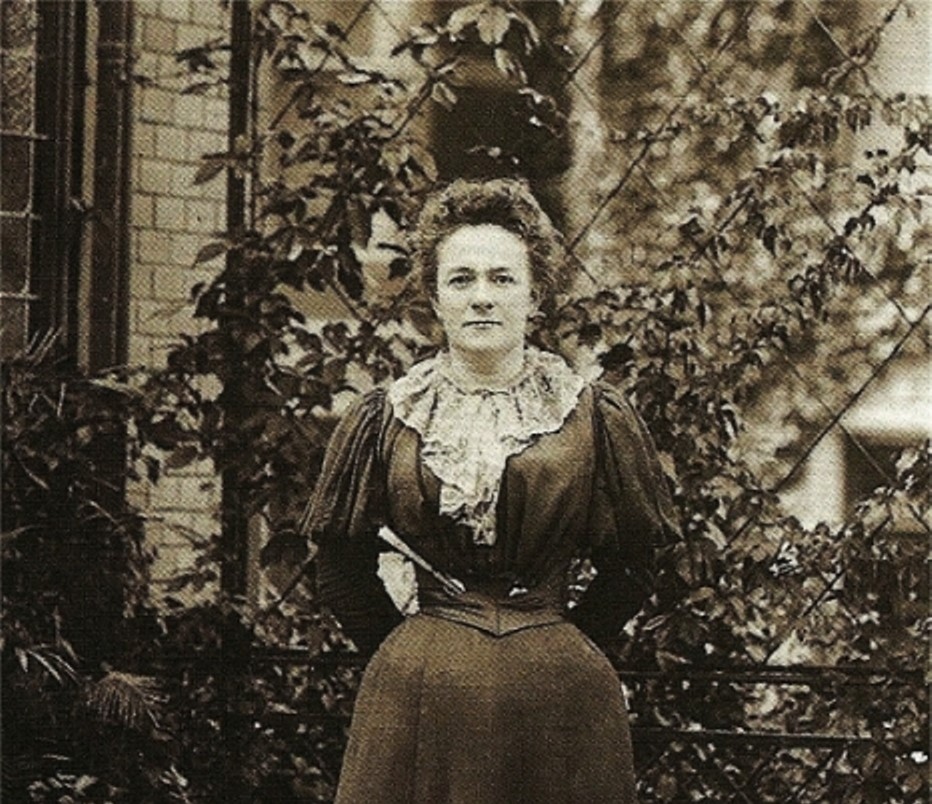
A marvelous speech by a Clara Zetkin at her best to the March, 1922 Plenum of the E.C.C.I.
‘Against War and the Danger of War’ (1922) by Clara Zetkin from Communist International. Vol. 4 No. 12. August 15, 1927.
[We publish here the concluding section of comrade Clara Zetkin’s speech at the enlarged Plenum of the E.C.C.I. in March 1922. Her revolutionary call to the workers of all countries and her recognition of the tasks of the Communist Parties have not lost their value today. We think that the 70th birthday of our grey-haired champion cannot be better celebrated than by the publication of this speech.]
THE Second International, at its congresses at Stuttgart, Copenhagen and Basel, passed excellent resolutions that the workers of all countries must unite determinedly to oppose the threatening war danger. It seemed to the illusioned leaders and masses that eternal peace would be rung in when the representatives of international Socialism made their entrance in the mystical twilight, and amidst the tolling of bells, into Basel Cathedral.
A short time passed, and then it turned out that the death knell of the Second International was rung in Basel. August, 1914, came. And the same men, who in Basel had sworn a holy vow that at the outbreak of war they would rouse the proletariat to the struggle, now confirmed with holy vows the duty of “defending the fatherland,” and hitched the workers for four years to the war chariot of imperialism dripping with blood and mud.
Comrades, the Amsterdam International Federation of Trade Unions, under whose banner resolutions about the General Strike, etc., are now being taken, is of the same flesh and spirit as the Second International, which destroyed the revolutionary united front of the proletariat of all countries in order to build up the national united front between the exploited workers and the exploiting bourgeoisie.
Our Duty
We must not be satisfied with the joyful fact that the “radicalization” of the organised masses drives their leaders forward to radical resolutions.
Let us do our duty to “radicalize” the proletarian masses further, to enlighten their understanding, to strengthen their will, so that they shall press forward, shall become ripe to translate these resolutions into fact. The enthusiastic revolutionary spirit alone—however highly I value it, however indispensable it is in the proletarian struggle for freedom—does just as little as resolutions on paper. The proletarian masses must be systematically prepared much more, both ideologically and organisationally, for the fight against the war danger and against war. The decisive moment must find them ready. When that is the case even the most cunning leaders will not act as brakes, will no longer be able to mislead and mystify, will not break their promises to and deceive the masses. Leaders and masses will be equal to each other, and as a strongly bound unity take up the fight against war danger and war, and carry it through with the utmost resoluteness.
To prepare the masses ideologically and organisationally for their fight is the task of the Communist Parties, of the Third International. The firm basis of this work of preparation is the recognition that the only effective protection against threatening war is the proletarian revolution. For it overthrows capitalism, and by that ensures the building up of a socialised economy which destroys the conflict of interests between States, as well as the contradictions between classes.
History puts to humanity the question: World war or world revolution? The proletariat must give the answer to that. We must convey this knowledge to the masses, hammer it into their consciousness, so that it may become their unshakable will and unlimited desire to carry on the revolutionary class war without fear of sacrifice and without fear of danger.
Practical Methods
To arm the broad proletarian masses mentally, politically and organisationally for the keenest revolutionary class war for averting war, I propose the following methods:
1. A systematic enlightenment of the working classes, particularly the youth, as to the causes, character, etc., of war.
2. The placing of all problems and decisions in foreign policy, on armaments, etc., before the broadest masses.
3. [*A clear statement is given here on the question of propaganda among the armed forces. Owing to “freedom of speech,” as interpreted under the capitalist dictatorship of Great Britain, it is omitted. Our readers will be aware of the very great importance attaching to this question, and of the position of the International upon it.]
4. [*A statement on the need, in the event of the outbreak of an imperialist war, to deal with the question of the transportation of munitions and troops has had to be omitted here for the reasons given in the preceding note.]
5. The strengthening of the revolutionary will of the masses to oppose an imperialist war by all other means at their disposal, by street demonstrations [*References to the General Strike and to armed uprisings have been omitted here for reasons given in a previous footnote.]
6. The creation of legal and other organs which will work for the carrying out of these tasks.
7. The setting up of legal and other organs and institutions to ensure a united energetic international co-operation among the Communists in those countries between which the conflict of interest is sharpest.
It seems to me superfluous, after what has already been said, to substantiate these demands separately. Only three will be emphasised. The workers—to a certain extent also the reformist trade unions—frequently adopt on economic and world political questions a petty bourgeois attitude; it does not concern them “if somewhere in Turkey the people are struggling among themselves”: that is “high policy” on which they have nothing to say. This idea must be rooted out. The masses must learn to understand that questions of foreign politics are also questions of home politics, their most urgent concern, because in their working out they interfere with their lives.
Foreign Policy and the Workers
For that reason we must drag all problems and important phenomena of foreign policy out of the dark rooms of governments and diplomats and the debating clubs of Parliamentary Committees and sessions and bring them before the masses. The masses must be able to judge and decide upon them, for they are those who pay the cost of such decisions. Marx, in his inaugural address to the First International, expressly demanded that the proletariat should no longer leave foreign policy to the bourgeoisie and their governments, but themselves interfere decisively with a powerful hand.
German Social-Democracy in the pre-war period refused to carry out special “barracks agitation,” and even more, to carry out of such propaganda by illegal methods. Among the parties in the Second International those sharing this standpoint were predominant. [*A reference to the Communist attitude towards bourgeois legality, and respect for it, is omitted here, for reasons as preceding.]
These circumstances stand as a symbol of the revolution, the class enemies, proletariat and bourgeoisie, conflicting sharply. The bourgeoisie itself, when the proletariat would use the legal system for its own struggle, destroys the basis of that very system. The proletariat has indeed no reason to be more legal than its enemy. It undoubtedly uses the foundations of bourgeois legality to its most utmost limit of possibility, but [*The end of this sentence has been omitted,]
Legality and Force
It must not be forgotten that the legality of bourgeois States, although it bears a democratic cloak, is nothing but the power of the possessors and exploiters in a crystallised form, to be held sacred by the exploited because they were created for the use of others. Faced by this power, the proletariat must appeal to its historic right and its historic duty of revolution, which will give rise to a new legality, engendered in the struggle. Does that mean—with reference to the matter in question—that the Communists shall play the part of mutineers, shall found secret societies and revel in organising defence corps without rhyme or reason, as the forces of the revolutionary vanguard of the proletariat in Germany succeeded in doing, senselessly and uselessly, under the influence of the war and of the November uprising?
By no means! The Communists, in their propaganda [*Six words omitted here] will not turn to stone before every police official and every paragraph of the law as if they had seen the head of a Medusa. They will fulfil their task on the broad legal road as long and as far as that is possible [*The end of this sentence has been omitted].
Our revolutionary fight against war urgently requires that special international organs and institutions for its execution must be created. It is not sufficient, comrades, that there are periodic international conferences and congresses of the Communist Parties, which put forward good, first-rate theses and pass ringing resolutions, that Communist leaders from the various countries confer with each other on particular measures. No; constant systematic work must be done internationally, so that in the various countries mighty masses of workers are mobilised who, instead of being drawn into war, will force forward the revolution. That is impossible without organs to do this work and without measures which, on the basis of international understanding, will be realised co-operatively.
International Aid
The most closely organised international co-operation among Communists is particularly necessary in those countries in which the conflicting interests of the bourgeoisie, and therefore the dangers of war, are particularly great.
This is further of the greatest significance in the large centres on the west and south borders of Germany, where the continental, nay, the European, economy is based on the production of a large amount of raw materials, where the international focal points of this economy lie. The flower of the revolutionary solidarity of the proletariat grows out of the same historical soil which, among the primary impacts of the class contradictions between exploiters and exploited, is rent violently asunder by the national struggles of the bourgeoisie for profits and power.
The desire for war and the fear of war of the international bourgeoisie trifle diplomatically with each other, until the volcanic powers of capitalist society, the antagonisms of forces, burst in a frightful world-war catastrophe.
The proletariat must oppose to his frivolous game and self-evident danger its most determined and iron will to revolution. And this will excludes both fear of revolution and playing at revolution. It must be an international, firmly welded together in resolute readiness for war.
Comrades, the world bourgeoisie challenges the world proletariat to prove its readiness for war. At the Genoa Conference it intends to form an international united front for the reconstruction of capitalist economy, which means an united front against the proletariat. The proletariat must oppose that conference by its own international revolutionary united front. It is the task of the Communists to appeal to the widest masses of the workers of all countries to build this united front, and themselves, guiding and directing, to take their place in it.
Reconstruction of capitalist economy! What does that mean? Armaments and war. Placing the gigantic burdens of the last war and the gigantic costs of reconstruction on to the working people and the only workers’ State—Soviet Russia. That is, intensification of exploitation of the masses until they sink into the deepest misery. That is, heightening their oppression to the most complete slavery. That is, the most unscrupulous violent class dictatorship of the bourgeoisie over the proletariat.
Faced with these conditions the proletariat must express internationally by mighty proclamations that it denies that the world bourgeoisie and their governments have the capacity and the will to build up a higher and more complete economic and social edifice, in which humanity shall live in culture and peace. It must prove its unshakeable resolution to protect itself and Soviet Russia against the raging desire for plunder and power of international capitalism by the bitterest class struggle. In defending Soviet Russia the international proletariat is defending itself. The fate of the exploited of the earth is indissolubly bound up with Soviet Russia. The world revolution welds them together. Their progress must be made with the most active reciprocity and co-operation, a common fight against capitalism, a common victory over it. The proletariat of Soviet Russia, with a sacrifice worthy of admiration and heroic courage, has by fighting made the recognition of this connection a fact.
War or Revolution?
It has been till now the glorious champion of the proletarian world revolution, the conscious, progressive force of history. The proletariat of the still capitalist world must no longer bear the ignominy of being only the passive object of history, a withered, confused mass of leaves, with which the clouds and winds of bourgeois domination, of capitalism play.
It must finally align itself with Soviet Russia, and fulfil its duty towards the world revolution. Its actions in the world revolution will be the evidence of the historical maturity.
World war or proletarian world revolution, not as an academic problem, as a question of dull theory, which we may discuss and philosophise about in tranquility of mind. No, comrades! As a burning practical question of the day, which we must deal with as the alpha and omega of our “programme of action,” which enters into all the present needs of the exploited but must in its further aim go beyond them and their alleviation.
The fight against war and the war danger, in which we, the proletarian masses, must lead, is an essential and significant part of the fight against capitalism, and is a decisive step forwards to world revolution. The revolutionary class struggle of the proletariat is the seed of world peace. Only the overthrow of capitalism can save humanity from the fury of war. Only the world revolution leads humanity to freedom. Let us act! Let us fight! Let us prepare the masses for the struggle!
The ECCI published the magazine ‘Communist International’ edited by Zinoviev and Karl Radek from 1919 until 1926 irregularly in German, French, Russian, and English. Restarting in 1927 until 1934. Unlike, Inprecorr, CI contained long-form articles by the leading figures of the International as well as proceedings, statements, and notices of the Comintern. No complete run of Communist International is available in English. Both were largely published outside of Soviet territory, with Communist International printed in London, to facilitate distribution and both were major contributors to the Communist press in the U.S. Communist International and Inprecorr are an invaluable English-language source on the history of the Communist International and its sections.
PDF of full issue: https://www.marxists.org/history/international/comintern/ci/vol-4/v04-n12-aug-15-1927-CI-grn-riaz.pdf
 Revolution's Newsstand