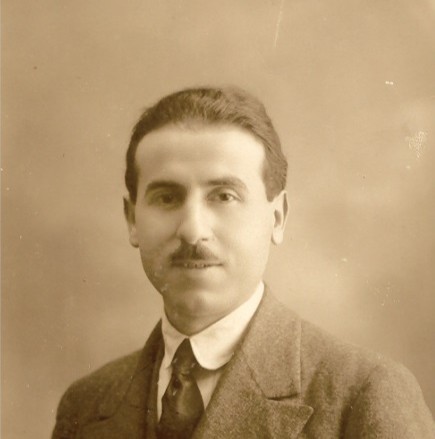
One of the central conflicts of the post-Ottoman world was over Mosul, or more precisely, the oil of Mosul. In 1926 the area was ‘awarded’ to Britain through its Iraq Mandate by the League of Nations sparking a nationalist reaction and a potential conflict with Turkey, then under Kemalist leadership still creating the new Republic. Historic leader of the Turkish Communist Party Bekar Ferdi, Mehmet Şefik Deymer, with an essay on the conflict between an emerging capitalist Turkey and the British Empire.
‘The Anglo-Turkish Conflict’ by Bekar Ferdi from International Press Correspondence. Vol. 6 No. 15. February 25, 1926.
England, by dictating an arbitrary decision to the League of Nations, has just obtained the possession of the petroleum field of Mosul finally adjudicated to her. This burning injustice has again roused the nationalist Turkish bourgeoisie, at whose cost it happened, against the imperialist Powers against England and her lackeys, the League of Nations. This attitude of public opinion which is only a reflection of the views of the official circles of the Nationalist party, indicates a radical change in the foreign policy of the young Republic.
Immediately after the military successes of the Turkish masses of the peoples of Asia Minor and after the diplomatic success of Lausanne, the political adherents of Kemal Pasha considered themselves strong enough to overcome all resistance by diplomatic measures and by resorting to a court of arbitration. The nationalist leaders first of all undertook to wean the Turks and their State from the demands of the Moslum religion both with regard to the customs and mode of living of the population and to social relations. The nationalist bourgeoisie naively hoped by these means to distract the capitalist Powers from their desire to colonise Turkey and to ensure their disinterested co-operation in the efforts of the Turkish nation towards an economic rise.
The Mosul affair helped to wake them from this sweet dream. Their claims had not even been very grasping. It appears from the statements of a previous Prime Minister, who is now Ambassador in Paris, that Kemal’s adherents had given their consent to the cession of the South of Mosul to the English and only keeping the North, and even demilitarising both parts if the English demanded it. It was in vain for them to go so far in the spirit of reconciliation. The English wanted the whole Vilavet of Mosul, and the League of Nations did not even dare to give any satisfaction to Turkey.
To-day Kemal’s adherents seem to have got rid completely of their illusions, as regards the possibility of enjoying cooperation with international capitalism and at the same time maintaining national independence. Their Press is unanimously revealing the predatory spirit which lies hidden behind the hypocrisy of the political and economic organs of imperialist capitalism and is declaring that the object of the latter is to enslave the States which, like Turkey are still in a primitive stage of economic development. And they came to the conclusion that they will call upon the Oriental nations to unite with one another and to get rid once for all of this insatiable monster, imperialism. Never has the Turkish Press used such offensive language against the Great Powers, the League of Nations, and especially against England.
Up to quite recent times, the political circles of the Turkish bourgeoisie had maintained an attitude of reserve and mistrust towards the Soviet Union. Only a few weeks ago the revelations of the “Chicago Tribune” as to an alleged agreement between Italy and Russia against Turkey, called forth a certain amount of irritation in public opinion. The news, however, of the conclusion of a treaty of neutrality between the Soviet Union and Turkey immediately roused great enthusiasm in favour of the Soviet Union. All eyes are turned sympathetically towards the Soviet Union. In some quarters the proposal is made to create a real League of Nations with the participation of the Soviet Union and all oppressed peoples. The adherents of Kemal are therefore becoming more eager to fight from day to day, with the result that the danger of an Anglo-Turkish war for the Mosul district is constantly growing.
It is therefore urgently necessary that the point of view of the revolutionary proletariat in view of the possibility of an armed conflict between English imperialism and Turkish nationalism should be clearly stated. How do they see the Mosul question and what action do they recommend to the workers and peasants of Turkey? Above all it is necessary to state whether they recognise the justification of a war over a frontier question at the present moment.
It is hardly a year since Turkey entered on a period of economic development. Her productive forces are beginning to boom. Only through persistent and uninterrupted efforts can the country be extricated from its present condition of stagnation and take its place among the States which enjoy a certain amount of economic prosperity. History has shown that every time when Turkey has entered on a period of renovation and development, the Powers in their lust for expansion have in one way or another thrown such difficulties in her path, that her rise was interrupted. The attempts to make use of the ignorance and fanaticism of some of the tribes in order to stir them to revolt against the anti-clerical reforms of Kemal’s adherents have failed miserably.
Thus only one way was left to the British imperialists, that of the cruel thrust of the League of Nations against Turkey which wounded at the same time both its vital interests and its reputation. The English are convinced that in the present conditions a war whatever its issue would be disastrous for the prospects of development of the Turkish Republic. Let the Kemalists decide whether or not to resort to force. In the opinion of the English such a piece of folly would be the signal for the collapse of their work which offers so annoying an example to the peoples who are subjected to the rule of British imperialism.
In a conflict of this sort, the Turkish people would risk losing its sovereignty and independence which it gained at the cost of so much sacrifice. If it were possible to detach this question from all its preliminaries we should be tempted to associate ourselves with this reservation, which would result in sacrificing Mosul in the interest of undisturbed progress of the politics of the economic construction and of the reorganisation of the country. But nothing is less certain than that the capitulation of Turkey to the decision of the League of Nations would ensure her a long breathing space in which to continue in peace the tasks of reconstruction which she has set herself. Quite the contrary! An action of this sort would undoubtedly immediately be interpreted as a sign of weakness and decay both by the English and by the counter-revolutionary sections in Turkey. The internal and external foes of the Republic would make the best of this vacillation of courage and of national pride to discredit the Kemalists in the eyes of their own adherents.
On the other hand we must not disregard the fact that the oppressed peoples, whilst fighting for their independence, watch with passionate interest the slightest actions and gestures of the young Republic. The subjection of the Turkish Government would immediately be felt as a fateful recoil on the national movements for liberation, especially in Syria, Mesopotamia, with the Riffs etc. These peoples, who have revolted against the imperialist colonisers, would experience a painful disillusionment, were they to see that the British executioners enforce their will even against victorious Turkey and cut away, with impunity. pieces of her living flesh.
As a matter of fact, it must be remarked that a retreat on the part of Turkey before Great Britain’s diplomatic offensive and the recognition by Turkey of the annexation of Mosul, would, to a certain extent, restore the shaken reputation of imperialist Great Britain and give her the possibility of subjugating the peoples of the East more easily and with more energy.
These considerations prove unmistakably that a policy of forbearance and conciliation will not bring Turkey a hand’s breadth nearer its goal, that of banishing the threats and disturbances which are incompatible with a fruitful political and economic activity. Should the Turkish Nationalists yield to Great Britain’s demands, they would not only estrange the sympathies of the Oriental peoples but also put themselves in an untenable position with regard to their political opponents and the Kurd separatists. Constant difficulties would prevent them from carrying out their plans of reconstruction to the end.
In any case it would be rash to conclude that, if it came to an armed conflict, Turkey would necessarily be smashed by the powerful war apparatus of Great Britain. The relation of forces is not as simple as it seems at first. The moment the London Government were to order an expedition against Turkey, a whole number of questions, which affect the existence of the British Empire, would at once arise. These questions, of which each is more important than the last, if they did not completely paralyse military action, would at least cause it insuperable difficulties. First of all there would be attempts to break the bonds which bind the colonies to the mother country especially in Egypt and India. It is unthinkable that these oppressed peoples would not make use of this splendid opportunity to escape from the claws of John Bull and in doing so to support, indirectly, their brothers in the faith. In the second place, everything points to the fact that, after the tragic experiences of the last war, it would not be so easy to lead the industrial proletariat to the slaughter. It is not even possible to guarantee that this class, whose revolutionary spirit is growing daily, would not consider the moment opportune for overthrowing the rule of the industrial magnates.
On the other hand so many capitalist interests clash in this district, which seems destined to play a chief part in the future development of world economics, that it is more than likely that it might be impossible to localise the conflict to Turkey and Great Britain. A general war conflagration would be inevitable. Without wasting time over discovering whither the clashing interests of the existing imperialisms might lead, we can maintain that in such a situation the Soviet Union and all the Eastern peoples would be found in the Turkish camp.
It can be seen from this exposition that republican Turkey would have comparatively little to lose and much to gain should she continue her policy of resistance to the imperialist attempts at intimidation. This policy however demands, in view of all eventualities, that great watchfulness should be observed and that a number of preventive measures should be taken. These measures can be summed up as follows:
1. Close alliance with the neighbouring peoples which have risen against their oppressors.
2. A law, empowering the peasants who have little or no land to take possession of the domains which belong to the feudal Beys and the large landed proprietors in the Eastern provinces of Turkey, including Mosul.
3. A final alliance with the Soviet Union.
4. A law for the protection of the workers drawn up on generous lines, which makes it possible effectively to protect the interests of the workers in town and country and guaran tees them full freedom for the organisation of trade unions and for publishing newspapers.
5. An official proclamation promising to the broad masses of the people of Kurdistan the right to determine their own form of government as soon as the country is freed from the oppression of the English and their feudal and clerical tools.
It would be an unsurmountable task to ensure the free and voluntary participation of the working masses in a military undertaking without giving them concessions on the above lines. The workers would never understand that the anti-imperialist action of the Government is in keeping with their class interests as long as the same Government uses all means in its power to oppose the claims of the workers.
On the other hand it would be unpardonable of the Kemalists to undertake an enterprise of such importance without previously coming to an agreement with the countries bordering on Turkey. The most elementary intelligence demands that measures of precaution of this kind should be taken.
We must now ask ourselves, what attitude the Kemalists would actually take. Our observations lead us to think that they would not carry resistance as far as a complete breaking off of relations and to a declaration of a state of war. Instead of embarking on a military campaign which may always bring surprises, they would prefer a compromise which would spare their feelings of national pride. A small concession on the part of Great Britain, for instance a middle line between the Brussels line laid down by the League of Nations and that which they demand, a concession which would at least leave Turkey the town of Mosul, would suffice to content them. The essential thing for the Kemalists seems to be, not the possession of the Vilayet of Mosul, but the fear of deviating from the attitude of the unswerving defender of the country and thus giving their opponents a very effective argument to their discredit. It can be regarded as certain that they would accept a boundary which would leave Turkey a small zone in the North of Mosul.
The conflict would only be inevitable if the English were obstinately to insist on observing the frontiers decided on by the League of Nations. The Turkish Government has expressed itself so categorically on this point that it has, so to speak, burnt its boats and made retreat impossible. In the worst case, should it lack the energy to enter on a decisive fight, it would maintain its claims to the disputed territory and try to preserve its hold over the people by an inflexibility consisting of mere words. We are convinced that the most far-sighted Kemalists will not fail to recognise the brittleness of such a policy of weakness which is quite contradictory to their usual determination, and will force the Government to take a more manly attitude. Thus, unless during the next six months Great Britain proves rather more accommodating, a decisive encounter may be expected between British imperialism and the Oriental world.
International Press Correspondence, widely known as”Inprecorr” was published by the Executive Committee of the Communist International (ECCI) regularly in German and English, occasionally in many other languages, beginning in 1921 and lasting in English until 1938. Inprecorr’s role was to supply translated articles to the English-speaking press of the International from the Comintern’s different sections, as well as news and statements from the ECCI. Many ‘Daily Worker’ and ‘Communist’ articles originated in Inprecorr, and it also published articles by American comrades for use in other countries. It was published at least weekly, and often thrice weekly. Inprecorr is an invaluable English-language source on the history of the Communist International and its sections.
PDF of full issue: https://www.marxists.org/history/international/comintern/inprecor/1926/v06n15-feb-25-1926-inprecor.pdf
 Revolution's Newsstand