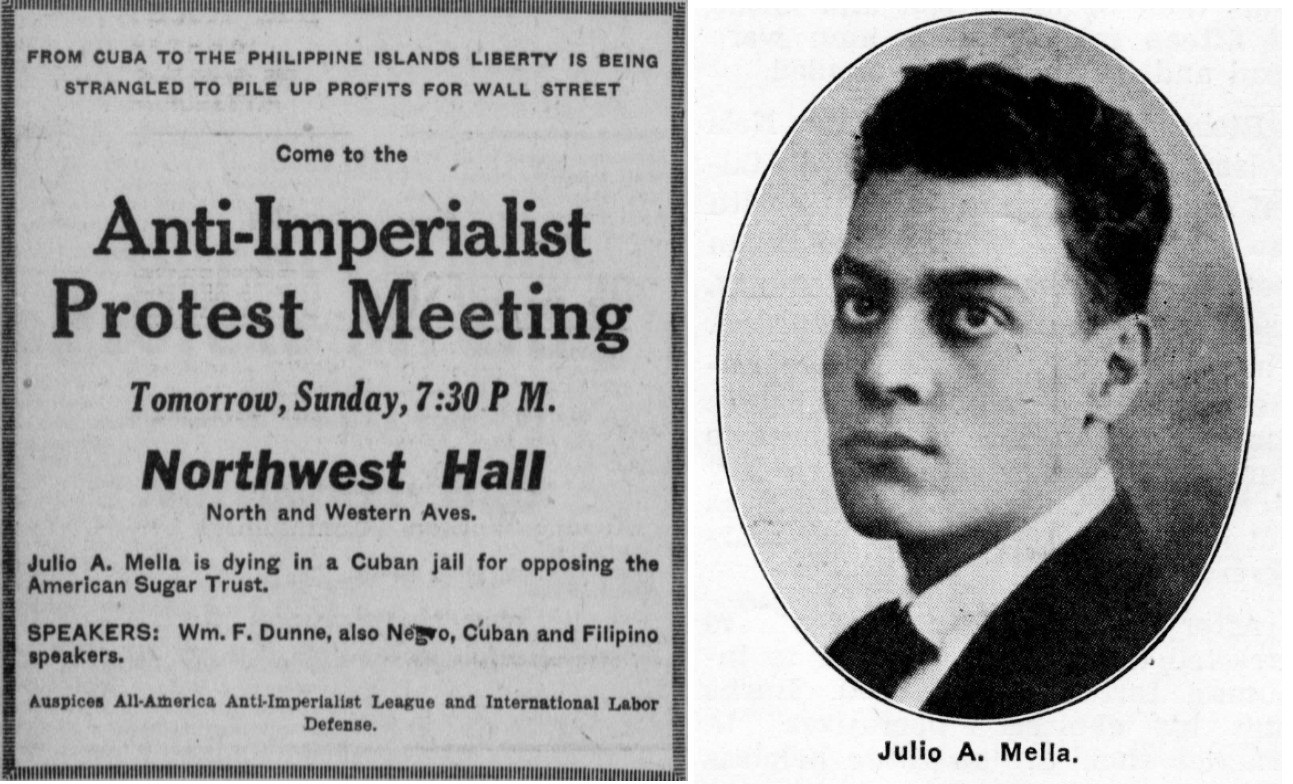
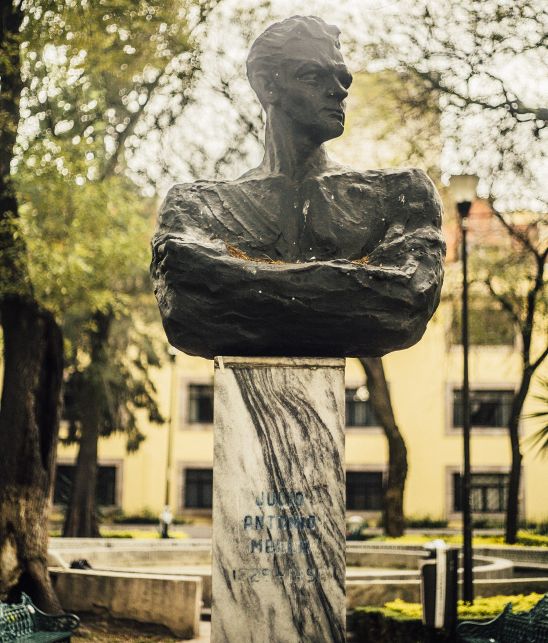
Julio A. Mella was not just the outstanding figure of early Cuban Communism, but one of the most compelling figures in all of the Comintern. Exactly 100 years ago, Mella and a dozen comrades were arrested for their roles in strikes against U.S.-owned sugar interests. Framed-up on bombing charges, Mella began a hunger strike on December 6, 1925. Quickly comrades from around the world, particularly organized through the All-America Anti-Imperialist League, began protests and pickets. After nearly three weeks of intense activity, the campaign won Mella’s freedom on bail and he called off his hunger strike. Mella was assassinated a few years later, on January 10, 1929, while in exile in Mexico City. Below are over a dozen Daily Worker notices and articles following the victorious campaign and giving background on the struggle.
‘Julio A. Mella: On Hunger Strike Against Imperialism’ from The Daily Worker. December, 1925.
Cuban Workers Indignant at Mella’s Arrest. December 10, 1925.
Communist Is Jailed on American Request
HAVANA, Cuba, Dec, 8. For the second time within a few weeks Julio Antonio Mella, youthful leader of the Communist Party of Cuba and instrumental in organizing the Cuban section of the All-America Anti-Imperialist League, has been put behind prison bars by the reactionary native government acting as the servile tool of Wall Street and Washington. Comrade Mella has begun a hunger strike in his prison cell.
Workers Indignation Roused.
Indignation at this new arrest, carrying with it the threat of renewed governmental terroristic methods, is running high on the island, not only among the workers but among all sections of the population that resent the continued subservience of the present Cuban government to American imperialism. The students of Havana, whose monthly organ, Juventud, was founded by Mella, are loud in their protest. A strong rank and file movement is rising against the official administration of the Students’ Federation, which betrayed Mella and abandoned him to his fate.
Jailed at U.S. Request.
Mella’s first arrest some weeks ago, was in connection with the spectacular campaign of ladings and deportations carried out by the Cuban government at the instigation of Ambassador Crowder. This was the climax of similar campaigns in Costa Rica and Panama, where many workers were imprisoned or deported for the expression of “anti-American” opinion.
Latin America Will Protest Mella Arrest by Manuel Gomez. December 12, 1925.
Cuban Communist on Hunger-Strike
All-American Anti-Imperialist League. Acting Immediately upon a cable message received yesterday from its Cuban section regarding the Wall Street-inspired arrest of Julio Antonio Mella and his twelve comrades, the All-American Anti-imperialist League has cabled organizations in all parts of Latin-America. Calling upon them to protest. The league has also cabled a strong protest to President Machado of Cuba, whose subservience to Ambassador Crowder recalls the similar subservience of President Chiari of Panama.
On Hunger-Strike.
Mella has been on a hunger-strike in his cell for the last six days. The campaign for his release will be test of the rapidly developing solidarity of anti-imperialist forces throughout the Americas.
The prisoners are charged with setting off bombs in front of a Havana factory. Opinion is universal, however, that this is a frame-up of the sort that has become common in Cuba since it was announced that the government would tolerate no criticism of American imperialism. It is generally understood that Mella’s arrest—the second within a few weeks—was to put an end to his revolutionary activities, particularly with regard to American interests on the island.
Leads Students’ Movement.
Mella is the outstanding figure of the recently-formed Communist Party of Cuba. He is also a leader of the student’s federation and has been active in uniting the students behind the demand for the repeal of the Platy Amendment giving the United States government virtual overlordship of Cuba. He became very much interested in the work of the All-America Anti-Imperialist League and helped to organize the Cuban section, of which he was made general secretary.

When he supported the exploited “colonos” who refused to cut sugar-cane under the conditions laid down by the big American-owned companies, the ire of the imperialists reached its height. Shortly after came his first arrest.
Protest to President Machodo.
Following is the cablegram of protest sent by the All-America Anti-Imperialist League last night to President Machodo of Cuba.
President of Republic of Cuba. Havana, Cuba.
The All-America Anti-Imperialist League, with sections in five countries of Latin-America and the United States, emphatically protests arrest of secretary of Us Cuban section, Julio Antonio Mella, and twelve companions. We denounce arrests as betrayal to American imperialism and demand immediate release.
Manuel Gomez, Secretary.
Campaign for Bella Release.
Campaign for the release of Mella and his associates will be taken up in all countries oppressed by American imperialism. The nationalist parties in Porto Rico, the Philippines, etc., are expected to take part, as well as American labor organizations opposed to imperialism.
Mella, Cuba Communist Leader Dying in Prison on Hunger Strike. December 15, 1925.
HAVANA, Cuba, Dec. 13, The Iron heel of imperialist oppression which grinds the workers of Cuba knows no mercy. Jose Mella, the young and devoted secretary of the recently formed Communist Party of Cuba, who has declared a hunger strike upon being arbitrarily Imprisoned at the orders of the unofficial dictator, General Crowder, is in a crucial state in the Havana prison. He has lost nearly eighteen pounds weight and his weakened condition may be seen from his abnormal temperature. Despite the condition of Mella, whose only “crime” is that he Is a Communist, the government refuses to listen to demands made upon it by thousands of students and workers for Mella’s release.
Communist in Tenth Day of Hunger Strike. December 16, 1925.
Physical Condition Is Dangerously Weakened
HAVANA, Cuba, Dec. 14. The traitorous Machado government of Cuba, acting under orders from American imperialism declares that it will let Julio Antonio Mella, general secretary of the Communist Party, die in prison for the terrible crime of opposing the American sugar interests. Mella is entering upon the tenth day of his hunger strike. His pulse is recorded at 68, respiration at 20, and his entire physical condition is dangerously weakened.
The ostensible charge against Mella and the twelve workers arrested with him is setting off bombs in front of a factory, but it is well known that the bombs were placed by the police department. Mella was miles away at the time. There is little attempt, to conceal the fact that the real reason for his arrest was activity in the strike of the sugar-cane workers against the American sugar trust.
Active Leader for Liberation.
As general secretary of the Communist Party of Cuba. Julio A. Mella has been the most active leader in the movement to free the island from Wall Street domination. He organized the Cuban section of the All-America Anti-Imperialist League, which has systematically exposed the relations of the American ambassador Crowder, to the Cuban government.
In name the ambassador of a friendly foreign power, Crowder Is in fact the representative of an imperial overlord, treating Cuba as its private possession. General Machado, President of Cuba, is a mere tool of Crowder. The United States government permitted Machado to elect himself president by fraud and now Machado is “making good” with his protectors. Workers and students have been deported wholesale for daring to voice “anti-American sentiments.”
The case of Mella is of the utmost importance. It will show just how far American imperialism can or cannot go in its terrorization of an ostensibly free country. Protests are pouring into Cuba from all parts of Central and South America. It is now up to the workers in the United States.
Hunger Strike Against Imperialism. December 16, 1925.
Julio Antonio Mella, general secretary of the Communist Party of Cuba, organizer of the student’s federation and editor of the organ Youth, which also represents the All-America Anti-Imperialist League, is trying to arouse the workers of the Central American countries and of the United States against the fierce despotism prevailing in Cuba by a hunger strike in jail.
A valiant tighter in the youth movement and for the liberation of the workers from the thralldom of imperialism, Mella was chosen a victim of the vengeance of the American combines exploiting Cuba, he supported workers in their refusal to slave on the sugar-cane plantations at starvation wages and under miserable conditions.
This interfered with the interests of the Havemeyer sugar trust, which, with the American Tobacco company, incited the war against Spain and has since held sway in Cuba. The police agents of the trust planted two bombs near a factory and then arrested and accused Mella and eleven other workers of the crime. It is generally recognized that the United States ambassador, General Enoch H. Crowder, is exerting pressure to keep Mella in jail.
Today is the eleventh day of the hunger strike and the Cuban government shows no inclination to relent in its persecution. The outcome rests with the working class.
Protests have already been made by the All-America Anti-Imperialist League to the Cuban government and to the American state department. Also communications have been sent urging the labor unions of Central America to act. Workers everywhere should protest against this crime of imperialism and in Cuba the workers should lie urged to call a general strike, thereby stopping production until the agents of imperialism release this valiant lighter for the working class.
Mella on Hunger Strike is Removed to Prison Hospital as Condition Grows Serious. December 17, 1925.
HAVANA, Cuba, Dec. 15. Julio A. Mella was removed today from his cell to the prison hospital in a critical condition. He is continuing the hunger strike which he began eleven days ago as a protest against his imprisonment on a framed-up charge to satisfy the American sugar combines. The Cuban government remains deaf to all pleas for his release.
The International Labor Defense opened a campaign to save the life of Julio Antonio Mella, Cuban victim of American imperialism, now on hunger strike, when it cabled to General Enoch H. Crowder, American ambassador to Cuba that 200,000 American workers affiliated with the I.L.D. would consider him responsible for the possible death of the Cuban labor leader.
Challenge Crowder.
Here is a copy of the cable sent to General Crowder:
International Labor Defense representing two hundred thousand workers and affiliated organizations consider you responsible for the continued imprisonment of Mella and twelve others whose only crime is opposition to the American sugar trust. Mella is on strike and if he dies he will be a victim of American imperialism. Our protest against this outrage will be heard throughout the United States at demonstrations arranged by us.”
Demand Liberation.
Another cable to President Machado of Cuba, reads: “In the name of two hundred thousands individual members and affiliated organizations we protest against the continued imprisonment of Mella and twelve other workers whose only crime is the defense of Cuban liberation from Yankee imperialism! We demand their liberation and release.”
Both telegrams were signed by James P. Cannon, secretary of the International Labor Defense.
Mella and twelve other Cuban workers were charged: with setting off bombs in front of a Havana factory. This is a frame-up is universal among the Cuban working class.
American workers will be well acquainted with this method of getting rid of labor organizers. Mella is a leader of the student elements who have demanded the repeal of the Platt amendment which gives the United States virtual control of Cuba. Mella first came into conflict with the agents of the American imperialists in Cuba when he supported the exploited “colonos” in then” resistance to the exacting conditions forced on them by the sugar trust.
Mella is secretary of the Communist Party of Cuba and of the Cuban section of the All-America Anti-Imperialist League which has branches in several South American countries. Manuel Gomez, the secretary of the United States section of the league has cabled a protest to the president of Cuba against the death by starvation of Mella.
Protest Grows Against Attack on Mella. December 18, 1925.
Big Demonstration in Chicago Sunday Night
Calling upon the forward-looking workers of Chicago to demonstrate their solidarity with Julio A. Mella and the other victims of American imperialism in Cuba, Haiti, Central America and the Philippines, the All-America Anti-Imperialist League (U.S. section) has combined with International Labor Defense in arranging a monster anti-imperialist protest meeting, to be held Sunday evening, Dec. 20. The meeting will take place at Northwest Hall, corner North and Western avenues, and the doors will open at 7 o’clock. William F. Dunne, editor of The DAILY WORKER, will be the principal speaker. There will also be Negro, Cuban, Filipino and Chinese speakers. Manuel Gomez, secretary of the All-America Anti-Imperialist League, will be chairman.
Protest is Nation-Wide.
Both the All-America Anti-Imperialist League and International Labor Defense are mobilizing all their energies to draw the workers to this demonstration, which is only one of a number of similar demonstrations to be held in the principal cities of the United States within the next few days.
It is pointed out that quick action is necessary if the protest of the American workers is to be heard before it is too late to save the life of Mella. who is in a critical condition in the prison hospital at Havana, whore he is continuing his brave hunger strike. He was imprisoned with twelve others, because of his activities against the big American sugar combines.
Not only in the United States, but throughout Latin-America, the protest is swelling against the latest Imperialist, exploits of Wall Street and Washington. Meetings have already been held in Mexico and Colombia. Everywhere attention is called to the fact that the new brutalities in Cuba come close on the heels of campaigns of wholesale deportations in Cuba, Panama and Costa Rica. All pretense of national sovereignty in these countries is being swept away.
The meeting Sunday night will expose the moving impulses behind the ruthless advance of American imperialism in Latin-America and also in the Far East. It will demonstrate the community of interests between the working class in this country and all the oppressed peoples of the American empire struggling against Wall Street. And it will voice a protest that cannot be ignored.
Spread These Leaflets.
Leaflets advertising the meeting will be ready as soon as the presses can turn them out several thousand of them will be on hand today at the office of International Labor Defense, 23 South Lincoln St. Workers interested in securing a wide distribution for them can secure a bundle by calling there. All labor organizations, fraternal societies and organizations of Latin Americans resident in Chicago are urged to co-operate.
Mella Ends the Second Week of Hunger Strike. December 19, 1925.
A partial list of the other victims of American imperialism arrested in Cuba with Julio A. Mella at the behest of the American sugar trust was made public today by the United States section of the All-America Anti-Imperialist League. The list, just received from Havana, includes some of the best-known labor leaders in Cuba: Alfredo Lopez Arencibia, Manuel G. Fernandez, Sandalio Junco, Antonio Penichet, Octavio Garoia, Rafael S. Marrero, Francisco M. Breteau and Manuel Landrove. Mella, who is general secretary of the Communist Party of Cuba, is entering upon the fourteenth day of his hunger strike. The Machado government of Cuba, always a ready tool of Ambassador Crowder and the sugar barons, shows no sign of relenting.
Colonos Still on Strike.
The strike of the colonos against, the big American-owned sugar centrals in Cuba still goes on, despite the repressive measures of the government. Military “supervisors” have been placed at all strategic points of the affected district. Some of the centrals (or grinding mills) have regular detachments of soldiers assigned to them.
“The case of Mella and his comrades involves more than a mere strike,” warns Manuel Gomez, secretary of the All-American Anti-Imperialist League, in a bulletin issued today. “It makes urgently necessary a united front between all the oppressed peoples of the ‘American empire’ with the forward-looking workers of the United States against the ever-widening menace of American imperialism.
The oppressed peoples are suspicious of all Americans, and with reason. It is up to the American workers to show that they have no part in the imperialistic schemes of Wall Street and Washington, and to lend support to their exploited brothers abroad. With Julio A. Mella dying in his prison cell, where American imperialism has placed him, instant protest is necessary!”
Attend Protest Meeting.
All workers are urged to attend next Sunday’s mass meeting at Northwest Hall, corner North and Western avenues, under the joint auspices of the United States section of the All-America Anti-Imperialist League and International Labor Defense. The meeting is set for 7:30 p.m. Although it was necessary to arrange the demonstration almost on a moment’s notice, and the date is now only two day’s off, a turnout of Chicago workers is expected. William F. Dunne, editor of The DAILY WORKER is to be one of the principal speakers. There will also be Negro, Cuban, Filipino and Chinese speakers.
Attack Labor Unions.
The campaign of terror continues unabated in Cuba. Labor organizations throughout the island are being attacked by the government. The National University is threatened with being closed down because the students support the sugar strikers and denounce the subservience of the government to American imperialism. Students and worker are looking for aid to the protests of their brothers in South and Central America, and especially to the working class of the United States, which, as the Cubans know, has its own score to settle with Wall Street.
Anti-imperialist protest meetings similar to the one in Chicago next Sunday, are to be arranged in all important cities of the United States. Rose Karsner, secretary of International Labor Defense, has wired to all branches of her organization to co-operate with the All-America Anti-Imperialist League in the arrangement of the meeting.
Mella Protest Demonstration Sunday Night. December 20, 1925.
Chicago Mass Meeting at Northwest Hall
Wholesale deportations of Cubans, Panamans and Costa Ricans from their native lands “for expression of anti-American opinions;” “indefinite postponement” of the presidential election in Haiti at the command of Military Governor John H. Russell; arbitrary attacks upon the Filipino independence movement by Gen. Wood; intrigues of American financiers in China; move of American imperialism to share in the partition of Arica; military strike-breaking occupation of the City of Panama, with jailing and slaughter of Panaman workers—these are only a few of the incidents marking the latest development of American imperialism, which will be exposed before the workers of the anti-imperialist protest meeting at Northwest Hall tomorrow night, 7:30 p.m.
The primary purpose of the meeting is to protest the Imprisonment of Julio Antonio Mella and the twelve Cuban labor leaders arrested with him at Havana, at the dictation of the American sugar trust. A cable received yesterday from Cuba indicates that President Machado, a Wall Street puppet, is bringing back stairs influence to bear upon the courts to secure a summary conviction of Mella and his comrades. Mella is still on hunger strike in prison.
Persecutes Cuban Workers.
“The reaction in Cuba continues,” says a letter just received from the Communist Party of Cuba, of which Mella Is general secretary. “The government, completely sold out to Wall Street, is trying to make the Cuban workers and peasants bear the burden of the crisis caused by the drop in sugar prices. Sugar cane workers are in some cases being forced to work without remuneration except their meals. Orders of arrest have been issued against 44 of the best-known labor leaders of the Cuban movement, 23 of them Communists. Only 13 have been apprehended by the police so far, but the search for the others goes on.”
Protest Meeting Tomorrow.
Tomorrow night’s protest meeting in Chicago is under the joint auspices of the All-America Anti-Imperialist League (United States section) and International Labor Defense. The place of meeting, Northwest Hall, is at the corner of North and Western avenue.
The Crimes of Wall Street Imperialism in Cuba. December 20, 1925.
THE circular printed below was received yesterday from Havana by the United States section of the All-America Anti-Imperialist League. As it is dated November 28, one might suppose that mail service between Cuba and the United States is very, very slow, and particularly at the present time. The brutal facts set forth in the circular will perhaps explain why it was held up somewhere in transit. The mystery is that it was allowed to arrive at all
What the circular establishes beyond the shadow of a doubt is that the imprisonment of Julio A. Mella and the twelve Cuban labor leaders at the dictation of the American sugar interests is not an isolated incident but is part of a whole reign of terror on the island instituted by American imperialism with the aid of the servile. Machado government. The savage grip of American imperialism is tightening everywhere! Deportations of “anti-American elements” from Cuba Panama and Costa Rica; the strike-breaking military occupation of the City of Panama by American troops; Military Governor Russell’s abrogation of presidential elections in Haiti; General Wood’s latest arbitrary acts against the independence movement in the Philippines; the maneuvers of Pershing in the Tacna-Arica district of South America–these are only a few of the things that characterize the development of American imperialist policy in the last two months.
In making public this circular of its Cuban section, the All-America Anti-Imperialist League calls upon all workers to attend the anti-imperialist protest meeting to be held at North & Western Aves, Chicago, tomorrow evening at 7:30 o’clock.
***
Circular of the Cuban Section of the All-America Anti-Imperialist League Regarding the Origin and Magnitude of the Crimes Now Being Committed Against the Cuban Proletariat.
IN this circular the Cuban section of the All-America Anti-Imperialist League proposes to inform all the peoples of the Americas regarding the outrages now being committed in Cuba–and of the causes which led to the imprisonment of our general secretary, Julio Antonio Mella, and numerous labor leaders of the threat of a shut-down against the national university and of the dissolution of labor organizations.
Early in August, there assembled in the city of Camaguey a convention of the Confederation of Labor, representing 200,000 organized workers. On the 22nd day of the same month the Cuban section of the All-America Anti-Imperialist League staged a great demonstration at Mars Field, Havana. In the labor convention it was decided, among other things, to start a campaign to organize the peasants; in the demonstration the slogan issued dealt with the approaching economic crisis, laying full blame at the door of American imperialism. About the same time, the Union of Factory Workers declared a strike for higher wages. The employers in their turn, organized and declared a lockout, at the same time entering a formal complaint with the government, charging the leaders of the union with injecting poisonous matter into the products of their factories.
The government, determined to obstruct the development of the Confederation of Labor and disturb the propaganda of the Cuban section of the anti-imperialist league, began a persecution of labor leaders and of the speakers at the anti-imperialist meeting. The persecutions began in the last few days of August, giving as a basis the alleged acts of sabotage referred to above.
The secretary of the Communist Party, who had spoken at the anti-imperialist meeting, was arrested and many party documents were confiscated–minutes of various meetings, plan of organization, list of members, and a little map of the city of Havana.
A Crude Frame-up.
With this scant material, the police elaborated their frame-up. They added to the charges of poisoning that of conspiring against the security of the state, on the flimsy pretext that on the map of Havana found among Mella’s papers a red mark had been placed over the building occupied by the National Bank of Cuba. This red mark, like many similar ones on the map, had served merely to acquaint the secretary, who was a stranger in Havana, with the location of the streets.
On the basis of this “evidence,” together with the ordinary manifestos of the Communist Party, trade unions and the Cuban section of the All-America Anti-Imperialist League, the indictments were drawn up-heaping together the activities of Communists and anarchists, so as to give the appearance of a “united front” against the government. A number of workers were indicted with Mella.
Bail was refused the accused at first but finally, after considerable pressure, they were liberated under a provisional bail of $1,000 each.
The Union of Factory Workers was declared illegal. At the same time a wholesale deportation of foreigners was carried out, including all those who had expressed “anti-American opinions.”
Notwithstanding indifference of the public in the face of these police outrages, the police felt it necessary to justify their conduct, and on September 17 arranged the explosion of a few small bombs in various parts of the city, with such ill effect that even the bourgeoisie refused to become panic-stricken and no one paid any attention to the matter.
The student leader, Julio Antonio Mella, out on bail, redoubled his activities in the anti-imperialist league, in the Communist Party and in the trade union centers, as well as among the students of the national university.
The Hand of the Sugar Trust.
The economic crisis in Cuba was now at its height, aggravated considerably by the low price paid to the “colonos” for their sugar which did not cover the cost of production. The “colonos,” accordingly, organized and refused to continue cutting cane. In order to bring pressure upon them in the interest of the Wall Street combines, President Machado took immediate action. Determined at all cost to prevent the activities of labor leaders on behalf of the “colonos,” the government resurrected the forgotten incident of the bomb explosions of September 17, suddenly revoking the bail of all those accused of having violated the law regarding explosives. On November 27, Mella and twelve labor leaders were imprisoned. Undoubtedly a contributing cause of the arrest of Mella was his activity against American imperialism among the students of the national university, whose strong stand against American interference in the affairs of Cuba had “embarrassed” the president in his relations with Ambassador Crowder.
As will be seen from the facts given above, the indictment and the imprisonments are the result of a long period of preliminary maneuvers, hedged around with imaginary and fantastic plots, carried out with the authorization of a manifestly partial judiciary, the arrests were preceded by repeated threats of assassination against Mella–threats which were not to be taken lightly after the mysterious murders of the editor of El Dia (newspaper opposing the government), of the labor leader Varona (who organized the big 1924 strike in the sugar centrals controlled by the American companies) and of the Catalonian, Couxart (who was murdered in the military fortress of La Cabana, Havana).

Meanwhile the government intercepts all news from the provinces, preventing knowledge of the consequences (probably bloody) of the active protest of the peasants in the sugar fields. It is known, however, that military “supervisors” have been named for the sugar centrals, with instructions to do their duty without too much recourse to persuasion. It is known also that the peasants have not given up the fight; they refuse to carry out orders that do not come from the “colonos,” who guarantee their wages and who are the ones who at the present moment are refusing to cut cane because of the miserable prices paid by the American companies.
Imperialist “Law and Order.”
THE outrages we are describing in this circular may be explained, by the public declarations of General Machado in the United States, which he visited a month before taking office as president of the republic. At that time he stated that his government would be a better “Platt amendment” than the amendment itself. He promised the American interests that “law and order” would reign throughout the republic and no strike would last 48 hours without being repressed by force.
For Machado, disorder consists in the righteous claims of the working class, in the campaigns against American imperialism among all sections of the population and in the activities of the students of the national university in behalf of the liberation of their country.
“Law and order” for Machado, just as for President Chiari of Panama, signifies security and development of American interests at the sacrifice of native victims, at the sacrifice of the economic independence of the state. If in Panama a simple rent strike of worker tenants could bring about the intervention of Yankee soldiers, we can expect that in the present situation in Cuba the bloodlust of Wall Street will not be satisfied with the indictments and arrests so far undertaken by the Cuban government, but will insist upon still greater outrages.
In spite of the reprisals, the Cuban section of the All-America Anti-Imperialist League will continue its activity in the national university (as long as the university is allowed to remain open), in the labor organizations, etc. It will give full voice to its program: Abolition of the Platt amendment which makes Cuba a mere protectorate of the United States, abolition of the American naval base at Guantanamo, campaign against the forced loans from Wall Street–particularly the $100.000.000 loan now in project. We denounce before all the peoples of the Americas the outrages now being committed on Cuban soil. Mella and the labor leaders are in jail by order of American imperialism. The students, workers and vital forces of the entire continent must demand their liberty.
Havana, Nov. 28, 1925.
Chicago Labor Demands Recall of Ambassador. December 23, 1925.
“Release Cuban Labor Leaders” Workers’ Cry
Placing the full responsibility for the plight of Julio A. Mella and his twelve Imprisoned comrades in Cuba upon the shoulders of American imperialism, a mass meeting of Chicago workers aft Northwest Hall, corner North and Western avenues, Sunday night protested against the intrigues of the American sugar trust on the island and unanimously demanded that the United States government recall Ambassador Crowder and abrogate the treaty which forces Cuba to maintain the notorious “Platt amendment” to her constitution in the interests of American Imperialist domination. The meeting was one of many to be held in all the important cities of the United States, under the joint auspices of the All-America Anti-Imperialist League (U.S. section) and International Labor Defense.
Demand Immediate Release.
The meeting further demanded immediate release of all those kept in jail in Cuba by American influence. Quick action is necessary, it was pointed out, if Mella and his comrades are to be saved. Mella is in a desperately serious condition as a result of the long hunger strike he has been carrying out in prison.
William F. Dunne, the principal speaker, gave a survey of American imperialist history with regard to Cuba, beginning with the unprovoked war of aggression of Spain in 1898. One of the slogans of this war, he declared, was “Via Cuba libre!” (Long live free Cuba!) but Cuba today is suffering under a reign of terror such as even the black regime of the Spanish General Weyler did not surpass.
Under the domination of the sugar trust and the National City Bank of New York, the real “owners” of Cuba, colonos in the sugar fields are being forced to work at the point of the bayonet for a bare subsistence, while labor leaders who attempt to organize the sugar slaves are imprisoned, trade unions are smashed and all who protest against American imperialism are persecuted by the subservient Machado government.
Workers Must Fight Imperialism.
“The greatest share of the responsibility for fighting American imperialism,” declared the speaker, “rests upon us—the workers of the United States. The official bureaucracy of the trade unions does not take up this task. Instead it strives to extend American imperialism by poisoning and rendering harmless the labor movements of the subject countries, while at the same time sharing the ill-gotten gains of imperialism thru the profits of so-called labor banks, insurance schemes, etc. This makes our responsibility for determined struggle all the greater. We must win the trade unions for class struggle, and away from the policy of ‘class collaboration,’ built upon the foundation of imperialist exploitation, here, inside the very fortress of American imperialism, we can strike the most telling blows at the monster that has become the universal exploiter, the enslaver of all the world!”
Other speakers included Manuel Gomez, secretary of the All-American Anti-Imperialist League, George Brewer, a young Negro who told of the struggle of the Negroes against race discrimination and oppression in this country; Vicente Orbet, a Filipino, who described the iniquities of the rule of Gov. Gen. Wood in the Philippines, and George Maurer, secretary of the Chicago branch of International Labor Defense.
Adopt Protest Resolution.
A resolution demanding complete and immediate independence for the Filipino people was unanimously adopted, copies of which are to be forwarded to President Coolidge, to the Filipino Independence Mission now at Washington and to the Philippine Legislature.
Cuban Students and Workers Urge Mella to Abandon Hunger Strike. December 24, 1925.
The following cablegram was received yesterday by the All-America Anti-Imperialist League from its Cuban section:
“Students’ and workers’ organizations beg Mella to abandon his hunger strike, considering it useless sacrifice. Mella’s condition very grave. He refuses to listen to all suggestions that he desist from strike. Government executing will of American imperialism, declares it will continue persecutions.”
Workers Picket American Sugar Trust Offices. December 24, 1925.
N.Y. Labor Demands Release of Mella
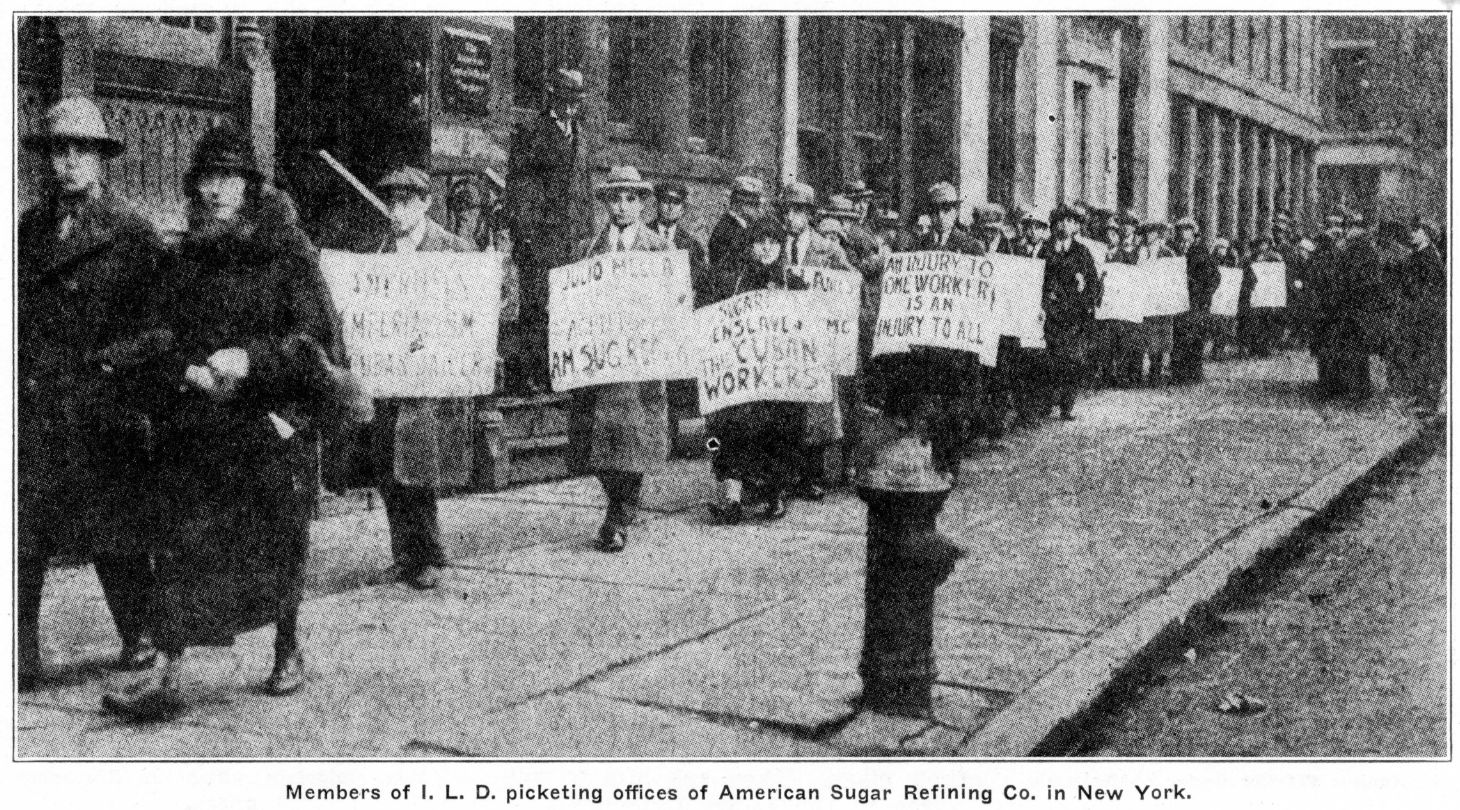
NEW YORK, Dec. 22. Over one hundred and fifty workers picketed the American Sugar Refining company main offices at 117 Wall St. at noon today, demanding the release of Antonio Mella, Imprisoned by the Cuban government at the request of the American sugar interests thru its tool, Ambassador Crowder.
Thousands of workers were attracted to the scene by the signs that were carried by the pickets. The district became congested as the workers milled around the pickets to be able to better read the demands on the American sugar trust for the release of the Cuban labor leader who dared to organize the colonos against the sugar trust exploitation.
The following slogans were carried by the pickets:
Defend the Persecuted Cuban Workers.
Down with American Imperialism.
American Imperialism Makes a Prison of Cuba
The Sugar Trust Keeps the Cuban Workers Enslaved.
Wall Street is Strangling the Cuban Labor Movement.
The Anti-Imperialist League Demands the Liberty of the Workers’ Champions.
If Mella Dies, on Wall Street Lies the Guilt.
Hail Julio Mella, Cuba’s Anti-Imperialist Leader.
The Anti-Imperialist League Demands Freedom for Porto Rico, the Philippines and the Virgin Islands.
The Monroe Doctrine Protects Latin-America from European Aggression. But What Protects Latin-America from Wall Street?
Machado is Wall Street’s Lackey: Crowder its Dictator.
Free Mella, Defender of Cuba’s Sugar Workers.
Wall Street is Killing Julio A. Mella.
American Imperialism Is Cuba’s Jailer.
The Cuban and American Workers have the Same Enemies.
Mella Shall Not Be Murdered.
Free Mella, the Workers’ Champion.
The Workers of America Demand Mella’s Freedom.
Break the Prison Bars That Hold the Workers’ Champions.
International Labor Defense Is the Workers’ Shield.
Mella Shall Not Die.
Workers of the World Unite.
An Injury to One Worker is an Injury to All.
American Workers Demand Freedom for Mella and the Other Imprisoned Workers.
The Blood of Workers’ Champions Shall Not Be Shed.
If Mella Dies the Workers Will Lay the Blame at the Door of American Imperialism.
Mella and 12 Other Cuban Workers are In Jail on Framed-up Charges.
The Defense of Labor’s Prisoners is the Defense of Labor’s Vanguard.
The Sugar Trust Dictates to Cuba. The Sugar Interests Enslave Cuban Workers.
Mella is Imprisoned by Agents of the American Sugar Refining Company.
The Cuban Workers are Victimized by Wall Street’s Greed.
Down With the American Sugar Refining Company. It Enslaves Cuba’s Toilers.
The mass picketing, which took place in the financial heart not only of America but of the world, was organized by the All-America Anti-Imperialist League, American section and the International Labor Defense, New York section.
Telegrams were sent to Washington, D.C., protesting the jailing of Antonio Mella and demanding his immediate release. The following telegram was sent to President Calvin Coolidge and the Secretary of State Kellogg:
“The International Labor Defense, New York section, in name of forty thousand organized workers and affiliated organizations, protests against imprisonment of Mella and twelve other Cuban workers in jail on frame-up charges. Mella has been on hunger strike for fourteen days and is now in a dying condition. If he dies Cuban workers as well as their fellow workers in America will lay the blame at the door of American imperialism.
“Rose Baron, Secretary.”
Resolution on the Persecution in Cuba. December 27, 1925.
ALL-AMERICA ANTI-IMPERIALIST LEAGUE DEMONSTRATION DEMANDS RELEASE OF CUBAN COMMUNISTS
Together with a message of fraternal greetings to Julio A. Mella and the twelve other victims of American sugar trust tyranny Imprisoned with him at Havana, the All-America Anti-Imperialist League has forwarded to its Cuban section the following resolution adopted at last Sunday’s anti-imperialist protest meeting In Chicago
(Adopted by a Mass Meeting of American Workers, Chicago, U.S.A., Dec. 20, 1925.)
Whereas: A reign of terror has been set loose on the island of Cuba, stimulated by and operated for the exclusive benefit of the big American sugar companies who dominate this nominally independent republic, backed by the entire machinery of the United States government.
Whereas: In an attempt to break the strike of the “Colonos” and sugar cane workers against the sugar trust, military “supervisors” have been placed in the important sugar centrals, in many cases forcing the workers to labor for no other recompense than their meals, those who resist being arrested, brutally beaten, or even murdered by the military.
Labor Union Destroyed.
Whereas: Labor unions all over the country are being destroyed, the Cuban section of the All-America Anti-Imperialist League is being attacked, and the National University is threatened with being closed down for no other “crime” than supporting the sugar workers and demanding the expulsion of Ambassador Crowder, who for six years has virtually dictated Cuba’s governmental policies, under the notorious “Platt Amendment” giving the United States the “right” to intervene in Cuba’s internal and foreign affairs.
Whereas: This unparalleled reign of terror, carried out by President Machado of Cuba who like President Chiari of Panama, is mere tool of American imperialism, has culminated in orders for summary arrest issued against 44 Havana labor leaders, twelve of whom have already been apprehended, together with Jose Antonio Mella, leader of the Students’ Federation, general secretary of the Communist Party of Cuba and outstanding figure of the anti-imperialist movement, on a ridiculous frame-up charge of bombing various buildings.
Whereas: In protest against his imprisonment, Mella is carrying out a heroic hunger strike, which has already lasted two weeks and which has so weakened his physical condition that he has had to be removed to the prison hospital, and
Will Let Mella Die.
Whereas: The Wall Street owned Machado government indicates that it will let Mella die and will continue its persecutions, therefore, be it
Resolved:
That this protest meeting of American workers called together in Northwest Hall, Chicago, United States of America, under the joint auspices of the All-America Anti-Imperialist League, (United States section) and International Labor Defense, hereby declares that if Julio A. Mella is allowed to die the blame will be upon the shoulders of American imperialism. And be it further
Demand Immediate Release.
Resolved: That we demand the immediate release of all those kept in jail by American influence. We denounce the methods of the sugar trust in supporting puppets in Cuban governmental office for the purpose of having them betray the Cuban people to American imperialist interests. We demand the immediate recall of Ambassador Crowder by the United States government. We demand the immediate abrogation of the treaty by which Cuba is bound to maintain the “Platt Amendment” to her constitution, and we call for the immediate abandonment of the American naval base at Guantanamo Bay. We demand complete and actual, not merely nominal, independence for the republic of Cuba. We pledge all solidarity to the Cuban sugar strikers and to the entire Cuban people in their brave struggle for national liberation.
Free Mella From Prison! December 27, 1925.
GRIP OF WALL STREET-OWNED MACHADO RULE ON COMMUNIST PARTY SECRETARY IS BROKEN
HAVANA, Cuba, Dec. 24. The case of Julio Antonio Mella, secretary of the Communist Party of Cuba, which for nearly three weeks has stirred the workers and anti-imperialist forces of the two American continents to protest, has resulted in clear-cut defeat for American imperialism.
Mella was released from jail here yesterday under $1,000 bail, despite repeated declarations of the Wall Street-owned Machado government of Cuba that he would be kept in prison in the face of all opposition.
Mella, who had been jailed at the dictation of the American sugar interests in Cuba, had been on a hunger strike since Dec. 5 and first took food yesterday. During the nineteen-day period he lost 35 pounds.
Exposed imperialist Rule.
Physicians say that owing to his weakened condition he could not have lived for more than a week longer if he had continued refusing food. His voluntary ordeal, maintained in the face of requests from labor and student organizations that he give up what appeared to them a useless sacrifice, dramatized the whole issue of American imperialist domination in Cuba and made it possible to mobilize all the sentiment for national liberation behind him.
The campaign to free Mella was a great victory for the working class and marked an important step in the development of a homogenous movement against Wall Street throughout the Americas. Especially was It a triumph for the All-America Anti-Imperialist League, which is giving organizational form to this movement and which already has sections organized in Cuba, Porto Rico, Mexico, Colombia, Ecuador and the United States. The entire campaign was directed by the central office of the league, with the close co-operation of its Cuban section with which it was in day-to-day communication by cable.
Secretary of Communist Party.
Mella is general secretary of the Communist Party of Cuba, leading figure of the students’ federation and organizer of the Cuban section of the All-America Anti-Imperialist League. He has been active in all of these organizations in behalf of the liberation of Cuba from the control of the sugar trust and of the National City Bank of New York. At the very outset of the present wave of terror in the ostensibly independent republic, the Cuban section of the league organized a mighty demonstration in which more than 10,000 people took part, demanding the repeal of the notorious Platt amendment, the giving up of the American naval base at Guantanamo Bay and the expulsion of Ambassador Crowder.
Subsequently, the sugar strike of the colonos against the American companies took place and Mella actively supported the strikers. After repeated warnings and threats of assassination, he was summarily arrested on Dec. 9, together with twelve prominent labor leaders, under the framed-up charge of exploding bombs, and was held without bail.
As soon as bail was denied, the acting secretary of the Cuban section cabled all details of the case to the central office of the All-America Anti-Imperialist League. The league immediately cabled its protest to President Machado of Cuba and to Ambassador Crowder, placing full blame upon the shoulders of American imperialism and demanding the release of all the prisoners.
The league also sent cablegrams to its various sections, as well as to labor organizations and to every important anti-imperialist publication in Latin-America. News stories and detailed suggestions were also sent out, explaining that demonstrations must be organized, resolutions of protest must be introduced in national and local legislatures, and messages of protest must be sent to Cuba from all parts of the Americas.
There was instant response. The struggle to free Mella aroused large sections of the population throughout Latin-America everywhere the demand was voiced that this new victim of American imperialism be set free. The senate of the Republic of Mexico adopted a resolution of protest. The city council of Buenos Aires (Argentina) did likewise.
The Protest Grows
Meanwhile, in the home country of American imperialism Itself, the United States section of the All-America Anti-Imperialist League pursued the campaign, succeeding in interesting the organization for the defense of class-war prisoners known as International Labor Defense, which wired protests to the Cuban president, to Ambassador Crowder and to the state department at Washington. On a few days’ notice anti-imperialist protest meetings, under the joint auspices of the All-America Anti-Imperialist League (U.S. section) and International Labor Defense were arranged for all important cities of the country.
In Chicago, a protest meeting was held at Northwest Hall, on Dec. 19. In New York, 150 workers picketed the offices of the American Sugar Refining company (dominating unit of the sugar trust) with banners bearing Inscriptions such as: “Wall Street is Stifling the Cuban Labor Movement,” If Mella Dies on Wall Street Lies the Guilt,” and “The Sugar Trust is Keeping Cuban Workers Enslaved.”
New Dangers Ahead.
The campaign resulted in such pressure from all sides that President Machado of Cuba, poor tool of Wall Street though he is, could no longer resist. An Associated Press dispatch declares that “requests for the release of Mella had been sent to President Machado from throughout Latin-America, the United States and Europe.”
The only danger in the present situation is that the enemies of American imperialism will now feel that the battle is already won and relax their support. Mella’s trial on the framed-up charge of bombing will be coming up soon and every effort will be made to railroad him to jail for a long term.
Moreover, the twelve labor leaders arrested with Mella are still in prison. The splendid campaign which brought about Mella’s release must be continued with greater energy than ever if they are to be freed.
Rescuing a Prisoner of Imperialism by Manuel Gomez from Labor Defender. February, 1926.
The story of the two-weeks’ campaign for the release of Julio Antonio Mella takes us from Cuba to the United States and from Mexico to Argentina. It is a story of international struggle in behalf of the victims of American imperialism with a U.S. ambassador placed directly in their service by the state department and a Latin-American president as their servile tool. The campaign was led jointly by the All-American Anti-Imperialist League and International Labor Defense. That it ended in victory is a tribute to the remarkable solidarity that is growing up among all the oppressed peoples of the American continent, together with the working class in the United States.
Mella was arrested at Havana,Cuba, on December 5, on a framed-up charge which every newspaper in Cuba declared to be ridiculous. Eleven prominent Havana labor leaders were arrested with him. The charge was setting off a number of small bombs in front of factories and public buildings. Despite the fact that the men were arrested under a Cuban law at the orders of a Cuban president, they must and have been considered as American class-war prisoners. They are victims of American imperialism. Their real prosecutors are (for the eleven labor leaders are still in jail and Mella’s case is by no means over) the American sugar trust, the National City Bank of New York and the imperialist government of Wall Street and Washington.
Cuba has been called “the sugar bowl of the world.” The island produces three-fourths of all the cane sugar of the world. And the extremely lucrative sugar industry–and with it the entire structure of Cuban economic life is owned from top to bottom by American capital. Nominally an independent republic, Cuba is in fact a protectorate of American imperialism. The so-called Platt amendment to Cuba’s constitution, put there through a treaty forced upon the island by the United States, gives the U.S. government the “right” to interfere in Cuban affairs at will. Ambassador Crowder dictates every turn of governmental policy. President Machado, whose fraudulent election was secured with the help of the sugar interests, eagerly obeys.
Several months ago a reign of terror was initiated on the island. Foreigners and even native Cubans who had given expression to “anti-American sentiments” were rounded up and deported. Labor unions were destroyed. The National University, considered altogether too liberal, was threatened with being closed down. The explanation of epidemics of this sort in Cuba is usually to be found in sugar, and the present one was no exception. An economic crisis was developing, caused by the low price of sugar, the burden of which the companies tried to shift upon the shoulders of the “colonos.” The “colonos” accordingly refused to cut cane. A great strike broke out in which the military was called into play, many sugar workers being forced to labor at the point of the bayonet. Every attempt to organize the sugar workers more effectively was hindered by the venal Machado government. No less than 44 orders of arrest were issued by President Machado at the dictation of the sugar interests in Havana alone. Only 12 of the 44 were apprehended however, chief among them being Julio Antonio Mella.
Bail was refused, President Machado declaring that the prisoners would be kept in jail in the face of all opposition. Mella immediately began his 19-day hunger strike in protest against American imperialist methods in Cuba.
The arrests caused an intensification of anti-imperialist feeling thruout Cuba. Protests were raised on all sides, particularly on the part of workers’ and students’ organizations. As soon as bail was denied the prisoners, the acting secretary of the Cuban section of the All-America Anti-Imperialist League cabled all details of the case to the central headquarters of the league. The league immediately cabled its protest to President Machado and to Ambassador Crowder, placing full blame upon the shoulders of American imperialism and demanding the release of the prisoners. Cables were also sent to labor and anti-imperialist organizations in all parts of Latin- America.
There was instant response. The struggle to free Mella aroused large sections of the population throughout Latin-America. The senate of Mexico adopted a resolution of protest. The city council of Buenos Aires did likewise. Meanwhile, in the home country of American imperialism itself, the U.S. section of the All-America Anti-Imperialist League pursued the campaign, securing the important aid of International Labor Defense. International Labor Defense sent out telegrams to various centers. On a few days’ notice anti-imperialist protest meetings, under the joint auspices of the All-America Anti-Imperialist League and International Labor Defense were arranged for all important cities of the country. In Chicago, a protest meeting was held at Northwest Hall on Dec. 13. In New York, 150 workers picketed the offices of the American Sugar Refining Co., with banners reading: “Wall Street Is Stifling the Cuban Labor Movement,” “If Mella Dies on Wall Street Lies the Guilt,” “The Sugar Trust is Keeping Cuban Workers Enslaved.” By no means inconsiderable were the workers in this country who took up the issue, realizing that the anti-imperialist struggle is simply a phase of their own struggle against American capitalism.
The campaign to free Mella resulted in such pressure from all sides that President Machado, servant of longer resist. An Associated Press Wall Street though he is, could no dispatch declares that “requests for the release of Mella had been sent to President Machado from throughout Latin-America, the United States and Europe.” Mella was released under $1,000 bail, on Dec. 23.
However, the real battle is just beginning. The eleven others who were arrested with Mella are still behind prison bars, and the cases against all twelve will soon be coming up in the court.
 Revolution's Newsstand