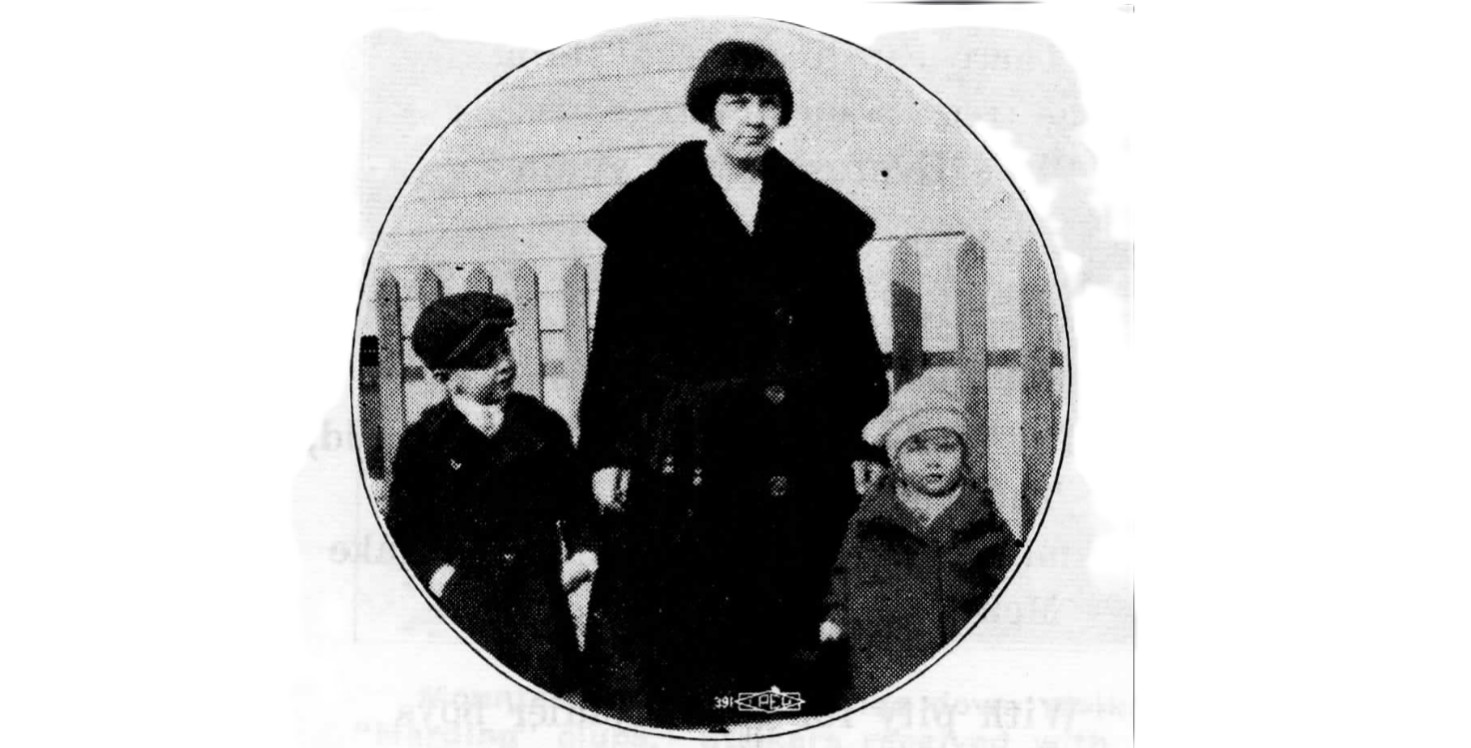
Briggs, here writing as Publicity Director for among the reactionary 1920’s most radical and heroic strikes, the largely Communist-led struggle against Passaic, New Jersey textile mills, urges support for those arrested and facing a myriad charges after the strike’s end.
‘Rally Labor for Passaic Strike Prisoners’ by Cyril Briggs from Labor Defender. Vol. 2 No. 5. May, 1927.
IN the police effort to break the Passaic textile strike, nearly one thousand strikers were arrested on one pretext or another during the long strike. A number of these strike prisoners are still facing trial. That they are in real danger of suffering for their strike activity no one can doubt who knows what has happened in those strike cases recently brought to trial. Of ten strikers tried only one, Tom Regan, escaped the vengeance of the mill owners. Of the others, one got off with a year, but eight drew sentences of three years. The textile barons do not forget. And, now, as in the past, they have at hand ready tools to measure out their vengeance under the guise of justice and in the name of “law ‘n order”.
It takes little imagination to realize the menace of savage revenge and long prison sentences facing these prisoners, whom the capitalist courts insist on bringing to trial even though the industrial dispute in which they were arrested was ended several months ago. One needs no imagination if one is familiar with the records of these courts during the big strike. The courts did everything possible to break the strike. They supported one hundred per cent the police efforts at strike breaking. They held the leaders of the strike on all manner of flimsy charges. They fixed excessive bail in the case of Albert Weisbord and many others. They co-operated with the police in the plot to keep the leaders behind bars, hoping thus to break the strike. They fixed high bail with the additional purpose of depleting the slender resources of the union. They fined 185 strikers a total of $4,078.15 with the same end in view. Their bail bonds amounted to the gigantic sum of $601,550.00.
In the early days of the strike, they fixed bail of $30,000 for Albert Weisbord, strike organizer and leader.
Later on, as they grew bolder, they set bail at $100,000 for one of the men held on a third degree confession in the police bombing frame-up. One hundred thousand dollar bail in a case where no one was injured and very little property damage done, while in another New Jersey court a woman accused of murdering her minister husband and his affinity, was released on bail of $40,000. Plainly New Jersey considers striking a crime worse than murder.
Nor did the courts confine their efforts to depleting the treasury of the union or keeping the strike leaders behind bars on high bail demands. They also aimed crushing blows at the spirit of the strikers with savage jail sentences. They sentenced picket lieutenants and rank and file strikers in a brazen fashion. They were on the mill owners’ side and did not care who knew it.
Ninety-eight strikers were sentenced to six months to one year in jail. The extreme youth of the pickets made little difference to courts too anxious to serve their masters to be bothered with any sense of decency. Maggie Pitocco, a seventeen-year-old girl striker, was given a sentence of six months. The charge on which she was arrested was disorderly conduct. Her crime was constant activity on the picket line. Many other young workers received harsh sentences. The young workers, especially the girls, were the life of the strike, and the courts were out to intimidate them. These cases were all appealed and will come up again for trial soon.
The capitalist courts show no intention of letting up in their persecution of the strike prisoners. The victory won by the union in the case of Tom Regan has given them a set-back but has not altogether deterred them.
The organized labor movement, and the other friends of the Passaic strikers, must again rally to the cause of Passaic. Adequate legal defense must be provided for these heroic workers, whose fight is the fight of the entire labor movement. Any prison sentence inflicted upon them would be a blow to the labor movement.
The Passaic strike is over, but the struggle to protect the strike prisoners must still be waged to a successful conclusion.
Labor Defender was published monthly from 1926 until 1937 by the International Labor Defense (ILD), a Workers Party of America, and later Communist Party-led, non-partisan defense organization founded by James Cannon and William Haywood while in Moscow, 1925 to support prisoners of the class war, victims of racism and imperialism, and the struggle against fascism. It included, poetry, letters from prisoners, and was heavily illustrated with photos, images, and cartoons. Labor Defender was the central organ of the Scottsboro and Sacco and Vanzetti defense campaigns. Editors included T. J. O’ Flaherty, Max Shactman, Karl Reeve, J. Louis Engdahl, William L. Patterson, Sasha Small, and Sender Garlin.
PDF of full issue: https://www.marxists.org/history/usa/pubs/labordefender/1927/v02n05-may-1927-LD.pdf
 Revolution's Newsstand