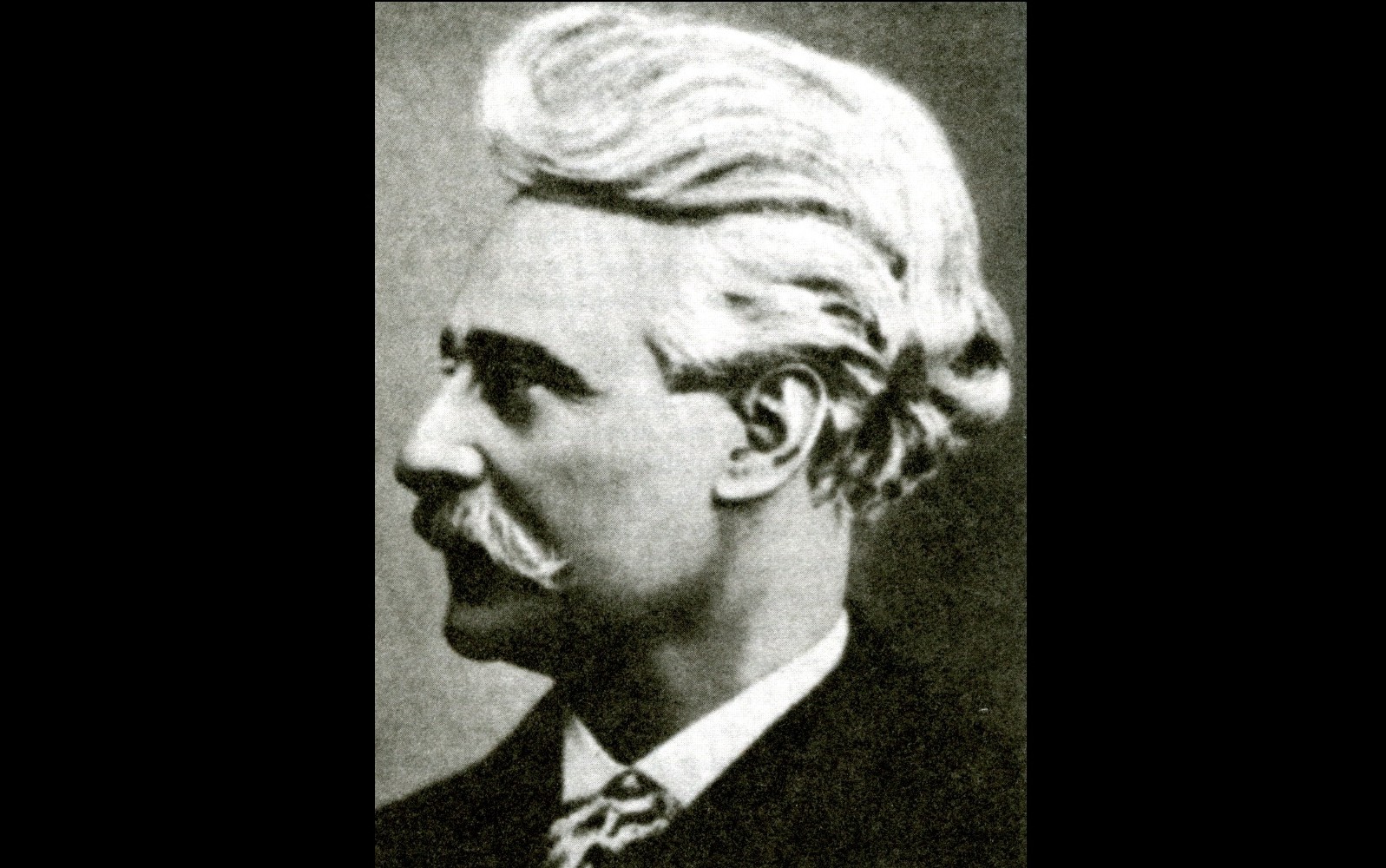
The scope and complexity of Lafargue’s historical, cultural, and philosophical references; his–at times–revelatory insightful social perceptions; the expansiveness of his revolutionary imagination; and the purity of his hatred for the class enemy and their hypocrisy make his writings, despite their many anachronisms and exuberant excesses, thrilling and often profound additions to Marxist thought. A reminder, ‘savagery,’ ‘barbarism,’ and ‘civilization’ were then considered technical terms for eras of social development and not used to denote moral or racial hierarchies. Part one of a compelling study on the changing ideas of justice. Part two here.
‘The Origin of the Idea of Justice: I. The Law of Retaliation–Retributive Justice’ by Paul Lafargue from from Social and Philosophical Studies. Charles H. Kerr, Chicago. 1906.
Justice as it exists in our civilized societies flows from two sources; one takes its origin in the very nature of the human being and the other in the social environment organized on the basis of private property. The passions and the concepts existing in man before the establishment of property, and the interests, passions and ideas which this engenders, acting and reacting one upon another, have ended by begetting developing and crystallizing in the brain of civilized man the ideas of the Just and Unjust.
The human sources of the idea of justice are the passion for vengeance and the sentiment of equality.
The passion of vengeance is one of the most ancient in the human mind. It has its root in the instinct of self-preservation–in the necessity which impels animal and man to resist when they receive a blow, and to respond to it mechanically if fear does not put them to flight. It is the blind and unreasoning necessity which leads the child and the savage to strike the inanimate object which has wounded them. Reduced to its simplest and last expression, vengeance is a reflex movement analogous to the involuntary motion which makes the eye wink when it is threatened.
Vengeance with the savage and the barbarian is of an intensity unknown to civilized men. “The Redskins,” says the American historian, Adairs, “feel their heart burn violently day and night until they have shed blood for blood. They transmit from father to son the memory of the murder of a relative, of a member of their clan, even though it be an old woman.” There are stories of Redskins who have committed suicide because they could not avenge themselves. The Fijian, who has received an insult, places within the range of his vision an object which he does not take away until he has assuaged his vengeance. The Slavonic women of Dalmatia show their child the bloody shirt of the slain father to incite it to vengeance.
“Vengeance one hundred years old, still has its milk teeth,” says the Afghan proverb. The Semitic god, “although slow to anger” visits the “iniquity of the fathers upon the children and the children’s children unto the third and fourth generation.” (Exodus, XXXIV, 7.) Four generations do not assuage his thirst for vengeance. He forbids entrance into the assembly up to the tenth generation to the Moabites and the Ammonites, “because they met you not with bread and with water in the way, when ye came forth out of Egypt.” (Deut. XXIII., 4.) The Hebrew might have said, like the Scandinavian, “The shell of the oyster may fall into dust by the process of years and a thousand other years may pass over this dust, but vengeance shall still be warm in my heart.” The Erinnyes of Greek mythology are the ancient goddesses “of vengeance” “of the inextinguishable thirst for blood.” The chorus of the sublime trilogy of Aeschylos, palpitating with the passions that torture the souls of the gods and mortals, cries out to Orestes, hesitating to avenge his father: “Let outrage be punished by outrage, let murder avenge murder.” “Evil for evil,” says the maxim of ancient times; “blood shed upon the earth demands other blood; the nourishing earth has drunk the blood of murder; it is dried, but its trace remains ineffaceable and cries for vengeance.” Achilles to avenge the death of Patroclus, his friend, forgets the insult of Agamemnon and stifles the wrath which made him watch unmoved the defeats of the Achaeans. The death of Hector does not assuage his passion; three times he drags his corpse around the walls of Troy.
The savage and the barbarian never forgive. They can wait year after year for the propitious moment of vengeance. Clytemnestra for ten long years watched patiently for the hour of her vengeance. When she had assassinated Agamemnon, the murderer of her daughter, drunk with joy and blood, she cried, “The dew of murder has fallen on me; as sweet to my heart as is to the fields the rain of Jupiter in the season when the grain of wheat comes forth from its sheath.”
Man sanctifies and deifies his passions, especially when they are useful for his preservation, private and social. “The inextinguishable thirst for blood,” vengeance, erected into a sacred duty, becomes the first of duties. The Erinnyes, in number like the curses which come from the mouth of an angered mother, hurl themselves from the shades of Erebus when once the imprecations give them life and motion. [1] They appear in the light of the sun only to breathe the passion of vengeance and untiringly to pursue the murderer over land and sea. No mortal could escape them. Their rage hunted down the culprit and his family and extended to him who gave him protection – to cities and whole countries. They stirred up civil wars and scattered pestilence and famine. The chorus of the Erinnyes of Aeschylos when Orestes is on the point of escaping them cries:
| And I, dishonoured, wretched, full of wrath, Upon this land (Attica), ha! Ha! Will venom, venom from my heart let fall, In vengeance for my grief, A dropping which shall smite the earth with barrenness! And thence shall come, (O Vengeance!) on the plain Down-swooping, blight of leaves and murrain dire That o’er the land flings taint of pestilence. (Plumptre’s Translation.) |
The Semitic god likewise avenged the shedding of blood upon plants, beasts and children. The poetic imagination of the Greeks personified in these terrible goddesses, whose name they feared to pronounce, the terrors inspired in primitive peoples by the unchaining of the passion of vengeance.
Vico, in his Scienza Nuova, formulates this axiom of social science:
“Legislation takes man as he is to make of him a being adapted for human society. From ferocity, avarice and ambition – these three vices which lead men astray, it derives the army, commerce and the court; that is to say, the strength, wealth and knowledge of republics; and these great vices, capable of destroying the human race, create social felicity.
“This axiom proves the existence of a divine providence – the divine legislative thought, which, from the passions of men absorbed completely in their private interests, that would make them live like ferocious beasts in solitude, derives the civil order which permits them to live in human societies.”
Inviolable law, to use Aristotle’s phrase, arose in fact from the passion of vengeance, furious and ever boiling. But it is not a divine legislative intelligence, which, as Vico thought, creates order out of the disorders of human passions; it is on the contrary these disorders which engender order. I shall try to prove this. The implacable and furious passion for vengeance which is found in the souls of the savages and barbarians of the old and new world, as is proved by the previous quotations, is imposed upon them by the conditions of the natural and social environment in which they move.
The savage, at perpetual war with man and beast, and his spirit haunted by imaginary dangers, cannot live alone, and gathers himself into herds. He cannot understand existence outside of his clan; to drive him from it is to condemn him to death. [2] The members of a tribe consider themselves descended from a single ancestor. The same blood flows in their veins. To shed the blood of one member is to shed the blood of the whole tribe. The savage has no individuality; it is the tribe, the clan, and later the family, which possesses an individuality. Solidarity of the narrowest and solidest kind welds together the members of a tribe or clan to the point of making them one single being, like the Briareus of Greek mythology; in the most primitive nations that it has been possible to observe, the women are in common and the children belong to the clan. Individual property has not yet made its appearance. The most personal objects such as arms and ornaments pass from hand to hand with the most startling rapidity, according to Fison and Howitt, those conscientious and intelligent observers of Australian manners. The members of savage tribes and barbarous clans move and act in common like a single man; they change their location, hunt, fight and cultivate the land in common. When warlike tactics are improved, they range themselves in battle by tribes, clans and families.
They put offenses into the common fund, like everything else; an injury done to one savage is resented by the whole clan as if it were personal to every member; to shed the blood of one savage is to shed the blood of the clan. All its members consider it their duty to wreak vengeance. Vengeance is collective like marriage and property. The right of exercising vengeance was among the barbarous Germans the family bond, par excellence. When the Frankish tribes had established the wehrgeld; that is to say, a monetary compensation for the offense, all the members of the family shared the price of blood. But the Frank who had gone out of the family community had no right to the wehrgeld. If he was killed, it was the king who became his avenger and received the price of his blood.
But, because the clan resents the injury done to one of its members, the whole clan becomes responsible for the offense committed by one of its members. The offense is collective like the injury. [3] The offended clan takes vengeance by killing any individual whatever of the offending clan. “Among the Australian people a general consternation reigns,” writes Sir G. Grey, “when a murder is committed, especially when the guilty one has escaped, for his relatives consider themselves guilty, and it is only the persons who have no relation with the family who feel any safety.” A murder is the declaration of war between two families, between two clans – a war of ambuscades and extermination, which lasts for years, since a murder demands a death to avenge it, which in its turn demands vengeance. Some times two entire clans come to blows. It is only half a century ago that in Dalmatia “war extended from the families to the whole village, and sometimes civil war was let loose over all the district.” [4] Even women and children are objects of vengeance. The Scandinavians did not spare the new-born in the cradle, for, “A wolf lies in wait in the tender child” says the Eddas. Even in the nineteenth century the Greeks took vengeance upon male children of more than eight years old, and the women and young girls alone were spared. [5]
It is not only real murders which imperiously demand vengeance, but also the imaginary murders created by the superstitious intelligence of the savage. No death is natural for the Australian; every decease is caused by the mischief of an enemy belonging to a rival clan, and the duty of the relatives is to avenge the deceased by killing; not exactly the presumed author of the mischief, but any member whatever of his clan–several indeed if possible. [6] Moreover, the dead man avenged himself, his spirit came to torture the guilty. Fraser asserts that one of the causes of the suppression of the cannibal banquets is the fear of posthumous vengeance on the part of the unfortunate who has been eaten. It is not only to avenge himself that the savage kills the murderer, but also to appease the dead, whose spirit would be tormented until human blood be shed. To tranquilize the shade of Achilles, the Greeks sacrificed on his tomb Polyxena, the sister of Paris, his murderer.
The savage, who understands his existence only as an integral part of his clan, transforms the individual offense into a collective offense; and vengeance, which is an act of personal defense and self-preservation, becomes an act of collective defense and self-preservation. The clan protects itself by wreaking vengeance for the murder or wounds of one of its members. But this collective vengeance inevitably involves collective dangers which sometimes compromise the existence of the clan. The collective dangers of these vendettas obliged the savages to stifle their sentiment of solidarity and to sacrifice the member of the clan responsible for the injury and to deliver him up to the clan of his victim. Savages of Australia, arms in their hands, stop and calm themselves, reducing their vengeance to a personal damage exactly equal to that which had been committed, and which had become the cause of the quarrel. Life for life, wound for wound. The law of retaliation was born.
Retaliation, “life for life, eye for eye, tooth for tooth, hand for hand, foot for foot, burning for burning, wound for wound, stripe for stripe” (Exodus, XXI, 23, 25), this alone can give full satisfaction to the sentiment of equality of the primitive communist tribes, whose members are all equal.
The most complete equality follows necessarily from the conditions in which the savage of the communist tribes lives. Darwin in his Voyage of a Naturalist relates this characteristic story: He saw a Fuegian, to whom a wool coverlet had been given, tear it into rags equal in breadth, in order that each individual of the tribe might receive a piece, since the savage could not admit that one member of his clan should be better endowed than another in anything whatever. Caesar, when he came in contact with the German tribes, was struck by the equalitarian spirit which governed their division of goods. He attributed it to the desire to create equality among their members. Caesar reasons like a civilized man living in a social environment where unequal conditions of existence inevitably produce inequality among the citizens. The barbarians whom he had under his eyes were living on the contrary in a communist environment producing equality; they therefore did not have to seek for it in their divisions, but to satisfy their equalitarian spirit by distributing equal shares to all without in the least suspecting the social importance of their act. It is in this way that people digest without any knowledge of the chemistry of the stomach, and that the bees construct the cells in their hives according to the most exact geometric and mechanical rules of resistance and economy of space, without suspecting the existence of geometry and mechanics. Equality is not only implanted in the heart and brain of primitive men, but furthermore exists in their physical appearance. Volney relates that a chief of the Redskins expressed to him his astonishment at the great physical differences which existed between the whites whom he saw, while the greatest resemblance was the rule between the members of any one savage tribe.
Old age surrounded with respect is the first privilege which appears in human societies. It is the only one which exists in the savage tribe. Whatever may be the superior qualities of courage, intelligence, endurance of hunger, thirst and pain which distinguish a warrior, they do not give him the right to assert himself. He may be chosen to direct his companions on the hunt, and to command in war, but the expedition ended, he becomes again their equal. “The greatest chief of the Redskins,” says Volney, “cannot even in the field strike or punish a warrior, and in the village he is obeyed by no child except his own.” [7] The Greek chief of Homeric times possessed an authority scarcely more extended. Aristotle remarks that if the power of Agamemnon went as far as the right to kill the runaway when they were marching against the enemy, yet he patiently accepted insults at the time of council. The Greek generals in historic times, when their year of command expired returned to the ranks. Thus, according to Plutarch, Aristides and Philopœmen, who had been leaders of armies, and who had won victories, served as simple soldiers.
Retaliation is merely the application of equality in the matter of satisfaction to be awarded for in injury. It is the equalized expiation for the offense. Only a damage exactly equal to the offense committed–a life for a life, a burn for a burn–can satisfy the equalitarian soul of primitive men. The equalitarian instinct, which in the distribution of food and of goods imposed the equal share, created the law of retaliation. The necessity of preventing the disastrous consequences of vendettas introduced it into primitive societies. Justice plays no role, either in its creation or introduction. Thus we find the law of retaliation established among nations, who have so little idea of Justice that they possess no words for crime, fault, justice. The Homeric Greeks, although of a relatively higher civilization, had no word for law, and it is impossible to conceive of Justice without laws. [8]
Retaliation, invented and introduced to escape the dangers of vendettas and admitted by primitive men because it gave full satisfaction to their passion for vengeance, had to be regulated when once it became a matter of custom. The entire clan originally had a right to vengeance, which it exercised indifferently on any member of the clan which had committed the offense. A beginning was made by limiting the number of persons who could exercise vengeance, and that of the persons upon whom it was permitted to exercise it. The thar, the law of blood of the Bedouins and almost all the Arabs, authorizes every individual comprised in the first five degrees of relationship to kill any relative of the murderer comprised in the first five degrees. This custom must have been general, for among the Germans and the Scandinavians the wehrgeld was paid and received by the relatives of the first five circles or degrees.
This custom, although limiting the field of vengeance, nevertheless gave up to it too vast a choice of victims; thus among the Hebrews we recognize attempts to restrain it and to limit vengeance to the guilty one. Jehovah, who has no fear of contradicting himself, commands in Deuteronomy (XXIV, 16): “not to put to death the fathers for the children, nor the children for the fathers, but each to be put to death for his own sin.” It was so difficult to impose this limitation upon fiery vengeance that long afterwards the Eternal protests against the proverb, “The fathers have eaten sour grapes and the children’s teeth are set on edge. As I live, ye shall not have occasion any more to use this proverb in Israel. Behold! all souls are Mine, as the soul of the father, so also the soul of the son is mine, and the soul that sinneth shall die.” (Ezekiel, XVIII, 2, 3, 4)
But it was still more difficult to limit the number of persons considering themselves authorized to exercise vengeance–and finally to take it away from them. The passion of vengeance could not be assuaged unless the nearest relative of the victim punished the guilty one. Thus, it is Pyrrhus, the son of Achilles, who before the Achaean army had to sacrifice the sister of his father’s murderer. Caillaud relates that in certain tribes of the African desert, the guilty one is turned over to the full discretion of the near relatives of the victim–who torture him and kill him at their will. Fraser saw in Persia a woman, to whom they had given up the murderer of her son, pierce him with fifty slashes of a knife, and by a refinement of vengeance, pass the bloody blade over his lips. In the ninth century in Norway, the murderer, led to the edge of the sea by the members of the popular assembly, was put to death by the prosecutor, or on his authority, by the royal provost. As for Athens, the civil power was charged to strike the culprit, the nearest relative assisted at the execution as an avenger of blood. Even though he no longer played an active part, his presence was necessary, not only to assuage his vengeance but also to fulfill the primitive conditions of the law of retaliation.
This law, by regulating and limiting the vendetta, proves that the passion which tortures and blinds primitive man subsides by degrees and can finally be curbed under a yoke; man accustoms himself no longer to exercise vengeance blindly upon a whole clan or upon a whole family, but on the culprit alone, and this vengeance is limited to rendering strictly blow for blow, death for death. [9] This regulation could not be introduced and maintained but for the collective intervention of the clans and families of the victim and the culprit. The family, always remaining responsible for the actions of its members, is called upon to declare whether it wishes to take the responsibility of the offense, or to give up the offender; in this last case, to determine on an expiation proportionate to the injury, it must also constrain the culprit to submit passively in the event of there being resistance on his part. [10] Thus they came to establish arbitrating tribunals, whose duties it was to estimate the offense and to award satisfaction.
The members of the tribe assembled together as was the case with the Scandinavians, constituted this first tribunal of arbitration; but on account of the difficulties presented by the gathering of such assemblies, only cases of murder or serious wounds were submitted to them; as for of minor importance, like blows and wounds not involving death or the loss of a limb they had to be settled by the council of elders
Moses on the advice of his father-in-law, Jethro, chose men of truth and placed such over them to be rulers of thousands, rulers of hundreds, rulers of fifty and rulers of tens, to judge the people at all times,” but every grave matter they were to bring to him. (Exodus xviii) Moses probably reproduced in the desert what existed in Egypt. A council of Druids was in Gaul charged with looking into the offense and fixing the penalty. If one of the parties refused to submit to its decree, it barred him from sacrifices, which constituted the most terrible punishment, for the interdict was avoided by everyone. (Caesar’s Gallic War, vi, 13) At Athens the Areopagus regulated vengeance. Aeschylos puts in the mouth of the Erinnyes who had just lost their case, these words depicting the evils which had necessitated the institution of such a tribunal:
| “For this, too, I will pray, That Discord, never satiate with ill, May never ravine in this commonwealth Nor dust that drinks dark blood From veins of citizens, Through eager thirst for vengeance, from the State Snatch woes as penalty For deeds of murderous guilt.” – (Plumptre’s Translation.) |
These ancient goddesses, daughters of Night, who personified primitive vengeance, were pronouncing their funeral oration. After the establishment of the Areopagus, they subsided and lost their savage character along with their function. They then changed their names and were called Eumenides; that is to say, the Good Goddesses.
The Areopagus must have dated back to a remote antiquity. Another legend says it was established to pronounce on the murder committed by Ares. He had killed the son of Poseidon who had violated his daughter. He was acquitted by the twelve gods who formed the tribunal. By the way, the word Areopagus signifies Ares Hill. Another legend has it that the first murder brought before this tribunal was that of Procris, killed accidentally in the chase by her husband, Cephalus. This legend and that of the matricide of Orestes would make the institution of the Areopagus date back to the period of the matriarchate, which at the time of the Trojan war had just been replaced by the patriarchate; in fact, at the moment when woman ceases to be the head of the family, she enters as a slave into the house of her husband, who has the right of life and death over her. Even her son possesses that right. Consequently vengeance could no longer be demanded for her death if the murder was brought about by her husband or her son. [11] The Areopagus rendered its decrees in the dark, like the Egyptian tribunal corresponding to it. That is why Themis, the goddess emblematic of Justice, has her eyes bandaged. The Athenians no doubt wished this symbolism to recall the fact that the Areopagus had been established as a substitute for the Erinnyes, daughters of Night, who, according to Homer, lived in the shades of Erebus. The Areopagus and the Egyptian tribunal admitted no attorneys. The culprit, himself, was obliged to preserve silence. These two tribunals, replacing the families of the offended and the offender, did not judge; their role was limited to finding the culprit and delivering him to the family of the offended.
If in a commercial city like Athens, the necessity of maintaining order permitted the establishment of a permanent tribunal for regulating vendettas and punishing culprits, almost everywhere else it was necessary to leave to the families the function of satisfying their own vengeance. In England in the tenth century, under King Alfred, custom and law still authorized families to declare private war in case of murder. The civil power in France, not having been able to take vengeance away from the families, tried to attenuate its effects by imposing an interval between the offense and the vengeance. A royal ordinance of the thirteenth century, La quarantaine-le-roy (king’s forty days), attributed to Phillip Augustus or St. Louis, forbade undertaking private war for vengeance until forty days had elapsed since the commission of the offense. If, in this interval a murder was committed upon one of the offenders, the murderer was punished with the death penalty, for having transgressed the royal ordinance. It is only lately that the French Government has been able to suppress vendettas in Corsica.
The passion for vengeance, although subject to the law of retaliation and to arbitrating assemblies, still remained irrepressible. Its claws and its teeth could only be drawn by property. Nevertheless property, which is destined to banish the disorders of private vengeance, makes its appearance surrounded by a train of discords and crimes in the bosom of families. Before the right of primogeniture was recognized and accepted as an established custom, it engendered fratricidal struggles for the possession of the paternal goods, of which Greek mythology has preserved horrible memories in the story of the Atridae. [12] Since then property has not ceased to be the most efficacious and the most active cause of private dissensions and crimes, and of civil and international wars, which have overwhelmed human societies.
Property enters like a fury into the human heart, overwhelming the most deeply rooted sentiments, instincts and ideas and exciting new passions; nothing less than property would have served to restrain and weaken vengeance, the ancient and dominant passion of the barbaric soul.
Private property once established, blood no longer demands blood; it demands property; the law of retaliation is transformed.
The transformation of retaliation was probably facilitated by slavery and the slave trade, the first international commerce which was regularly established. The exchange of living men for oxen, arms and other objects accustomed the barbarian to giving for blood some other equivalent than blood. A new household phenomenon contributed even more energetically than the slave trade toward modifying the law of retaliation. Woman, so long as the matriarchal family exists, remains in her clan, where she is visited by her husband or husbands; in the patriarchal family the young girl leaves her family to go and live in that of her husband. The father is indemnified for the loss of his daughter, who by marrying ceases to belong to him. The young girl then be comes an object of traffic, a finder of oxen, alphesiboia according to the Homeric epithet. It was for oxen that the Greeks exchanged her. The father began by trafficking in his daughters and ended by selling his sons, as is shown by the Greek and Roman laws. The father by selling his own blood breaks the ancient solidarity which united the members of the family and bound them in life and death. The parents, exchanging for beasts and other property their children, their living blood, became for a still stronger reason disposed to accept beasts or other property for blood that had been shed, for a son who was slain. The children, following the example of their parents, came in their turn to satisfy themselves with an indemnity, whatever it might be, for the blood of their father or mother.
Then instead of life for life, tooth for tooth, beasts, iron or gold are demanded for life, tooth and other wounds. The Kaffirs require oxen, the Scandinavians, Germans and barbarians, who by contact with more civilized nations have learned the use of money, demand silver. [13]
This revolution, one of the most far-reaching ever accomplished in the human soul, was not brought about suddenly nor without painful struggles. Not only religion, the preserver of ancient customs, but also the barbarian sentiments of solidarity and dignity opposed themselves to the substitution of money for blood. Superstition attached a curse to blood money. The treasure, which in the Eddas is the cause of the death of Sigurd and the extermination of the family of the Volsungs and the Giukings, is precisely the price of blood which the Scandinavian gods Odin, Loki and Hœnir had to pay for the murder of Balder. Saxo Grammaticus has preserved the song of a Danish bard who is indignant against the customs of his day and against those who carry in their purse the blood of their fathers. The nobles of Turkestan, says Pallas, never consent to receive the price of blood. The Afghan murderer, even if he has committed an involuntary murder, according to Elphinstone, has to beg the family of his victim to accept his money for compensation and has to submit to a humiliating ceremony analogous to that which on a similar occasion was in use among the Slavs of Southern Europe.
“The judges and spectators form a large circle. In the middle, the culprit with a gun and a dagger attached to his neck, crawls on his knees to the feet of the offended party, who, after taking away his arms, raises him and embraces him, saying, God forgive you. The spectators with joyous plaudits congratulate the reconciled enemies. This ceremony, called the Circle of Blood, ends by a feast given at the expense of the murderer, in which all the spectators take part.” [14]
The Bedouin, although accepting blood-money, forces the murderer and his family to recognize their obligations to him.
Retribution for blood was at first left to the award of the offended party, who at his will determined the quantity and quality of the objects to be given to appease him. The Sagas show us the Icelander fixing by himself the price of blood and content with nothing less than all the property of the murderer and his family. To appease his passion for vengeance, complete spoliation was required, that the culprit and his family might be deprived of the joys of life. This excess of compensation made this sort of expiation practically impossible and gave room for endless debates. The barbarians, to obviate this difficulty, saw themselves forced to decide on the price which could be demanded. The barbarian codes fixed minutely the price to be paid in kind or money for the life of a freeman, according to his birth and his rank; for wounds on the hand, on the arm, on the leg, etc.; and for every insult to his honor, and every attempt upon his domestic peace. The king, as well as the peasant, was protected by a wehrgeld, payable to his relatives. The only difference between the wehrgeld of the king and that of other individuals in a nation was the scale on which the price of blood was figured. [15]
The family of the culprit was responsible for the payment of the price of blood, which the family of the victim shared among its members, proportionately to the degree of relationship. The Gragas of Iceland indicate the manner of division: the males of the family were divided into five circles or degrees of relationship; the first circle, composed of the father, mother and the eldest son, received or paid three marks; the second and third circles two marks; the fourth one mark and the fifth one ore or an eighth of a mark.
The wehrgeld involved the creation of an official body with the duty of superintending its application. Later, fines were added to it. The wehrgeld continued to be paid to the relatives of the victim, while the fines accrued to the royal or public funds. It is almost the same as in our own days in capitalist countries, where the wehrgeld has taken the name of damages and interests.
The simple and equalitarian spirit of the savage had led him to the law of retaliation, life for life, wound for wound, which was the only way for regulating vengeance that he could imagine; but when under the operation of property, the law of retaliation was transformed and the brutal equation of life for life was replaced by the economic equation, beasts and other goods for life, wound, insult, etc.–the spirit of the barbarian was submitted to a severe test: he had to solve a problem which obliged him to penetrate into the domain of abstraction. He had on one side to weigh the material and moral damage caused a family by the death of one of its members; and to an individual by the loss of one of his limbs or by an insult; and on the other hand to measure the advantage which they derived from the cession of certain material goods;–that is to say, he was obliged to apportion and equilibrate things having no direct material connection between them. The barbarian began brutally in demanding in the case of a murder, the social ruin of the culprit, his economic death, the cession of all his property; and ended after many intellectual efforts by tariffing life, the loss of an eye or a tooth and even insults. This tariffing obliged him to acquire new abstract concepts on the relations of men among themselves and with things, which in their turn engendered in his brain the idea of retributive justice, which has for its mission to proportion as exactly as possible compensation to damage.
Notes
1. Curses are not idle words for the barbarian; the word, the verb, is for him endowed with irresistible power. The gods themselves obeyed the imprecations of mortals. The Jews like the Chinese, condemned to death him who had cursed his father or mother. (Exodus XXI, 17.) Catholicism in giving the confessor the power of binding and loosing sins on earth and in heaven by the aid of a formula, reproduces the primitive idea of savages on the power of the word.
2. Cain, driven from his clan after the murder of Abel, laments: “My punishment is greater than I can bear. Behold, thou hast driven me from this land. I shall be a wanderer and fugitive over the earth and it shall come to pass that whosoever findeth me shall slay me.” (Genesis IV, 13, 14.) Exile is one of the most terrible punishments of ancient societies.
3. Collective responsibility still seems so natural in the Middle Ages that the ordinances of Edward I of England make the whole of the Trade Guild responsible for the crime of one of its members.
4. Sir Gardner Wilkinson, Dalmatia and Montenegro, 1848.
5. Lord Carnarvon. Reminiscences of Athens and Morea.
6. Jesus Christ, St. Paul and the Apostles, shared with the savages this opinion; diseases were according to them the work of the demon, the enemy of the human race. (Matthew IX, 33; Luke XI, 14; Acts XIX, 12.) This superstition for centuries kindled in Christian Europe the pyres of sorceresses.
7. Volney’s General Observations on the Indians of America, 1820.
8. This absence of the word “law” had struck the ancients: the historian Josephus observes with astonishment that in the Iliad the word nomos, which later was to signify law, is never employed in that sense.
9. The barbarian does not stop half way. He carries logic to its final consequences: once he had the idea of detaching the culprit from the collectivity of the family to make him carry the responsibility of his action, he pushed this idea to the point of detaching from the collectivity of the body, the organ which had committed the act, to be punished. Diodorus of Sicily reports that the Egyptians punished the violation of a free woman by mutilation. They amputated the nose of an adulterous woman in order to deprive her of the attractions which she had employed for seduction. They cut off the hands of counterfeiters and forgers of public seals, “in order to chastise the portion of the body with which the crime had been committed.” In almost all countries the hand of thieves have been cut off for petty larceny not involving capital punishment.
10. “When among the Itelmen of Kamchatka,” relates a traveler of the eighteenth century, G. Steller, “a murder is committed, the family of the victim applies to that of the murderer and demands that he be given up. If the latter consents and gives him up he is killed in the same fashion in which he killed his victim; if it refuses, that means that the family approves of the murder. Then war is declared between the two families. That which triumphs, massacres all the males of the vanquished family and carries into slavery the women and girls.” In Polynesia, when the culprit did not submit passively to the vengeance of the offended party, his own family constrained him by force. (Ellis, Polynesian Researches)
11. Demosthenes in one of his civil pleas cites an article of Draco’s laws which gave every Athenian the right of life and death over five women – his wife, his daughter, his mother, his sister and his concubine. The Gragas (gray geese), which are the ancient laws of Iceland, sanctioned this same right, adding to it adopted daughters. Later on in Solon’s epoch, customs being transformed, the laws of appeared too bloodthirsty, yet they were never abolished “but by the tacit consent of the Athenians,” says Aulus Gellius, they were, so to speak, obliterated.”
The first laws, precisely because they fix and sanction the customs of ancestors, were never abrogated they persisted although they were contradicted by new laws. Thus the code of Manu preserves, side by side, the law establishing the equal division of goods between brothers and that which established the right of primogeniture. The law of the twelve tables at Rome did not abolish the royal laws. The stone on which the latter were engraved was inviolable; at the very most the least scrupulous believed themselves authorized to turn it over.
12. If we recall the mythological legends of Greece, it seems that when the father’s authority replaced the mother’s in the family the order of succession was thrown into serious disorder. All the sons, who in the matriarchal family did not inherit, claimed to have equal rights to take possession of the goods of the deceased father and the management of the household. It was only after many internal struggles that the right of primogeniture succeeded in establishing itself and it could only maintain itself by calling religious superstition to its assistance. The father was accounted to live. He continued to administer his property and gave orders to his successor. Obedience was rendered not to the living heir but to the deceased father. Then by the side of the tribal religion were established the family cults which Fustel de Coulange supposes to have been primitive
13. At a time when historians believed that every nation and every race had its own special manners and customs, it was claimed that the wehrgeld was of German origin and that the Greeks and Latins had never descended to this barbarous means of compounding for blood by money. Nothing is further from the truth.
The Eighth Table of the Roman Law of the Twelve Tables says:
- Against him who breaks a limb and makes no amends, retaliation
- For the breaking of a freeman’s tooth a penalty of three hundred aces; of a slave’s one hundred and fifty
- For an insult a penalty of twenty-five aces.
Ajax having been sent with Ulysses and Phoenix on an embassy to Achilles to influence him to accept Agamemnon’s presents and appease his wrath, said to Ulysses: “Yet doth a man accept recompense of his brother’s murderer or for his dead son; and so the man-slayer for a great price abideth in his own land, and the kinsman s heart is appeased, and his proud soul, when he hath taken the recompense.” (Iliad, IX, 632-6)
14. Krasinski, Montenegro and the Slavonians of Turkey, 1853.
15. The establishment of the wehrgeld carries with it this curious consequence, which Mallet observes among the Scandinavians. Since the death of a freeman and wounds on his hand, his foot, etc., are subject to a price schedule, the body of a debtor may be held responsible for the debt contracted. It is this reasoning which in all countries has given the creditor the right to mutilate and enslave his debtor.
The Charles H Kerr publishing house was responsible for some of the earliest translations and editions of Marx, Engels, and other leaders of the socialist movement in the United States. Publisher of the Socialist Party aligned International Socialist Review, the Charles H Kerr Co. was an exponent of the Party’s left wing and the most important left publisher of the pre-Communist US workers movement.
PDF of Book: https://archive.org/download/socialphilosophi00lafa/socialphilosophi00lafa.pdf
 Revolution's Newsstand