Part two of a compelling study on the changing ideas of justice. Part one here.
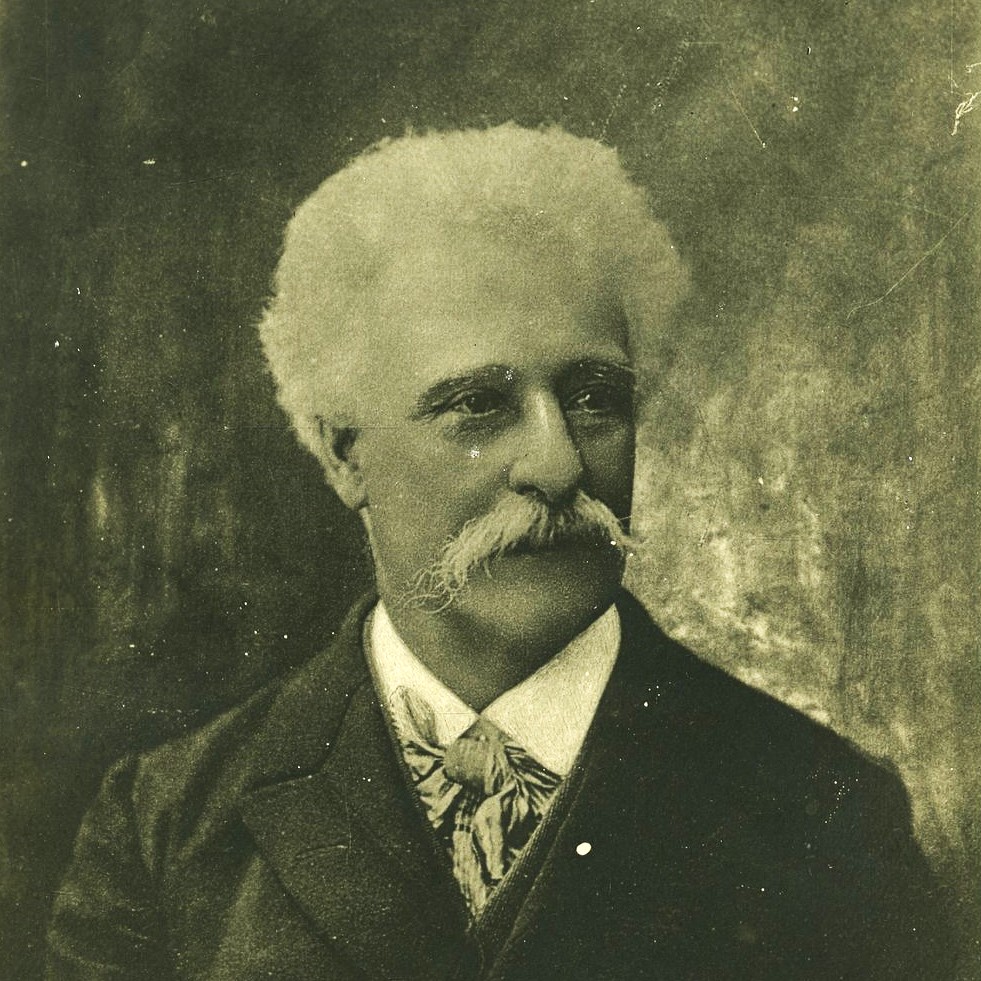
‘The Origin of the Idea of Justice: II. Distributive Justice’ by Paul Lafargue from from Social and Philosophical Studies. Charles H. Kerr, Chicago. 1906.
The instinct of self-preservation, the first and the most imperious of instincts, impels the savage man, like the animal, his ancestor, to take possession of the objects he needs. All that he can seize he grasps to satisfy either his hunger or his fancy. He acts toward material goods in the same way the scientist and the man of letters act toward intellectual goods: he takes his good wherever he finds it, according to Moliere s phrase. [16] The European travelers who have been the victims of that instinct have given themselves up to fine moral indignation and have belabored the savage with the epithet of thief, as if it were possible that the idea of theft should enter into the human head before the establishment of property. [17]
To subdue this prehensile instinct [18], which is the transformation of one of the essential proper ties of organized matter, to subject it to the yoke and to compress it to the stifling point, has been one of the tasks of civilization. To subjugate the prehensile instinct humanity has passed through stages more numerous than those required for subduing and extinguishing the passion for vengeance. The subjection of this primordial instinct has contributed to the defining of the idea of justice, rough-hewn by the taming of vengeance.
The savage, while he wanders in little clans over the uninhabited earth, along the seas and the streams, stopping where he finds food in abundance, exercises his prehensile instinct without restrictions of any sort; but from the remotest prehistoric times, the necessity of procuring the means of existence obliges him to restrain that instinct within certain limits. When the population of a country acquires a certain density, the savage tribes inhabiting it divide the land into hunting grounds, or into pastures when they live by the breeding of cattle. In order to preserve their means of subsistence, which are the natural fruits, game, fish and sometimes herds of swine feeding freely in the forests, the savage and barbaric nations of the old and the new world fringe their territories with neutral zones. [19] Every individual who goes beyond the limit of the territory of his tribe is pursued, trailed and sometimes put to death by the neighboring tribe. He can within the limit of his territory take freely of what he needs, but beyond that limit he takes only at his risk and peril. The violations of territory, often encouraged to exercise the bravery and the skill of the young warriors, are among the most frequent causes of war between neighboring tribes. The savages, in order to avoid these wars and to live at peace with their neighbors, were obliged to repress their prehensile instinct and to leave it a free career only within the limit of their own territory, the common property of all the members of their tribe.
But even in the limits of this territory the necessity of preserving the means of existence obliges the savages to put a bridle on their prehensile instinct. The Australians forbid the consumption of chickens and pigs when there is a scarcity, and that of bananas and yams when the crop of the bread-fruit trees promises ill. They prohibit fishing in certain bays when fish are scarce. The Redskins of Canada for other reasons do not kill the female beavers. The savages, even when dying of hunger, do not touch the plants and animals which are the totems of their tribes, that is the ancestors from which they claim to be descended. These prohibitions, to be more effective, often take on a religious character. The forbidden object is tabooed, and the gods take it upon themselves to punish those who violate the prohibition.
These restrictions to the prehensile instinct are communistic; they are imposed only in the interest of all the members of the tribe and it is only for this reason that the savage and the barbarian submit to them voluntarily. But there exist even among savages other restrictions which have not this character of common interest.
The sexes in savage tribes are distinctly separated by their functions. The man fights and hunts, the woman feeds and watches over the child, which belongs to her and not to the father, who is generally unknown or uncertain. She takes charge of the preservation of the provisions, the preparation and the distribution of food, the making of clothes, household utensils, etc., and she attends to agriculture at its beginning. This separation–based upon organic differences, introduced to prevent promiscuous sexual relations and maintained by the functions devolving upon each sex–is reinforced by religious ceremonies and mysterious practices peculiar to each sex and forbidden on pain of death to the persons of the other sex and by the creation of a language which is understood only by the initiated of one sex. The separation of the sexes inevitably brought on their antagonism, which translated itself by prohibitions imposed upon the prehensile instinct, which no longer have a general character, but which take on a special sex character–we might say a class character; for, as Marx observes, the class struggle first shows itself under the form of a struggle between the sexes. Here are a few of these sex prohibitions: the savage tribes ordinarily forbid women to participate in their cannibal feasts; certain choice meats such as the flesh of the beaver and emu are in Australia especially reserved for the warriors; it is from a sentiment of the same kind that the Greeks and Romans of historic times forbade women the use of wine.
The restrictions imposed upon the prehensile instinct continued to become more numerous with the establishment of the collective family property. As long as the territory of the clan remains the undivided property of all its members, who cultivate it in common just as they hunt and fish in common, the provisions entrusted to the keeping of the married women, according to Morgan, remain common property. Also within the limit of the territory of his clan a savage takes freely the food he needs. “In a village of Redskins,” says Cattlin, “every individual, man, woman or child, has the right to enter into any cabin, no matter what, even into that of the military chief of the nation, and eat all he requires.” The Spartans, according to Aristotle, had preserved these communistic manners, but the division of the arable lands of the clan introduces other manners. The division of lands could only take place on condition of its giving full satisfaction to the sentiment of jealous equality which filled the soul of primitive man. This sentiment demands imperatively that all have the same things, according to the formula which Theseus the mythical law-giver of Athens, had given for the foundation of justice. Every distribution of food or of the booty of war among primitive men was made in the most equalitarian manner–they could not conceive that it should be otherwise. The equal partition is for them the inevitable, so in the Greek language, moira, which signifies at first the part coming to each guest at a banquet ends by indicating the supreme goddess of Destiny to whom men and gods are subject; and the word diké used at first for equal division, custom ends by being the name of the goddess Justice. [20] If the most perfect equality must rule in the distribution of food, so much more the equalitarian spirit will be awakened when it comes to distributing the lands which provide the support for the whole family, for the division of lands was made by families proportionately to the number of their male members.
It has been rightly said that the inundations of the Nile forced the Egyptians to invent the first elements of geometry that they might redistribute the fields when the stream, bursting its banks, had effaced their land-marks. The custom of holding plowed lands in common after the harvest, and their annual redistribution, imposed upon other nations the same necessity as the overflowing of the Nile. The primitive men were obliged in all countries to discover for themselves the elements of surveying without going through the Egyptian school. Measuring follows naturally from counting. Probably the flock fortified the idea of number and developed numeration, while the division of land engendered the idea of measurement, and the vessel that of capacity. Rectilinear geometry was naturally the first to be discovered. It required year after year to learn how to decompose a curve into an infinity of straight lines and the area of a circle into an infinity of isosceles triangles. The arable lands were then divided by straight lines into parallelograms, very long and very narrow. But before they knew how to measure the surface of parallelograms by multiplying the base by the altitude and consequently before they had the power of making them equal, the primitive men could not be satisfied until the pieces of ground falling to each family were enclosed in straight lines of equal length. They arrived at these lines by carrying over the ground the same stick the same number of times. The stick which was used for measuring the length of the lines was sacred. The Egyptian hieroglyphics take for the symbol of Justice and Truth, the cubit, that is to say, the unit of measure. What the cubit had measured was just and true. [21]
The portions comprised between the straight lines of equal length set at rest their equalitarian spirit and gave no room for contests. The straight line was thus the important part of the operation 1 he straight lines once traced, the fathers of families were content. They gave full satisfaction their equalitarian sentiments. For this reason the Greek word orthos, which at first means what is in a straight line, has the further meaning of that which is true, equitable and just. [22]
The straight line, because it acquired the power of subduing their savage passions, must of necessity have taken on in their eyes an august character. It is by a like phenomenon that the Pythagorians, dazzled by the properties of the numbers they were studying, attributed to the decade a fatalistic character, and that all nations have given mystical qualities to the first numbers. We may thus conceive that the straight line represented in the minds of the men of the first agrarian allotments all they could conceive of Justice.
The equalitarian spirit of primitive men was so fierce, that to prevent the division of lands divided into narrow strips of equal lengths from exciting quarrels, they were distributed by lot, with the aid of pebbles, before the invention of writing. Thus the Greek word kleros, which means pebble, takes on the added significance of portion assigned by lot; then that of patrimony, fortune, condition, country.
The idea of justice was originally so closely linked to the division of lands, that in Greek, the word nomos, which means usage, custom, law, has for its root nem, which gives birth to a numerous family of words containing the idea of pasturage and of sharing. [23]
Nomos, at first exclusively used for pasturage, took on in the course of time numerous different meanings (sojourn, habitation, usage, custom, laws), which are so many historical sediments deposited by human evolution. If we unroll the chronological series of these meanings, we pass in review the principal stages traversed by prehistoric peoples. Nomos, pasturage, recalls the pastoral and vagabond epoch; from the time the nomad (nomas) pauses, nomos is used for sojourn, habitation; but when once the pastoral peoples pause and choose their homes in a country, they must inevitably divide up the lands; then nomos takes on the meaning of division. When once the agrarian divisions have passed into popular customs, nomos takes on its last meaning, custom, law, law being originally the codification of custom. In the Greek of the Byzantine period and of the modern epoch, nomos no longer preserves any other meaning than law. From nomos are derived nomisma, that which is established by custom, religious practice; nomizo, to observe the custom, to think, to judge; nomisis, worship, religion; Nemesis, the goddess of distributive justice, etc.–which are so many witnesses of the effect of agrarian divisions upon human thought.
The division of the common lands of a clan reveals a new world to the imagination of prehistoric man. It revolutionizes the instincts, the passions, the ideas and the customs in a more energetic and more profound fashion than would be done in our days by the return of capitalist property to the community. The primitive men, to familiarize their brains with the strange idea that they must no longer touch the fruits and the harvests of the neighboring fields within reach of their hands, were obliged to resort to all the witchcraft that they were capable of imagining.
Every field assigned by lot to a family was surrounded by a neutral zone like the territory of the tribe. The Roman law of the Twelve Tables fixed it at five feet. Boundaries marked its limits. At first they were only heaps of stone or trunks of trees. It was not until later that they were given the form of pillars with human heads to which arms were sometimes added. These heaps of stone and pieces of wood were gods for the Greeks and Latins. Oaths were made not to displace them [24]; the plowman was not allowed to approach it, “for fear that the god, feeling him self struck by the ploughshare, should cry to him, Stop, this is my field, there is thine.” (Ovid, Fasti) “Cursed be he who removeth his neighbor’s landmark,” thunders Jehovah, “and all the people shall say Amen!” (Deuteronomy, xxvii, 17). The Etruscans called down all manner of curses on the head of the culprit. “He who shall have removed the boundary,” says one of their sacred anathemas, “shall be condemned by the gods, his house shall disappear, his race shall be extinguished, his land shall produce no more fruits; hail, blight and the fires of the dog-star shall destroy his harvests, his limbs shall be covered with ulcers, and shall fall into corruption.” If property brought justice to humanity, it drove away brotherhood.
Every year at the Terminalia, the neighboring proprietors of Latium decorated the landmarks with garlands, made offerings of honey, wheat and wine, and sacrificed a lamb on an altar built for the occasion, for it was a crime to stain with blood the sacred landmark.
If it is true, according to the word of the Latin poet, that fear gave birth to the gods, it is still more true that the gods were invented to inspire terror. The Greeks created terrible goddesses to subdue the prehensile instinct and to horrify the violators of the property of others. Dike and Nemesis belonged to this class of divinities. Their birth was subsequent to the introduction of agrarian divisions, as their names indicate. They were charged with maintaining the new customs and punishing those who infringed them. Dike, terrible as the Erinnyes, with whom she is allied to terrify and punish, is appeased in proportion as men acquire the habit of respecting the new agrarian customs; she loses little by little her forbidding aspect. Nemesis presided over the divisions and took care that the distribution of the land was accomplished in an equitable manner. Nemesis on the bas-relief which represents the death of Meleager, is represented with a roll in her hand; doubtless the roll on which were inscribed the lots that fell to each family. Her foot rests on the wheel of fortune. To understand this symbolism it must be remembered that the portions of land were drawn by lot. [25]
The Greeks were so thoroughly convinced that the culture and sharing of lands had given birth to law and justice, that out of Demeter, the goddess of the shepherds of Arcadia, where she bore the name of Erinnys [26], and who plays no part in the two Homeric poems, they made the goddess of the fruitful earth, who initiated men into the mysteries of agriculture and established peace among them, giving them customs and laws. Demeter, on the monuments of the more ancient type, is represented with her head crowned with ears of wheat, holding in her hand implements of husbandry and poppies, which by reason of their innumerable grains are the symbol of fruitfulness; but in the more recent representations, which show her as law-giver, Thesmophora, Demeter replaces her ancient attributes by the stylet, which serves to engrave the customs and laws regulating the divisions of land; and by the roll on which are inscribed the titles of property. [27]
But the most formidable goddesses and the most horrible curses and anathemas, however deeply they disturbed the fantastical and artless imagination of the child-nations, failed utterly in curbing the prehensile instinct and the people’s inveterate habit of taking the things they needed. So there was nothing for it, but to resort to corporal punishment of a ferocity never before heard of and totally opposed to the sentiments and customs of savages and barbarians, who, if they do inflict blows to prepare themselves for their life of incessant struggles, never give to them the character of punishment. The savage does not strike his child. It is the proprietor fathers who invented the horrible precept, “He who loves well punishes well.” Attempts against property were punished more fiercely than crimes against persons. The abominable codes of iniquitous justice made their entrance into history in the train, and as the consequence, of private appropriation of land.
Property marks its appearance by teaching the barbarians to trample under foot their noble sentiments of equality and brotherhood. Laws inflicting the death penalty are enacted against those who menace property. “He, who at night shall secretly have cut or pastured his flocks on harvests produced by the plow,” commands the law of the Twelve Tables, “if he is of age, shall be sacrificed to Ceres and put to death; if he is under age, he shall be beaten by rods at the will of the magistrate and condemned to make amends for double the damage. The open robber, (that is to say, taken in flagrante delicto), if he is a freeman shall be beaten with rods and delivered up into slavery. The incendiary of a haystack shall be flogged and put to death by burning.” (Table VIII, 9, 10, 14) The law of Burgundy goes beyond the ferocious Roman law. It condemned to slavery the wife and the children of more than fourteen years who did not immediately denounce the husband and father guilty of theft or horses or oxen. (XLVII, 1, 2) Property introduced espionage into the bosom of the family.
Private property in real and personal goods, from its appearance, gives birth to instincts, sentiments, passions and ideas which under its action have been developing in proportion to its transformations, and which will persist as long as private property shall survive.
The law of retaliation introduced into the human brain the germ of the idea of justice, which the division of lands, laying the foundations of private property and real estate, was to fertilize and make fruitful. The law of retaliation taught man to subdue his passion for vengeance and subject it to regulation; property curbed, under the yoke of religion and law, his prehensile instinct. The role of property in the elaboration of justice was so preponderant that it obscured the earlier working of the law of retaliation to the point that a nation as subtle as the Greeks, and minds as keen as those of Hobbes and Locke, did not perceive it. In fact Greek poetry attributed the invention of laws only to the goddesses who preside over the partition and culture of lands. Hobbes thinks that before the establishment of property in a state of nature there is no injustice in whatever a man might do against another. Locke affirms that “where there is no property, there is no injustice, is a proposition as certain as any demonstration of Euclid: the idea of property being a right to a thing, and the idea to which the word injustice corresponds being the invasion or the violation of the right.” [28] The Greeks and these profound thinkers, hypnotized by property and forgetting the human being and his instincts and passions, suppressed the first and principal factor of history. The evolution of man and his societies cannot be understood and explained if we do not take account of the actions and reactions, one upon another, of human energies and economic and social forces.
The equalitarian spirit of primitive men, to overcome the passion of vengeance, had not and could not have found anything but the law of retaliation. On the occasions of the divisions of food, booty and lands, this same equalitarian spirit required imperatively equal parts for all, “that all might have the same things,” according to the formula of Theseus. Blow for blow, equal compensation for the wrong caused, and equal parts in the distribution of food and of lands were the only ideas of justice that primitive men could conceive. An idea of justice, which the Pythagorians expressed by the axiom “Not to overpass the equilibrium of the balance,” which as soon as it was invented became the attribute of justice.
But the idea of justice, which at its origin is but a manifestation of the equalitarian spirit, goes on, under the action of the property which it helps establish, to sanction the inequalities which property engenders among men.
Property, in fact, can only be consolidated by acquiring the right to set aside the prehensile instinct, and this right once acquired becomes an independent and automatic social force, which dominates man and turns against him.
The right of property conquers such a legitimacy, that: Aristotle identifies justice with respect for the laws which protect it, and injustice with the violation of these same laws; that the declaration of the rights of man and the citizen, of the bourgeois revolutionists of 1789 erects it into a “natural and inalienable right of man” (Article II); and that Pope Leo XIII in his famous encyclical on the condition of the laborers transforms it into a dogma of the Catholic Church. Matter leads the spirit.
The barbarian had substituted property for the shedding of blood. Property substituted itself for man, who in civilized societies possesses no rights but those conferred upon him by his property. Justice, like those insects which as soon as born devour their mother, destroys the equalitarian spirit which engendered it, and sanctions the enslavement of man.
The Communist Revolution, by suppressing private property and giving “to all the same things,” will emancipate man and will bring to life the equalitarian spirit. Then the ideas of justice, which have haunted human heads since the establishment of private property, will vanish–the most frightful nightmare which ever tortured sad civilized humanity.
NOTES
16. “Nature,” said Hobbes, “has given each of us an equal right over all things. In the state of nature each has the right to do and possess all that pleases him; whence comes the common saying that nature has given all things to all men, and from which it is gathered that in the state of nature utility is the rule of Right.” (De Cive, Book I, Chapter I) Hobbes and the philosophers who speak of natural right, natural religion, natural philosophy are lending to Dame Nature their notions of right, religion and philosophy, which are anything but natural. What should we say of the mathematician who should attribute to nature his concepts of the metric system and should philosophize on the natural meter and millimeter? Measures of length, laws, gods and philosophical ideas are of human manufacture; men have invented them, modified them and transformed them, according to their private and social needs.
17. Proudhon, who had taken to himself the proprietorship of Brissot’s phrase, committed the game error when he gave for a social axiom his “property is robbery,” for robbery is the consequence of property and not its determining cause. The historic origin of property, whether personal or real, proves that it never took, at its beginning a character of spoliation; this could not have been otherwise.
18. The word prehensile exists in zoological language. Webster defines it, adapted to seizing or grasping.
19. The rude savages of Terre del Fuego define the limits of their territories by broad vacant spaces. Caesar reports that the Suevi took pride in surrounding themselves with vast solitudes. The Germans gave the name of bordering forest and the Slavs the name of protecting forest to the neutral space between two or more tribes. Morgan says that in North America this space was narrower between tribes of the same language, ordinarily allied by marriage, and otherwise, and wider between tribes of different tongues.
20. A fragment of Heraclides of Pontus, a disciple of Plato, contains a description of the communistic feasts of the Dorians. Every person at the andreias (the common repast of the men) received an equal share, except the archon, the member of the council of the elders; he had the right to a quadruple portion – one in his quality as a citizen, a second in his quality as president of the table and two others for the support of the hall, these probably must have been reserved for his servants. Each table was under the special supervision of a matriarch, who distributed food to the guests. This function of distributor, reserved to woman, impressed so forcibly the prehistoric Greeks that they personified destiny and the Fates by the goddesses Moira, Aissa and Ceres, whose names signify the part which is received in the distribution of food or booty.
21. Haxthausen relates in his curious journey in Russia that he was in the State House of Jaroslaf certain rods which were revered as the sacred units of land measurement. The length of the rods was in inverse ratio to the quality of the land, the shortest served to measure the best lands and the longest for lands of inferior quality. “all the portions are in this way unequal in size and equal in value.”
22. The root or in the Greek language contributes to the formation of three groups of words, which seem contradictory, but which are complementary and connect themselves with the division of land:
- The Idea of going in a straight line:
or-thos, straight, erect, vertical, true, equitable, just;
or-me, movement upward, soaring, leaping, passion;
or-numi and or-ino, to set in motion, to excite;
or-ugma, ditch, subterranean gallery;
or-ux, pick-axe;
or-thoo, to make straight, to redress;
or-thosios, Zeus-Jupiter, who redresses wrongs.- The idea of bounding, of limiting:
or-os, boundary, frontier;
or-izo, to bound, to limit, to define, to enact;
or-ios, that which serves as a limit;
Zeus or-ios, Jupiter, protector of boundaries;
theos or-ios, the god of boundaries.- The idea of vigilance:
our-os, guard, guardian;
pul-or-os, guardian of gates;
tima-or-os, he who punishes, who avenges;
or-omoi, to watch over, to guard.
23. Nemo, to share, to distribute, then to treat some one according to law; nome, pasturage, portion, lot; nomas, nomad, vagabond, who wanders feeding a herd; nomos, originally pasturage – then sojourn, dwelling, portion–and finally usage, custom, law; nomizo, to observe the custom, the law; to think, to believe, to judge; nomisma, a thing established by custom, by law, religious practice, money; nomisis, worship, religion, belief; nemesis, wrath of the gods against those who infringe on the rights of another, the goddess of distributive justice; epi-nomia, right to pasturage; pro-nomia, privilege.
24. Plato In his Laws says: “Our first law should be this, that no one touch the boundary which separates a field from that of his neighbor, for it should remain unmoved, that no one should think of shaking the stone, which he has bound himself by an oath to leave in its place.”
25. Agriculture had a decisive influence over th development of the mentality of primitive men. Thus, for example, it was this which modified their opinions on the division of time. The hours, which in Greek mythology designated not the divisions of the day, but those of the year, were originally two in number; the hour of spring-time, Thallo, whose name signifies to be verdant, to bloom; and the hour of autumn, Karpus, which means fruit. Spring and autumn are the important seasons for the savage, who does not cultivate the land, but who lives on the fruits which it bears spontaneously. After the division of the lands, the number of hours is Increased to three, – Dike, Eunomia, whose name signifies good pasturage, equity, observation of custom, and Eirene, which means peace. Hesiod describes them in his Theogony as giving customs to men and establishing among them peace and Justice, like Demeter Thesmophora.
As long as men live by hunting, fishing and gathering wild fruits, it is a matter of indifference to them to be at war during one season rather than another, but when they have fields to sow and to reap, they are obliged to suspend during certain seasons of the year the wars of tribe against tribe, and to establish truces for the sowing times, the harvests and other agricultural labors. They then created the hour of peace, Eirene, and put these truces under her protection. The Catholics of the Middle Ages placed them under that of God and called them “Truces of God.” Eirene is derived from the word eiro, to speak. At Lacedaemon they gave the name eiren to the young man more than twenty years of age who had a right to speak in public assemblies. During the periods consecrated to the labors of the fields, the disputes between tribes and villages were settled no longer by arms, but by speech–whence is derived Eirene, the goddess who speaks.
The cultivation of the land might have had an influence over writing, as would seem to be proved by the ancient manner of writing employed by the Greeks, Chinese, Scandinavians, etc., which consists in writing alternately from left to right and right to left, – returning on one’s steps like the oxen which plow.
26. Erinnys might have come from erion, wool, from which is derived eriole, wool stealer.
27. The mythological gallery of Millin (Paris, 1811) reproduces numerous medallions, vases, cameos, bas-reliefs, etc., on which Demeter is pictured with her various attributes.
28. Hobbes: De Cive, remark added to the French translation of Sorbières. Locke: Essay on the Human Understanding.
The Charles H Kerr publishing house was responsible for some of the earliest translations and editions of Marx, Engels, and other leaders of the socialist movement in the United States. Publisher of the Socialist Party aligned International Socialist Review, the Charles H Kerr Co. was an exponent of the Party’s left wing and the most important left publisher of the pre-Communist US workers movement.
PDF of Book: https://archive.org/download/socialphilosophi00lafa/socialphilosophi00lafa.pdf
 Revolution's Newsstand