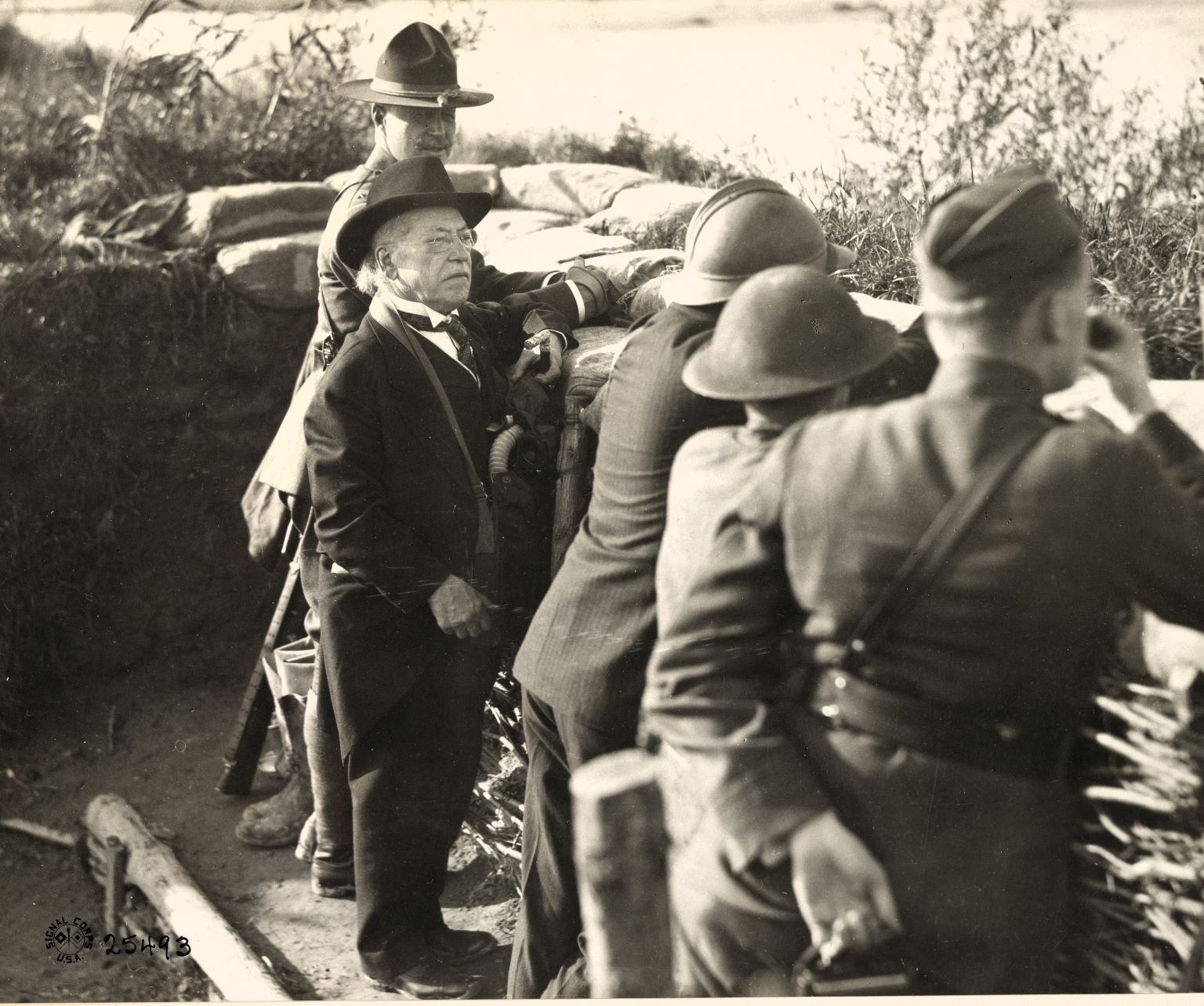
The origins of the ‘A.F.L.-C.I.A.’ ‘Labor imperialism’ emerged after the First World War whereby a ruling class deeply hostile to labor legitimized conservative unions at home by enlisting them in the war effort, then utilized them internationally to undermine radical and anti-imperialist labor movements with bodies like the International Labor Organization, and the Pan-American Labor Federation, described below by Bertram Wolfe, who was Comintern representative to Mexican Communist Party around this time.
‘Latin-America Prepares For Gompers’ by Bertram D. Wolfe from Workers Monthly. Vol. 4 No. 2. December, 1924.
THE left wing of the Mexican Labor movement and the Communist Party of Mexico are laying their plans for a “warm” reception to Samuel Gompers, President of the American Federation of Labor and of the Pan-American Federation of Labor, when that worthy comes to Mexico on November 31, to grace the ceremony of inauguration of the new “labor government” under President Calles, and to preside over the fourth Congress of the Pan-American Federation.
The walls of the City of Mexico will be plastered with placards reading: “Down with the Agent of Yankee Imperialism in the Latin-American Labor Movement;” “Gompers is America’s Greatest Strikebreaker;” “Gompers Favors the Occupation of Haiti;” “25 to 35 Per Cent More Wages for Americans than for Latin-Americans in the Canal Zone—recommendation of Gompers;” “Gompers Opposes Socialism;” “Gompers is the Enemy of Workers’ Russia,” etc.
In the Congress of the Pan-American Federation of Labor, he will find a left-wing group determined to prevent his re-election as president of that body. That left-wing group, in spite of the decision of most left-wing labor bodies in Latin-America not to send delegates to “Gompers’ Federation,” and in spite of the hand-picked delegates whose expenses are paid by the purchased governments set up by the American marines in Central America, and in spite of the treacherous collusion of Luis N. Morones and other Gompers henchmen in the Mexican Federation of Labor–that left wing group may develop a strength that will surprise Samuel.
Gompers Organizes the Pan-American Federation.
The Pan-American Federation of Labor is Gompers’ substitute for Amsterdam. It is the Monroe Doctrine applied to the American labor movement. Gompers organized it during the administration of President Wilson to aid that altruistic gentleman in his designs for the “pacification and civilization” of Latin-America. While Wilson sent troops to Haiti, Santo Domingo, Cuba, Nicaragua, Mexico, etc., he sent Gompers to talk to them about the benevolent intentions of the United States, the glories of American Democracy and the greatness of President Wilson. Also he was to persuade the Latin-American workers to favor entrance into the war on the side of the Allies, to favor the fourteen points and the many-pointed Versailles treaty, and he was to be so “bigbrotherly” that the Latin-American workers would not unite against American Imperialism and organize a continental labor revolt against its brutal attacks.
In these plans Gompers found willing tools in the conservative leaders of the supposedly “socialist” Mexican labor movement. Luis N. Morones, first General-Secretary and big chief of the Mexican Federation, became his chief supporter, and later Roberto Haberman, former California Socialist, became errand-boy or go-between for Gompers and Morones, getting a sort of commutation ticket between Washington, D.C. and Mexico, D.F. where the two great labor leaders “direct” their respective movements. Haberman also became a sort of publicity-man to explain how Gompers was “fighting” American Imperialism and aiding Latin-America, His “copy” consists of a wild tale as to how Secretary of State Hughes withdrew battleships from Mexican waters in twenty-four hours, when Gompers tipped him off that they didn’t belong there.
Let us examine Gompers’ “services” to Latin-America and see why he is to get such a rousing reception when he comes down here at the end of November to preside over the fourth Congress of the Pan-American Federation of Labor.
How Gompers “Fought” American Imperialism.
After many preliminary conversations during the war period, the Pan-American Federation of Labor was organized in Laredo, Texas, in a conference that lasted from November 13 to 16, 1918. There were seventy-five representatives present from the American Federation of Labor, from the Mexican Federation, and from more or less imaginary labor movements of Guatemala, Costa Rica, Salvador and Colombia.
William B. Wilson, Secretary of Labor in the American cabinet, represented Woodrow Wilson officially. Sam Gompers represented him unofficially. Pablo de la Garza represented President Carranza of Mexico officially. Luis N. Morones represented him unofficially. Governor Hunt of Arizona also graced the ceremonies. The representatives of the little Latin-American countries under the control of American marines, also represented their governments. All in all, it was like a pocket-edition of the Amsterdam international, except that its delegates, in place of representing so-called “Labor Governments,” represented frankly capitalist governments. (This year Morones will represent the “Labor government” of President Cailes.)
The Way of an Imperialist Is Hard.
Even as in Amsterdam, hesitant left wing and rank-and-file expressions sometimes disturb the peace and quiet of the great European labor statesmen, so here, from the very first, similar conflicts arose and disturbed the quiet happiness of Gompers, bound on his noble mission of peace and civilization.
In Amsterdam the bombshell that broke up the fun was the question: “What have you done with Liebknecht and with Luxemburg?” In Laredo: “What have you done with the I.W.W.?”
The Mexican delegates proposed a resolution for the release of the I.W.W. war-time prisoners. Gompers was indignant and roared forth his righteous wrath against the resolution and against the I.W.W. who were supposed to have committed the crime of opposing the war or the worse one of striking for better conditions during the war. The astonished Mexicans promptly forgot their resolution.
Gompers, as befits a great labor statesman and an agent of the House of Morgan, proposed a resolution approving the peace terms, the League of Nations and its proposed Labor Code. He forgot the fact that the Latin-American countries had not participated in the war. The Mexican delegates pointed this out, but finally voted for the resolution “subject to subsequent ratification by the Mexican Federation of Labor,” and the shameful peace-treaty and the bandit League were endorsed.
A permanent federation was voted, to include the United States, Canada, Mexico, Central America and South America. The objects stated were:
(1) To better conditions for emigrants from one country to another. (To this day the Mexican workers are exploited shamelessly in the beet and cotton fields of the United States and Gompers does not lift a finger. The Mexican government sanitary officer at Juarez reported at the end of 1923 that all of the large number of Mexican workers deported from the United States as insane were driven insane by cruel exploitation.)
(2) To promote a better understanding between the nations of the two Americas and their peoples. (It’s only unreasonableness or lack of education that makes Latin-America fail to “understand” why American troops should be in Nicaragua, Honduras, Haiti, Santo Domingo, Guatemala, Costa Rica, Cuba and Mexico!)
The other objectives are similar.
Thanking Wilson for Santo Domingo.
The second Congress in 1919 was uneventful. Again the big federations of Argentine, Chile, and others, remained away. Gompers was elected president, Canuto Vargas of Arizona, Secretary, and James Lord, “expert on was elected treasurer.
The third Congress, held in January, 1921, in Mexico City, brought a new storm. Argentinian workers again sent a contemptuous answer to the invitation. Chile, Uruguay, and others were conspicuous by their absence. But in spite of the absence of powerful mass organizations, the Latin-American delegates were so up in arms against the continued occupation of Santo Domingo by American troops that they demanded a protest to the American government. This is not surprising because even the governments these “labor delegates” represented, were outraged, and attacked the occupation. But Gompers, loyal battler for the House of Morgan, fought the protest resolution with all the arts at his command. It passed. As President of the Pan-American Federation of Labor, Samuel Gompers was ordered to send a tele gram of protest, signed by him, to the American president. He did not send it. The convention lasted nine days, and near the end, a delegate demanded to know why the telegram had not been sent. “I don’t like the wording; the text must be modified,” said Gompers. As it was near the close of the convention, there was no time to “correct” the telegram to suit the tastes of his excellency. So the editing of it was committed to his tender mercies. The cable he finally sent thanked the American government for having sent troops into Santo Domingo and having “restored order,” and added a request for the withdrawal of those. troops now that the United States had done all the good it could for that hapless island. (Needless to say, the troops were not withdrawn.)
Gompers’ “Services” to Latin-American Workers.
The Communists and the left wing elements generally in Latin-America are making every effort to prevent Gompers from being reelected again in December, 1924 as President of the Pan-American Federation of Labor. In this they have an easier task than the Communists in the United States have in their efforts to prevent his reelection to the presidency of the American Federation of Labor. The presence of the representatives of Latin-American workers, gives the Communists a powerful weapon in the exposure of Gompers’ record of repeated services to American imperialism and repeated injuries to Latin-American workers.
Wide-spread publicity is being given the Santo Domingo incident, telling how Gompers thanked the American government for sending troops to Santo Domingo when he was ordered to denounce it for the same act.
Gompers, as usual, is also providing fresh ammunition. In the American Federationist for March, 1924, he publishes his report of an investigation made by him of conditions of labor in the Panama Canal Zone. In spite of the fact that the Zone in question is a strip of land stolen from a Latin-American country (Colombia) by force thru the fake revolution engineered by President Roosevelt and carried thru by the American marines, Gompers calls all Latin-Americans in the canal area, “aliens.” He recommends that “aliens” be not employed except in unskilled labor; that all other positions be filled by citizens of the United States; and where it is impossible to secure “all-American” labor that the Latin: American “aliens” should be paid from 25 to 35 per cent less than the citizens of the United States working at the same jobs. That is the friendship for Latin-American workers on the part of Gompers of which Calles and Morones and even Gompers boast.
In the same report Gompers adds a gratuitous insult to the Latin-American and Negro population of Haiti struggling 58
for its independence and longing for the day when the workers of the United States will compel their government to withdraw its troops from that unhappy island country. Gompers was seized with the Bright idea of stopping in Haiti and asking General Russel, American Charge d’Affaires and Consul Ray how Haiti liked being invaded. He also asked the dummy president, ruling by the grace of the American troops. Naturally, he is able to report that Haiti is delighted with the invasion. But let Gompers talk for himself:
“At Haiti,” he naively sports, “the vessel stopped for a few hours.” (Lots of time for Sammy to whitewash an invasion which he approves of in advance.)…”I called upon General Russel and Mr. Bray, American consul. General Russel told what the Americans had done to make the country safe for its inhabitants” (3,000 of them have been killed by American troops) “and to advance it from its primitive state. A road has been built over the hills for 70 miles into a territory almost unknown.” (The Roman conquerors also used to build military roads.) “I asked General Russel what was the feeling of the Haitians toward the United States. He said it was excellent.
… I then asked President Borno (of Haiti) the same question: “What are the relations between the United States and Haiti?” President Borno said they were very friendly. I then mentioned that from time to time there appeared in the press of the United States denunciations of the American government and demands that the marines be taken from the island. President Borno smiled and said: ‘It is only the outs that are dissatisfied.'” (Only the disinherited and the despoiled, Mr. Gompers, are ever dissatisfied. That’s why President Gompers and President Borno are satisfied with American capitalism and American imperialism.)
The president of Haiti continued enlightening Gompers. Of the protests of the bleeding Haitian people he explained: “One, two, or three men might some day send out a statement contrary to what is the opinion of the great majority of the Haitian people. Naturally, people in the United States may think that there is some basis for the charges made. But there is not. We have the most friendly relations and General Russel has proved a great friend to Haiti.”
It is publicity given to facts like these that may cost Gompers the presidency of the Pan-American Federation of Labor when it meets in Mexico City in December. He nearly lost it in the Congress of 1921, when the opposition to him was so strong that almost all Latin-Americans wanted to prevent his reelection. They united on Morones, president of the Mexican Federation of Labor and tool of Gompers. Morones was clever enough to keep quiet until after the nominations were closed, and then resign, leaving Gompers as the only candidate. Even at that, Gompers received only the votes of the delegates from Santo Domingo (picked by the American government), Porto Rico (American colony) and the United States. The others did not vote.
To save Gompers, Morones is likely to point out that Gompers supported the Obregon government against the De La Huerta revolt in 1923. But so did the National City Bank. So did Mr. Hughes. So did the house of Morgan. So did the oil interests. They supported Obregon against the Fascist revolt of De La Huerta because (1) the latter was backed by British oil interests; (2) Obregon had recognized the tremendous debt which, with interest, will amount to $2,000,000,000; (3) Obregon had agreed to emasculate Article 27 of the Mexican constitution, which protects the natural resources from foreign imperialism. He agreed to nullify it by declaring it non-retroactive in respect to oil and mineral steals already made by American interests. (They own two-thirds of the oil lands and four-fifths of the mineral lands now under exploitation.) And (4) Obregon had agreed to recognize the claims of American citizens for damages suffered in the Mexican revolutions. For these reasons of great weight to labor statesmen such as Gompers, he, along with Morgan, Rockefeller (National City Bank), Coolidge and Hughes, supported Obregon against De La Huerta.
And as to the childish story which Haberman circulates to the effect that Hughes does what Gompers tells him and withdraws battleships at the command of the “labor dictator” of the United States, we shall turn that legend inside out and point out that Hughes does what Morgan tells him to, and Gompers does what Hughes tells him to. Hughes does not oppose recognition of Russia, or favor Obregon, or send or withdraw battleships, or keep troops in Haiti or Santo Domingo, because Gompers tells him to, but Gompers supports Obregon or opposes Russian recognition or praises the occupation of Haiti because Hughes tells him to. Or, more correctly, both of them do what Morgan tells them to, and Gompers is the agent of Morgan in Latin-America. Unless the Communists succeed in December, Morgan will continue to be the real boss of the Pan-American Federation of Labor.
The Workers Monthly began publishing in 1924 as a merger of the ‘Liberator’, the Trade Union Educational League magazine ‘Labor Herald’, and Friends of Soviet Russia’s monthly ‘Soviet Russia Pictorial’ as an explicitly Party publication. In 1927 Workers Monthly ceased and the Communist Party began publishing The Communist as its theoretical magazine. Editors included Earl Browder and Max Bedacht as the magazine continued the Liberator’s use of graphics and art.
PDF of full issue: https://www.marxists.org/history/usa/culture/pubs/wm/1924/v4n02-dec-1924.pdf
 Revolution's Newsstand