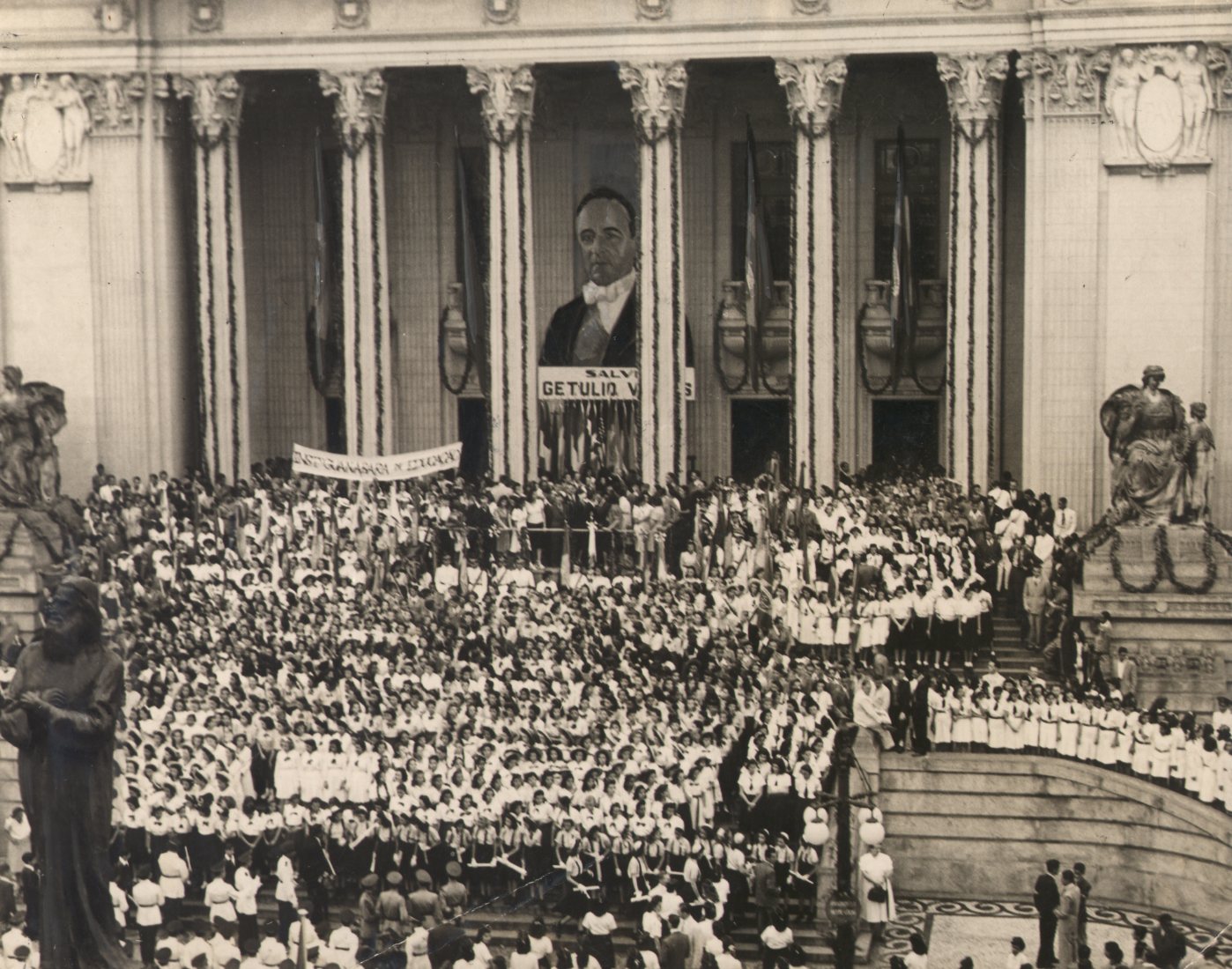
Imperialism is not a policy made by a few powerful countries for control and domination. While access to markets, resources, and commodities is, of course, elemental in the impulses of empire, it is also not the primary element of imperialism. Imperialism is the current hegemonically-dominant global capitalist economic order–in its entirety. With that order dominated as it is by the financial power wielded by tiny capitalist classes of a few countries–the United States clearly the most powerful; countries that have become, essentially, criminal enterprises–with the United States being also the most criminal. Countries which have identical interests in some ways, and the world-disaster potential of competing interests in others. Both interests, the same and different, mean murder, however. The gangster machinations and myriad consequences of their interests and differences felt most savagely and injurious to the colonial world, where every action made by calculation in benefit of cabals of foreign plunderers, and with the willing subordinated participation of native ones. Bernard Ross looks at Brazil and how those international dynamics came to play in the 1937 coup of Getúlio Vargas.
‘Vargas Coup Entrenches Hold of U.S. Imperialism’ by Bernard Ross from Socialist Appeal. Vol. 1 No. 20 November 20, 1937.
When considering semi-colonial Latin America, a clear understanding of politics is inconceivable unless it is analysed in the light of imperialist machinations. This is all the more true of the most backward of all the South American countries, Brazil, whose colonial nature can hardly be overlooked. Reposing upon a feudal economy, with coffee as its economic foundation, virtually the entire industrial life of the nation is monopolized between American and British imperialism.
The contradictions between these two imperialisms have been the main dynamic force behind Brazilian political happenings of the last decade. The two imperialist camps struggling for the upper hand have organized political cliques and parties. During this time, the pliant tool of American Dollar Diplomacy has been and still is Don Getulio Vargas. In 1930 he was nominated as presidential candidate by the feudal landlords of Rio Grande De Sul, Minas Geraes and Parahyba in connivance with Wall Street which controls the railroads, banks and electrical industries of those states. His opponent was Julio P. de Alburquerque of Sao Paulo, the hope of the British Lion which dominates the economic life of that state. With the government of President Washington Luis favoring the candidacy of de Alburquerque, Vargas and his Yankee masters, demagogically flirting with the masses, carried through a successful coup d’etat against Luis.
Vargas’ Past Record
Vargas has been in office for seven years and has consistently shown himself to be a loyal lackey of his Yankee overlords. In fact, it has been one of the most friendly periods in the history of Brazilian-American relations. As a crowning point of Vargas’ servility, Brazil, at the Buenos Aires conference, openly and unmistakingly aligned itself with Washington in the latter’s efforts to attain economic hegemony of the Western Hemisphere.
A Washington dispatch to the New York Times of November 12, obviously after the reporter had consulted State Department officials, stated: “Furthermore, the records of the men in power in Brazil, would indicate that as long as they remain in office any move being sponsored contrary to the interests of the U.S. is inconceivable.”
How explain the action of Vargas? Basically there are two reasons for the latest step of the Brazilian president. 1) The internal economic and political situation of the country; and 2) Sharpening of imperialist contradictions.
The seven years dictatorship which has brought Brazil to the brink of economic disaster, reducing millions of hunger-ridden masses to barbaric levels of existence and which has pitilessly crushed every national, anti-imperialist manifestation of the Brazilian people, finds itself today devoid of any social support whatsoever with new mass explosions imminent. Vargas had to act quickly to reconsolidate his precarious rule.
Secondly, a fair election being held, with the hatred and disgust of the masses directed against Vargas, British imperialism’s candidate, Armando de Salles Oliviera undoubtedly would be swept into office. The desire of the Vargas feudal clique for self-preservation and with it, the exigencies of American imperialist domination determined the action of Vargas.
The Daily Worker striving to prove to the American bourgeoisie the virtues of Russo-American accord, warned Wall Street editorially on November 12 that “Dictator Vargas in Rio de Janeiro has taken his orders directly from Hitler, Mussolini and the Konoye cabinet in Tokyo.” We by no means wish to ignore the role of Germany in Brazilian German imperialism, almost asphyxiated as a result of Versailles, has been turning frantically, during the last few years, toward Latin-America as a source for war materials and as an outlet for her industrial commodities, and has succeeded in obtaining mining concessions in some South American nations.
By means of government subsidies on exports, Germany in 1936 led the U.S. in exports to Brazil. The “Integralist” party overtly expresses its friendship for Nazi Germany. The large, influential German population of Brazil is overwhelmingly Nazi in its sympathies. However, at the present time, German economic and political influence isn’t of great significance and the Integralist party is still far from being a decisive force in Brazilian political relationships and struggles.
The fact that Vargas has given free latitude to the “Integralists” in their activities does not prove that he is an agent of Germany, but stresses the point, that lacking any social support, he rests to some extent upon that fascist rabble in his efforts to perpetuate his rule.
As for Japan, we can add, that although Japanese trade with Latin-America has grown by leaps and bounds during the last few years, only the most naive political observer could maintain that Japan exercises at the present time, influence on Brazil. The same can be said for sup posed Italian influence. The Daily Worker, trying to place the responsibility for the Vargas coup upon the Rome-Berlin-Tokyo axis and furthermore, by maintaining in that same editorial that Roosevelt’s Latin-American policy is for “peace and Democracy” shamelessly attempts to dissimulate the fact that Vargas is the product of American imperialist manipulations.
Has Brazil turned fascist? A sober political analysis would bring an observer to the conclusion that what presents itself today in that country is just another form true, more naked of the personal, military dictatorship so common throughout Ibero-American history. The tyrant Gomez ruled Venezuela for 25 years no more democratically than Vargas will rule under the new constitution. A fascist movement is an upsurge of discontented petty-bourgeois masses and lumped proletarians directed in the interests of finance capital. Vargas hasn’t any mass base at all, having long since alienated the sympathies of virtually the entire Brazilian nation. The new tyrant rests upon the precarious support of an army which will inevitably reflect the social antagonism which the very logic of his politics will not mitigate but only intensify.
The Militant was a weekly newspaper begun by supporters of the International Left Opposition recently expelled from the Communist Party in 1928 and published in New York City. Led by James P Cannon, Max Schacthman, Martin Abern, and others, the new organization called itself the Communist League of America (Opposition) and saw itself as an outside faction of both the Communist Party and the Comintern. After 1933, the group dropped ‘Opposition’ and advocated a new party and International. When the CLA fused with AJ Muste’s American Workers Party in late 1934, the paper became the New Militant as the organ of the newly formed Workers Party of the United States.
PDF of full issue: https://www.marxists.org/history/etol/newspape/themilitant/socialist-appeal-1937/oct-23-1937.pdf
 Revolution's Newsstand