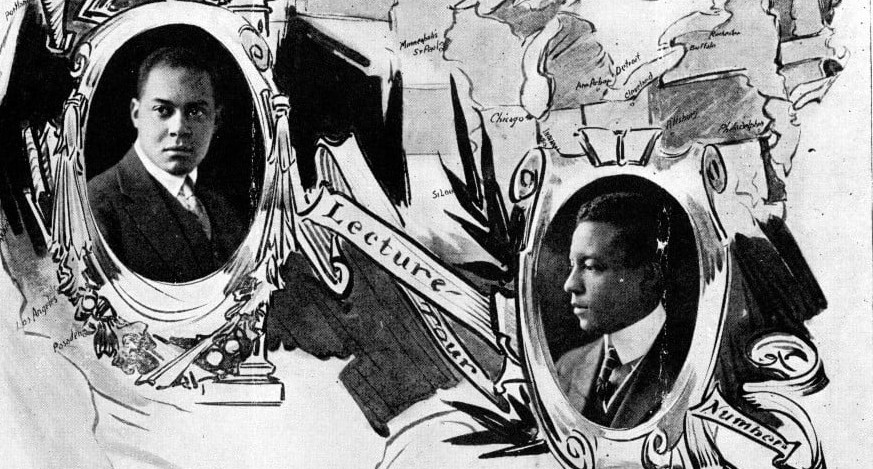
Randolph and Owen respond to the Red Summer of 1919 with analysis of U.S. ‘race riots’ and a revolutionary program to overcome them.
‘The Cause Of and Remedy For Race Riots’ by A. Philip Randolph and Chandler Owen from The Messenger. Vol. 2 No. 9. September, 1919.
Race riots are miniature wars. Like wars, they are injurious to the masses who fight them. Like wars, a few profit from them. Like wars, they also have causes–ultimate and immediate; chief and contributory causes. It is the purpose of the writers to ascertain those causes in order that the remedy may be prescribed.
History of the Problem
In order to understand any social phenomenon of the present, it is essential to inquire into the history of the conditions out of which it grew.
The race problem of America is a relic of chattel slavery. It is more acute in the United States than in any other country, because slavery was abolished here, after it had been abolished in every other country. Besides, every American document has recognized and sanctioned the institution of slavery.
The Declaration of Independence was signed by men, 50% of whom were slave-holders. The Constitutional Convention endorsed slavery, while recognizing its viciousness.
George Washington, “the father of the country,” and first President of the United States, and one of the largest slave-holders in the world, asked that the term “bound persons” be used in the records of the Constitutional Convention instead of the term slaves, because he recognized that history would repudiate and condemn their hypocritical professions in the Declaration of Independence. Even Thomas Jefferson was a big slave-holder, and attempted to salve his conscience with this celebrated soliloquy: “I tremble for my country when I reflect that God is just!” The statement in the Declaration of Independence that “all men are created free and equal” meant “all white men.”
The Constitution also recognized and upheld the institution of slavery, for slavery continued 73 years after its adoption. The Supreme Court of the United States reentrenched the institution in the “Dred Scott Decision” of 1857. It gave political power and sanction to slavery. It permitted five slaves to be counted as three white citizens, and upon this basis representation in Congress was increased for the South.
This brings us to the Civil War, the inevitable consequence of slavery. The length and bitterness of the Civil War in which the problem of slavery was uppermost, fanned the fires of race hatred. The South hated the slave because it feared his revolt. The rebellions of Gabriel, Denmark Vesey and Nat Turner justified their fears, while John Brown’s raid intensified their apprehensions. Hatred against the Negro grew in the North, because it was felt that white soldiers were giving their lives for Negro slaves. This feeling was manifested by the New York riots, and the dragging of William Lloyd Garrison through the streets of Boston.
Reconstruction
Reconstruction still further fanned the flames of race prejudice. The 13th, 14th and 15th Amendments to the Constitution, were resented by the South. The Freedman’s Bureau, the Force Bill, the Sumner Civil Rights Bill and the Military Bill–measures adopted in the interest of the Negroes–were indignantly repelled by the Southern whites along with their Northern white sympathizers. The South retaliated with the Black Code and Vagrancy laws, the Klu Klux Klan, the Tissue Ballot and Bloody Shirt. It rejected the 13th, 14th and 15th Amendments. Finally, however, when these amendments were ratified by the necessary votes of other states, the white South, reluctantly and sullenly, submitted along with its Northern supporters which were very large, as shown by the States of New York, New Jersey, and Ohio (great abolition states) withdrawing their ratification of the 14th Amendment.
Wage Slavery
The industrial revolution had prepared the way for the abolition of slavery by the introduction of labor saving machinery. The abolition of chattel slavery paved the way for the next step–wage slavery. It marked the passing of Feudalism and the introduction of capitalism in the United States. Coming fast upon the heels of slavery, however, there were relics of the old order, which manifested themselves in the transition period. These were peonage, tenant-farming, the crop-lien system, the Black code and the vagrancy laws. These bring us to the consideration of the economic causes of mob violence and race wars.
First, what are economic causes? By economic causes, we mean material gains which are the motor-forces of individual and social actions. For instance: A Jewish and an Irish lad were fighting and they were calling each other all kinds of humiliating names. Presently, along came two passersby who speculated as to the cause of the fight, giving various religious and sentimental reasons. But upon inquiry they were informed by the Irish lad that the D-Jew had his foot on his nickle. Thus you see, not race nor religion, but the crass, materialistic, economic factor–the nickle–was the sound reason for the scrap.
As to our first proposition, the economic cause, we maintain that the capitalist system is the fundamental cause of riots. By the term capitalist system, we mean, in short, the exploitation of human labor-power and the natural resources of the country, for private profits.
This is a system under which the tools with which the laborer works and the raw material upon which he works are owned by private individuals. Now our capitalist system expresses itself in different forms in different sections of the country. For instance, in the East, factories, railroads and steamships are the paramount economic factors; in the West, mining, railroads and steamships; and in the South, cotton plantations, lumber mills, turpentine and railroads. The banking institutions of the South, which extend loans to poor black and white farmers, are the channels through which the commodities of the industries find their way to their local, national and world markets. Out of these industrial arrangements have grown certain socio-economic conditions, namely, peonage, the crop-lien system, tenant-farming and peasantry, which are the more immediate causes of lynching.
First, what is peonage? Peonage is a system of serfdom, the principle of which is, that if an employee owes his master he must continue to serve him until the debt is paid, the only escape being that if another employer is willing to come forward and assume the debt, the employee is allowed to transfer his obligation to the new master. In practice the system amounts to vassalage, inasmuch as the debt is usually allowed to reach a figure which there is no hope of paying off.
Now how is this system maintained? During the Reconstruction Period the Negro tasted and became intoxicated with the new wine of freedom and was loath to return to the farm, under conditions, in many instances, worse than slavery. Unsophisticated Negroes looked wistfully for the promised “mule and forty acres.” But lumber must be cut, cotton must be picked and turpentine must be dipped. In short, profits must be made. Negroes must work or be made to work, besides they must work cheaply.
Thus the “black code” and vagrancy laws of the South. These laws provided for the imprisonment of all Negroes who had no visible means of support. The result is that hordes of unemployed Negroes are hustled off to jail and the convict camps. Their fines are paid by the lumber, cotton and turpentine operators; they are assigned into their custody; put to work at starvation wages, besides being compelled to trade at the company’s store, which prevents their ever getting out of debt. They are also compelled to sign certain labor contracts, the non-performance of which the state laws make a crime. And as a white planter himself tells the story: A planter can arrest a man upon the criminal charge of receiving money under false pretenses, which is equivalent to the charge of stealing; you can get him convicted; he is fined, and being penniless, in lieu of the money to pay the fine, he goes to jail; then you pay the fine and costs and the judge assigns him to you to work out the fine and you have him back on your plantation, backed by the authority of the state. This is peonage. It is an economic system. It is maintained for profits.
We pass next to the crop-lien system. The crop-lien system is the method of mortgaging the planted and unplanted crops of the poor farmers. It operates in this way: The poor farmers are in need of provisions until harvesting time; the white merchants supply them for a part of their crops the share usually being so large as to keep a perpetual lien on the farmers’ crops. Under this system the Negroes are fastened to the farms.
The Negro farmer being in debt, cannot leave. To escape is to violate a contract; to violate a contract is to commit a crime which might result in being remanded to the convict camps or lynched. Next we shall consider tenant-farming, which is explained by its title.
Usually, however, the tenant-farmer has been a farm-owner, who, due to the crop-lien system, has lost control of the said farm. The next stage of the tenant-farmer is the farm laborer, which is the final goal of the poor white or black in the South. Thus an economic system which makes peasants out of the Negroes and poor whites. In the South the peasants are objects of reproach, the scum–the flotsam and jetsam of society. They are illiterate, morally depraved and physically broken. The fruits of this system are prejudice, jim-crowism, segregation and lynching. Banking institutions and loan agencies supply the money for their maintenance at rates of interest as high as 60 and 100 per cent on the dollar.
Negroes don’t protest or resist because they are intimidated and cowed by lynching bees. Negroes and poor whites don’t unite against a common exploiter–because race prejudice exists and is artfully cultivated to keep them apart. The weapons of capital in other parts of the country are the state militias, secret-detective-strike-breaking agencies, religion or nationality. So that in the East and West we have our Bayonne, West Virginia and Ludlow, and in the South we have our Waco and Memphis horrors. Of more recent date we have the East St. Louis massacre, the cause of which is fundamentally economic. Negro laborers were imported into the above named place to work. They were either imported to take the jobs of white workers or to increase the supply of labor, and thereby force down wages. This was the real cause of the conflict.
This is similar to the principle of picketing by labor unions. White laborers will not only shoot down Negro laborers, but also white laborers who are imported by capitalists to take their jobs or lower their wages. Such is the history of the labor movement in this country. Negro laborers would do the same thing if they were in the white laborers’ places.
We might as well meet the big, bald fact that self-Interest is the supreme ruler of the actions of such men. The reason does not lie in race prejudice, but in the class struggle. Blame your capitalist system. Of course, this does not justify or expiate the crime; it simply explains it. Certainly the culprits should be brought to justice. We also have had a race riot in London, the roots of which go back to our capitalist system. The association with white women was but the occasion of the London race riot.
Proximate Economic Causes
During the last half of the nineteenth century, and until a very late date, the Negro has been largely a scab. This, of course, was due chiefly to the short-sighted position of organized white labor. Nevertheless, his scabbing created great hostility between the races. Within the last decade, however, there has been a movement from the competition of black and white workers to the unionism of black and white workers.
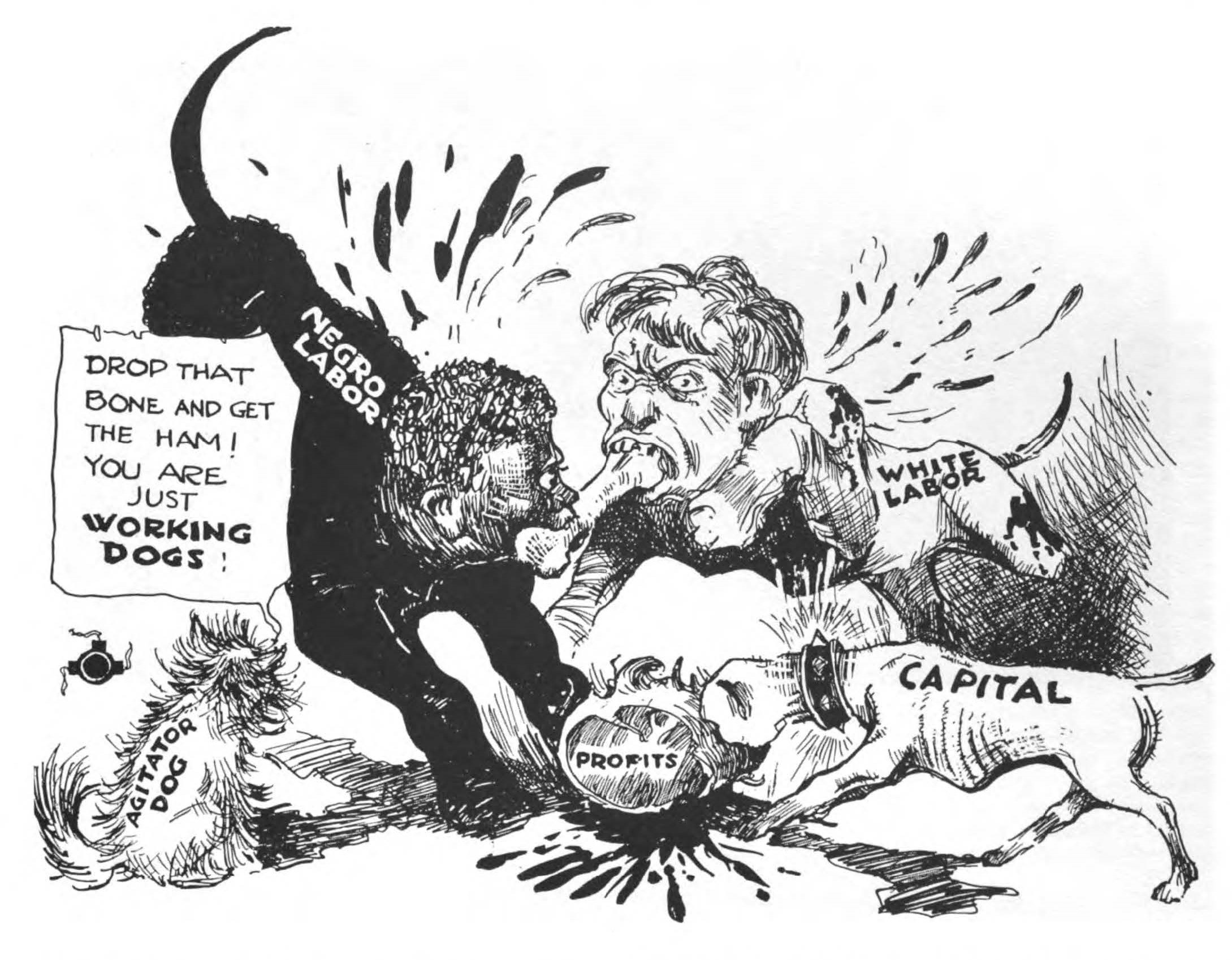
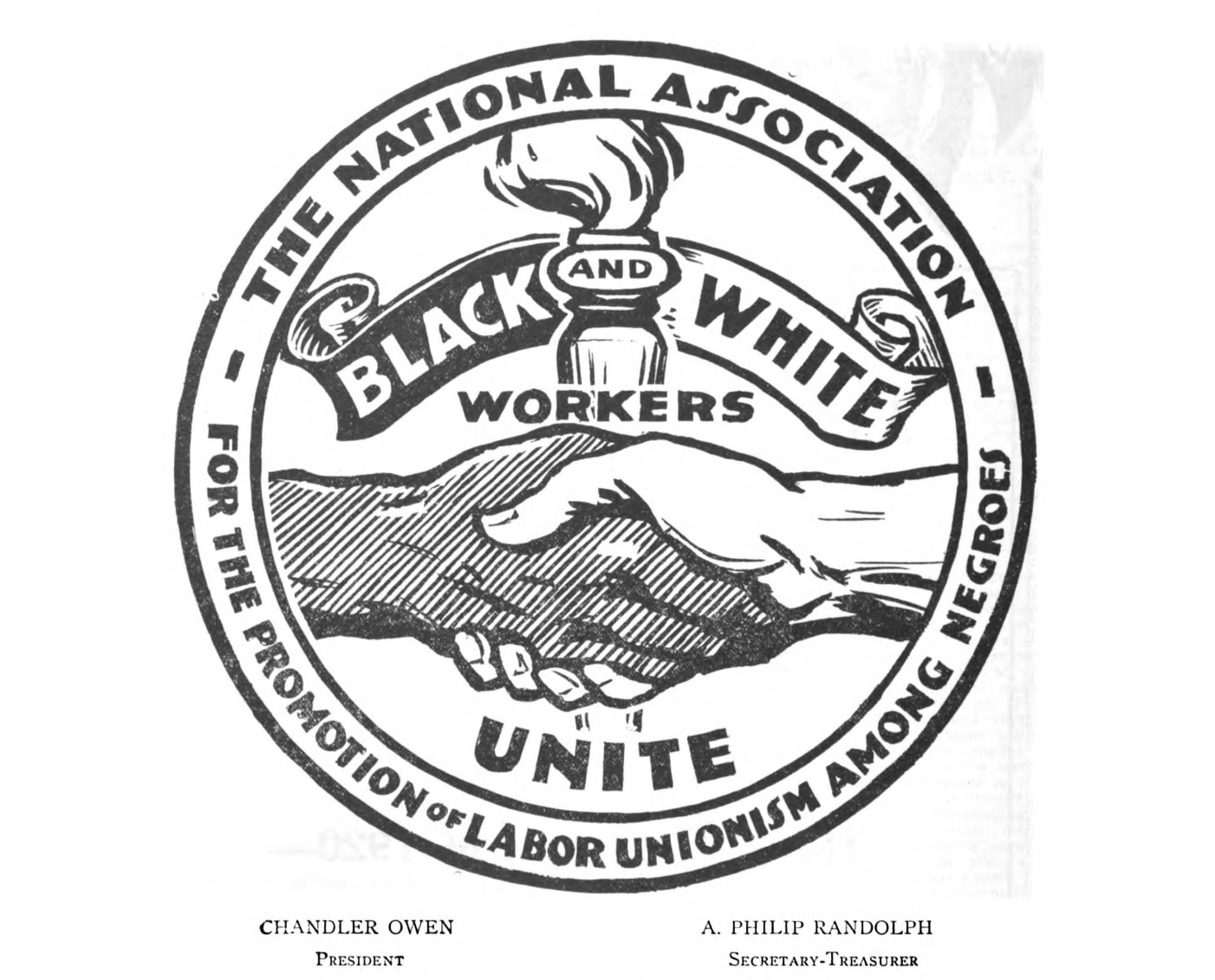
The I.W.W. prohibit discrimination on account of race or color in the first clause of their constitution, and they carry it out in practice. The recent convention of the American Federation of Labor held in Atlantic City, went on record as favoring the organization of all Negro workers. In addition to this, the Negroes have shown a marked tendency toward unionizing among themselves. They have formed the National Brotherhood Association of America, which is an organization on the order of the United Hebrew Trades. (Just as the Hebrew Trades was organized to protect Jewish workers, so the National Brotherhood Association was organized to protect Negro workers.) At the convention of the Virginia State Federation of Labor in Alexandria, Va., June of this year, 30 Negroes were seated and took an active part in the proceedings. Everywhere the white and black workers show signs of co-operation in combining against the common enemy–Capitalism. This, naturally, breeds its counter-irritant–the attempt, on the part of capital, represented in the banks, railroads, manufacturers, packers and mine owners to divide the workers to get the black and white working dogs to fighting over the bone of race prejudice in order that they, the yellow capitalist dogs, may get away with the meat. And this illustration carries with it more than the figure. It is very apt, for it is literally true.
In Chicago, the riots grew out of the fight between the packers and the workers. There are about 60,000 workers in the packing industry. Of these workers, it is estimated that about 15,000 or 18,000 are colored. They were just on the verge of organizing to get more wages, shorter hours and decent working conditions. About 6,000 Negroes had already joined the union. For all of them to join the union would enable the workers, by calling a general strike, to paralyze the entire industry and to secure their demands. If the workers secured their demands, it would greatly lessen the $120,000,000 of profits made by the “Big Five” packers in 1918. The more wages for the workers the less profits for the packers. This would never do. Hence, something must be done to prevent this combination of black and white workers. The race riot was the most convenient and effective instrument at hand. Besides, the riots in Washington and Chicago were the best places for calling them. Washington is the capital and what happens there would be heralded throughout the country and world. This would inflame the feeling between colored and white persons in all other sections of the country. Chicago, on the other hand, is the second largest city in the United States particularly, it is the home of the packing industry, and what happens there is second only to what happens in the capital. While what happens in the packing industry ramifies the industries throughout the United States, since the “Big Five” packers, according to the latest report of the Federal Trade Commission, control the manufacture of 775 commodities in the United States, and Negroes are employed in very nearly every one of these industries. The Chicago riot, therefore, struck the blow at the unionism of black and white workers in nearly every industry in the United States. So much for the economic causes of race riots.
Now the question arises: what other method shall be brought into play? What other weapons may be used? This brings us to the psychological or contributory causes.
Race Prejudice
The red embers of race prejudice are always smouldering in America. To fan them for a moment is sufficient to start the fire. Consequently, this vestige from slavery was a good starting point for the combined capitalists and manufacturers in America to ignite race wars.
Again, there are Southern agents provocateurs in the United States who are carrying on a tireless and systematic campaign, to poison public opinion against the Negroes. They have Southern clubs in every big college of the North, East and West and Southern societies in the big cities. No one would know the significance of a Northern, Eastern or Western club, but everyone immediately understands the purpose of the Southern Club. The average Southerner still sullenly broods over the lost cause. The progress of the Negro rankles in his breast and he would secede tomorrow to maintain his reactionary and bourbon traditions. They carried their propaganda to France, and disseminated the falsehood that Negroes, like monkeys, had tails.
Newspapers carry inflammatory headlines about alleged crimes of Negroes. The rape of white women is invariably played upon. Opprobrious terms are used such as “n***r,” darky,” “coon,” “black burly brute,” etc. Papers like the Washington Post even announced mobilization almost at the doors of the “White House.” The Chicago Tribune becomes more inflammatory than the Atlanta Constitution. The New York Times writes viciously about the inferiority of the Negro.
The schools in the United States are largely segregated, which reduces the contact between colored and white children to the minimum. Biased and mischievous histories are written–histories which distort the facts about Negroes in every phase of American life. In Virginia, the history used in the schools is written by General Robert E. Lee’s granddaughter. Alleged scholars like Professor John Burgess of Columbia College in his Reconstruction and the Constitution and Albert Bushnell Hart in the Southern South show lamentable ignorance of the problems they are discussing, while the former is as violent and rabid as Vardaman and Hoke Smith might be. Franklin H. Giddings, Professor of Sociology in Columbia, on Friday, August 1st, makes frequent use of the term “darky” in a class composed of colored and white teachers. Dr. Miller of Bellevue Hospital, in 1914, used the term “darky” in the class room of the New York School of Philanthropy. The Spectator, the official organ of Columbia, in a leading editorial endorses and defends the use of the term “darky.” Numbers of colleges like Princeton, John Hopkins, West Point, Annapolis, the latter two of which are government schools, refuse admission to colored students. In nearly all of the large white universities, Negroes ore excluded from the dormitories. Again school equipment is inadequate for both whites and blacks in the south. John R. Commons of Wisconsin University points out that in 1910, $2.22 and $4.92 were spent on the Negro and white child respectively in the South. In Washington, D.C., in 1913, despite the fact Negroes comprised 30 per cent of the school population, they received only 10 per cent of the school appropriation for equipment. And a member of the Chicago City Council in 1918, introduced a bill for segregated schools.
The church is usually reactionary. The Presbyterian Church invested $93,000 in the slave trade. In 1830, all the white churches met in conference in Charleston, S.C., and issued a manifesto stating that a Negro had no soul. The Church was a bulwark of slavery. It taught them “servants obey your masters.” It preaches a doctrine of humility. It is seldom that a white minister preaches a sermon against lynching. In the Negro church, the ministers are largely ignorant, venal or controlled. (There are certain marked exceptions, of course.) The disgraceful “Mitchell Slush Fund” in the campaign of 1917, stained the character of every Negro minister in New York, with the exception of one or two.
The screen and stage also arouse race prejudice. “The Birth of a Nation,” based on Thomas Dixon’s Clansman, did much to prepare the American mind for race riots and lynchings, “Pride of Race” (which ignorant Negroes knew no better than to produce themselves), was propaganda against race equality. “The N***r” was a play of similar type. Previous to this, the Clansman had been presented throughout the United States. The black face comedian is another menace to harmonious race relations. The Negro is always shown in the capacity of an inferior. He is making fun–the lowest form of pleasure. Those who see comedians like Bert Williams, Al Jolson, Lew Dockstadter, Al G. Fields and other black faced comedians, acting the part of buffoons and clowns do not generally see Negroes in their best light. They regard the presentation on the stage as typical. And one who is constantly shown as a clown, thief, gambler, or crap-shooter, gets eventually the stigma of an inferior. This so-called American Negro music, such as, plantation songs and old spirituals, sung by the Fisk Jubilee Singers, the Hampton and Tuskegee Quartettes, has been more funny than musical. Besides it has served to instill the spirit of servility into Negro youths. Capitalists contribute large sums of money to these institutions, because they know that if they can get the black and white workers to singing slave songs, they can more successfully rob them, for they cannot think about their own interests. The stage and screen, then, have done a big part to create and crystalize race prejudice. Part of the race prejudice is vicious and grows out of the contempt in which an inferior is held.
To sum up: First, how has the press caused riots? The Southern press has been controlled by the regnant economic forces in the South. Their editorial and news policies have been so adjusted as to suit the Southern plutocracy. Here, again, it is apparent that he who controls the bread and butter will also control and shape the ideas. Newspapers like the Atlanta Georgian have carried such headlines: “A Subject for the Stake,” “Lynch the Brute,” “Lynch the Wretch.” During the Atlanta Race Riot, September 22, 1916, the Atlanta Evening News carried inflammatory headlines which fanned the fires of race prejudice.
Second, the church is the recipient of large contributions from the financial rulers of the South and naturally preaches the Christianity of profits.
In very truth the beneficiaries of a system cannot be expected to destroy it. Hence, the Methodist Church split over the issue of slavery (which was an economic question pure and simple) into North and South, in 1860. The Church of the South prayed and preached for the victory of the cotton kings. The Church of the North blessed and anointed the industrial capitalists.
Third, the most important social institution of the South is controlled by legislators who are controlled by political parties which are, in turn, controlled by financial lords who regard it safer and more profitable to keep the common people, white and black, in virtual ignorance and superstition, because ignorant people don’t strike for higher wages and better working conditions. So that the school terms, in some parts of the South, last for only three months. The educational appropriation of the Southern states is the lowest paid in any section of the country. The slave states appropriate $2.22 for each Negro pupil per year and $4.92 for each white.
This but indicates the low social state of both races in the South.
Fourth, the propinquity of the races in the South has, undoubtedly, operated to accentuate the feeling of race prejudice.
This doubtless is due to the extreme oppositeness of physical characteristics. Of course, the racial differences are not a cause, but an occasion, for race strife. The social mind of the South is the product of a peculiar environment. For instance, the social heritage of slavery and the Reconstruction Period still rankles in the bosom of Southern society. And the attack of a Negro on a white person, the doctrine that the Negro is a hewer of wood and a drawer of water; the Bible citation of Canaan in proof; the doctrine of the white man’s superiority preached by political, religious and journalistic demagogues to the poor, ignorant whites; the doctrine of the sacredness of the Southern white woman shown by the Southern white man’s chivalry toward her in public conveyances, combined with the ignorance and superstition of the common whites and blacks, has a tremendous psychological and emotional power in occasioning lynching. We say occasioning because the cause lies deeper. They are the fuse. The magazine is the capitalist system. Most anything in the South may be the occasion of lynching. It may be a “well-dressed” Negro in country districts, the use of the word “yes” by a Negro to a white man, asking a white woman for the name of a street, the fighting of a colored and white boy, and the use of good English to white folks. A very conspicuous characteristic of the South is its hyper-sensitiveness. There still persists the duel. Homicides are more numerous than in any other part of the country. When the sister of a young white man or daughter of a father is fooled by another white man, seldom is recourse made to courts, but the accused is generally shot down like a dog in the open streets.
Political Causes
Political causes are back of the riots also. Negroes are largely disfranchised. They cannot take political revenge upon those who make and administer the law. Consequently, police are careless and indifferent about giving them protection. The police system is controlled, as a rule, by the mayor, and the mayor is elected by the party, and the party is controlled by those who make up the campaign funds. And the Negro comes nowhere in this chain. The fact that he votes in Chicago, does not alter the case because of his relative numbers. (There are about 30 white persons to every Negro.) Another political reason for the riots was the desire on the part of the passing Democratic administration to get some anti-Negro legislation enacted. Immediately the race-riot in Washington, D.C. began. Senator Harrison of Mississippi introduced a bill for jim-crow cars in Washington. A representative from Arkansas introduced a bill against the inter-marriage of the races. Moreover, the Northern and Western states are threatening to penalize the South for forcing prohibition on the country, by reducing her representation in the coming apportionment, by enforcing the 14th and 15th Amendments. So the South feels that if sufficient race prejudice can be stirred up in the North, it will act toward changing opinion for the enfranchisement of the Negro.
Social Causes
Social causes are always present where there are social diseases. Race riots are symptoms of social diseases. Segregation is a long standing American social disease. It lessens the contact between the races. It prohibits harmony between the races through such methods as the jim-crow car, discrimination in public accommodation, residential segregation and laws against inter-marriage. The prohibition of an act creates the desire to perform that act. A striking example of the proof of this principle is the relation between the races in the South. There the races are segregated in every way as they are in no other part of the world, and yet the feeling is worse. In the North, there is more contact, despite considerable discriminations, and the feeling is much better than in the South. In countries like France, where there is absolutely no discrimination, the feeling is as harmonious, cordial and kindly between white and black persons as among white persons themselves.
The housing problem has also been productive of friction. Negro migration created a fertile field for real estate speculators. With its many advantages there were certain concomitant evils. It enabled the real estate speculators to exploit both whites and Negroes. The whites had to pay higher rents and they had to go into worse quarters. The Negroes, too, had to pay higher rent and were forced to convert their quarters in to lodging houses in order to pay the rents. The deprivation of one’s home is irritating and engenders strife and ill-will against those who replace them. This gave rise to bombing of Negro homes purchased in former white sections of Chicago.
Military Causes
Lastly, military causes have not been without their effect in the production of race riots. For four and one-half years the religion of violence had been taught to both white and black people of America. War has engendered the spirit of violence. The transition from shooting a white German is not very far from shooting a white American. Besides, Negroes hate American whites, but they almost uniformly report that the Germans were among the fairest and the best people they have ever met. They like the Germans as well as the French. Everybody overseas was better to the Negro soldier than the white American.
Hence the Negro returned with vengeance and hatred for the white American in his breast. He noted the difference in the treatment abroad from that he got at home. The white American also noted this difference. The Negro favored it: the white American disapproved of the French fraternal spirit. Hence, the clash. Upon returning home, the Negro found conditions worse than when he left, despite his fight to “make the world safe for democracy.” He is dissatisfied with his reward for his participation in the war. Not knowing President Wilson, he took him at his word. He wants to make the world safe for democracy, and is therefore determined to make America safe for himself. He secured the knowledge of the art and value of organization. And he is determined to use this knowledge and art in the interest of himself.
Effects
The spirit of independence of Negroes has increased, because with their inferior numbers they feel that they have gotten the better of the contest. The prejudice of the whites has increased because they are not accustomed to Negroes striking back. The result is a social magazine which may explode at any moment upon lighting the fuse. Almost anything might serve as the fuse, such as, the use of the word “n***r,” “a fight between a black and white boy.” Negroes owning fine automobiles, purchasing fine houses in the so-called white neighborhoods, accidentally stepping on a white woman’s foot–ad infinitum.
The Remedy
What it is not. It is not segregation. As pointed out above, the South is segregated to the (nth) power, yet there, feeling is worse, mob violence, lynching, and race riots most frequent. Upon the advent of white Americans in Europe with their segregation measures between the races, riots in London and Liverpool followed.

The solution will not follow the meeting of white and Negro leaders in love feasts, who pretend like the African ostrich, that nothing is wrong, because their heads are buried in the sand.
On the economic field, industry must be socialized, and land must be nationalized, which will thereby remove the motive for creating strife between the races. Black and white workers must unite in the same unions, ask for the same wages, same hours and the same working conditions. Identity of conditions between the workers will do more to produce equality of citizenship than any other force. Jevons the logician, aptly says: “Nothing happens without a reason why it is so rather than otherwise.” This is true of large scale industry in the United States. It does nothing without a motive or a reason. It would not be interested in the production of race riots if no profits were realized therefrom. The beneficiary of a system cannot be relied upon to overthrow that system. The workers only can be relied upon consciously to destroy the industrial autocracy in the United States.
Politically, all peoples must be enfranchised without regard to race, creed, sex or color.
Educationally, schools must be revolutionized. Equal pay must be granted to teachers with equal equipment for school children. This can be made secure by abolishing segregation in the schools, for when all children sit in the same classroom, it is not possible to discriminate in teachers equipment. Besides, it produces the spirit of fraternity. The curriculum needs to be changed. More economics, history and sociology and the physical sciences need to be taught and less Latin, Greek and Bible.
The people must organize, own and control their press.
The church must be converted into an educational forum.
The stage and screen must be controlled by the people.
Immediate Program
We recognize that the preceding remedy is a comprehensive and fundamental remedy which may take years for attainment. In the meantime, an immediate program must be adopted to meet the demands of the transition period. Hence, we offer this immediate program.
1. Physical force in self-defense. While force is to be deplored and used only as a last resort, it is indispensable at times. The lesson of force can be taught when no other will be heeded. A bullet is sometimes more convincing than a hundred prayers, editorials, sermons, protests and petitions. (The resistance of Negroes in the race riots just passed has been helpful to the white and colored people throughout the country.) It has saved us in other cities from riots. Negroes have shown that riots hereafter will be costly and unprofitable, and when you make a thing unprofitable you make it impossible.
2. Larger Negro police force. A larger Negro police force in Negro districts will help to keep down riots. The behavior of the police in all the race riots in the United States has justified Negroes in believing that the police, so far from being impartial, were m collusion with the white rioters. A prompt and impartial arrest of the aggressors in Washington and Chicago could have nipped the riots in the bud. Moreover, Negroes understand the psychology of Negroes better than the Irishmen and Southern white men who very largely compose the police forces of the cities. Negroes even receive no protection from the militia or army which is called out in order to suppress the riots. In East St. Louis the soldiers are reported to have given their rifles to the white rioters. And it is obvious that you cannot expect prejudiced white soldiers and policemen impartially to adjust the relations between the races, when they are a part of the race doing the mobbing.
Finally, the courts of law must indict both white and colored without fear or favor, according to their culpability. Besides, the white and colored persons. How jury should be made up of both can Negroes expect to get justice from an all-white jury? In Chicago, the jury has returned indictments against 57 Negroes and only 4 whites. Think of it! Negroes are justified in regarding the so-called Department of Justice as a department of injustice, where they are concerned. In Washington, 200 Negroes have been arrested, and only 20 whites, despite the fact that the whites in Washington, as in Chicago, are known to have begun the riots.
Lastly, revolution must come. By that we mean a complete change in the organization of society. Just as absence of industrial democracy is productive of riots and race clashes, so the introduction of industrial democracy will be the longest step toward removing that cause. When no profits are to be made from race friction, no one will longer be interested in stirring up race prejudice. The quickest way to stop a thing or to destroy an institution is to destroy the profitableness of that institution. The capitalist system must go and its going must be hastened by the workers themselves. The capitalists are the beneficiaries of race riots. The workers are the losers by race riots. The same is true of war. The workers entail huge burdens of expense and lose their life and limb. Make wars unprofitable and you make them impossible. This is the task of the workers, white and black, and especially the imperative duty of the white workers by virtue of their numbers, their opportunity and their intelligent class consciousness.
The Messenger was founded and published in New York City by A. Phillip Randolph and Chandler Owen in 1917 after they both joined the Socialist Party of America. The Messenger opposed World War I, conscription and supported the Bolshevik Revolution, though it remained loyal to the Socialist Party when the left split in 1919. It sought to promote a labor-orientated Black leadership, “New Crowd Negroes,” as explicitly opposed to the positions of both WEB DuBois and Booker T Washington at the time. Both Owen and Randolph were arrested under the Espionage Act in an attempt to disrupt The Messenger. Eventually, The Messenger became less political and more trade union focused. After the departure of and Owen, the focus again shifted to arts and culture. The Messenger ceased publishing in 1928. Its early issues contain invaluable articles on the early Black left.
PDF of full issue: https://www.marxists.org/history/usa/pubs/messenger/1919-09-v2n09-sep-Messenger.pdf
 Revolution's Newsstand