Among the specific issues confronting the Bulgarian workers’ movement in the post-war years leading to the 1923 Coup was the presence of such a large number of Czarist refugees and defeated White Russian officers welcomed to the country home after Communist victories in Russia.
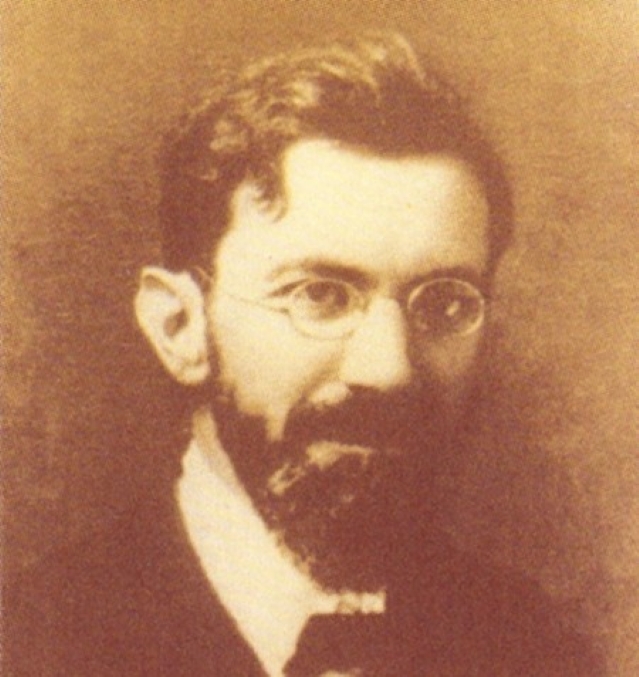
‘The Russian Counter-Revolutionists in Bulgaria’ by Christo Kabaktchieff from International Press Correspondence. Vol. 2 No. 15. February 24, 1922.
The Bulgarian bourgeois and the Stamboliski government have thrown open Bulgaria’s doors to the Russian counter-revolutionists, who are at large in our country as in the Russia of the Czar. And even more. The Bulgarian Government has fully subordinated itself to the Russian counter-revolutionists. Under the influence of the Allied Powers and the princes and generals living in Bulgaria, the Government is carrying on an insolent, hostile and provoking policy towards Soviet Russia. The Bulgarian bourgeoisie, who cringed before Czarist Russia, bears a deadly hatred against revolutionary Russia, against the Russia of the workers and peasants.
Yet only the bourgeoisie is taking this hostile, irreconcilable and criminal attitude towards Soviet Russia. The workers and peasants of Bulgaria are inspired with sympathy and gratitude towards the revolutionary Russian people. This sympathy and gratitude are deeply roofed in their hearts. The liberation of Bulgaria from the Turkish yoke was the result of the Russian war against Turkey in 1877-78. This war was undertaken by Russian Czarism with the aim of dominating the Balkans and Constantinople. The Bulgarian people, however, are grateful to the Russian workers and peasants who shed their blood in the war from which resulted the liberation of Bulgaria. Furthermore, the Bulgarian and Russian peoples, being both of Slavic origin, have kindred language, religion etc. And last but not least the Russian Revolution, by overthrowing Czarism, abolished the danger of Bulgaria and other Balkan states being conquered and transformed into a “Danube Government” of despotic Russia. This was the aim of the Czar for decades. Therefore the Bulgarian workers and peasants appreciate the heroic revolutionary struggle which the Russian people is carrying on for all oppressed peoples and exploited classes of the world.
The Bulgarian bourgeoisie and its Government, however, do not take into account these feelings of the Bulgarian people towards the Russian Workers’ and Peasants Republic. Against these sentiments and the most evident economic, political and national interests of the Bulgarian people, the bourgeoisie has become an instrument in the hands of the Entente imperialists and of Russian princes, generals and Pomeshtiks (Junkers) and maintains a criminal provocative policy towards Soviet Russia.
The publication of the secret documents of the Russian Czarist government exposed the criminal treaties which the Bulgarian bourgeoisie had concluded with this government. In one of these treaties, signed in 1902, Bulgaria put its army, its harbors and its independence at the disposal of the Russian Czar. The treaty of 1912 in which Czar Nicholas bribed the former Bulgarian “Czar” Ferdinand with 5 million leva, caused Bulgaria, as an instrument of Russia, to participate in the war of the Balkans which resulted in Bulgaria’s defeat.
During the world war, the Bulgarian government sold itself to the German emperor. Today, however, it is again a tool of the Entente and in common with the Russian counter-revolutionists conspires against Soviet Russia.
In 1919 the Bulgarian Government permitted a number of Denikin’s generals to enter Varna (harbor at the Black Sea) thus making Bulgaria a refuge of the Denikin army. Simultaneously the government provided this army with hundreds of carloads of munitions. Proceedings were started against. The members of the Executive Committee of the Communist Party because they exposed this support of the counter-revolution and conducted and energetic campaign against it. Yet, the great victory of the Communists in the ensuing elections prevented the government from throwing the E.C. into jail.
Some time later the government undertook the support of the army of Wrangel. After the defeat of this army, Bulgaria became the refuge of a large proportion of these counter-revolutionary troops. Thousands of fugitives, among them a great number of generals, officers and junkers, overran the towns and cities of Bulgaria and the government spent tens of millions for their support. Recently the government has begun to employ for this purpose its debt of 82 millions to Russia in spite of the clear and energetic protest of the Russian Soviet Government (Chicherin’s note of July 10th, 1921).
The most revolting and scandalous act, however, was the transport of the remnants of the counter-revolutionary army of Wrangel, comprising about 20,000 men, from Gallipoli (near Constantinople) to Bulgaria. The Bulgarian Government did not only not protest against the arrival of a foreign armed force in our country, but officially welcomed and liberally supported it. The Communist Party published a number of documents proving that this Russian counter-revolutionary army receives financial support not only from Paris, but also from Bulgaria. This army is housed in the barracks of all important towns. It is in possession of guns and other weapons; it has its own police and court martials which on Bulgarian territory are condemning to death and executing Russian workers and peasants who are not willing to submit to the yoke of the counter-revolutionary gang of Wrangel.
The admission of this foreign army to Bulgaria signifies the abolishment of the sovereignty of the state and the occupation of our country. This army is a direct threat to the political independence of the Bulgarian people and may force the people to participate in a counter-revolutionary war against Soviet Russia. The Bulgarian bourgeoisie does not care for that; on the contrary, after the disarmament of Bulgaria by the Allies, it needs this foreign army in order to maintain its rule over the discontented mases of workers and peasants. The government itself is threatened by the proximity of Soviet Russia and the Red peril haunts the bourgeois in their dreams.
As the Bulgarian bourgeoisie is not able itself to fight the Communist Party and the ever growing revolutionary movement, it is willing to utilize these foreign mercenaries to keep down its own people. In September 1918 it used German soldiers, machine guns and cannons in order to slaughter 300 Bulgarian soldiers who had undertaken a revolt. Today the generals of the Wrangel army are freely moving about in Bulgaria and publicly threatening that they will revenge their defeat in Russia upon the Bulgarian Communists. The leaders of the Bulgarian bourgeoisie, the Government and Czar Boris, however, are arranging banquets in Sofia in honor of Wrangel’s generals and are toasting the victory of Wrangel over the Russian people.
Now, the entire staff of the defeated Wrangel army, with its present leader general Kutepoff, notorious for his horrible atrocities, has taken refuge in Bulgaria. The arrival of Wrangel is expected. This counter-revolutionary staff has established two military schools in Bulgaria with several hundred officers as pupils. It has, moreover, under the name of “Battle Society for the Rescue of Russia” organised a secret counter-revolutionary organization which is sending conspirators to Russia over the Black Sea. According to the rules of this society these conspirators must blow up railways, factories, electric stations, etc., to assassinate the leaders of the Soviet Republic, to prepare counter-revolutionary upheavals, etc.
The Bulgarian Government answers the repeated notes of Chicherin and Rakovski with insolent lies and insults or with silence. The miserable lackeys of Briand in Sofia use a still more infamous language towards Soviet Russia than their master himself. The Bulgarian Government is a blind tool of the French counter-revolutionists. The president of the Government, Stamboliski, recently stated to the correspondent of the Paris “Journal”: “If the Red Army successfully attacks (?) our neighbor Roumania and the Allied Powers ask us to remain neutral, we shall follow their advice. If France, however, calls ‘onward!’ we shall without hesitate unanimously join our flags with the French in order to preserve the culture and freedom of Europe.” The appeal of the Russian Red Cross on November 27th, 1921, to the Bulgarian Red Cross with regard to the workers and peasants of the Wrangel army, who have been pardoned by the Soviet Government (decree of the Central Executive Committee. of November 3rd) was answered in the negative. In this appeal the Bulgarian Red Cross was asked to bring its influence to bear upon the Bulgarian Government towards supporting the above mentioned soldiers, a large proportion of whom are willing to return to their country.
The following, facts are typical for the attitude of Bulgaria towards Soviet Russia. In May 1921 an Ukrainian commercial mission in Varna, consisting of three persons, was arrested and robbed; in September of the same year another Ukrainian commercial mission at Oarna was confined under the pretext of “quarantine” and later on expelled from Bulgaria. The protests of the Communist Party, and its 40 representatives in parliament, were answered by silence. The Party, however, put this question before the broad masses and will with them open the battle against the bourgeoisie and its government.
In general the Bulgarian bourgeoisie executes the policy of Entente imperialism and of the Russian counter-revolution. After having made Bulgaria and the other Balkan states a bridge to Constantinople and Asia Minor, Entente imperialism has set itself the task of crushing Communism in the Balkans and of utilizing the peoples of the Balkans for the intended counter-revolutionary war against Russia. For this purpose they have transported the Wrangel Army to Bulgaria. The Bulgarian bourgeoisie is supporting this policy; they welcome the Russian generals and junkers with open arms and conspire together with them against Soviet Russia. The Communist Party of Bulgaria is fighting this treacherous counter-revolutionary policy. In common with the Communist Parties of Jugoslavia, Roumania and Greece, it is raising the banner of the future Socialist Federated Soviet Republic of the Balkans.
International Press Correspondence, widely known as”Inprecorr” was published by the Executive Committee of the Communist International (ECCI) regularly in German and English, occasionally in many other languages, beginning in 1921 and lasting in English until 1938. Inprecorr’s role was to supply translated articles to the English-speaking press of the International from the Comintern’s different sections, as well as news and statements from the ECCI. Many ‘Daily Worker’ and ‘Communist’ articles originated in Inprecorr, and it also published articles by American comrades for use in other countries. It was published at least weekly, and often thrice weekly.
PDF of full issue: https://www.marxists.org/history/international/comintern/inprecor/1922/v02n015-feb-24-1922-inprecor.pdf
 Revolution's Newsstand