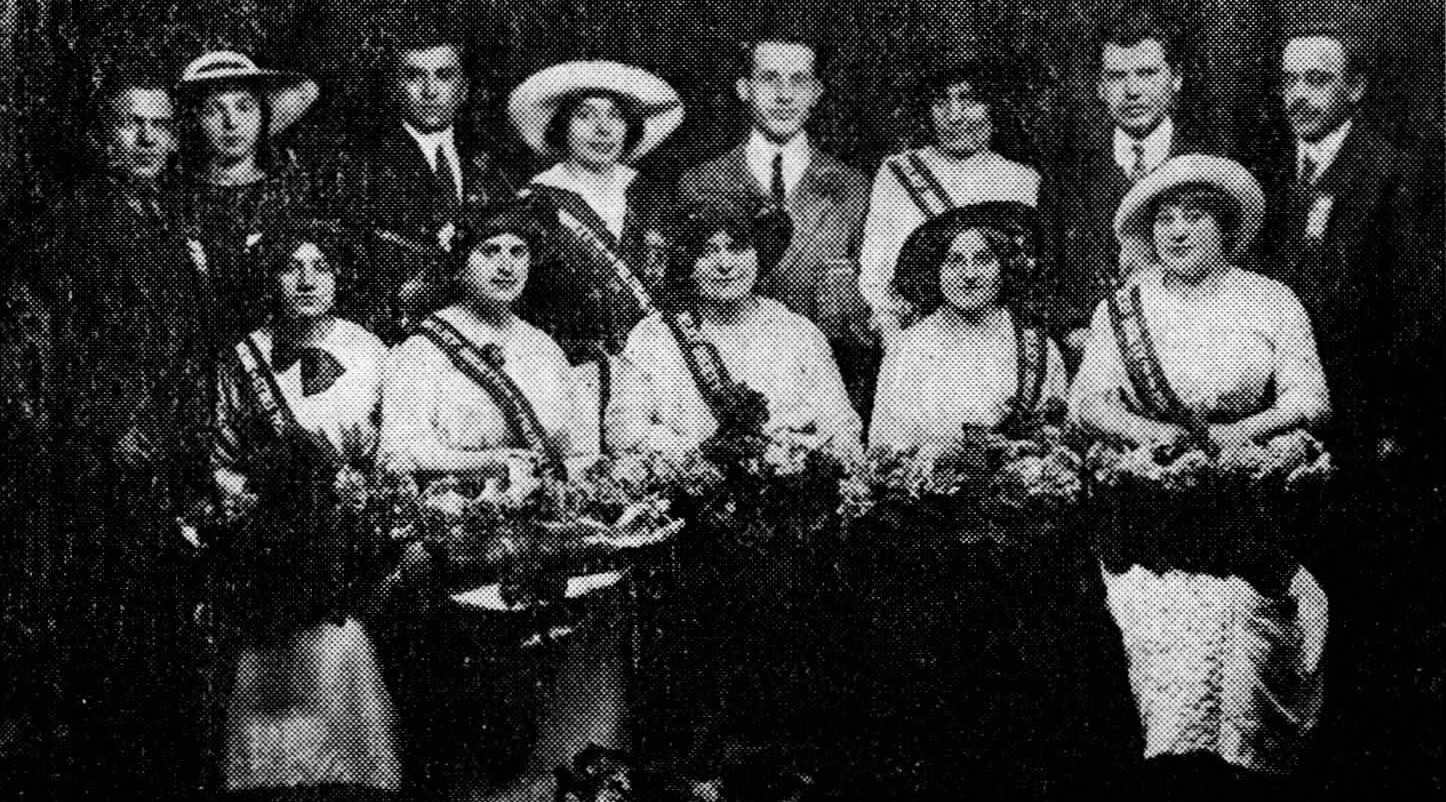
The I.L.D.’s Rose Baron looks at the U.S. organization in support of Russian political prisoners in the days of czarism for inspiration in present struggles.
‘They Live to Tell the Tale: the Relief Society for Political Exiles in Siberia’ by Rose Baron from Labor Defender. Vol. 10 No. 10. November, 1934.
A Lesson from the Past
In darkest Russia during Czarist days, thousands of revolutionaries were thrown into jail and exiled to wild forsaken places in Siberia. Defense or relief organizations could not exist. No organization that opposed the Czar in any way could exist legally. Help for the political prisoners was organized, however, in Switzerland, France, Germany, the U.S.A. and other countries by groups of Russian refugees.
The relief that came from these organizations saved the lives of thousands of revolutionaries who are now building Socialism in the U.S.S.R. Many of them occupy very high positions in the government as well as in the Communist Party.
Here in America, the organization was called the Relief Society for Political Exiles in Siberia. It was formed by a few exiles who escaped from Siberia in January, 1910. These people who went through torture themselves, understood very well the importance of such organizations. They issued a call in which they described their own sufferings and the sufferings of the thousands that were left behind in Siberia, and called on the Russian refugees to help save the lives of their comrades by forming a relief organization. The response was very good and in a short time branches were established in every part of the country. The center was in New York. Thousands of dollars were raised through affairs, banquets, tag days, mass meetings, theatre parties, red flower days, etc.
The Red Flower Day was always the most successful method of raising relief for political prisoners. This is how it was arranged: On May 1st, when tens of thousands of workers were marching in the streets celebrating the proletarian holiday, a few hundred men and women members of the society made it their business to bring to the attention of the workers that while they were free to celebrate the proletarian holiday, thousands of their comrades were being held in Czarist jails, tortured, dying of starvation and sickness, freezing to death.
The women participating in the Red Flower Days carried baskets of live flowers and wore sashes bearing the name of the organization, and an appeal to help save the lives of the imprisoned and exiled revolutionaries. The baskets were encircled with chains like the chains which bound the hands and feet chains which bound the hands and feet of their imprisoned comrades. The men who accompanied them carried collection boxes.
During the evening, meeting halls were visited–additional flowers were sold. The workers gave generously and the next day the treasury was a few thousand dollars richer. Help was sent to individual exiles who were distributed all over Siberia, far away from each other, and in most forsaken places.
In places where there were larger groups exiled, cooperatives, clubs and libraries were formed.
The Relief Society for Political Exiles in Siberia helped in the organization of these institutions financed them and sent literature (books, magazines, etc.). The formation of these institutions helped the prisoners not only materially but morally.
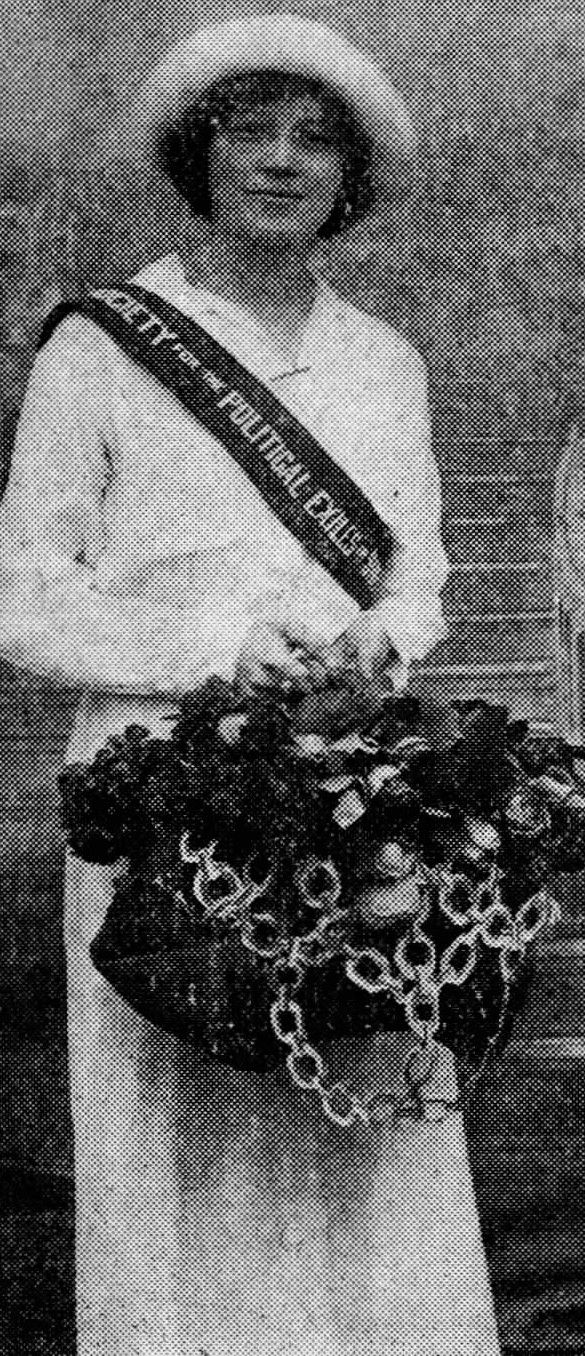
We must follow their splendid example.
Interesting and impressive letters came from the prisoners. They were widely publicized and helped a great deal in the collection of funds. Here is one example:
“On long winter nights, when the cold and hunger grips me, I often think that it is impossible for a human being to live like this. Why not put an end to all my sufferings. But then again I think of the human sufferings in general; in Russia with the millions of oppressed people; the tyranny of the Czar; the cynicism of the bourgeoisie that lives on the backs of the toilers; the thousands of our comrades that are being tortured and murdered daily for trying to protest. Then I forget about my own sufferings, and a strong desire to live overwhelms me to once again join in the fight for the liberation of the suffering masses. Today I have a new reason to live. A letter of encouragement from friends came to me. They offer assistance. They are concerned about my health. What a wonderful feeling to get such a letter after being buried alive for such a long time. This letter was a ray of sunshine to me. I thank you my dear friends from the bottom of my heart. Your letter meant much more to me than the few dollars for which I bought warm clothing and something to eat.”
After the establishment of the Soviet Republic, the former exiles and prisoners formed an organization called: “The Former Relief Society for Political Exiles and Prisoners“. This organization occupies a very prominent place in the U.S.S.R. This organization together with the Society of Old Bolsheviks was responsible for the organization of the International Red Aid, with sections in every corner of the world, of which the International Labor Defense is a branch. The National Secretary of the International Red Aid, Helena Stassova, is one of the former political exiles.
Conditions in the prisons in the U.S.A. are no better than in the Czars prisons, with one exception–that in Czarist Russia, political prisoners were recognized as such, and were kept in separate cells from criminals. In this country, political prisoners are not even recognized. The International Labor Defense, with the help of all its sympathizers and friends, is trying to save the lives of class war prisoners and their dependents. We must follow the example of the good work done by the Relief Society for Political Exiles, and raise enough money to keep up the strength and spirit of our class war prisoners, in order to restore them again into the fighting ranks of the working class; so they, too, may live to tell the tale.
Labor Defender was published monthly from 1926 until 1937 by the International Labor Defense (ILD), a Workers Party of America, and later Communist Party-led, non-partisan defense organization founded by James Cannon and William Haywood while in Moscow, 1925 to support prisoners of the class war, victims of racism and imperialism, and the struggle against fascism. It included, poetry, letters from prisoners, and was heavily illustrated with photos, images, and cartoons. Labor Defender was the central organ of the Scottsboro and Sacco and Vanzetti defense campaigns. Not only were these among the most successful campaigns by Communists, they were among the most important of the period and the urgency and activity is duly reflected in its pages. Editors included T. J. O’ Flaherty, Max Shactman, Karl Reeve, J. Louis Engdahl, William L. Patterson, Sasha Small, and Sender Garlin.
PDF of full issue: https://www.marxists.org/history/usa/pubs/labordefender/1934/v10n10-nov-1934-orig-LD.pdf
 Revolution's Newsstand