A remarkable addition to the obituaries of Rosa Luxemburg, this essay written in awe and in pain for the International Ladies Garment Workers Union journal, Justice, by Dr. Ester Luria. A number of years younger than Luxemburg, Luria was also a Jewish Socialist woman raised in Warsaw, who fled to Switzerland for and education, in 1903 receiving her doctorate in Humanities from the University of Bern. Luria returned to czarist-dominated Poland were she was active with the Bund during the Russian Revolution. After several arrests, including being held in the same prison as Rosa, Esther was exiled to a Siberian penal colony in 1906. A number of years later, she was able to escape and made her way to New York City in 1912. There she took up activity as an independent journalist for Yiddish-language Socialist and labor press and became widely known as a writer and lecturer, particularly on questions relating to Jewish, immigrant working class women of New York. After the reaction of the Red Scare set truly in, Luria drifted into poverty and obscurity in the city, with her exact death date being unknown, sometime in the 1920s.
‘Rosa Luxemburg’ by Esther Luria from Justice (I.L.G.W.U.). Vol. 1 No. 3. February 1, 1919.
I can hardly take up my pen to write about Luxemburg–the wound is still too fresh. It seems incredible that we shall never again read in the papers about some speech of hers, about some proposition which she put before a conference, etc. It seems incredible that this symbol of life and struggle is dead. One cannot believe that Rosa Luxemburg, who for tens of years fought against German absolutism, fell after the overthrow of the monarchy, after the triumph of the revolution. Fell in the civil war, or rather, in the fraternal war; fell in such a horrible, cruel way. We cannot as yet grow accustomed to the thought.
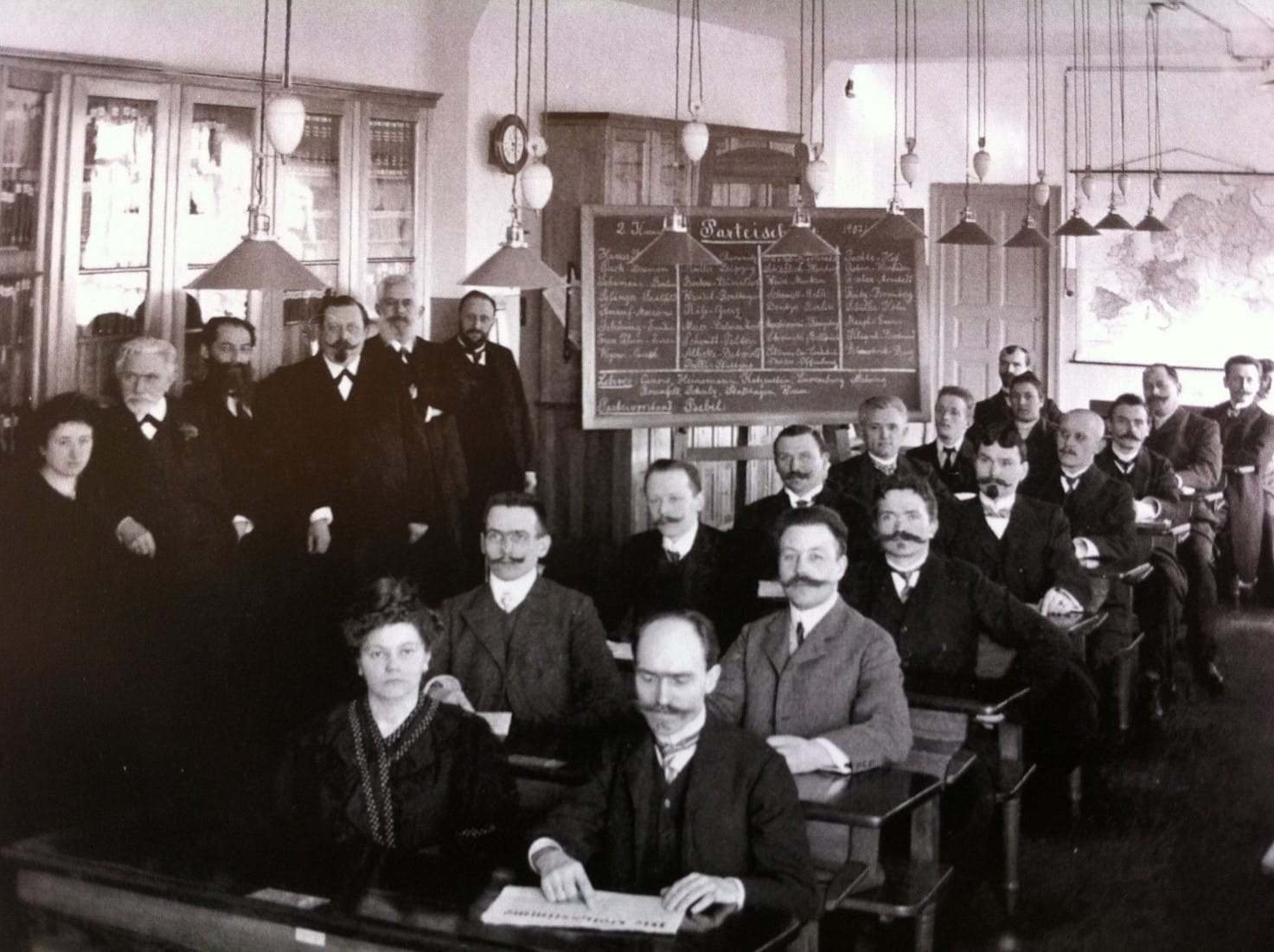
The social-democratic party was the first to demand equal rights for men and women. This demand it lived up through in its own ranks. It gave high posts to capable women, and for this reason, Rosa Luxemburg occupied such a prominent place in the party as speaker, writer, theoretician and polemisist. As a speaker, Rosa Luxemburg was very popular in Germany. One need not speak of the working masses. They would always run to hear “The Red Rosa.” She would inspire them, give them courage to fight, acquaint them with the problems of the day. The bourgeoise public was aware of Rosa’s biting tongue. To the German non-socialist intellectuals the name “Red Rosa” was better known than the names of the famous German scholars. About the latter they had once studied in school but had long ago forgotten them; but about Rosa they learned in the newspapers and heard about her in social circles. Rosa Luxemburg was a theoretician. She was an expert on certain questions and her writings on some of these are very valuable. A year before the war she wrote a book which proves that militarism is based on capitalistic society. This work is the only one of its kind. Liebknecht’s book on this subject is a historical work; that of Luxemburg is a deep, constructive study. The German social-democratic party was not lacking in theoretical forces. But Rosa Luxemburg occupied a prominent place in this circle. She was a professor in the party school. The German social-democratic party about ten or twelve years ago founded a workers’ university which would instruct party workers. The party chose as teachers its very best members. Luxemburg was one of the professors. Rosa Luxemburg was one of the most prominent feuilleton writers in Germany. With her sharp, biting tongue, with her education, with her temperament and power as a speaker, she would always defeat her opponents. Rosa Luxemburg could not use up all her energy. With her power as a speaker, her popularity and her talent for writing, she could certainly have gotten into parliament. But the women of Germany had no rights and now that they have gained these, Rosa Luxemburg has perished.
Rosa Luxemburg was born in Warsaw fifty years ago. Her parents were Jews, aristocrats. Luxemburg studied in the gymnasium [word missing] and graduating from the Institution, went to Switzerland to study. Switzerland was at that time the only country that opened its doors to women. The Russian women were the first to accept the hospitality of the Swiss republic. Their struggle against absolutism awoke in them the desire for education. Their struggle against absolutism also awoke in them the desire to study, so that they, too, went to Switzerland to seek an education. From Switzerland, Luxemburg went to Germany where she wished to work in the social-democratic party. But here there arose a difficulty. According to law, the law at that time, a foreign subject had no right to live in Germany. For this reason Luxemburg was about to be sent out of the country. But she found an escape from the situation. She married a German. Then she became a German citizen, and no one had the right to molest her. Luxemburg had no love for her husband and never lived with him. At that time this was a very popular custom among Russian and Polish socialist women. Their work was the most important, the most sacred thing to them and they did everything to further it.
Rosa Luxemburg was not very happy in her personal life. Nature had insulted her in many respects. She was very ugly, lame, looked very cross and would make a very unfavorable impression at first acquaintance. But her eyes made up for everything. Their brilliance would tell of her temperament, her enthusiasm, their expression would tell of her intelligence, of her exceptionally sound reasoning power.
For tens of years Rosa Luxemburg worked in the social-democratic party of Germany. She lived in this country all the time. She was looked upon as a German. Many did not know that she was a foreigner. Many among the socialists, even, did not know this. I recall the following: Once we were seated at a club. We were talking about the “Red Rosa.” A lady who was present told us that she had studied in the Warsaw gymnasia together with Luxemburg. Almost all of us cried out: “But that is impossible; she is German.” In spite of the fact that Luxemburg had lived so long in Germany, she still yearned for her home. As socialists, the German social-democrats were interested in the triumph of the Russian revolution. But they displayed no closer relationship to it. But this was not the case with the “Red Rosa.” The Russian revolution was so near to her that she had to witness its growth with her own eyes, and had to work for its progress. In October she went to Warsaw where she became active in the social-democratic party. She had a taste of the famous Warsaw prison, Paviak. In the Paviak Luxemburg was closely guarded. The other political prisoners were not allowed to approach her. But at the same time great respect was shown her. About a half year after Luxemburg had been freed, I found myself in the Paviak and the guards would keep on telling us that, “This is where Rosa Luxemburg sat; this is what she did; Luxemburg would get her meals from the secretary; Luxemburg would be interviewed in the official’s chambers: Luxemburg read a great deal,” etc., etc. All this was told us by the guards. The political prisoners who were imprisoned at the same time with her could tell nothing about her, because they had not been allowed to go near her. At most they were permitted to peep at her through the keyhole.
Luxemburg was interested not only in the Polish social-democratic party, but the socialist movement of Russia in general was near to her. She was the only German social-democrat who was present at the London convention of the Russian social-democracy. She did this because of personal interest, wishing to hear about the work of the Russian social-democrats. And since she had decided to go to the convention, the chairman of the German social-democratic party instructed her to greet the convention in the name of the party.
Luxemburg was a social-democrat. The triumph of the working class was her ideal. To the realization of this ideal she gave all her strength.
No local questions existed for her. No special labor questions interested her. She wrote no book about the woman question as was the case with August Bebel. She edited no woman’s magazine, as was the case with Clara Zetkin. And in spite of this the women were very proud of Luxemburg, were proud of the fact that there existed an exceptional woman.
Luxemburg was of a revolutionary nature, eager for the conflict. The general trend of the party was too slow for her, too calm, too watchful–she demanded more revolutionary methods she was not content with hesitation and propaganda alone. Because of this the comrades named her “Red.” And to the public she was also “the red” because of her fight against the administration, because of her frequent arrests.
It is self-understood that this revolutionist who belonged to the left wing of the party, that this theoretician who was so deeply interested in militarism because of its function in capitalist society, could not by nature, be carried off her feet by any false patriotism. Luxemburg, at the outbreak of the war, went hand in hand with Liebknecht. In the press and at meetings she condemned militarism and the manner in which the soldiers were treated in the camps. She was tried and sentenced to one year in prison but because of her physical condition, her sentence was postponed for a time. Despite this, however, she was rearrested and put into prison. Liebknecht condemned this act in the Reichstag. He was of the opinion that a woman like Rosa Luxemburg would not run away from a sentence, that such a woman did not stand in fear of prisons. He said that only the German police were capable of misunderstanding and of ignorance.
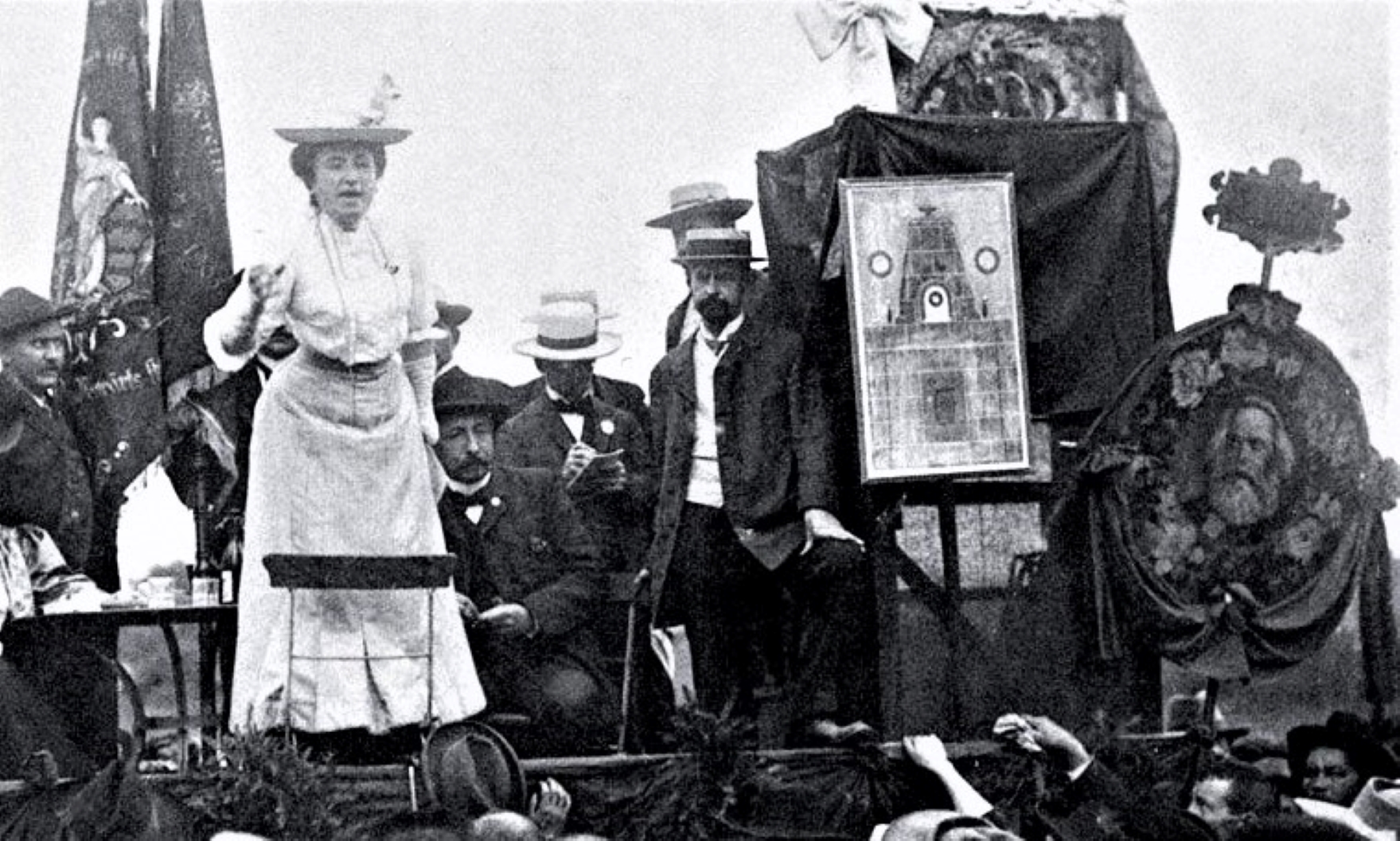
It was only natural that this extreme socialist should belong to the Spartacans. She was the leader of the party, Liebknecht’s right hand. Luxemburg was the typical revolutionist–fearless, energetic, eager for battle. She knew of no compromises. Courageously and with firm steps she worked toward her goal. She was the Sophia Spirdova of the German social-democratic party. Her death was a tragic one. Sophia fell at the hands of the Czar’s government.
Luxemburg fell at the hands of some unknown, in the civil war. Both shall remain in our memories as holy revolutionists.
The weekly newspaper of the International Ladies Garment Workers Union, Justice began in 1909 would sometimes be published in Yiddish, Spanish, Italian, and English, ran until 1995. As one of the most important unions in U.S. labor history, the paper is important. But as the I.L.G.W.U. also had a large left wing membership, and sometimes leadership, with nearly all the Socialist and Communist formations represented, the newspaper, especially in its earlier years, is also an important left paper with editors often coming straight from the ranks radical organizations. Given that the union had a large female membership, and was multi-lingual and multi-racial, the paper also addressed concerns not often raised in other parts of the labor movement, particularly in the American Federation of Labor.
PDF of full issue: https://www.marxists.org/history/usa/pubs/justice/1919/v01n03-feb-01-1919-justice.pdf
 Revolution's Newsstand